Penetanguishene bans overnight street parking 1 to 7 a.m. from Nov 1 to Apr 1, bans snow on roads and other boulevards, and caps corner-lot piles at 0.7 m. Add steep lots and lake-effect squalls, and a business needs a written contract and site map before the big storms.
Key takeaways
Last updated: November 2026
Snow removal in Penetanguishene is a planning job more than a plowing job. The town's steep grades, Georgian Bay squalls and clear Town rules (an overnight parking ban, and no snow pushed onto roads or boulevards) mean a business needs a written contract and a site map before the first big storm, not after it.
We are Forty Five Scapes, a family-owned design-build landscaper based at 905 Fuller Ave in Penetanguishene, and we now offer commercial snow removal in Penetanguishene for plazas, offices, churches, condos and waterfront properties. This guide covers what makes Penetang winters different, what the Town does and does not clear, and how to set up a contract that works. You can also see our full commercial snow removal service.
Key Takeaways
- Penetang's hills and slopes, like Main Street climbing up from the waterfront, make salting, drainage and pile placement as important as plowing.
- Georgian Bay lake-effect squalls can drop a lot of snow locally in one event, so contracts should plan for heavy winters, not average ones.
- Overnight street parking is banned from 1 a.m. to 7 a.m., November 1 to April 1, every year. That rule is written into the Town's traffic and parking by-law, so it is already in effect.
- Depositing snow or ice onto Town roadways or boulevards is prohibited, for owners and their contractors.
- Main Street from Beck Boulevard to Thompsons Road is a "critical area" for the Town's snowbank removal, which starts only after plowing and sanding are done. Private lots and laneways behind it are the owner's job.
- Book before the first big storm, with a site walk, written scope, site map and service logs.
Why is snow removal in Penetanguishene different?
Two things set Penetang apart from many Simcoe County towns: the land and the lake.
Hills and grades
Penetanguishene is built on a slope. Main Street climbs from the waterfront at Penetang Bay up through the downtown, and many side streets and parking lots sit on a grade. That changes how snow behaves on a site.
- Meltwater runs downhill. A snow pile at the top of a sloped lot melts across the pavement every sunny afternoon and freezes again at dusk, often right across a walkway or entrance.
- Slopes need more traction. A sloped driveway or ramp can be cleared of snow and still be dangerous. Salting and sanding timing matters more than on flat ground.
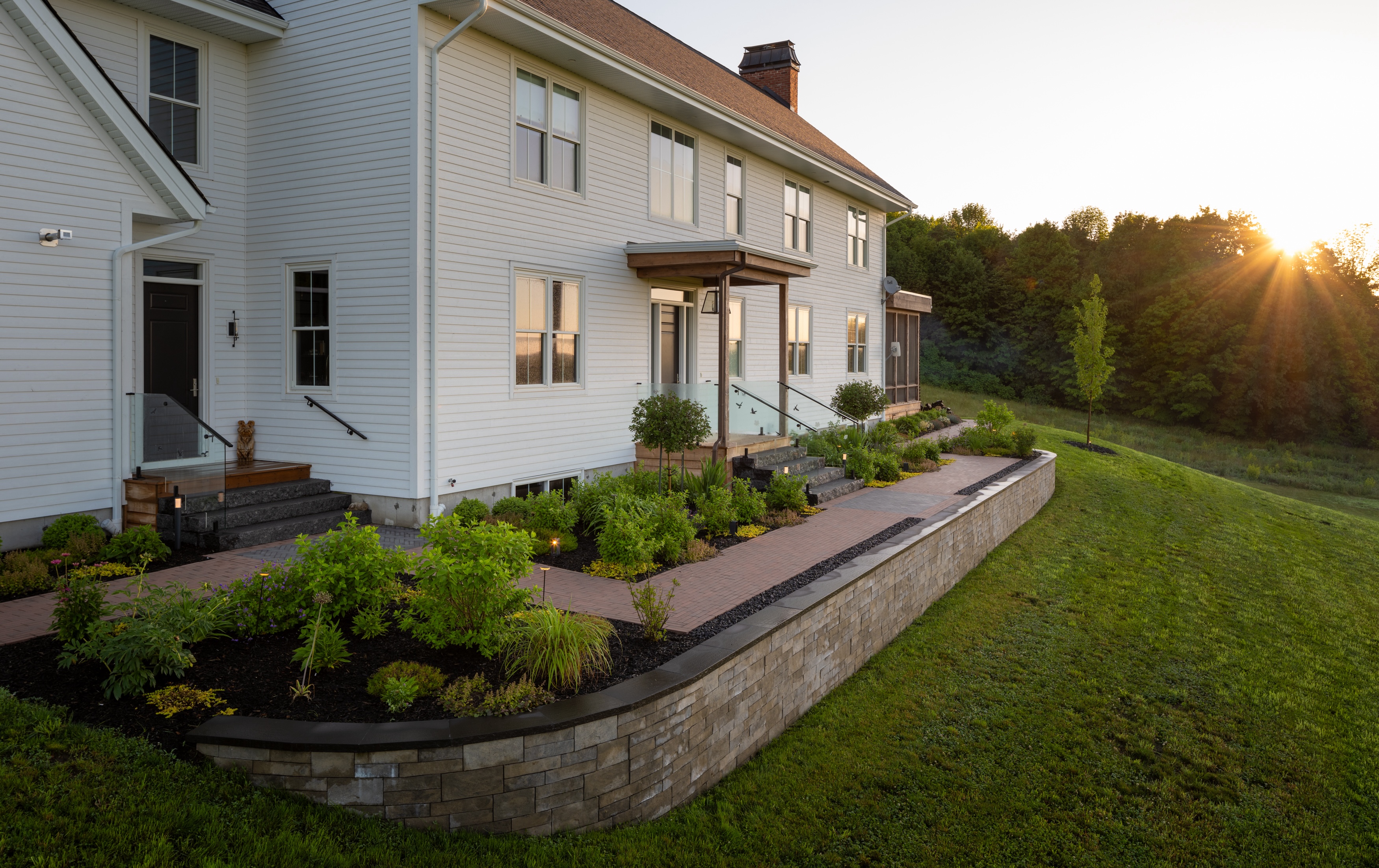
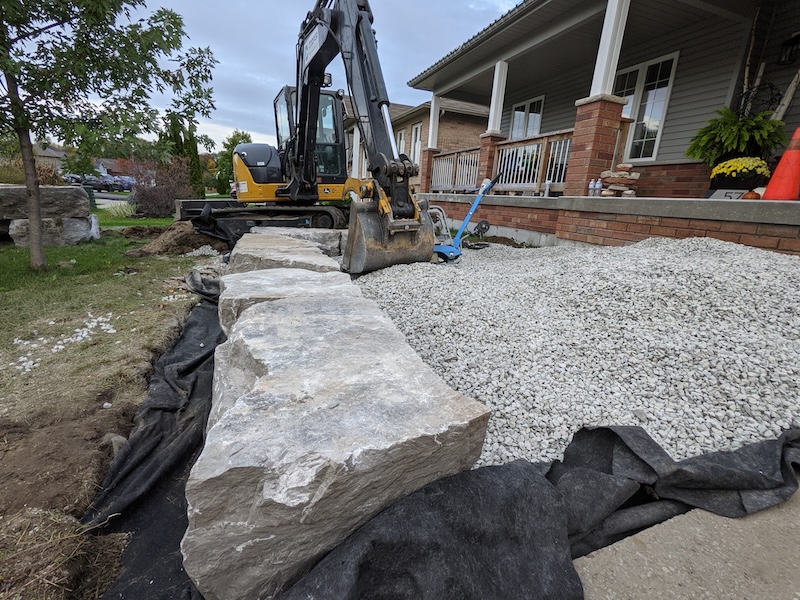
- Retaining walls and steps. Many Penetang properties have walls, stone steps and terraced beds. Plow blades and loaders can chip armour stone, crack caps and tear up lawn edges if the operator does not know where they are.
Grading and drainage are a big part of our landscaping work, which is why our snow plans start with where water goes, not just where snow goes.
Georgian Bay squalls
Penetang sits on southern Georgian Bay, inside Ontario's lake-effect snowbelt. When cold air crosses open water in early winter, squall bands can drop 10 to 20 centimetres or more on the shoreline in one event while Barrie, less than an hour south, gets very little. It is among the snowiest parts of southern Ontario. Environment Canada's climate normals show the long-term picture for nearby stations.
For a business owner, that means two things. Snow can arrive fast and very locally, so ask any contractor where their equipment is parked overnight and how they handle a squall that hits Penetang but misses Midland. And a heavy winter is not unusual, so your contract and your snow storage plan should be built for one.
What are Penetanguishene's winter rules for businesses?
The overnight parking ban
Section 31(2) of the Town's Traffic, Parking and Use of Highways By-law 2022-02 (consolidated December 2025) bans parking on any Town street from 1 a.m. to 7 a.m., November 1 to April 1, every year. Section 33 adds that you can never park or stand a vehicle where it gets in the way of snow clearing, at any hour. The Town's winter maintenance page warns that cars impeding plows can be ticketed and towed at the owner's expense.
If your building has apartments over the shop or tenants who used to park on the street, those cars now need a legal overnight spot, which is usually your lot. Mark those spaces on your contractor's site map and tell tenants in writing. Parked cars that never move are the main reason a lot cannot be cleared properly.
No snow on Town roads or boulevards
The same by-law treats snow or ice on a roadway as obstructing a highway (section 9(2)(a)) and bans snow on a boulevard that does not adjoin your property, "including but not limited to the snow pushed or deposited across a roadway" (section 10(3)). Pushing your lot's snow across the street is exactly what that clause targets, whether you do it or your contractor does. If you leave a mess, the Town can hand you a written notice and, if you ignore it, do the work and recover the cost like property taxes (section 14).
Corner lots and the 0.7 metre rule
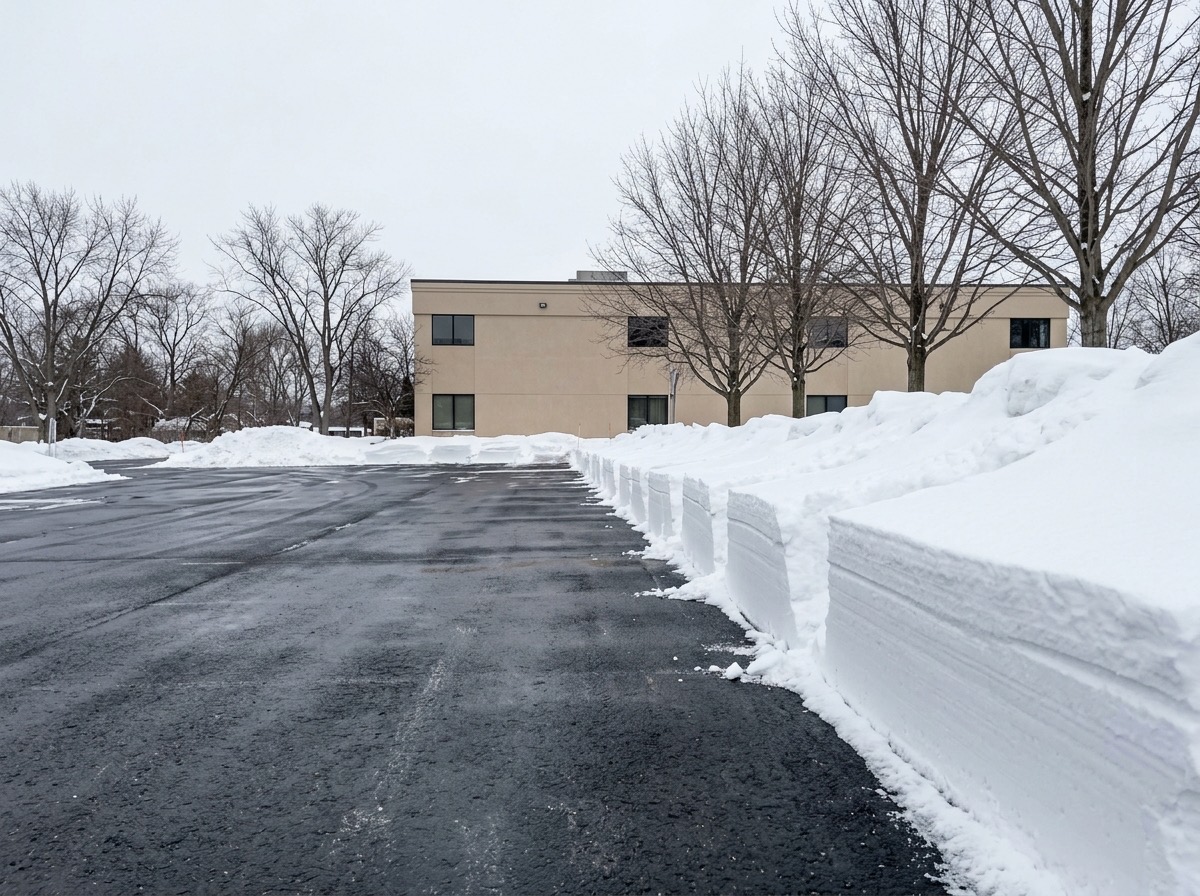
Section 9(4) limits snow on a corner lot to 0.7 metres (2.3 feet) above road grade inside the sight triangle. That triangle runs 6 metres back along each street line from the corner. For a corner plaza or church on Main Street, Robert Street or Poyntz Street, that means no tall piles at the corner of the lot, all winter. Mark the triangle on your site map so a night operator does not build a wall there in February.
The rule makes sense for safety. Snow pushed into a lane creates a hazard for drivers, blocks the curb drains, and comes straight back across your entrance when the Town plow passes. Midland has a similar rule in its new Snow Removal By-law, which we explain in Midland snow rules for businesses and property managers.
Private fire routes must be kept clear
If your plaza, condo or industrial site has a private road designated as a fire route, section 37 of the by-law makes the owner responsible for keeping it "clear of snow and ice" and free of obstructions. Designated addresses are listed in Schedule N. If you are not sure whether your lane is on it, ask the Town before the season, and put the fire route first in your contractor's priority order.
What does the Town clear on Main Street, and what is left to you?
Plowing and snowbank removal are two separate jobs for the Town. Crews plow and sand first, from 3 a.m. starts on major roads when needed. Removing the banks comes after, under the Town's Level of Service Policy for snow removal (revised January 2026).
That policy lists "critical areas" first. They include Main Street from Beck Boulevard to Thompsons Road (both sides, plus sidewalks), Robert Street West and East near Main, and parts of Simcoe, Water, Peel, Fox and Church streets. In those areas the Town clears roadside banks once they reach about 0.6 metres and affect visibility or traffic, aiming for three days, depending on weather and resources. Primary and secondary areas, such as the municipal lot at 10 Robert Street West, Poyntz Street and school zones, follow at the Roads Supervisor's discretion.
The Town also clears its designated sidewalks, with school, medical and business areas first, and asks people to pile snow on their own property rather than shovel it onto the sidewalk. So on Main Street you may have a Town snowbank at the curb for a day or two after a storm. Do not add to it.
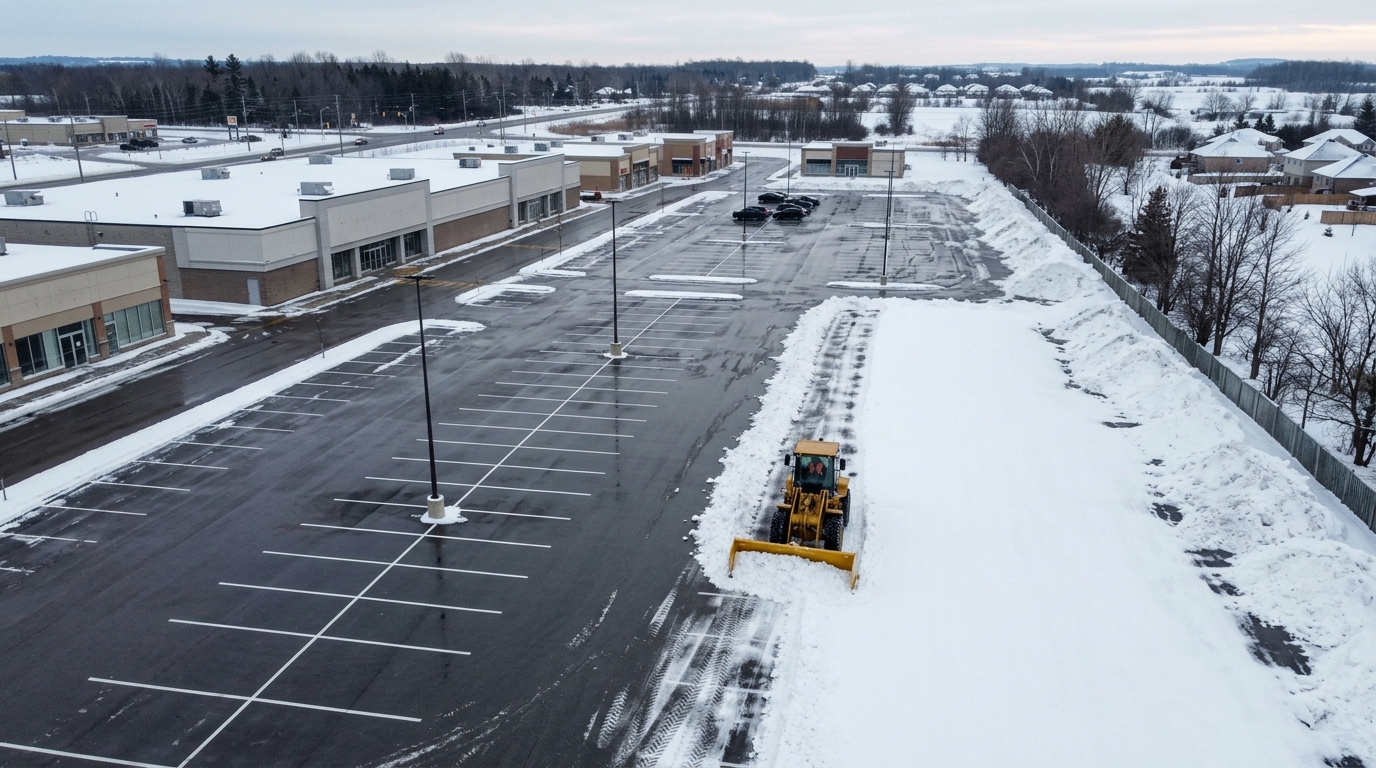
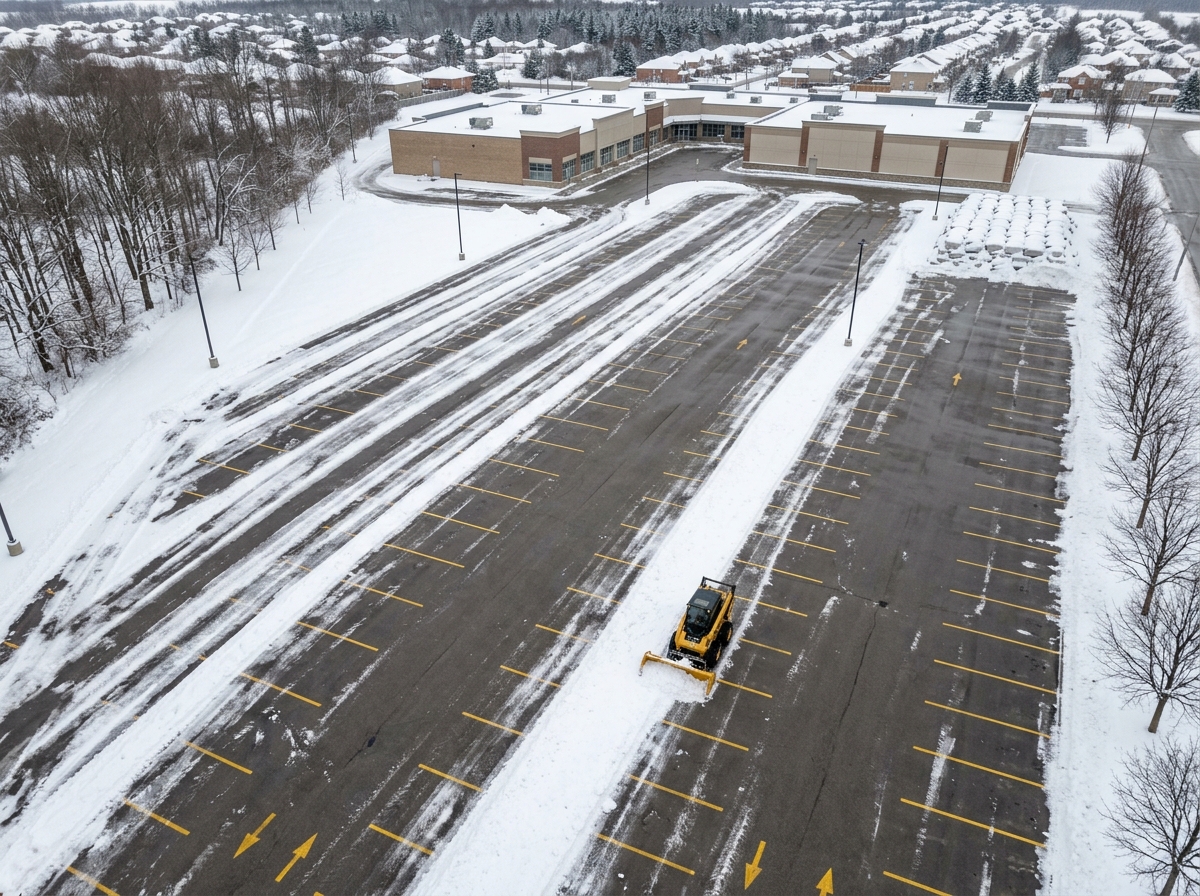
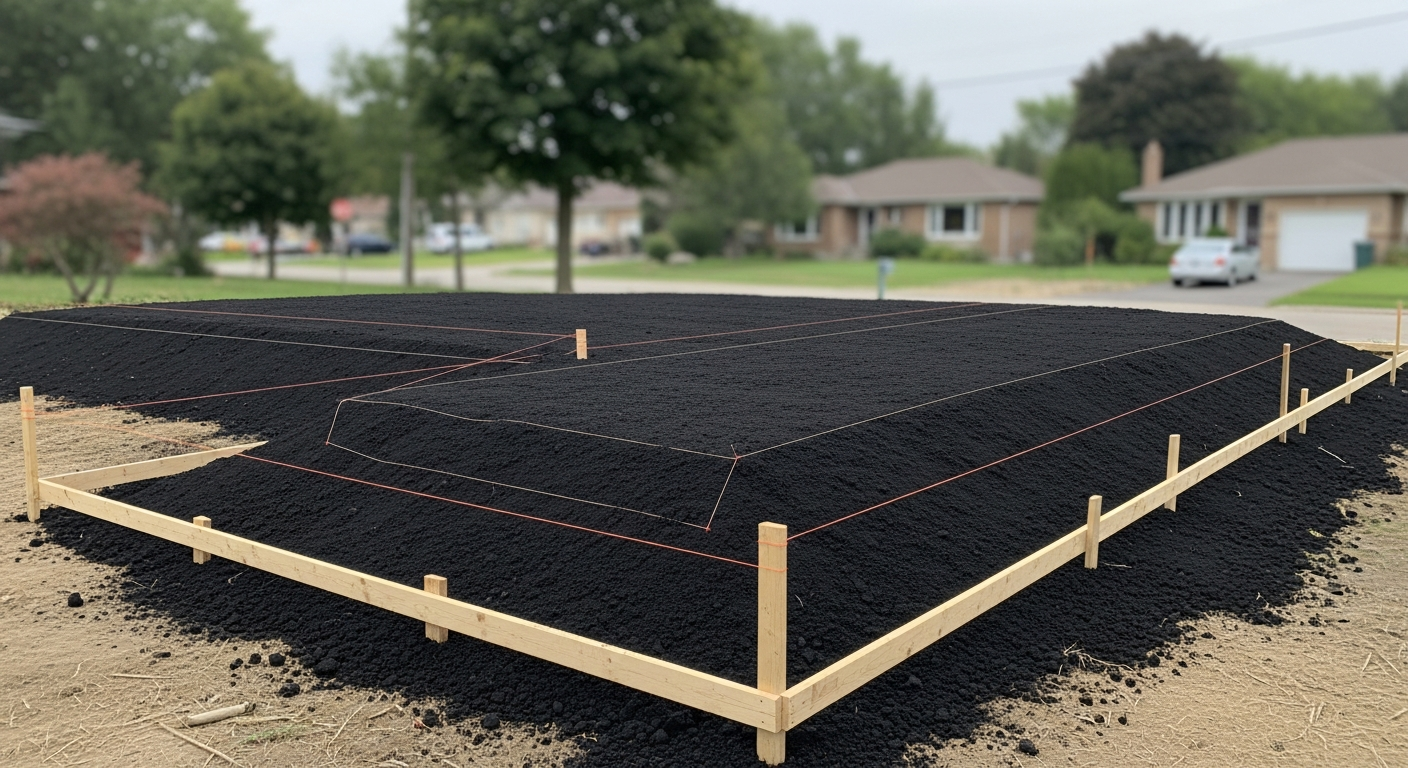
The parking lots, laneways, loading areas, back entrances and private walkways behind Main Street businesses are the owner's responsibility. These spaces are often small, sloped and shared between several buildings, with little room to store snow. A few things help:
- Agree on who is in charge. If three businesses share a back lot, decide who holds the contract and how costs are split before the first storm.
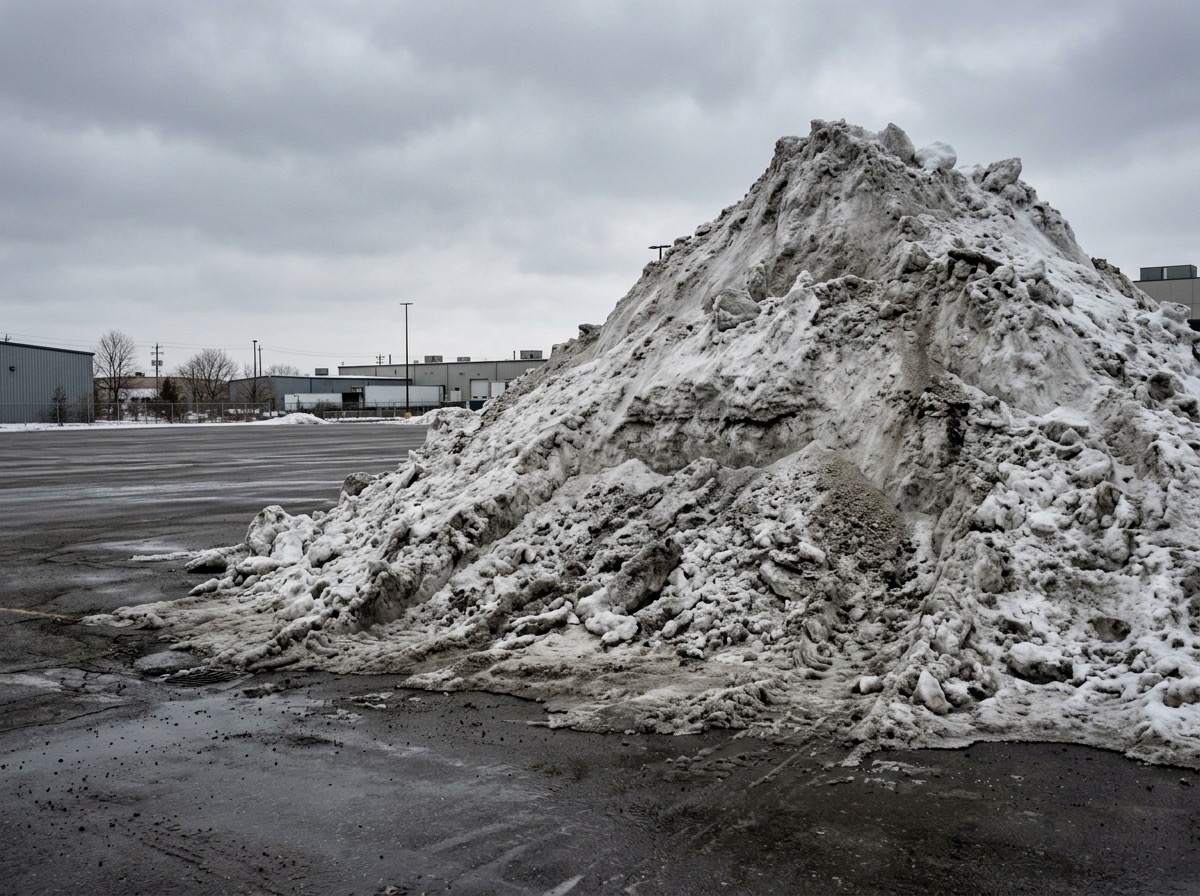
- Plan for hauling. Tight lots fill up fast in a snowbelt winter. Since snow cannot go onto the road, the contract should name a price for loading and hauling it away.
- Clear the back door, too. Staff entrances and delivery doors get heavy use early in the morning. Include them in the scope.
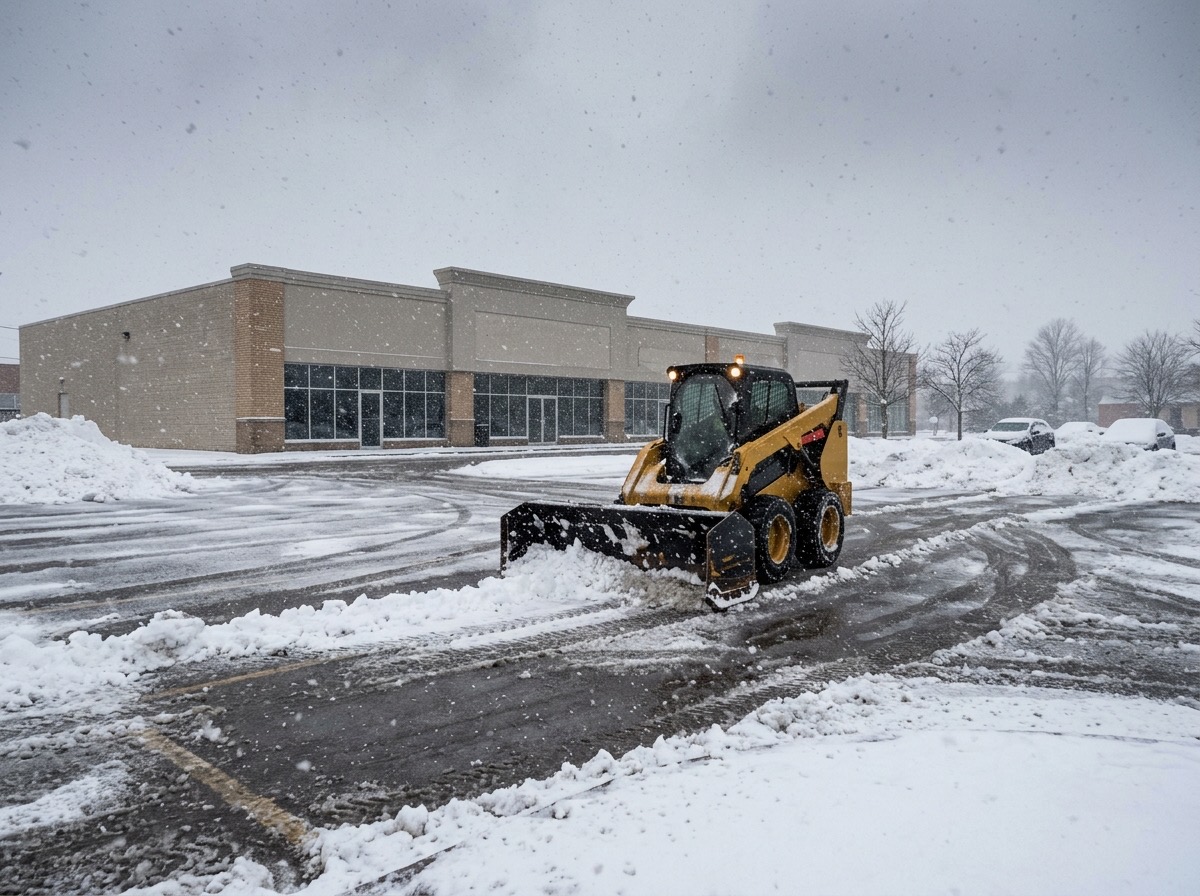
- Time it with the Town. Town haul crews work the downtown on their own schedule, often overnight. Your contractor should never push private snow into the banks or areas the Town has just cleared, since that is the deposit the by-law bans.
What should waterfront properties and marinas plan for off-season?
Marinas, boat storage yards and waterfront businesses on Penetang Bay are quieter in winter but not empty. Staff check on stored boats, insurers and owners visit, and emergency vehicles may need access. Key points:
- Keep a lane open to the office, to stored boats and to any fire route or hydrant.
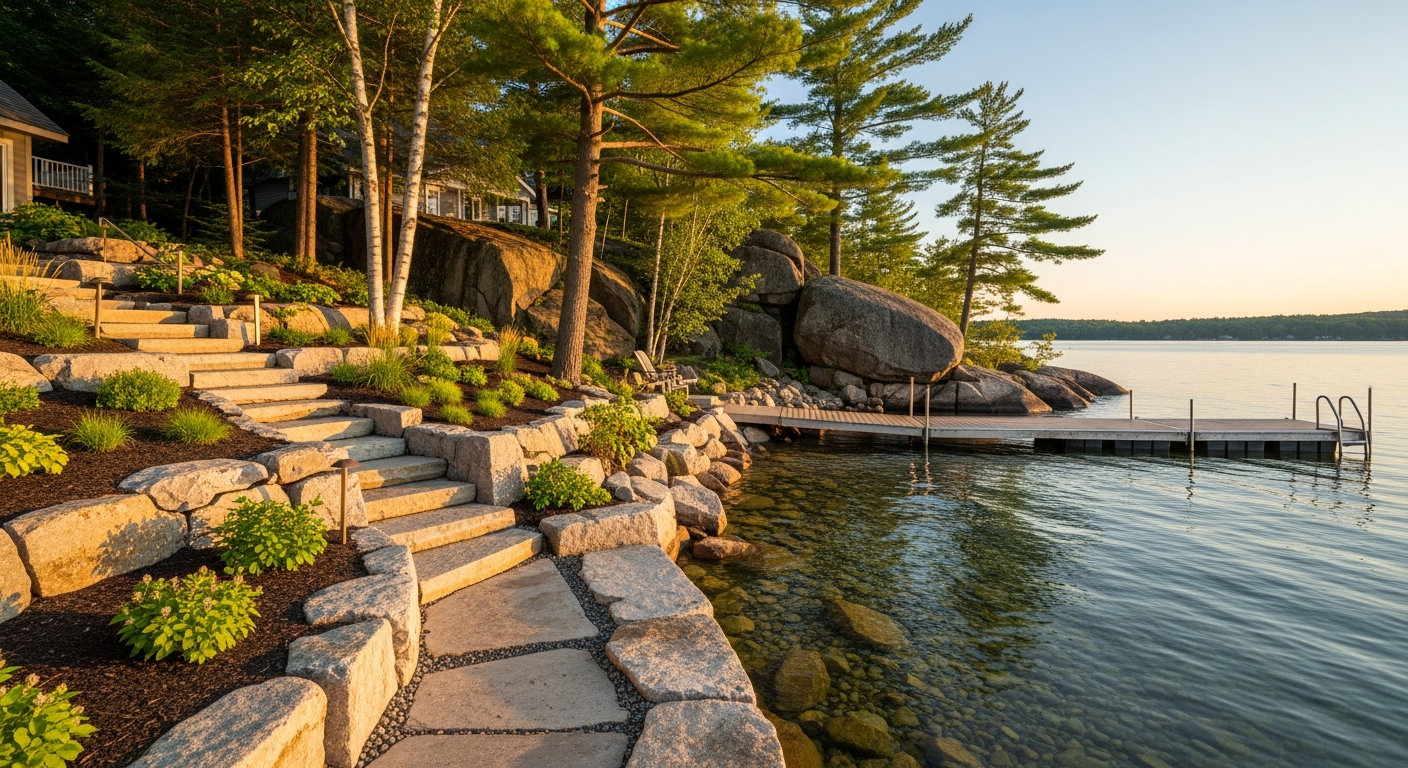
- Mark shorelines, docks, seawalls and armour stone so plow operators know where the edge is, especially when snow hides it.
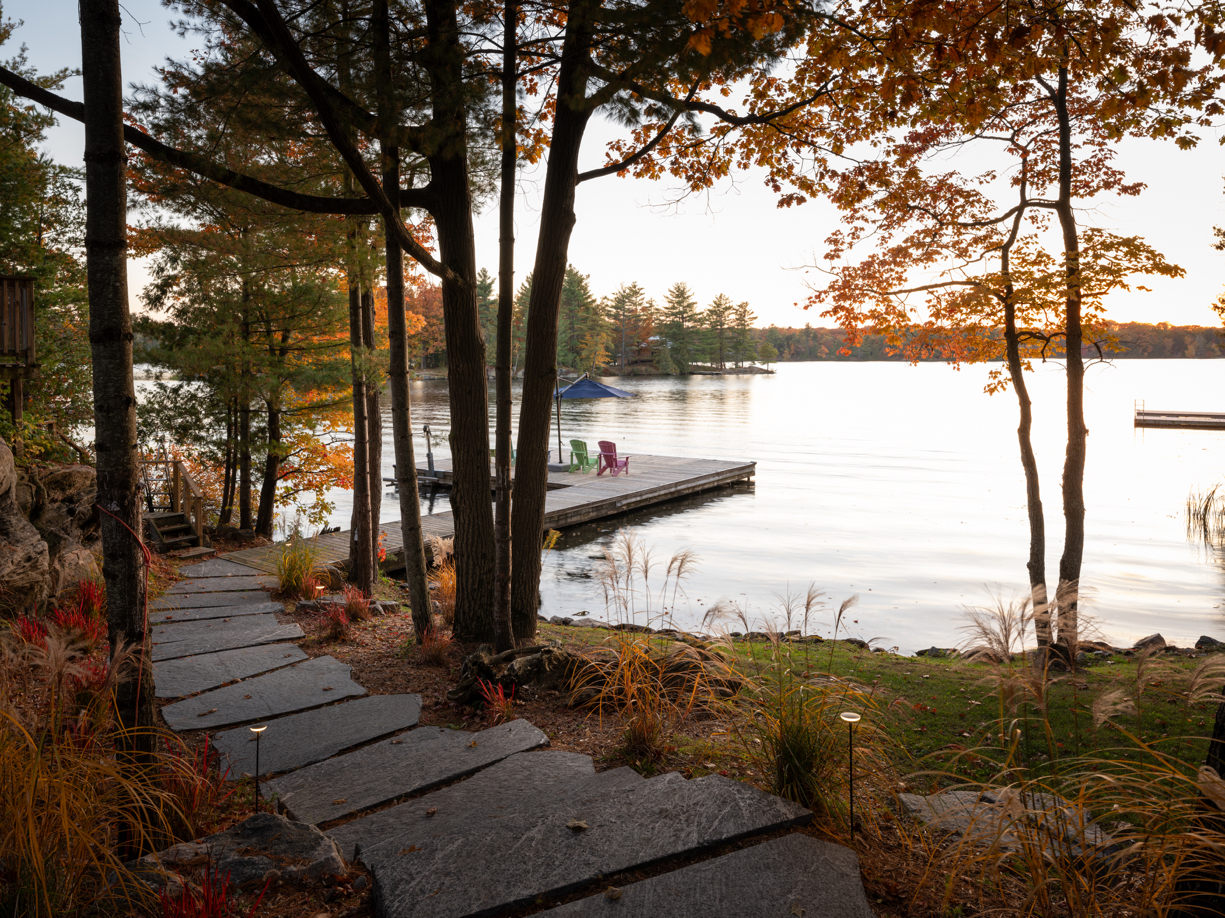
- Keep snow piles back from the water's edge and from shoreline plantings. Salted snow melting straight into the bay or onto a restored shoreline is not good for either.
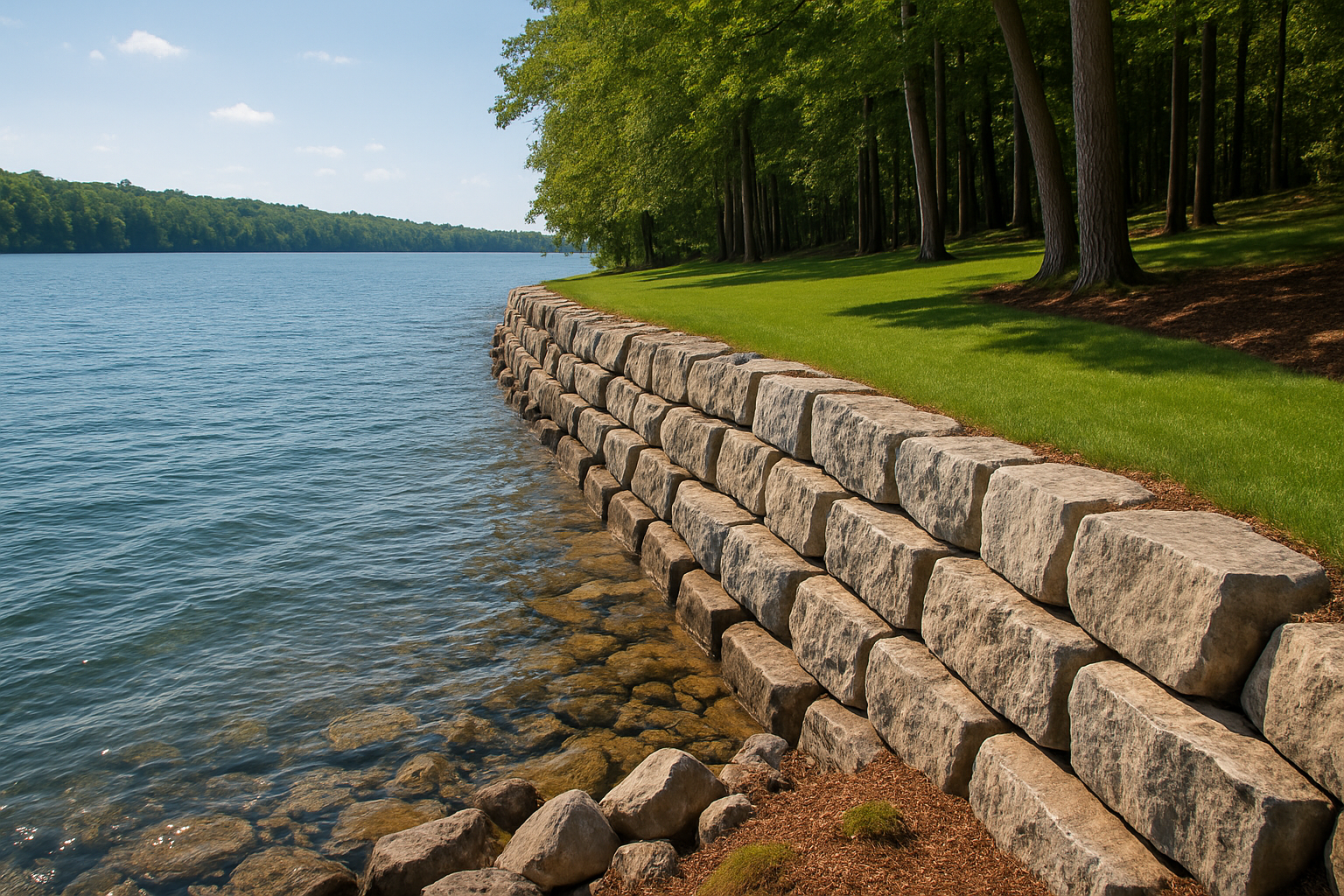
We build waterfront retaining walls and shoreline projects around Georgian Bay, so we know how easily a hidden wall cap or stone edge gets damaged under snow.
What do churches and medical offices need?
Both see people who are more likely to slip, at times that do not match a typical business day.
- Churches need lots and steps ready for Sunday services, plus weekday funerals and community events. Your contract should list those times and say when the site must be clear.
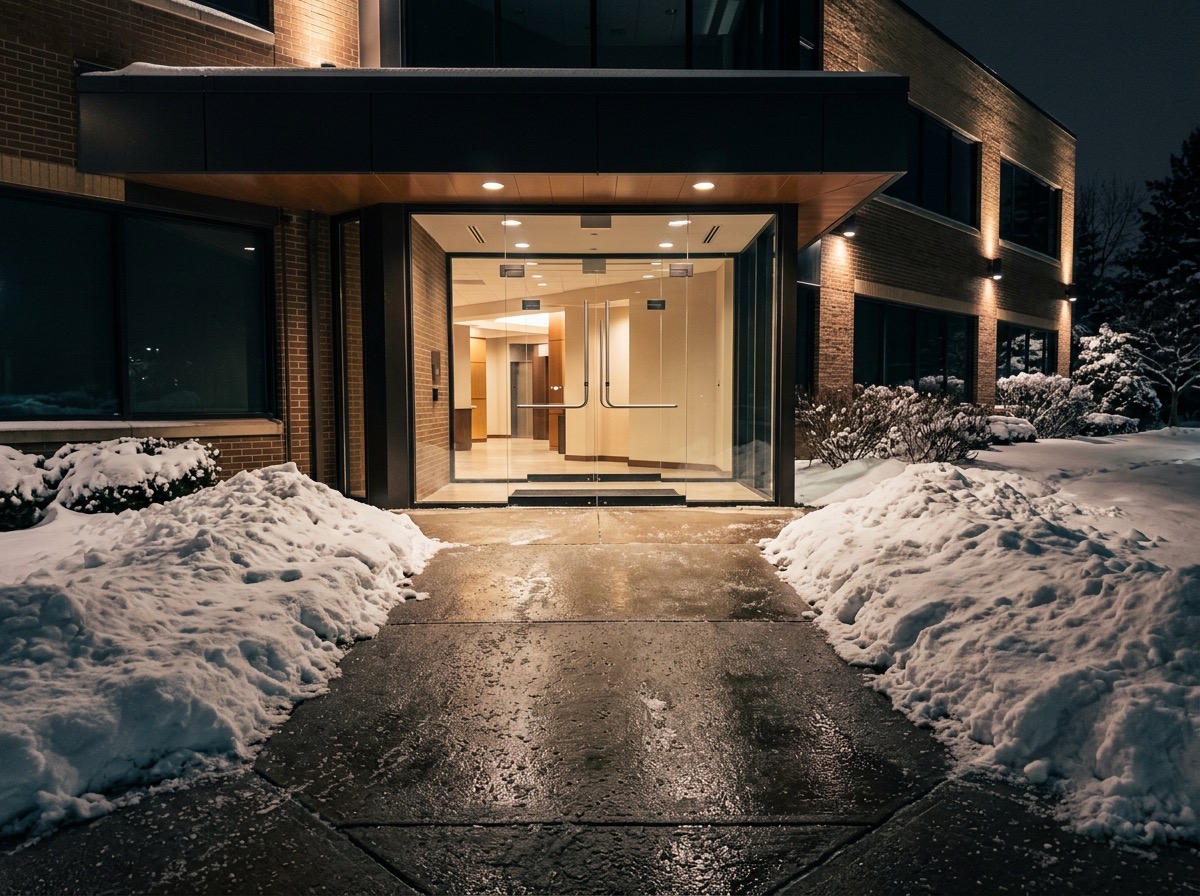
- Medical, dental and physiotherapy offices, including those around Jeffery Street, which the Town's snow policy flags as a hospital zone, see patients with canes, walkers and wheelchairs from early morning. Accessible parking spaces, ramps and the walkway to the door should be first in the priority order and salted before opening.
For both, records matter. In Ontario, a person hurt in a slip or fall on snow or ice must give written notice within 60 days, and a lawsuit can still follow up to two years later. Dated service logs and photos are what let you answer. Our guide to Ontario's 60-day snow and ice notice rule explains it in plain language.
How do you set up a commercial snow contract before the first big storm?
Here is the order we suggest. If the first squall has already come through, it is not too late.
- Book a site walk. Walk the property with your contractor. Note slopes, drains, hydrants, walls, steps, garden beds, accessible spaces and any shared areas.
- Draw a site map. Mark where snow will be stored, what gets cleared first, and what plows must avoid. Store it in writing so every operator follows it.
- Choose a contract model. Seasonal contracts give budget certainty; per-push or per-event contracts can cost less in a light winter but are unpredictable in a snowbelt year. Our guide to commercial snow removal costs in Midland and Penetanguishene compares them.
- Write down the details. The contract should name the trigger depth, salting triggers such as freezing rain, service hours and priority order, sidewalk and walkway scope, hauling pricing, damage reporting, proof of insurance, and how service is logged.
- Check references and records. Ask how the contractor logs visits and how fast you can get a copy. Our checklist for choosing a commercial snow removal contractor covers the questions to ask.
- Brief your tenants and staff. Tell them where to park overnight from November 1, who to call with a problem, and how to report a fall.
Why hire a landscaper for snow in Penetang?
We built the landscape, so we know where the edges are. A design-build landscaper knows which edges hide a curb, which bed is full of young plantings, and which slope sends meltwater toward a door. That means fewer plow-damaged curbs, lawns and armour stone, and snow piles placed where they will not kill plantings or flood in the spring thaw.
It also means one local contractor for the whole year. The same team that clears your lot in January can fix salt-burned turf, re-set a heaved step or refresh a garden bed in May. We are based right here on Fuller Avenue, and we serve Penetanguishene, Midland, Tiny Township, Tay Township, Victoria Harbour and Port McNicoll.
Book your Penetanguishene snow removal quote
Penetang winters reward the businesses that plan early. A site walk, a written contract and a clear site map turn a snowbelt winter into a routine one. We start every commercial snow job with a pre-season site walk and a written proposal.
Request your pre-season site walk and snow removal quote, learn more about snow removal in Penetanguishene, or see our commercial snow removal service for plazas, offices, condos and industrial sites across North Simcoe. Before the season starts, confirm current winter parking dates with the Town of Penetanguishene.
Plan your snow contract before the first squall.
We walk your site, map where the snow goes and send a written proposal. Plazas, offices, condos, churches and industrial yards.
Forty-Five Scapes did an amazing job on my property. I started with such a mess, mud and weeds and poor grading. I met with Mark and he put my mind at ease. He took my wants and needs and budget and created a vision. The crew was always on time and respectful and the end product was amazing. I look forward to many years with my amazing outdoor space.
Frequently asked questions
No. The Town's Traffic, Parking and Use of Highways By-law 2022-02 treats snow or ice on a roadway as obstructing a highway, and section 10(3) bans snow on any boulevard that does not adjoin your property, including snow pushed across the road. It applies to owners and their contractors. Keep snow on your own property, or have it hauled away when storage runs out.
Every year from November 1 to April 1, parking on Town streets is banned from 1 a.m. to 7 a.m. under section 31(2) of By-law 2022-02. Separately, you can never park where your vehicle gets in the way of snow clearing. Vehicles impeding plows can be ticketed and towed at the owner's expense, so give tenants a legal overnight spot on your lot.
After plowing and sanding are finished. Main Street from Beck Boulevard to Thompsons Road is a critical area in the Town's snow removal policy, along with nearby parts of Robert, Simcoe, Water, Peel, Fox and Church streets. Banks there are cleared once they reach about 0.6 metres and affect visibility or traffic, with a three-day target that depends on weather and resources.
No higher than 0.7 metres (2.3 feet) above road grade inside the sight triangle, under section 9(4) of By-law 2022-02. The triangle is measured 6 metres back along each street line from the corner. Corner plazas, churches and condos should mark it on the site map and keep storage piles elsewhere on the lot.