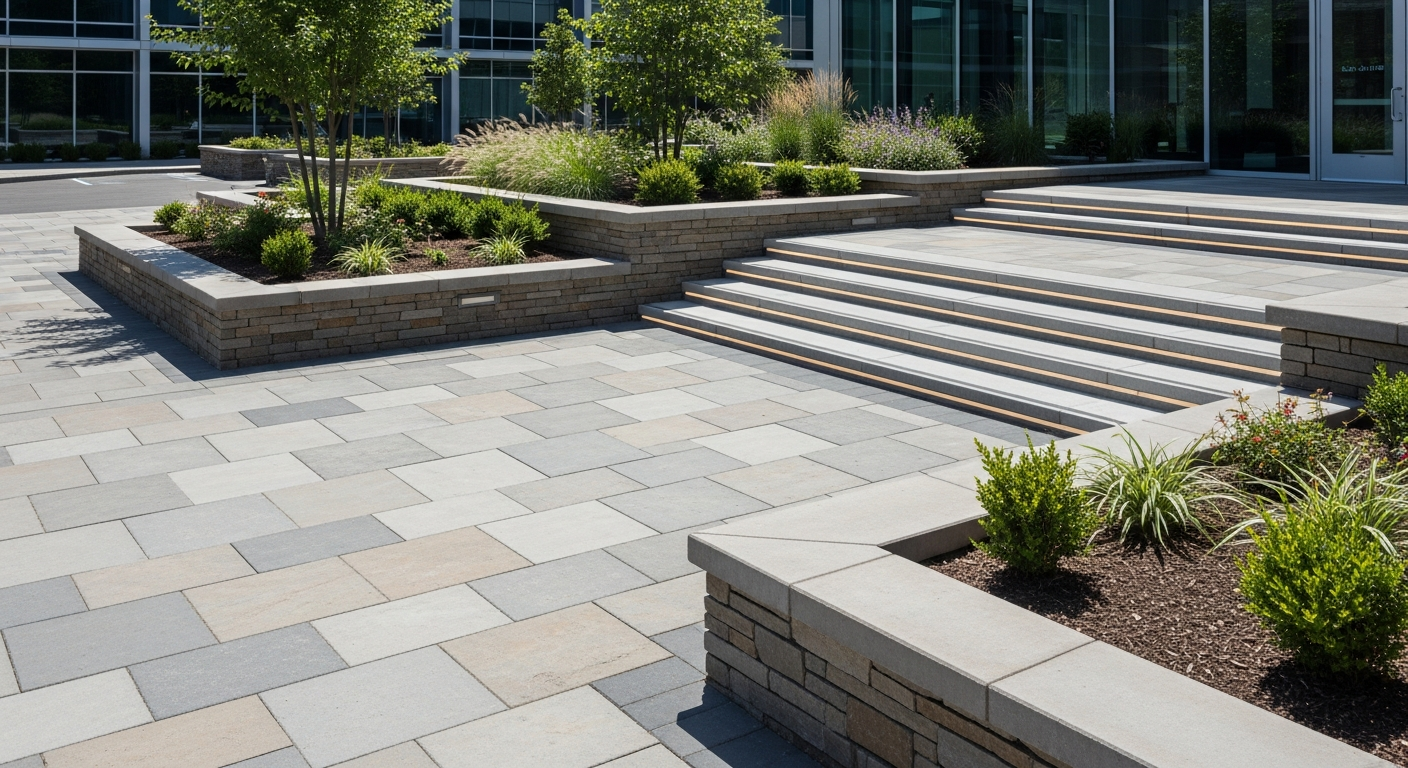
Choose a Midland snow contractor who gives you a written contract, an insurance certificate naming you as additional insured, a WSIB clearance, a snow-pile site map and timestamped logs. Ontario's 60-day notice rule means a claim can arrive weeks after a storm.
Key takeaways
Last updated: November 2026
To choose a commercial snow removal contractor in Midland, Ontario, look for one who gives you a written contract with a clear scope, a certificate of insurance naming you as additional insured, a WSIB clearance, a site map showing where snow will go, and timestamped logs and photos for every visit. Then check that they know local by-laws, have equipment sized for your site, and will keep in touch during storms.
Price matters, but on a commercial property the contractor is also taking on part of your safety and liability risk for the winter. A good hire keeps your lot open and your records clean. A poor one leaves you with missed salting, damaged curbs and landscaping, and nothing on paper if someone falls. This checklist walks through what to ask and why each item matters for a business in Midland, Penetanguishene and the surrounding area.
Key Takeaways
- Get a written contract that names trigger depth, service hours, priority order, salting trigger, sidewalk scope, pile locations, hauling rates and damage repair.
- Before the first snowfall, get a certificate of insurance naming you as additional insured and a current WSIB clearance. The clearance is free to look up and protects you from the contractor's unpaid premiums.
- Insist on timestamped service logs and photos. In Ontario, a snow or ice injury claim can arrive weeks later under the 60-day notice rule (Miller Thomson).
- Your contractor should know Midland and Penetanguishene rules on fire routes, hydrants, accessible spaces and snow on roads.
- Match the equipment to your site, agree on how you will hear from the crew during storms, and book a spring damage walk.
- A landscaper who also does snow knows where the edges are, which means fewer damaged curbs, sod and plantings.
What should a commercial snow removal contract include?
The contract is your best protection, so do not accept a one-line quote. A complete commercial snow contract should name:
- Trigger depth: the snowfall at which plowing and sidewalk clearing start.
- Service hours and priority order: when your site is cleared during a storm and where it sits on the route.
- Clear-by expectations: the time by which lots, entrances and walks should be open.
- Salting or sanding trigger: for example, after every plow, for ice, or for freezing rain.
- Sidewalk vs lot scope: exactly which walkways, ramps, stairs and entrances are included.
- Snow pile locations: marked on a site map.
- Hauling and relocation pricing: the rate if snow has to be trucked away.
- Damage reporting and repair: who reports it, how quickly, and who pays to fix it.
- Logs and proof of service: what records you receive and how often.
- Insurance: a certificate and additional insured status.
- Term, cancellation and fuel surcharge: how long it runs, how to exit, and whether fuel costs can be passed through.
The contract model matters too. Seasonal, per-push, hourly and hybrid contracts put the cost of a heavy winter in different places. Our guide to seasonal vs per-push snow removal contracts explains which fits which kind of business.
Insurance and additional insured status
If someone slips on your property, the claim may name both you and your snow contractor. You want to know the contractor carries commercial general liability insurance, and ideally that your business or condo corporation is named as an additional insured on their policy. Ask for a certificate of insurance before the season starts, check that the dates cover the whole winter, and keep a copy on file.
We are not insurance advisors, so talk to your own broker about what limits and wording are right for your property. The key point is simple: get the paperwork in hand before the first storm, not after an incident.
WSIB clearance certificate
In Ontario, a business that hires a contractor can be held responsible for that contractor's unpaid workplace insurance premiums. A WSIB clearance is the WSIB's confirmation that the contractor's account is up to date. While it is valid, the WSIB will not come after you for what the contractor owes. Clearances are free, you can look one up online without logging in, and each one lasts up to 90 days, so check again partway through the winter.
Read the damage and indemnity clauses
Many snow contracts follow Landscape Ontario's standard form, and two of its clauses surprise owners. First, the owner accepts that some damage is foreseeable, including salt damage to concrete, asphalt, sod and plantings, and plow scrapes on curbs and asphalt. The contractor only has to repair damage that was not foreseeable. Second, the contractor's promise to cover claims holds only if the owner reports a claim within 48 hours of learning about it. Neither clause is unreasonable, but you should know whether your contract has them. If your property has armour stone, interlock or new sod at the lot edge, ask for those areas to be staked and named in the contract.
Why do you need a site map with snow pile locations?
Where the snow goes is one of the most important decisions of the winter, and it should be made in the fall, not at 3 a.m. during a squall. A site map should show:
- Where piles go, and where they must never go.
- Fire routes, hydrants, accessible spaces and entrances that must stay clear.
- Curbs, islands, bollards, drains, light standards and anything that hides under snow.
- Landscaped areas, sod, garden beds and armour stone to protect.
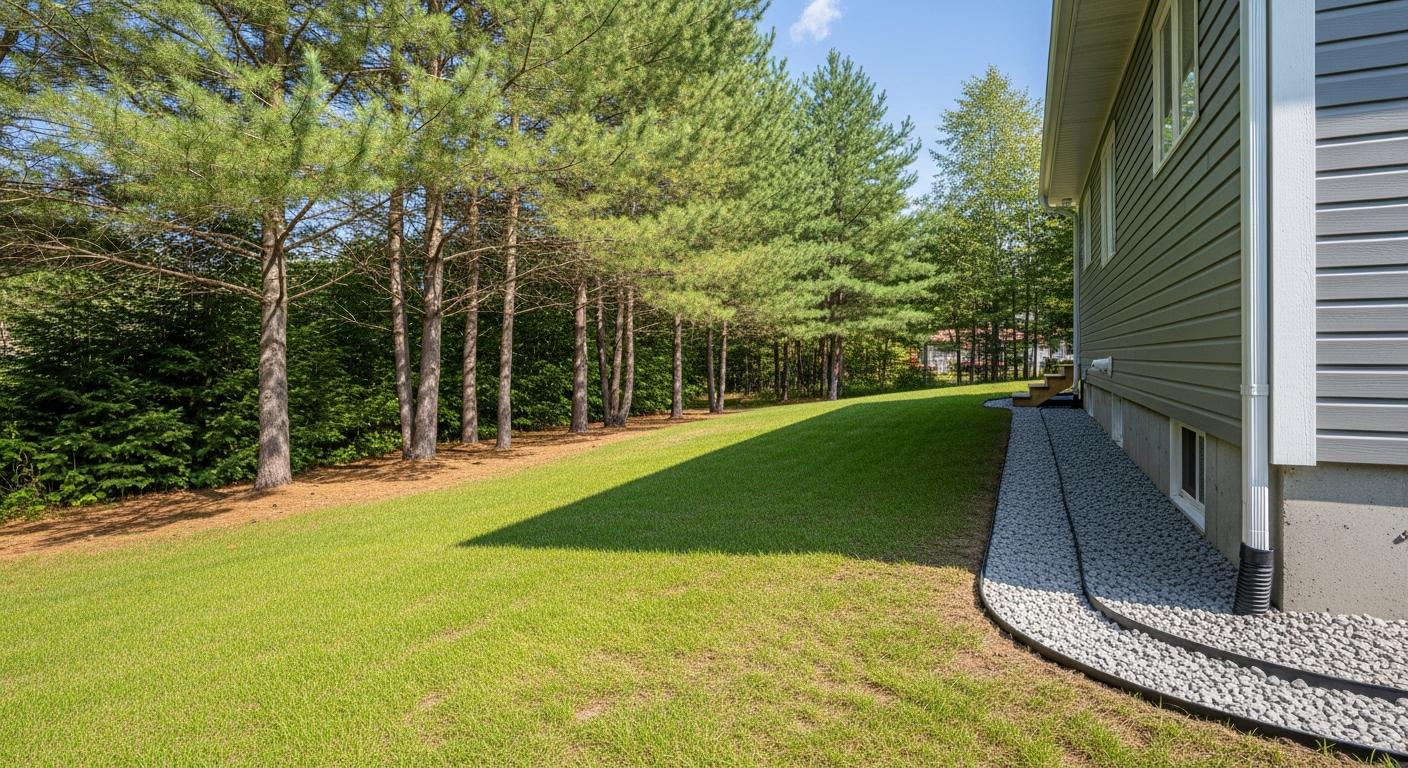
- Where meltwater will drain when piles thaw in spring.
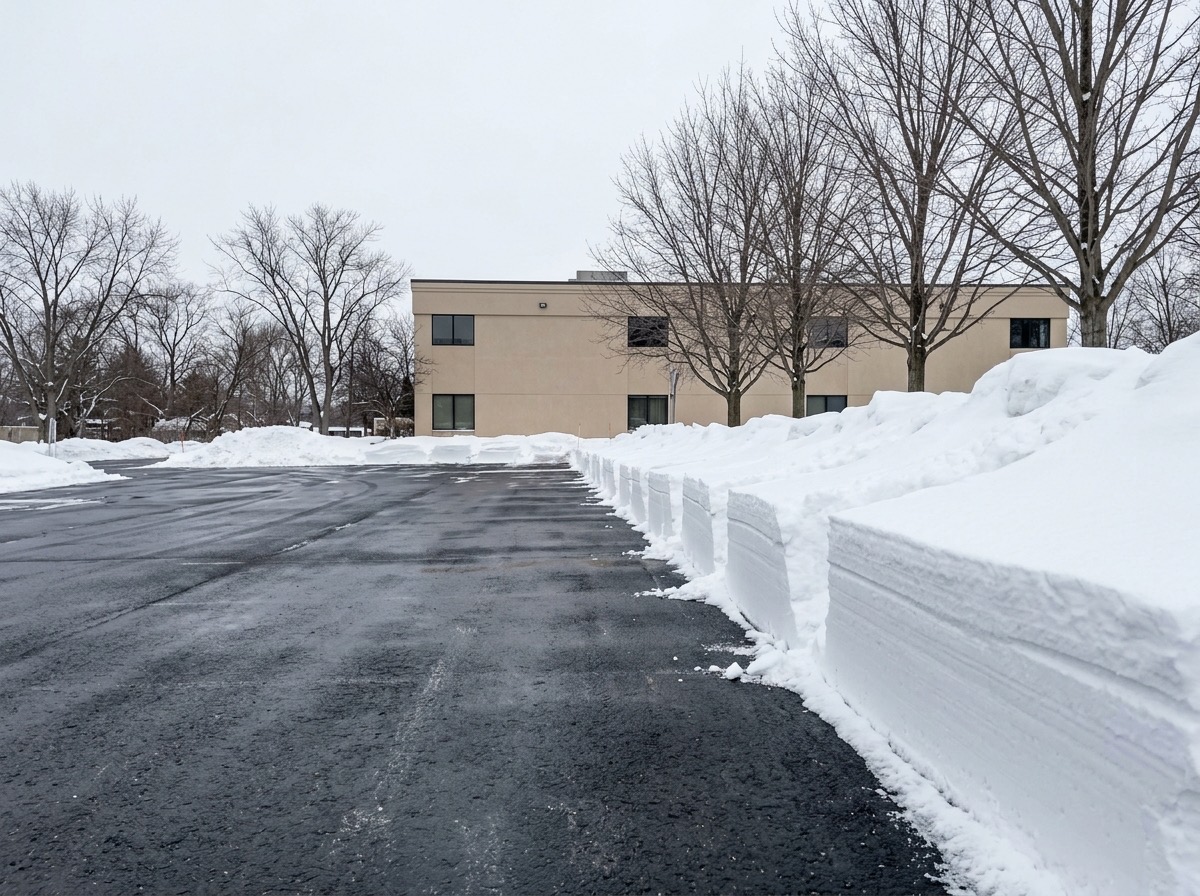
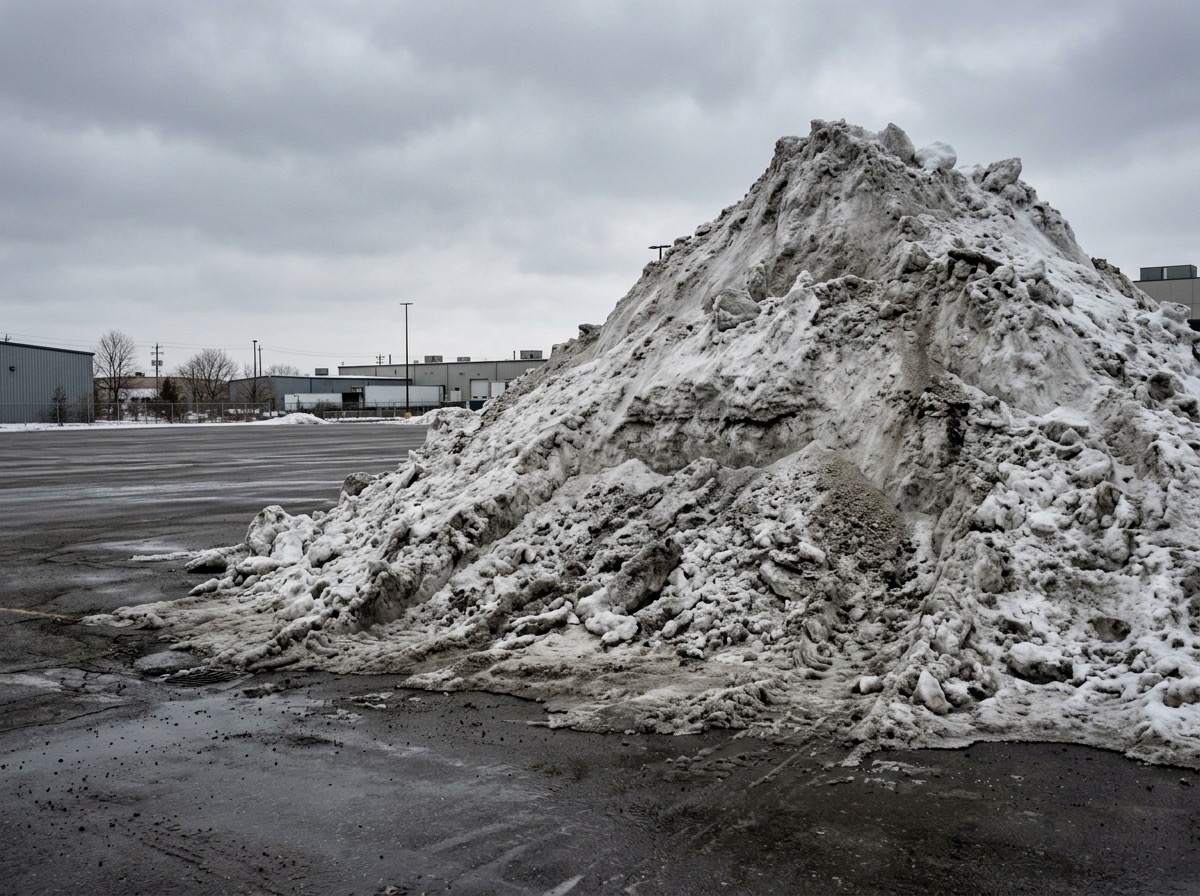
Piles placed on top of plantings can crush shrubs and soak the soil with salt. Piles placed uphill of a building or a low spot can flood an entrance during the thaw. A contractor who looks at grading and drainage when planning piles saves you trouble in April.
Field drawing 17 · Snow storage
Decide where the snow goes before it falls
A site map like this belongs in every commercial snow contract.
Swipe to see the full drawing →
- Store snow on the low corner. Pick low-value ground on the downhill side, with no plantings, that a loader can reach all winter.
- Near the drain, not on it. Meltwater should reach a working catch basin. A pile sitting on the grate floods the lot.
- Keep hydrants clear. Midland By-law 2025-53 bans snow on or immediately next to a fire hydrant, or anywhere that blocks access to it.
- Keep the fire route open. The by-law also bans piling snow in a fire route or an accessible space, on private property too.
- Clear accessible stalls first. Put them and the path to the entrance at the top of the priority order.
- Never on plantings. Salty snow piled on beds, islands and tree roots crushes and poisons them, and shows up as a spring repair bill.
- Keep exits low. Piles at the corners of an exit block drivers' view of the sidewalk and street. When storage fills, haul it off site.
Why do service logs and photos matter so much in Ontario?
Ontario's Occupiers' Liability Act was amended in 2020 by Bill 118. Under the new section 6.1, no action for personal injury caused by snow or ice can be brought against an occupier, or the independent contractor hired to remove snow or ice, unless written notice is personally served or sent by registered mail to at least one of them within 60 days of the injury, stating the date, time and location. Notice to one counts against all of them. There are exceptions, for example if the injured person died, or if a judge finds a reasonable excuse and the defence is not prejudiced. The rule applies to incidents on or after January 29, 2021, and it does not change the general two-year limitation period (BLG).
The Act also says an occupier that receives a notice must send a copy to its snow contractor, and the contractor must send one to the occupier. Write that into your contract as a same-day obligation on both sides, with a named contact for each.
In practice, this means a claim can land on your desk weeks after the storm in question. By then, nobody remembers whether the lot was salted at 5 a.m. or 9 a.m. That is why records matter. Ask your contractor for:
- Timestamped logs showing arrival and departure for every visit.
- What was done on each visit: plowing, shovelling, salting, sanding.
- Photos of the site after service, especially entrances and walkways.
- Notes on conditions, such as freezing rain or drifting.
- Easy access to those records when you need them, not only on request at the end of the season.
Good records do not replace good service, but without them, good service is hard to prove.
What an Ontario court expects on salting
Records only help if the work was done on time. In Musa v. Carleton Condominium Corporation No. 255 (2023), Ontario's Court of Appeal upheld a finding that a snow contractor was liable for a fall on a condo roadway that had been plowed but not salted. Salt went down about seven hours after the storm began, three and a half hours after the operator arrived, and an hour and a half after the fall. The court focused on the lag between clearing and salting. Ask any bidder how soon salt follows the plow on your site, and get the answer in writing.
Does your contractor know Midland and Penetanguishene snow rules?
Local by-laws affect where snow can go and when vehicles can park. A good contractor builds these into the plan.
Midland
Midland's Snow Removal By-law 2025-53 regulates removing and piling snow on public and private property. It prohibits piling snow on a boulevard not next to your property, on a neighbour's property, over Town drains, or on a boulevard where it blocks a driver's line of sight. It also bans snow on or near fire hydrants, in accessible parking spaces and in designated fire routes, including on private property. The by-law applies to anyone who "permits or aids" the dumping, and the Town can order the property owner to fix it. If the owner does not, the Town can do the work and add the cost to the tax bill. A contractor who ignores the by-law leaves you with the bill.
Midland's winter overnight parking restriction also applies from November 15 to April 1, midnight to 7 a.m., on Town streets and municipal lots, regardless of weather. If your staff or tenants rely on street parking overnight, plan for that. Check the Town's site for current-season dates.
Penetanguishene
Penetanguishene prohibits depositing snow or ice onto Town roadways or boulevards under its Traffic, Parking and Use of Highways By-law 2022-02. For businesses on Main Street with little room to store snow, that often means hauling. The Town also has overnight winter parking restrictions, so confirm the current season's dates and hours with the Town before relying on street parking.
Is the equipment matched to your site?
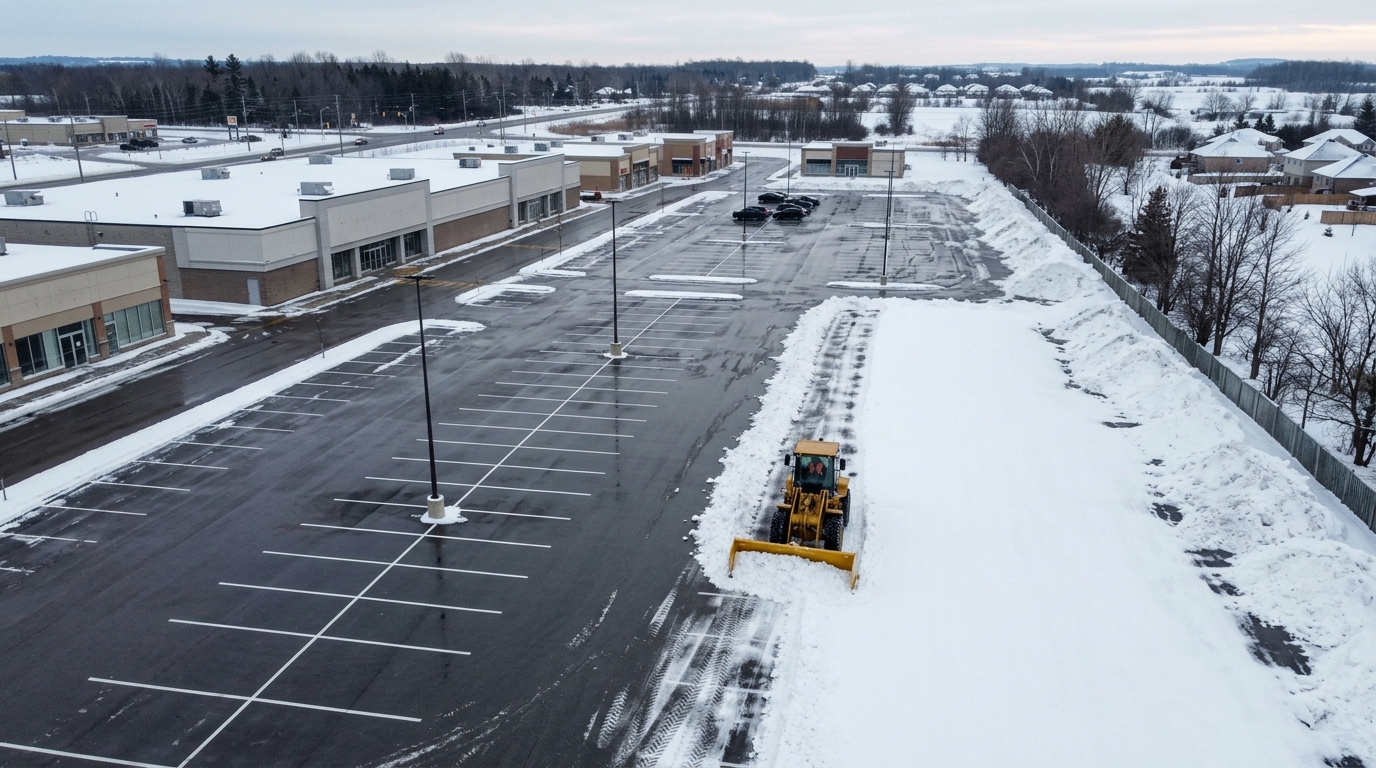
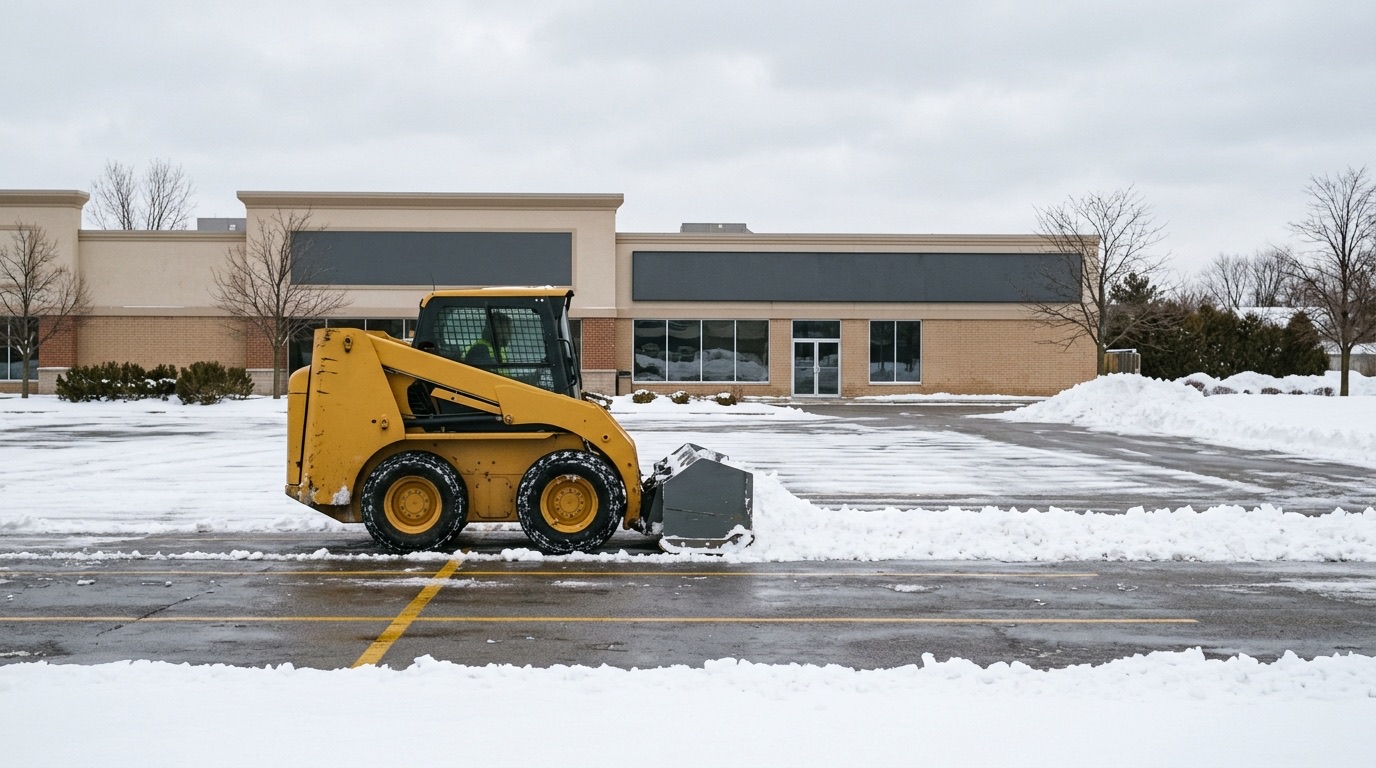
Bigger is not always better. A wide plow on a loader is efficient on an open industrial yard near Highway 93, but it can be a liability in a tight plaza on King Street with islands and parked cars. Ask the contractor what they plan to use on your property and why:
- Trucks or loaders sized for the lot and its obstacles.
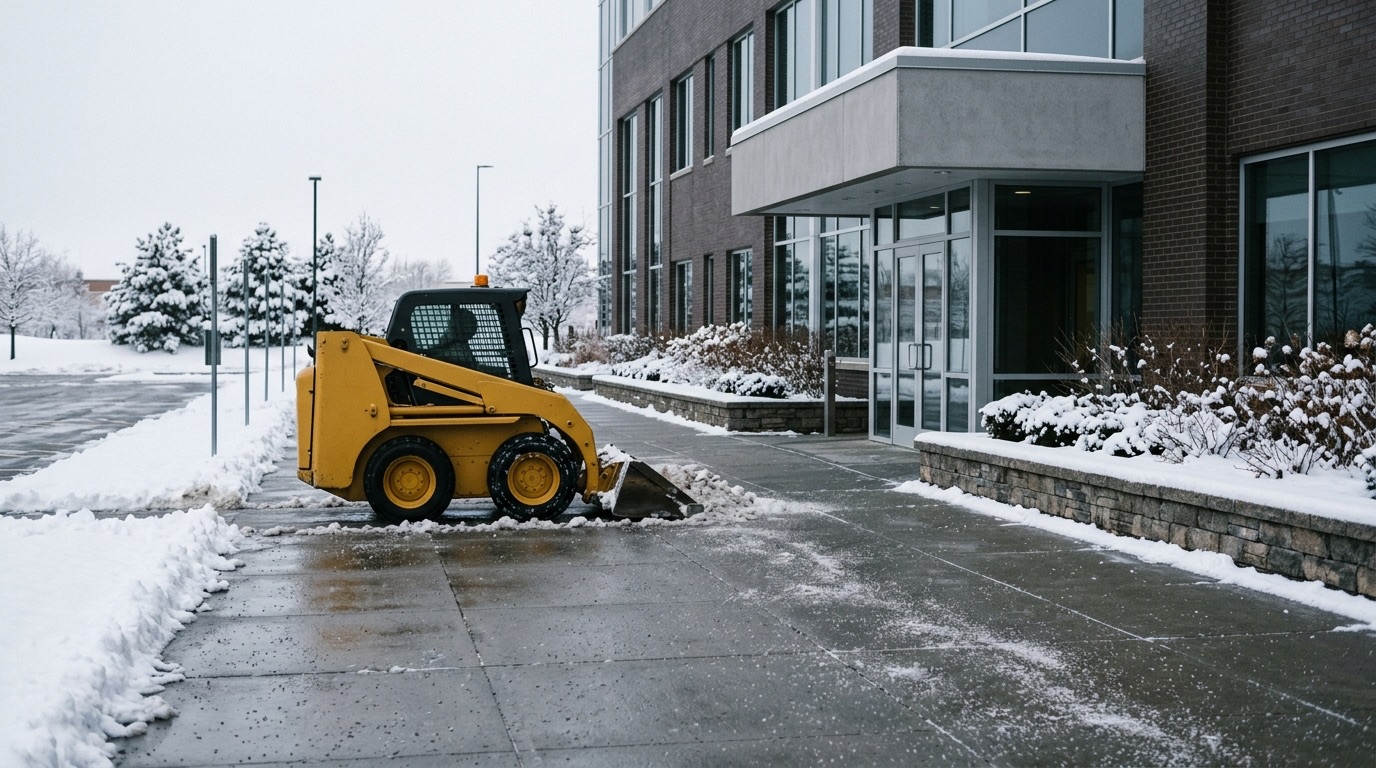
- Smaller equipment or hand crews for sidewalks, ramps and entrances.
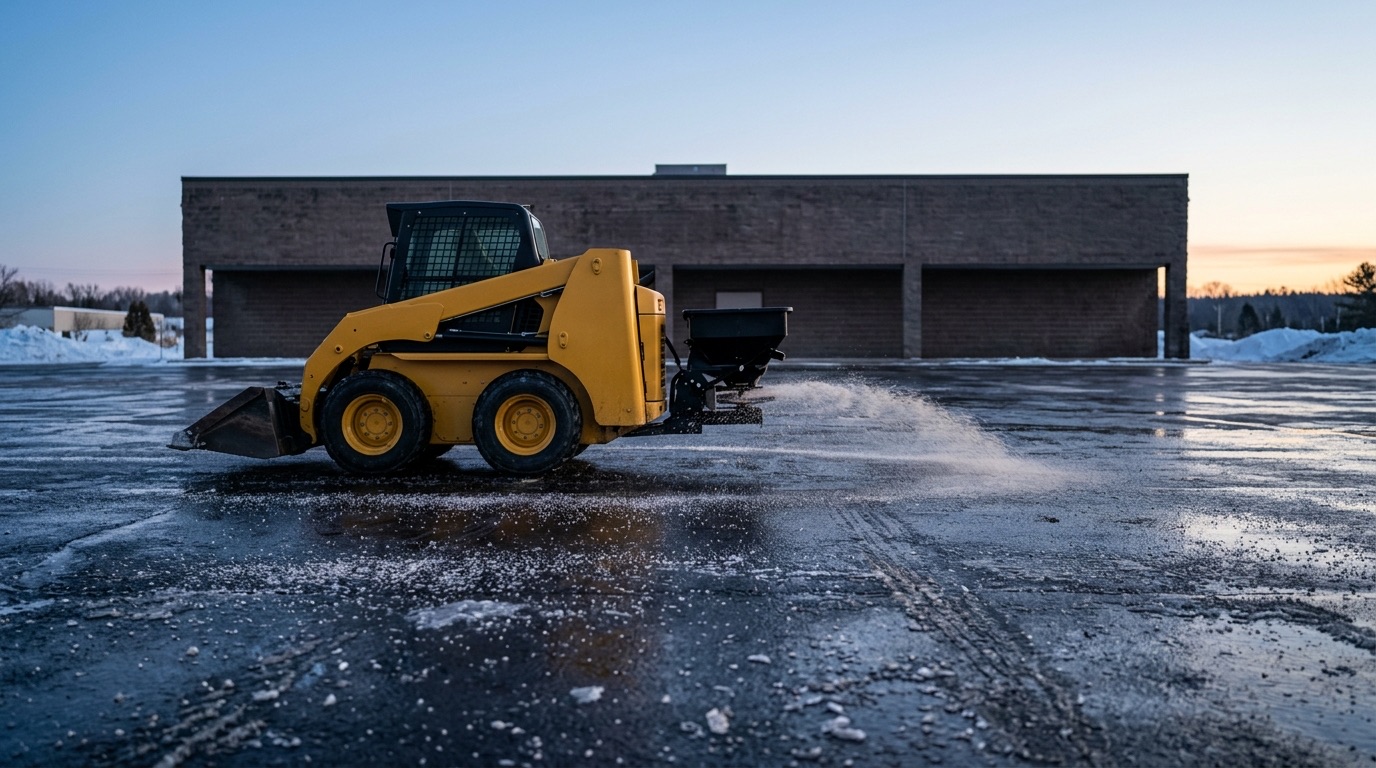
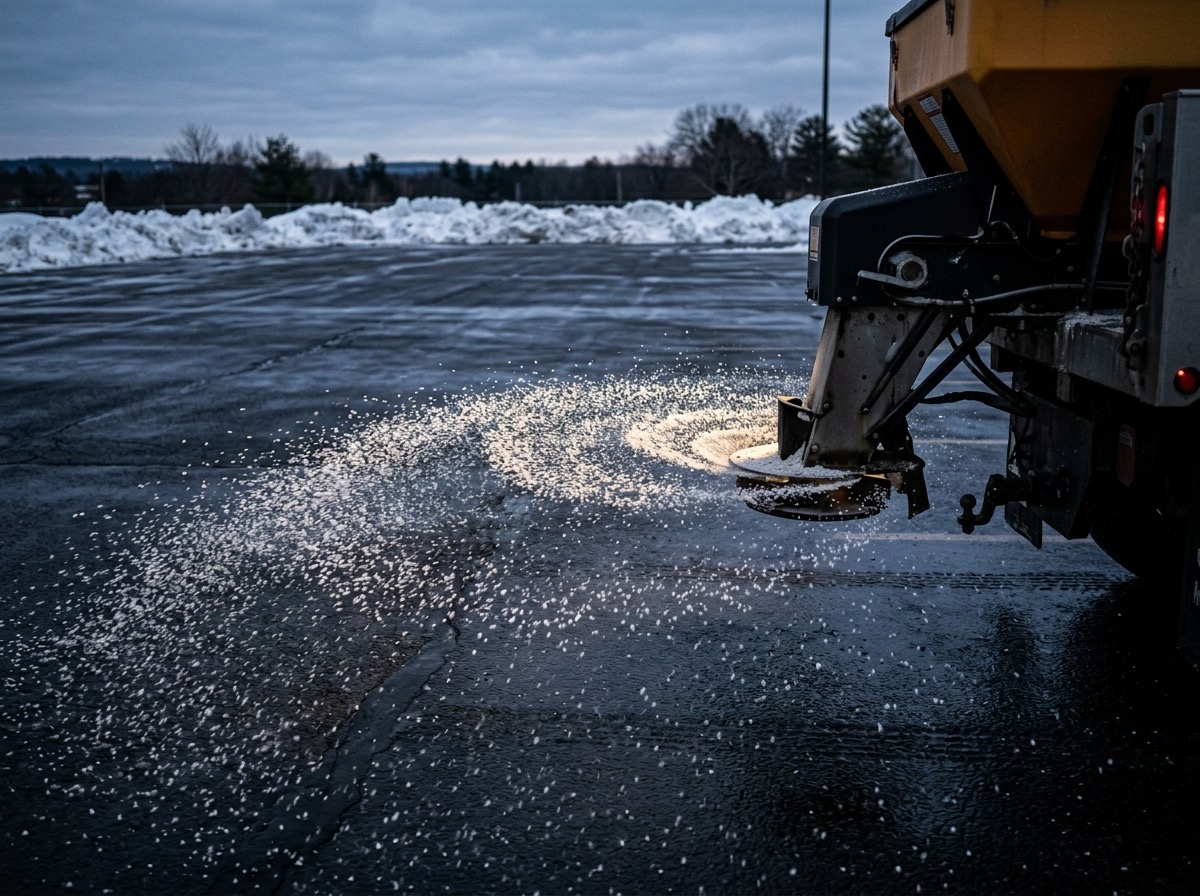
- Spreaders suited to the salt or de-icer they plan to use, and calibrated so the rate is known. The Smart About Salt Council keeps a directory of certified contractors, which is one way to check whether a bidder has formal salt training.
- A plan for hauling if piles fill up.
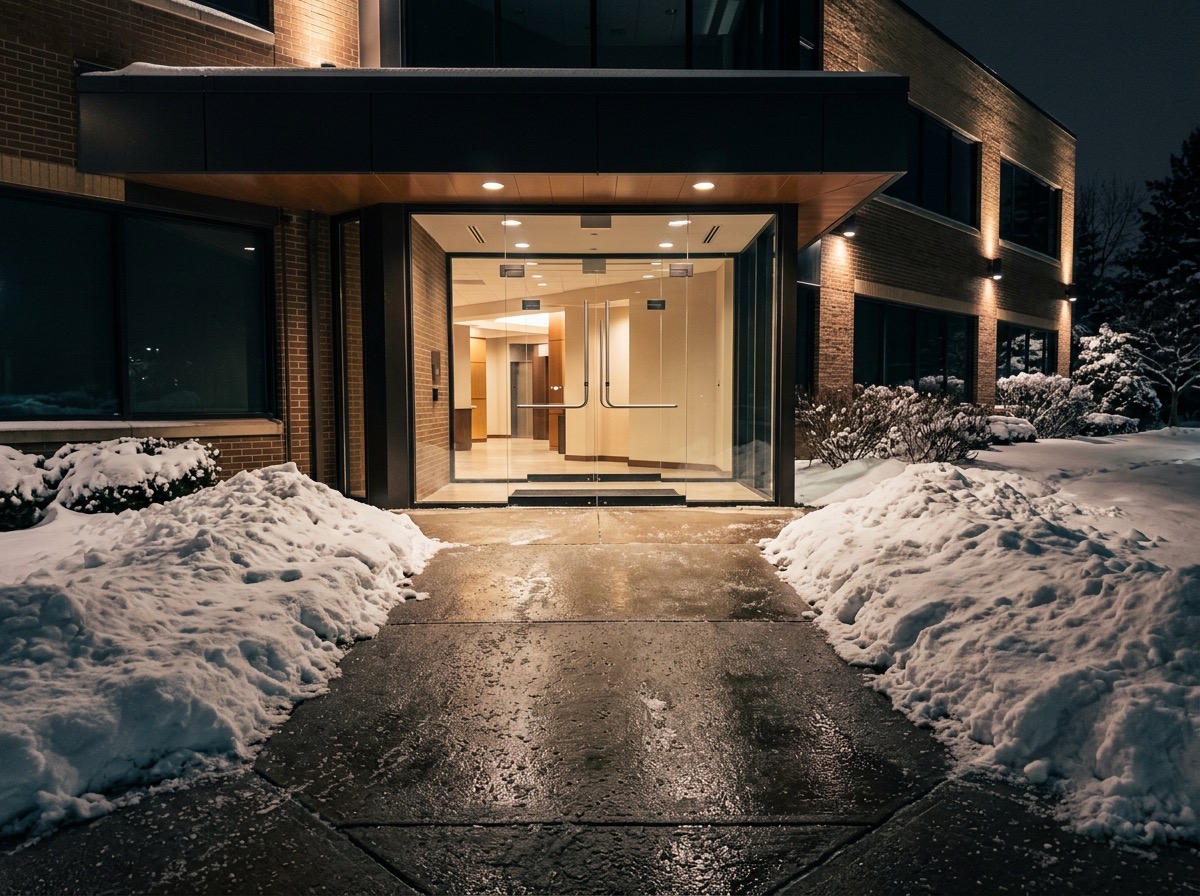
Sidewalks are often the most important part of the job for liability, so ask specifically how they are handled. Our sidewalk snow removal and parking lot snow removal pages describe how we scope each.
How will they communicate during a storm?
Storms are when you most need to hear from your contractor. Before the season, agree on:
- One named contact for your property and a backup.
- How you will be notified that service is complete, and when.
- How to request an extra visit or salting, and how fast it will be confirmed.
- How problems, such as a blocked entrance or a car left in the way, will be reported.
Georgian Bay squalls can roll in quickly and stay put for hours. Agreeing on communication in the fall avoids the 7 a.m. phone calls when the lot is half done and staff are arriving. Before you sign, also ask for two references from similar commercial sites nearby, and call them about the worst storm of last winter.
Will they walk the site with you in spring?
Even careful crews sometimes catch a curb edge or scuff a lawn. What matters is how it is handled. Ask whether the contractor will do a spring damage walk with you once the snow is gone, note any damage to curbs, asphalt, sod, plantings or hardscape, and explain how repairs will be made.
Salt damage often shows up in spring too: brown strips of turf along walks and drives, evergreens browning from the needle tips back, and buds that fail to open. Early spring flushing, gypsum and reseeding or re-sodding can help. Our sod installation crew handles that kind of repair after the thaw.
Why hire a landscaper for commercial snow removal?
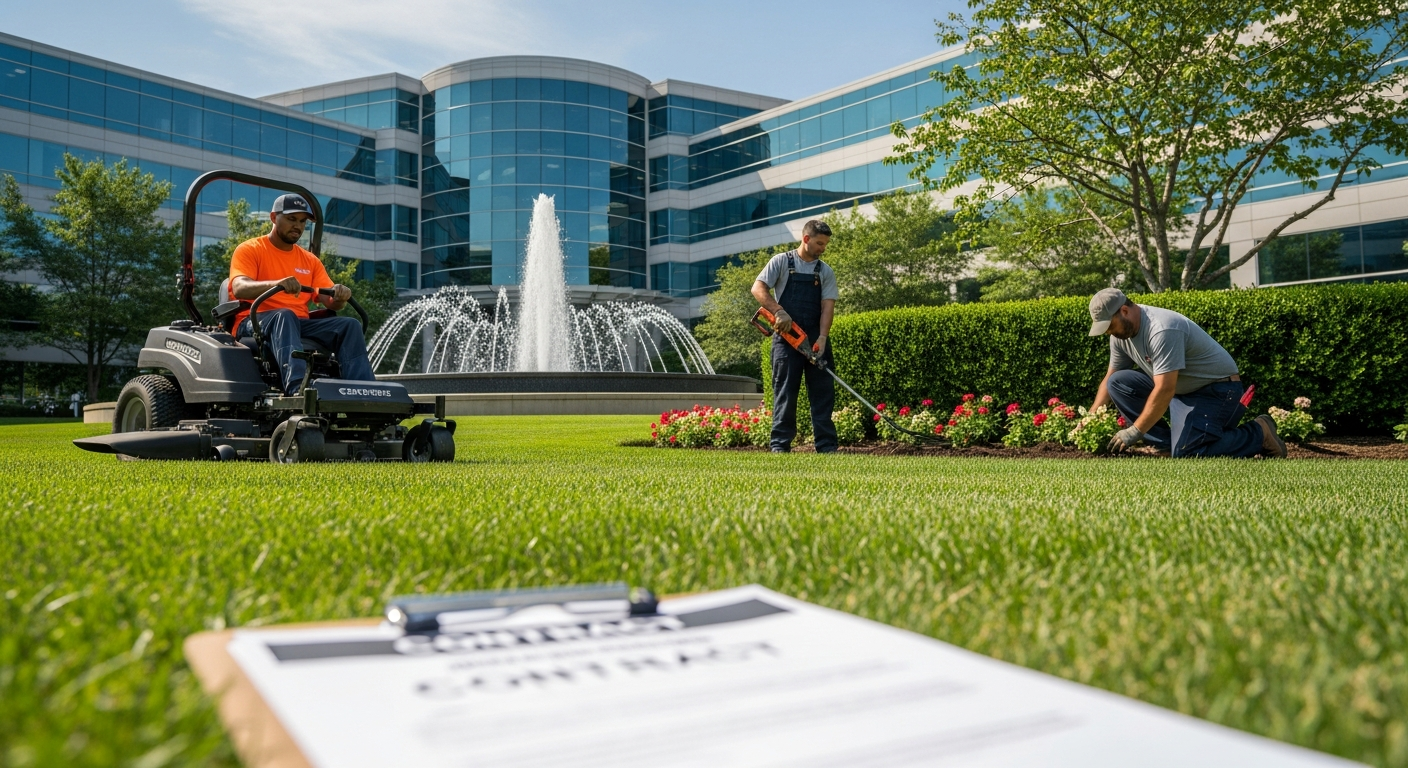
We build the edges that snow crews hit. Curbs, interlock, retaining walls, armour stone, garden beds and sod are our daily work from spring to fall, so we know what is under the snow and how easily it gets damaged. That shapes how we plan pile locations, which way we push, where we salt and how we drain the thaw.
It also means one contractor all year. The people who clear your lot in February are the same people who can fix a damaged boulevard or tired plantings in May. For property managers, condo boards and plaza owners around Midland Bay, Penetang Bay, Victoria Harbour, Port McNicoll and Tiny and Tay townships, that saves a second hire and a lot of finger-pointing. If you are still budgeting, our guide to commercial snow removal cost in Midland and Penetanguishene covers published Ontario price ranges and what drives them.
Start with a pre-season site walk
We provide commercial snow removal across Midland, Penetanguishene and southern Georgian Bay. See our Midland snow removal page for the area we cover. Request a snow removal quote and we will walk your property, talk through pile locations and scope, and send a written proposal you can hold up against this checklist.
Plan your snow contract before the first squall.
We walk your site, map where the snow goes and send a written proposal. Plazas, offices, condos, churches and industrial yards.
Forty-Five Scapes did an amazing job on my property. I started with such a mess, mud and weeds and poor grading. I met with Mark and he put my mind at ease. He took my wants and needs and budget and created a vision. The crew was always on time and respectful and the end product was amazing. I look forward to many years with my amazing outdoor space.
Frequently asked questions
Ask how soon salt follows the plow on your site, where piles will go on a site map, and who reports and pays for damage. Ask for an insurance certificate naming you as additional insured, a current WSIB clearance, and two references from similar sites you can call. Finally, ask whether their contract treats curb and salt damage as foreseeable.
A WSIB clearance confirms a contractor's workplace insurance account is in good standing. With a valid one, the WSIB will not hold your business liable for premiums the contractor owes. Clearances are free, you can check one online without logging in, and each lasts up to 90 days. Check again partway through a long winter contract.
Midland's Snow Removal By-law 2025-53 bans snow on or near fire hydrants, in accessible parking spaces, in fire routes, over Town drains, on a neighbour's land, and on boulevards where it blocks a driver's view. The Town can order the owner to correct it and add the cost of its own cleanup to the tax bill, so plan pile locations on a site map before winter.
A landscaper who also does snow knows where curbs, sod, beds and armour stone sit under the snow, so piles and plowing can be planned to avoid damage. That matters because many snow contracts treat edge and salt damage as foreseeable and leave it to the owner. Hiring one contractor all year also means the team that plows in winter can fix any damage in spring.