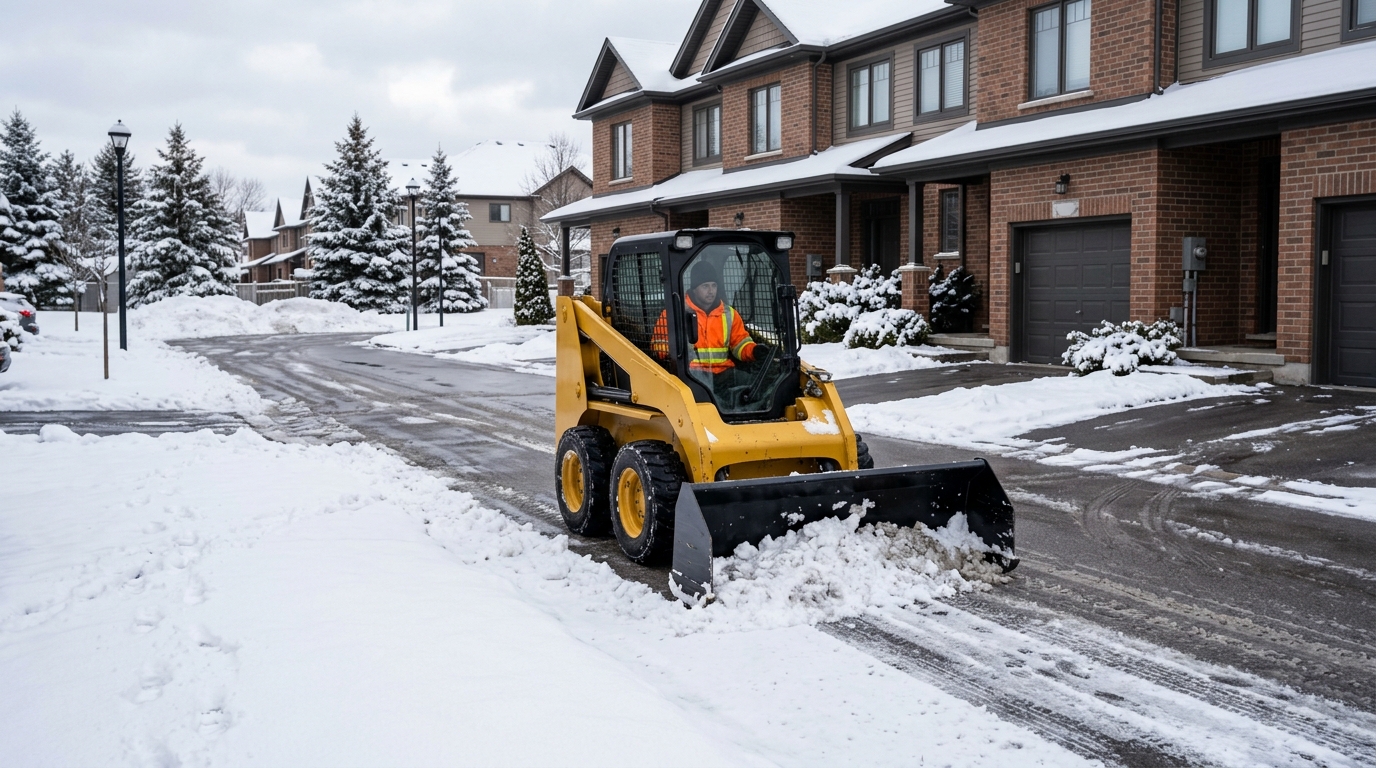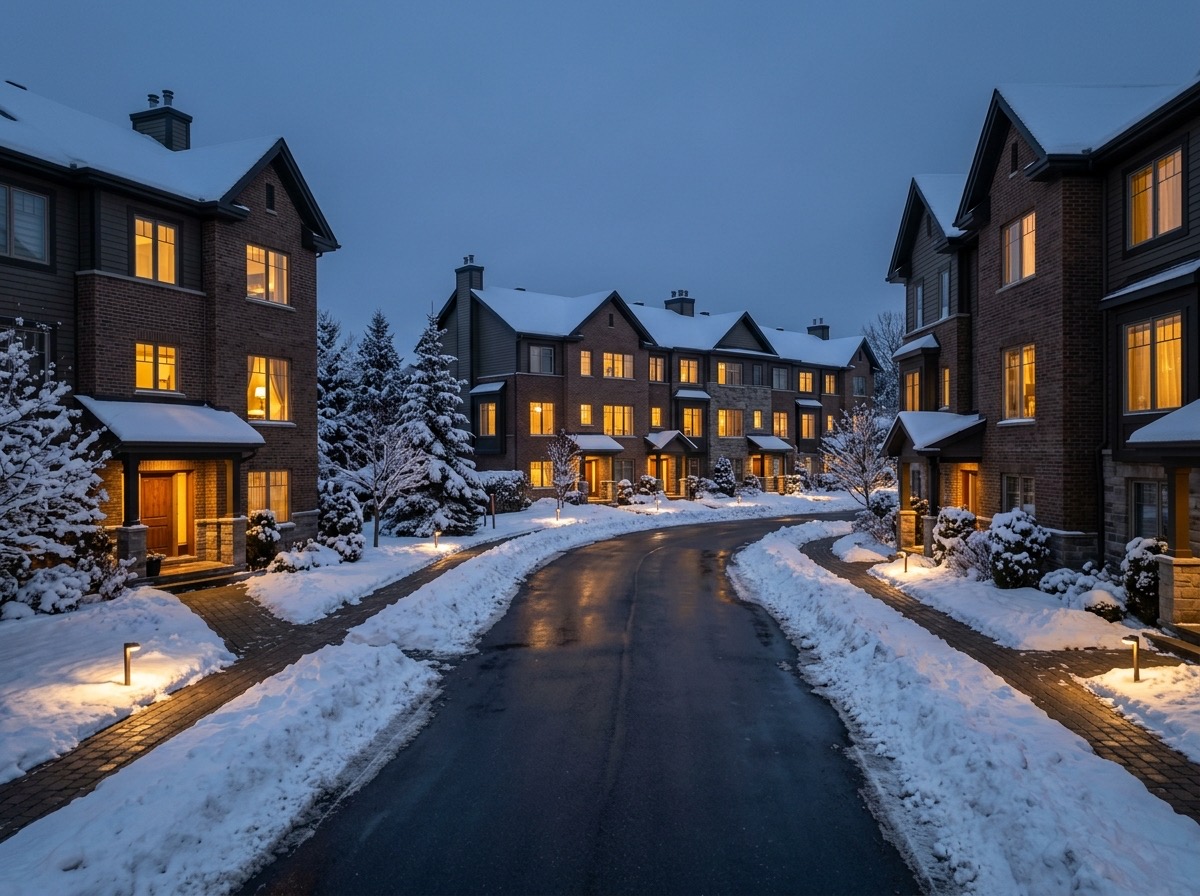
A condo snow removal contract should name triggers, priorities, salt timing, sidewalk scope, storage, hauling, damage repair, logs, insurance, WSIB and term. Tender by spring, require timestamped logs for Ontario's 60-day notice rule, and plan around Midland's overnight parking ban.
Key takeaways
Last updated: November 2026
A good condo snow removal contract spells out exactly what gets cleared, when, and how you will know it happened. At minimum it should name the trigger depth, the service hours and priority order, the salting trigger, the sidewalk and entrance scope, where snow piles go on a site map, how hauling is priced, how damage is reported and repaired, what service logs you receive, the insurance certificate, and the term and cancellation terms. If any of those is missing, residents will find the gap for you in January.
For condo boards and property managers in Midland and Penetanguishene, snow is one of the few services every owner sees every single day of winter. It drives complaints, it carries real liability, and it is a line in the budget that can swing hard in a snowbelt year. Here is a practical checklist for tendering, writing and managing a condo snow contract, from a design-build landscaper that also handles the grounds the rest of the year.
Key Takeaways
- Choose the pricing model on purpose: seasonal, per-push or per-event, hourly, or a hybrid with a seasonal base and per-event charges over a cap.
- Your contract should name the trigger depth, service hours and priority order, salting trigger, snow storage locations, hauling pricing and sidewalk scope.
- Require timestamped service logs and photos. In Ontario, written notice of a snow or ice injury claim can be served up to 60 days after the incident.
- Plan around Midland's winter overnight parking ban (Nov 15 to Apr 1, midnight to 7 a.m., on Town streets and municipal lots) when you plan visitor and resident parking.
- Midland's snow by-law prohibits snow in fire routes, in accessible parking spaces and on or near hydrants, on private property too.
- Finish every season with a damage walk of curbs, sod, gardens and stone so repairs are logged before spring.
When should a condo board start the snow tender?
Earlier than most do. Commercial snow contractors often book their winter routes by the end of summer, and one property management firm advises ordering salt and equipment by the end of May. A board that starts in October is choosing from whoever is left. Boards usually set the operating budget well before the fiscal year starts, so the snow decision belongs in the budget cycle, not in the fall scramble.
A practical timeline for many corporations:
- Late winter or spring: review how this season went. Pull the complaint log, the service records and the damage list while they are fresh. If your AGM falls in spring, this is a good moment to tell owners what is changing and why.
- Late spring to summer: write or update the scope, attach a site map, and send the tender to three or four contractors. Ask each one to walk the property.
- Late summer: compare bids on scope, not just price. Check references and insurance.
- Early fall: sign, confirm storage areas and staking, and send residents a winter notice.
If your current contract is a multi-year term, check the renewal and cancellation dates now so you are not locked into another season by default.
New building? You may be able to replace the developer's contract
If the developer signed the snow contract before the owners elected their own board, section 112 of Ontario's Condominium Act, 1998 lets the new board end it. The board can terminate an agreement for goods or services on a continuing basis by resolution, within 12 months after the turnover election, with at least 60 days' written notice. That window matters for the newer buildings and townhouse communities going up around Midland. Outside it, early termination depends entirely on the contract's own wording. One Ontario condo law blog describes boards that ended a snow contract early and were sued for breach, so read the termination clause before you act.
Which pricing model suits a condo corporation?
There are four common models, and each one shifts risk between the corporation and the contractor.
- Seasonal (fixed fee). One price for the winter, usually paid in instalments. You get budget certainty, and the contractor carries the risk of a heavy winter. Some seasonal contracts include a snowfall cap, beyond which extra events are billed.
- Per-push or per-event. You pay for each plow visit or each storm. Cheap in a light winter, unpredictable in a snowbelt year, which is exactly what Midland and Penetanguishene are. Squalls off Georgian Bay can drop 10 to 20 cm or more locally in one event.
- Hourly or time and materials. Common for hauling, cleanup and extra work. Hard to budget for routine plowing.
- Hybrid. A seasonal base covering a set number of events, with per-event pricing above the cap. Often a sensible middle ground for a board that needs a predictable budget but does not want to overpay in a mild year.
Salt is often billed separately per application, or included. Read that line carefully. On a condo with long walkways and steps, salting can be a large share of the winter cost.
For a rough sense of scale, a 2025 Ontario contractor price guide puts monthly contracts at about $1,000 to $2,500 for a 20 to 60 space lot, and $3,000 to $8,000 or more for large lots and townhouse-style complexes. A 2026 Ontario cost guide puts salting at around $50 to $200 per application, with prices up about 15 to 25 percent since 2022 on fuel and labour. Those are general market figures from outside Simcoe County, not a quote. A real price for your property only comes from a site walk.
Field drawing 19 · Snow contracts
Which snow contract costs less depends on the winter
In a snowbelt, the right side of this chart is the one to plan for.
Swipe to see the full drawing →
- Per-push rises every storm. You pay for each visit, so a light winter is cheap and a heavy one is not.
- Seasonal stays flat. One fee for the winter. The contractor carries the risk of a heavy year, and you get a fixed budget.
- Break-even moves with your quotes. Divide the seasonal price by the per-push price to see how many events it takes before seasonal wins.
- Hybrids cap your exposure. A seasonal base covers a set number of events, then each extra event is billed. Check how the cap is measured.
- Salt is often extra. Salting is frequently billed per application on any model, so compare quotes with salt in and out.
What must a condo snow removal contract include?
This is the checklist we would want any board to hold a contractor to, including us.
Service triggers and timing
- Trigger depth: how many centimetres of snow start a plow visit.
- Salting and sanding trigger: for example freezing rain, refreeze after a thaw, or any accumulation on walks.
- Service hours and priority order: which areas get cleared first (main entrance, fire route, accessible spaces, ramps, garage entrances), then which come next.
- Clear-by expectations: when residents can expect the drive and walks to be usable after an overnight storm, written as a target the contractor agrees to.
- Return visits: what happens when snow keeps falling all day, and when cleanup after the storm happens.
- Salt timing: salt applied with the plow, or right after, whenever surfaces are icy, without waiting for the manager's approval.
Scope
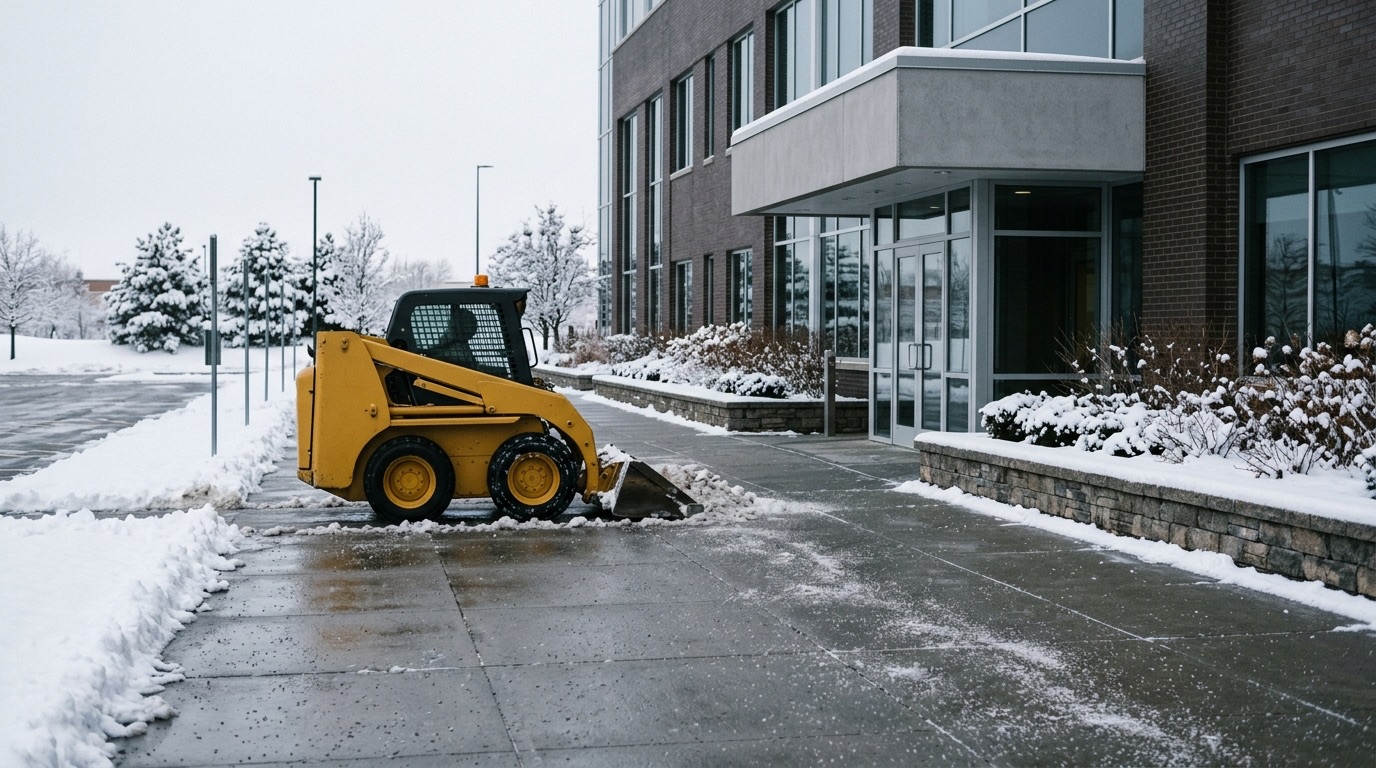
- Lot versus sidewalks: are walkways, steps, ramps, entrances, mailbox areas and garbage enclosures included, and to what standard?
- Who clears balconies, patios and private entrances, if anyone.
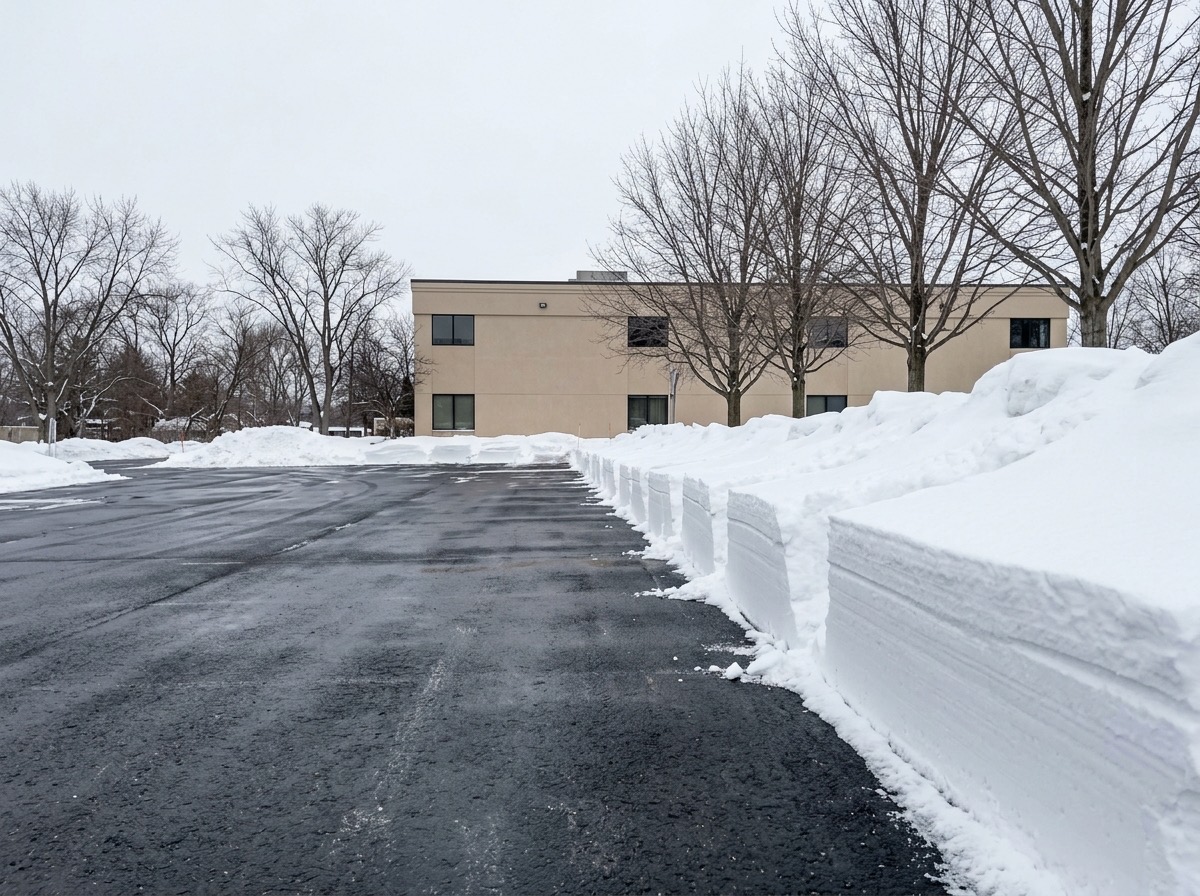
- Snow storage locations, marked on a site map.
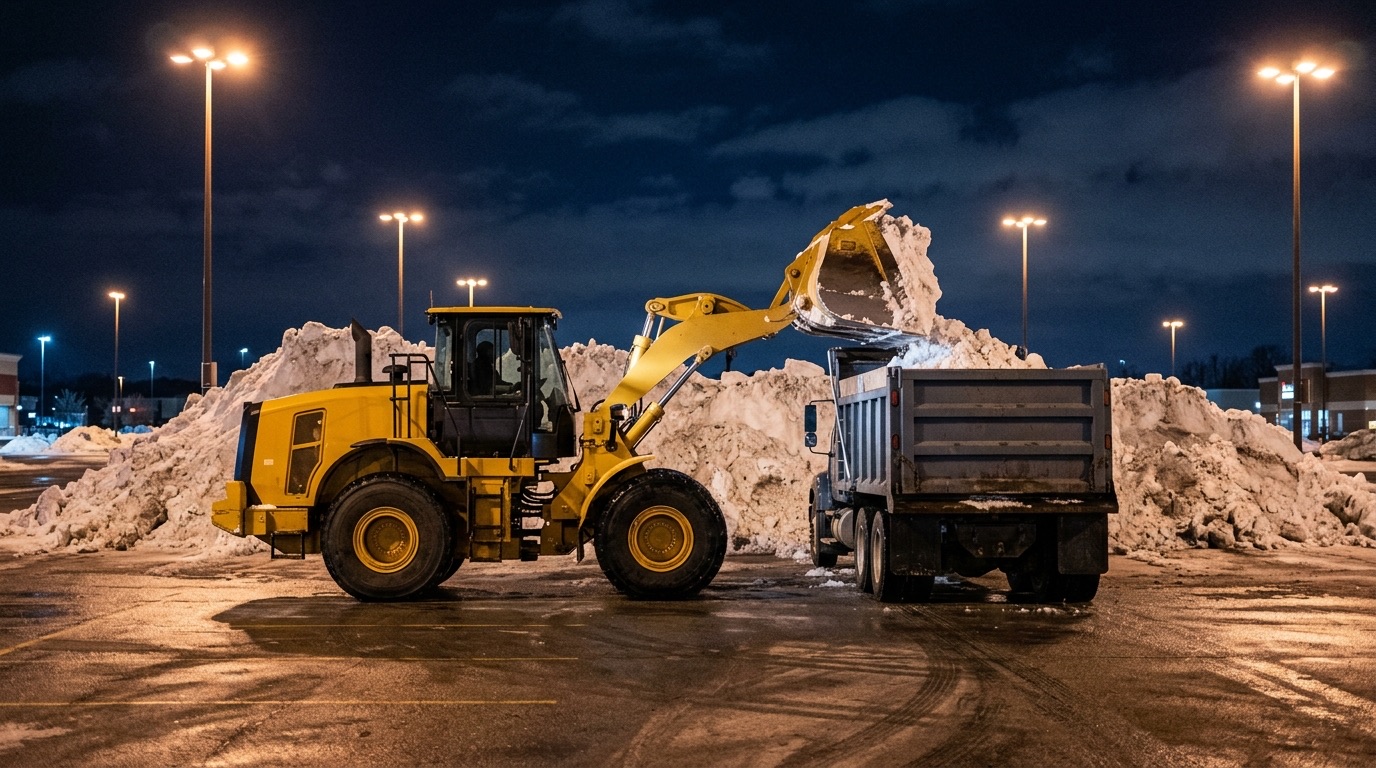
- Hauling or relocation pricing for when storage fills up.
Paperwork and protection
- Logs and proof of service for every visit: date, time, areas cleared, material applied.
- Damage reporting and repair: how damage to curbs, sod, gardens or vehicles is reported, and who fixes it by when.
- Insurance certificate naming the corporation as additional insured.
- Term, renewal and cancellation terms.
- Any fuel surcharge clause, spelled out.
- A WSIB clearance from the contractor, rechecked every 90 days. It is free to look up and protects the corporation from the contractor's unpaid premiums.
- The indemnity clause, and any deadline for reporting a claim to the contractor. Landscape Ontario's standard form requires the owner to report within 48 hours of learning of it.
- A same-day duty on both sides to forward any written notice of a snow or ice claim.
Our guide on choosing a commercial snow removal contractor in Midland covers the questions to ask during interviews.
Why do service logs matter so much for condos?
Because a slip-and-fall claim can show up weeks after the fall. Under Ontario's Occupiers' Liability Act, as amended in 2020, no action for personal injury caused by snow or ice can be brought against an occupier, or against the independent contractor hired to remove the snow and ice, unless written notice is served within 60 days of the injury, stating the date, time and location. There are exceptions where the injured person died or a judge finds a reasonable excuse, and the change does not alter the usual two-year limitation period (BLG summary).
So the board may learn about an incident a month and a half later. The Act also requires an occupier that receives the notice to send a copy to its snow contractor, and the contractor to send one to the corporation, so the property manager needs a same-day routine for it. At that point the only thing that answers "was the walk salted that morning?" is the record. Require timestamped logs and photos for every visit, and make sure the property manager can get them quickly. Our full explainer on Ontario's 60-day snow and ice notice rule goes deeper. This is general information, not legal advice. Talk to your corporation's lawyer and insurer about your own obligations.
The Ontario condo case every board should know
In Musa v. Carleton Condominium Corporation No. 255, a resident slipped on a condo roadway in Ottawa that had been plowed but not salted. The corporation had handed its winter maintenance entirely to its contractor, and the courts treated the contractor as an occupier. Salt went down about three and a half hours after the operator arrived and an hour and a half after the fall. The trial judge found the contractor liable, and in 2023 the Court of Appeal upheld that finding. For a board, the lessons are practical. Spell out who is responsible for what, write salt timing into the contract, and do not leave salting to depend on someone approving each application.
How should resident parking work in winter?
Parked cars are the single biggest obstacle on a condo lot. A plow cannot clear a space with a car in it, and a lot full of parked cars ends up with ridges of snow between every row.
The Town of Midland's winter overnight parking restriction runs from November 15 to April 1, midnight to 7 a.m., on Town streets and in municipal lots, regardless of the weather, with ticketing and towing. Confirm the dates each season. For condos, that matters in two ways: visitors and second cars cannot simply move to the street overnight, and resident parking on site gets tighter just when the plow needs room.
Things that help:
- a written winter parking plan, shared with residents in the fall;
- a rotation or "move your car" protocol for big storms so stalls can be cleared in sections;
- clear rules for visitor spaces, and where visitors should park on storm nights;
- a way for the contractor to report vehicles that block clearing, so cleanup can be scheduled.
What about sidewalks, entrances and fire routes?
Walkways and entrances are where people fall, so they deserve more attention in the contract than the lot itself. Spell out the standard for main entrances, ramps, steps and the paths to garbage and mail. Decide who handles them between plow visits, especially during long storms.
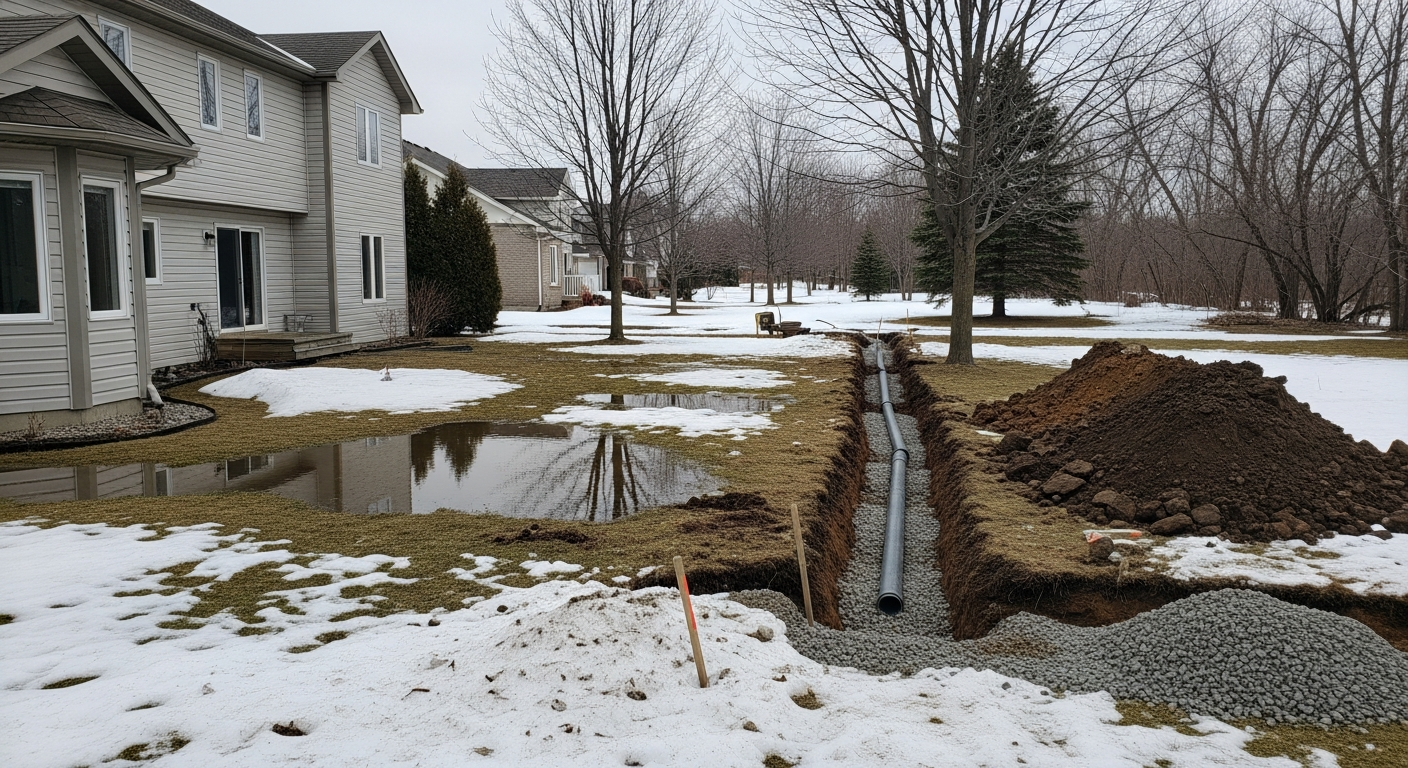
Midland's Snow Removal By-law 2025-53 prohibits placing snow on or near fire hydrants, in accessible parking spaces or in designated fire routes, including fire routes on private property. It also bans blocking Town drains or pushing snow onto a neighbour's land. The Town can order the owner to correct a violation, and if that does not happen, it can do the work and add the cost to the tax roll. That makes storage planning a compliance issue, not just a tidiness one. Mark the fire route, hydrants, drains and accessible spaces on the site map. Our sidewalk snow removal service and our guide to snow storage planning cover both pieces in more detail.
How should the board communicate with residents?
Most snow complaints are really expectation complaints. Owners who know what the standard is, and when the crew is coming, complain less. A short winter notice each fall covers most of it:
- who the contractor is and how to report a problem (through management, not by flagging down the operator);
- the general order of clearing and the trigger for service;
- the winter parking plan and the Town overnight ban;
- a reminder that walks may be slippery between visits and to use the cleared routes;
- how to report a fall or an icy spot right away, so it can be logged.
During the season, keep a simple complaint and incident log. Review it with the contractor monthly. It is also the best evidence you will have when it is time to renew, renegotiate or retender.
Why finish with an end-of-season damage walk?
Every winter leaves marks: plow-scraped lawn edges, chipped curbs, shifted stone, dead shrubs where piles sat, salt-burned turf along the walks. If nobody records it in April, it turns into a vague argument in June. Build an end-of-season walk into the contract. The board or manager and the contractor walk the property together, photograph the damage, agree on what the contract covers, and set a repair date.
This is where hiring a landscaper for snow pays off. Many snow contracts, including Landscape Ontario's standard form, treat salt and plow damage to sod, plantings and curbs as foreseeable, which means the corporation usually pays to fix it. We build curbs, walls, beds and stone for a living, so we plan the winter to avoid that damage, and the same team that plows in January can repair the sod, gardens and stone in spring. Our commercial landscaping service handles the warm-season side, so the corporation deals with one contractor twelve months a year instead of two pointing at each other.
Condo snow removal in Midland and Penetanguishene
Condo and townhouse communities here range from waterfront buildings near Midland Bay and Penetang Bay to newer developments off Hugel Avenue, King Street and Highway 93, and smaller complexes in Port McNicoll, Victoria Harbour and Tiny and Tay townships. Waterfront sites often slope toward the bay, which makes snow storage and meltwater planning more important. Infill buildings near downtown Midland have tight lots and very little room to store snow, so hauling belongs in the budget. Penetanguishene has its own winter parking restriction and prohibits pushing snow onto Town roads and boulevards, so check the Town's current rules too.
Get a condo snow proposal built around your property
If your board is planning next season's tender, or your current contract left too many gaps this winter, we would be glad to walk the property with you. Learn more about our condo snow removal contracts and our snow removal service in Midland, then request a snow removal quote. We start with a pre-season site walk and send a written proposal with the scope, storage plan and site map spelled out, so the board knows exactly what it is approving.
Plan your snow contract before the first squall.
We walk your site, map where the snow goes and send a written proposal. Plazas, offices, condos, churches and industrial yards.
Forty-Five Scapes did an amazing job on my property. I started with such a mess, mud and weeds and poor grading. I met with Mark and he put my mind at ease. He took my wants and needs and budget and created a vision. The crew was always on time and respectful and the end product was amazing. I look forward to many years with my amazing outdoor space.
Frequently asked questions
Often, yes. Under section 112 of Ontario's Condominium Act, a board can end an agreement for ongoing goods or services that the corporation signed before the owners elected their own board. It does so by resolution within 12 months after the turnover election, giving at least 60 days' written notice. After that window, the contract's own termination clause governs, so get legal advice first.
Most boards want budget certainty, which favours a seasonal price or a hybrid with a seasonal base and per-event charges above a cap. Divide the seasonal price by the per-push price to find the break-even number of visits, then compare it with your logs from past winters. In a snowbelt town like Midland, push counts can swing widely from year to year.
Start in late winter or spring, while this season's complaints, logs and damage are fresh, and send tenders out by late spring or early summer. Contractors often book winter routes by the end of summer, and salt and equipment orders are placed earlier. That leaves time for site walks, reference and WSIB checks, and a signed contract before fall.
Under Ontario's Occupiers' Liability Act, a person injured by snow or ice has 60 days to serve written notice on the corporation or its snow contractor, so a board may hear about a fall weeks later. Timestamped logs and photos showing when areas were plowed and salted are the best record of what was done. In the Musa case, the timing of the salt is what decided liability.