Beachfront landscaping in Midland works best with a deep-rooted native plant buffer on the upper bank, stone protection only at the toe where waves hit, and lawns, patios and structures kept back from the water. Georgian Bay has almost no tide, but lake levels swing by a metre or more between years, so design for high water and ice. Most work at the water's edge needs an MNRF work permit, and neighbouring Tiny Township currently restricts work near the 178 m contour.
Key takeaways
Good beachfront landscaping in Midland starts with the shoreline itself: keep or replant a deep-rooted native buffer above the beach, protect the toe of the bank with stone only where waves actually hit, keep lawn and patios back from the water, and line up the provincial and municipal approvals before any machine touches the shore. Georgian Bay has almost no tide, but its water level rises and falls by a metre or more over the years, and storms and wind set-up push water much farther inland than a calm day suggests. Design for those swings and the landscape will last.
Key highlights
- Native plants with deep roots hold a sandy bank far better than lawn.
- Dune and beach areas need protection from foot traffic and from removing stone, logs or vegetation.
- Wind shapes where you put seating, plantings and structures.
- Wildlife-friendly planting and no pesticides near the water protect the bay.
- Shoreline work on Georgian Bay usually needs approvals, and some municipalities restrict work near the shore.
Introduction
Living on the beachfront in Midland, Ontario means wide views over Georgian Bay and a quieter pace of life. Getting the most from that property takes a landscape that is designed and maintained to suit the shoreline instead of fighting it. This guide covers erosion control with native plants, protecting sandy beach areas, designing for wind, wildlife habitat, water management, natural materials and the permits that apply on the bay.
Beachfront landscaping comes with its own problems: shifting sand, ice push in spring, wave action during fall storms and water levels that change from year to year. Sustainable design and the right plants and materials give you an outdoor space that holds up to all of that.
Guide to beachfront landscaping for Midland, Ontario homes
The right landscape design gives a beachfront property a place to gather, a view that stays open and a shoreline that stays put. The sections below cover the work in the order most projects take it on.
1. Choosing native plants for erosion control
Erosion control is the first job on most beachfront lots, because waves, ice and runoff all work on the bank. Native plants adapted to Georgian Bay shorelines stabilize the soil better than turf. When selecting plants for erosion control:
- Choose natives with deep, fibrous roots, such as switchgrass, little bluestem, red osier dogwood and sweet gale, to anchor the bank.
- Use grasses and groundcovers in a continuous band so water has no bare soil to cut into.
- Add shrubs with dense foliage for extra cover and habitat.
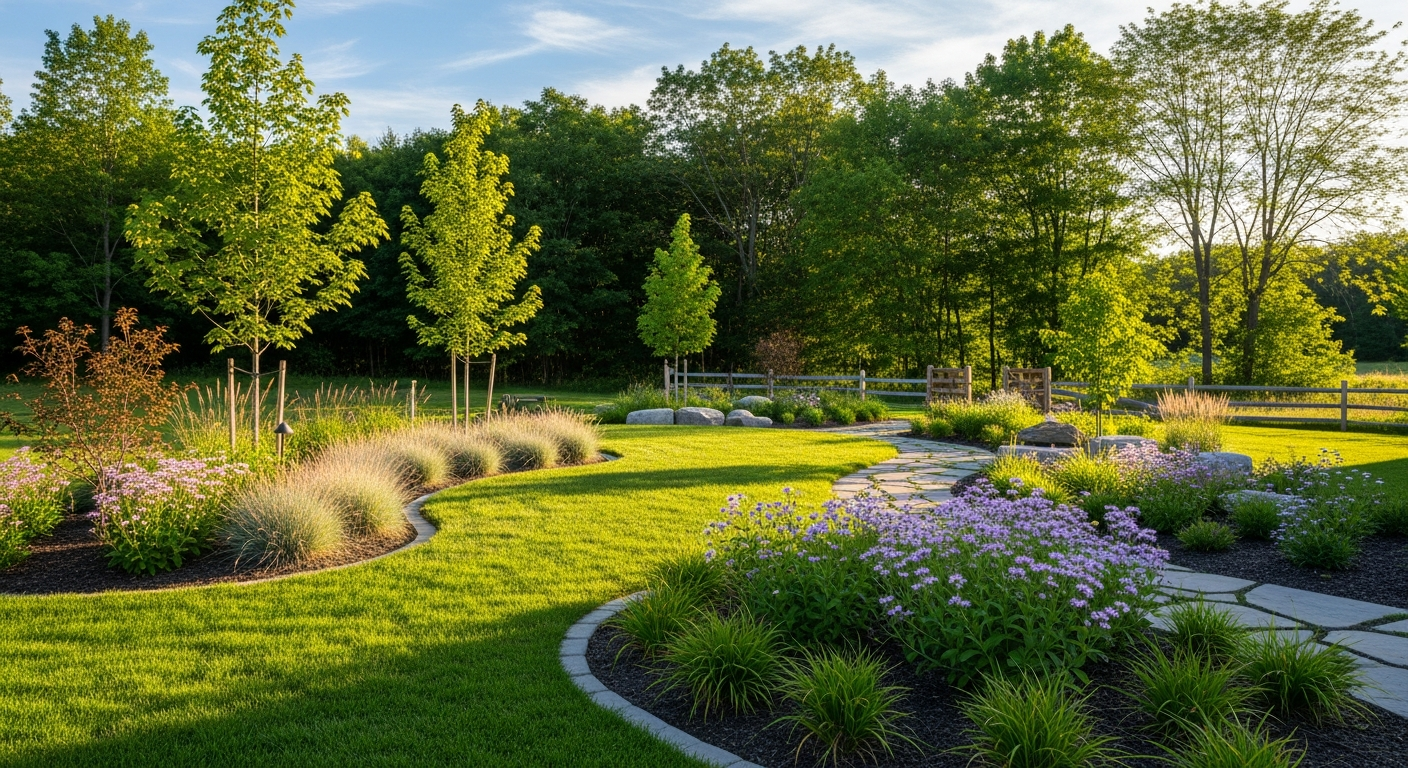
A native buffer strip along the top of the bank, with the lawn pulled back from the water, is the single most effective change most beachfront owners can make. Our guide to native shoreline plants for Georgian Bay lists species that suit sandy and rocky sites.
2. Managing waterfront sand erosion
Sand erosion is common on Georgian Bay beaches, especially after high-water years and fall storms. To manage it:
- Plant American beachgrass, sand cherry and other native dune species to trap and hold sand.
- Use sand fencing or defined paths to keep foot traffic off the most fragile areas.
- Check erosion-prone areas each spring after the ice goes out and after major storms.
- Get a contractor who knows shoreline work to look at areas that are losing ground before you add stone or fill.
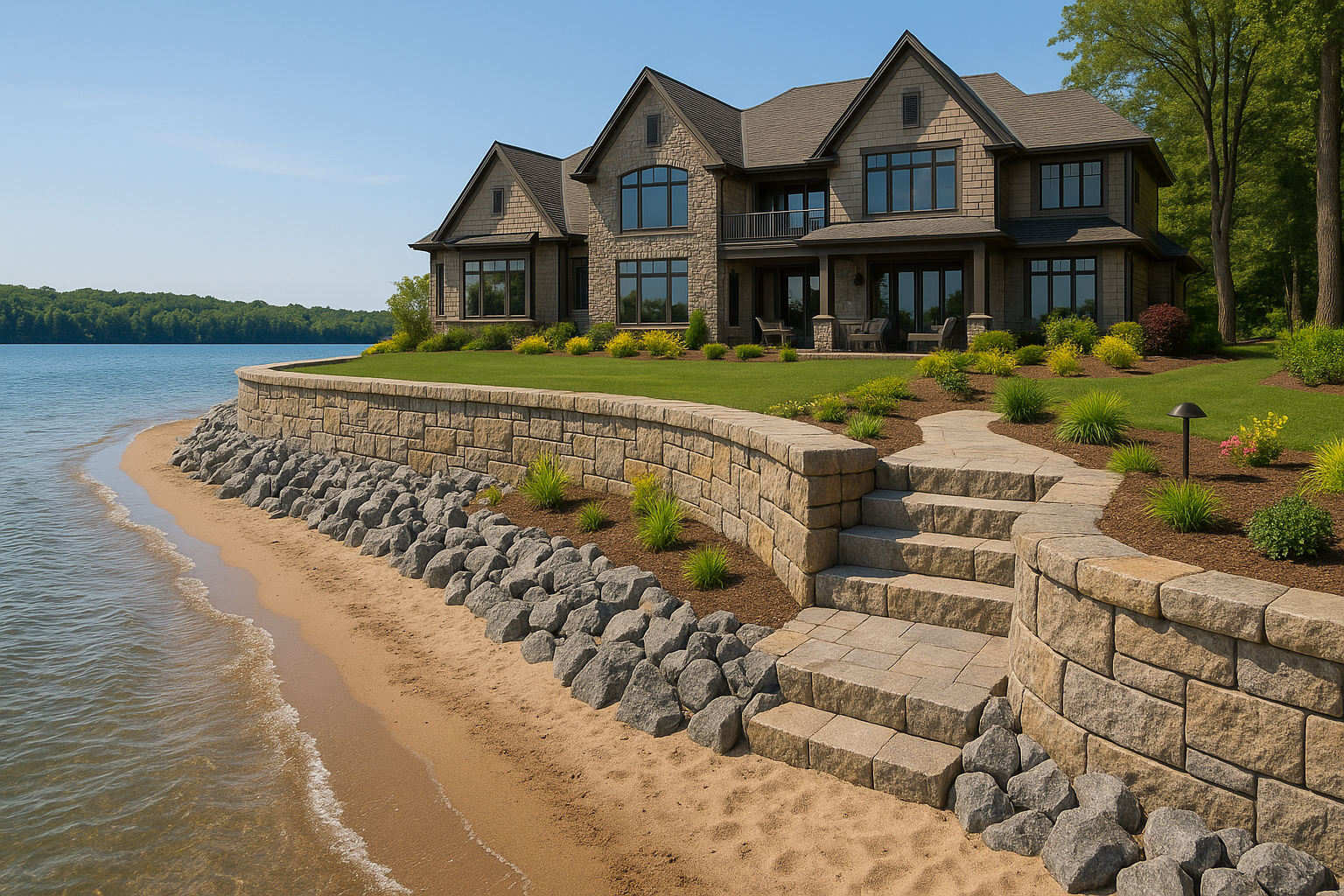
Where the bank is steep or exposed to waves, plants alone may not be enough. The usual answer is a planted buffer on the upper bank with armour stone or rip-rap on a filter fabric at the toe, sized for the exposure. Managed this way, the shoreline keeps its shape and the beach stays usable.
Field drawing 15 · Shoreline
A shoreline that holds: buffer above, stone below
Planted roots protect the upper bank. Stone protects the toe where waves hit. Both usually need approvals on Georgian Bay.
Swipe to see the full drawing →
- Pull the lawn back. Turf roots are shallow and do little to hold a bank.
- Plant a native buffer. Deep-rooted native shrubs, grasses and perennials bind the upper bank and filter runoff.
- Stone where waves hit. Armour stone or rip-rap on the lower bank, sized for the exposure.
- Filter fabric under stone. Keeps waves from pulling soil out between stones.
- Keyed toe. The bottom row is set into a stone bedding so it can't be undermined.
- Permits first. MNRF work permits apply on Georgian Bay shorelines, DFO may review in-water work, and Tiny Township regulates work near the 178 m contour.
3. Permits and approvals for beachfront work
Most work at the water's edge on Georgian Bay needs approval before it starts. Ontario's Ministry of Natural Resources requires a work permit for shoreline work on Georgian Bay and Lake Huron, and even removing aquatic plants on these shorelines needs one. Fisheries and Oceans Canada may need to review work below the high-water mark that could affect fish habitat. The Town of Midland's zoning sets setbacks for structures from the water. In neighbouring Tiny Township, an Interim Control By-law still prohibits new structures, retaining walls, patios, decks, landscaping and site alteration near the 178 m contour, because its 2025 shoreline zoning amendment is under appeal at the Ontario Land Tribunal and permits are paused. Check the current status with the municipality before planning anything near the beach. Our guide to shoreline landscaping regulations in Ontario walks through each approval.
4. Designing wind-resistant outdoor spaces
Beachfront lots take the full force of west and northwest winds off the bay. Plan for it:
- Choose heavy, weather-resistant outdoor furniture, such as powder-coated aluminum or teak, and store cushions out of the wind.
- Use hedges, native shrub plantings or fences as windbreaks to create sheltered areas.
- Put seating areas and structures where buildings or plantings block the prevailing wind but keep the view.
A space designed with wind in mind is one you can actually use on a breezy evening.
5. Creating wildlife-friendly habitats
Beachfront landscapes are habitat for shorebirds, pollinators, turtles and fish in the shallows. To support them:
- Plant natives that provide food and shelter for birds, butterflies and other wildlife.
- Add water features, such as bird baths or small ponds, away from the shoreline itself.
- Avoid pesticides, herbicides and lawn fertilizer near the water, where they wash straight into the bay.
- Leave natural cover, such as rock piles, driftwood and logs, for small animals and reptiles.
6. Sustainable water management
Runoff from roofs, driveways and lawns carries sediment and nutrients into Georgian Bay. Good water management keeps it on your lot:
- Use drought-tolerant native plants that need little watering once established.
- If you irrigate, use a smart controller that adjusts for rain and soil moisture.
- Collect roof water in rain barrels or a cistern for garden use.
- Use permeable paving or gravel so rain soaks in instead of running down to the beach.
7. Proper irrigation and drainage
Irrigation and drainage matter on beachfront lots because sandy soil drains fast and clay pockets hold water. Lay out irrigation by zone so the native buffer gets little or none once established. Drainage should spread water out and slow it down, with swales or rain gardens, rather than piping it in a concentrated stream onto the beach where it cuts gullies.
8. Using natural materials for hardscaping
Natural materials suit a Georgian Bay shoreline and age well. Good options include:
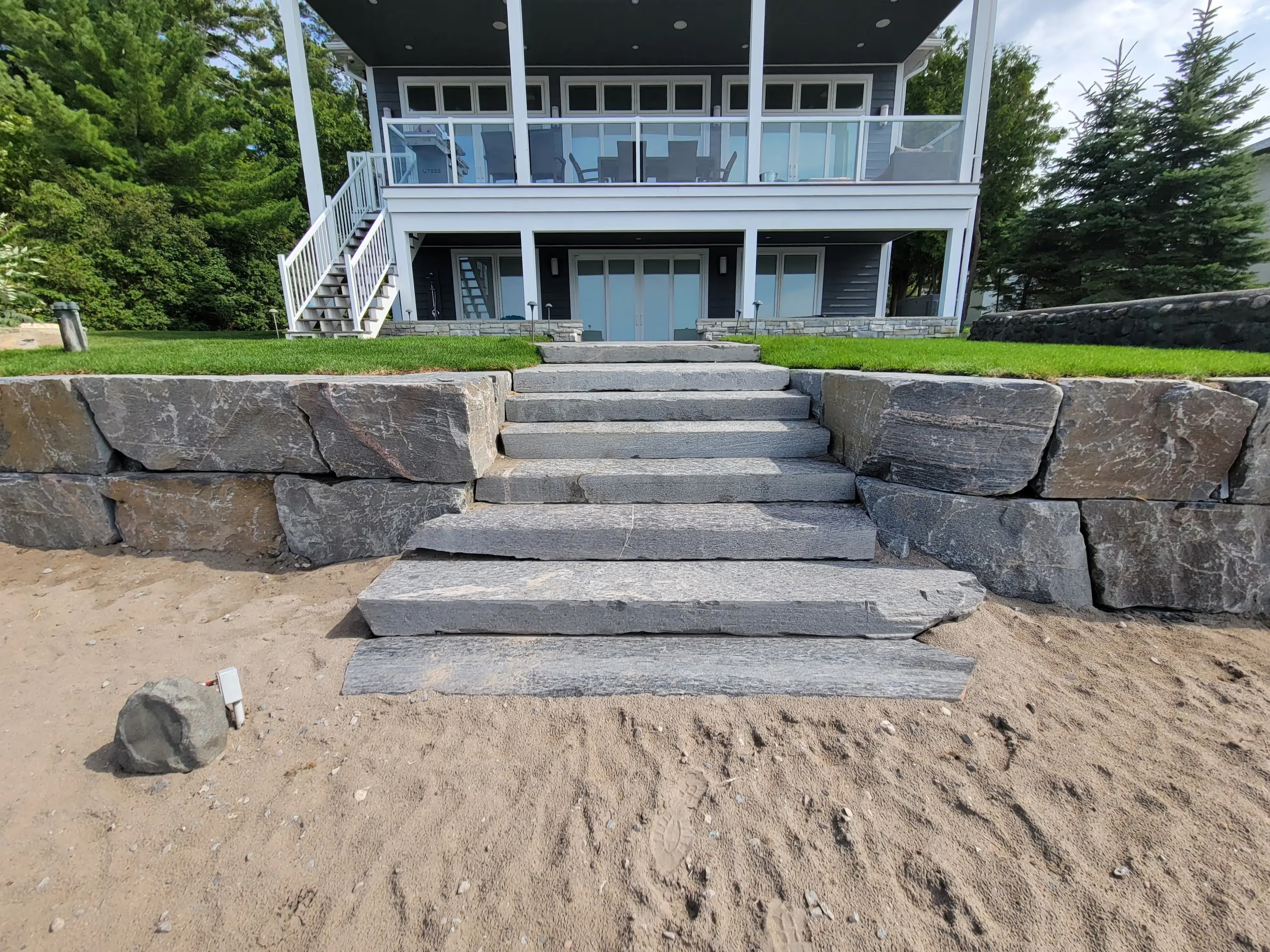
- Natural stone: durable and in keeping with the granite and limestone of the region, for steps, walls and patios.
- Wood: cedar and other durable species add warmth for decks and boardwalks. Choose sustainably sourced lumber.
- Gravel and crushed stone: permeable surfaces that help water soak in.
- Beach pebbles and river rock: for paths and accents. Buy it from a supplier rather than taking stone from the beach, which can destabilize the shoreline and may need approval.
9. Planning for water levels, ice and storms
Georgian Bay has no real tide. What changes is the lake level, which can vary by a metre or more between low-water and high-water years, plus short-term rises from storms and wind pushing water onshore. In winter and spring, ice can shove sand, stone and anything in its path up the beach. Keep patios, fire pits, sheds and lawn furniture well back from the high-water line, use plants and loose stone rather than rigid structures near the water, and assume the beach you see in a low-water year will be narrower in a high one.
Enhancing your beachfront property
Once the shoreline is stable, the rest of the property can be built around how you want to use it. A few ideas:
- Choose outdoor furniture that is comfortable and weather-resistant, with cushions you can store.
- Add low, downward-facing landscape lighting for paths and steps that does not light up the water or the neighbours.
- Build durable paths that connect the house, patio and beach access and follow the natural grade.
- Add a fire pit set well back from the beach and from trees, following the local open-air burning rules.
Planning a 2027 beachfront landscaping project
Beachfront work for 2027 should start with paperwork, not shovels. MNRF work permits, any federal review and municipal approvals all take time, and shoreline work is limited by in-water timing windows that protect spawning fish, so the approval should be in hand before spring. Use the winter to get a site plan drawn that shows the property line, the high-water mark, existing vegetation and any structures within the shoreline setback.
Ground work on the upper bank usually starts once the frost is out and the soil has dried, which around Midland is typically late April or May. Planting native buffers goes well in spring or early fall. If your property is in Tiny Township, check whether the Interim Control By-law is still in effect before you book anything near the 178 m contour.
- Book a site visit over the winter to measure the shoreline and flag erosion.
- Apply for permits early, MNRF first for shoreline and in-water work.
- Decide what stays natural and where the lawn ends before designing patios or paths.
- Choose native plants now so nursery stock can be reserved for spring.
Bringing it together
A beachfront landscape in Midland works when it starts with a stable, planted shoreline, then adds wind-sheltered spaces, wildlife habitat, careful water management and natural materials. Keep structures back from the water, get approvals before work starts, and check plantings and the bank each spring.
Frequently asked questions
What are some key considerations for landscaping in a beachfront property?
The main ones are erosion control, wind, changing water levels and permits. Choose native plants that tolerate sand, wind and occasional flooding, keep hard structures back from the water, and confirm what approvals the shoreline work needs.
Are there specific plants or trees that thrive in a beachfront environment in Midland, Ontario?
Yes. Native species that do well on Georgian Bay beaches and banks include American beachgrass, sand cherry, little bluestem, switchgrass, common juniper, black chokeberry, red osier dogwood and sweet gale. A local landscape professional can match species to your soil and exposure.
How can I protect my beachfront landscaping from erosion and water damage?
Use a continuous band of deep-rooted native plants on the bank, keep foot traffic on defined paths, and add armour stone or rip-rap at the toe only where waves reach. Direct roof and driveway runoff into gardens or swales instead of onto the beach, and inspect the shoreline after storms and spring ice.
Do I need a permit to landscape my beachfront in Midland?
Planting above the shoreline usually does not need a permit, but work at the water's edge does. MNRF requires a work permit for shoreline work on Georgian Bay, including removing aquatic plants, and DFO may review in-water work. Structures also have to meet municipal setbacks from the water.
Can I remove rocks or driftwood from my beach?
Moving beach stone and logs can speed up erosion and disturb fish and turtle habitat, and work below the high-water mark on Georgian Bay may need an MNRF work permit. Check before you rake out, dredge or move material on the shore.
Planning a project this season?
We’ll walk the site, scope it properly and give you a straight price.
Mark and Matt are amazing. Not only do they do high-quality work, but they are also collaborative every step of the way. They are also great at problem-solving for unforeseen issues, or if you are just stuck on what to do in a certain area. I highly recommend Forty-Five Scapes for your landscaping needs.
Frequently asked questions