May 8, 2026
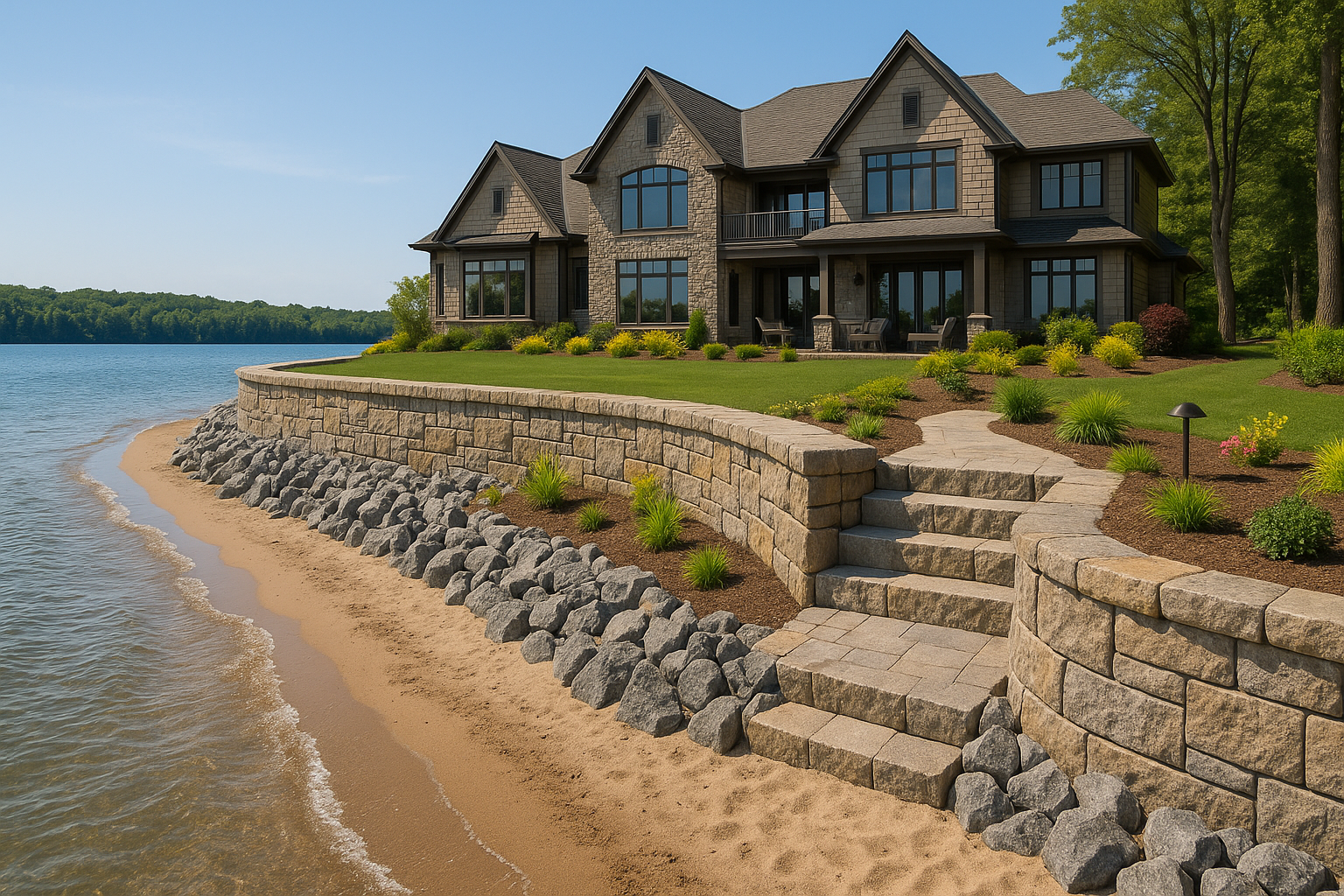
The best thing you can do for a Georgian Bay shoreline is also the simplest: plant it back. A naturalized buffer of native plants — deep-rooted shrubs like Sweet Gale and Red-osier Dogwood, soil-binding grasses and sedges, and wet-edge wildflowers — is the single most effective erosion-control and compliance move a waterfront owner can make. Native roots grip the bank against waves and ice where turf grass fails, and a vegetated buffer filters the majority of the runoff that would otherwise reach the water.
Here is the part most people miss: more than 90% of the life in a lake begins along its shoreline, and a mowed lawn running to the water does almost nothing to protect it. Cottage owners tell us they want a tidy waterfront, but a lawn to the edge quietly erodes the bank and, on most lots, breaks local shoreline rules. Below is a Georgian Bay–specific plant list grouped by role, the buffer-width numbers that actually matter, and how naturalizing solves erosion and compliance in one move. We install these shorelines on Georgian Bay rock and sand lots, so this is the palette and the process we reach for first.
Native shoreline plants develop deep, complex "basket" root systems that bind soil against waves and ice. Turf grass simply cannot compete: its roots reach only about 2–6 inches down, which is far too shallow to stabilize a shoreline that takes a beating from boat wake, storm waves and the shove of spring ice (Clemson Extension; Watersheds Canada). A native shrub or grass, by contrast, can send roots down several feet and outward through the bank, knitting the soil into a mat that holds when the water rises.
That root structure is why naturalized shorelines resist erosion instead of shedding it. It is also why they are alive in a way a lawn is not. Shorelines are the most productive strip of any lake — more than 90% of aquatic species use them for food, shelter, breeding and rearing, according to Watersheds Canada. When you plant a native buffer, you are rebuilding the "ribbon of life" that a lawn erases, and you are doing it with plants that never need mowing, watering or fertilizing once established. If you are new to the idea, our primer on what native plants are is a good starting point.
Aim for a native buffer at least 10 metres deep, with 30 metres being the ideal. The width matters because it does real work: a 30-metre vegetated buffer removed more than 85% of the pollutants in one study, filtering runoff before it reaches the lake (Watersheds Canada / SOBR, 2023). Even a narrower strip helps, but depth is what drives both water-quality performance and bank stability.
The buffer also does double duty. On top of erosion control, many townships along Georgian Bay and in Muskoka require a minimum naturalized strip along the water as a condition of development (Muskoka Watershed Council). That means the same planting that protects your bank is often the planting that keeps you compliant — one project, two problems solved. We walk through exactly what your township requires in our guide to Ontario shoreline landscaping regulations.
Here is the palette we build from, grouped by the job each plant does. Everything on this list is suited to Georgian Bay's Zone 4–5 climate and its two dominant shore types: exposed granite and rock, and sandy or gravelly banks. The key is matching the plant to the moisture: flood-tolerant species at the waterline, drought-tough species up on the rock.
To make matching easier, here is the same palette organized by where each group belongs on the shore:
Good news: planting native vegetation generally does not require a permit. What triggers a permit is altering the shoreline — grading, adding fill, building retaining walls, or removing existing vegetation. That is exactly why naturalizing is such a low-friction improvement. You are adding life and stability without the regulatory hurdles that come with hard armouring, and in most cases you are moving toward compliance rather than away from it.
The need is real. Of 44,274 shoreline properties assessed across Canada, only 22% met the minimum criteria to sustain wildlife and lake health (Watersheds Canada / SOBR, 2023). Before you plant — and definitely before you touch grade or vegetation removal — it is worth reading our full breakdown of Ontario shoreline landscaping regulations, which covers conservation-authority permits, setbacks and buffer requirements for the Georgian Bay corridor. If your project does involve any bank work, our shoreline restoration services are designed to keep the whole job permit-ready from the start.
A naturalized shoreline is also your best defence against invaders. The one to watch on Georgian Bay is invasive Phragmites (European Common Reed), which spreads roughly 10 acres (about 5 hectares) per year and can expand up to 20% annually, ultimately taking over 50–80% of a marsh and crowding out the very natives that hold your bank (Georgian Bay Forever). A dense, healthy stand of native plants leaves far less bare ground for Phragmites and other invasives to colonize.
Two habits protect your investment: keep an eye out for tall, feathery reed stands taking hold along the water, and remove invaders early while they are still small and containable. If you are unsure what you are looking at, a quick assessment during design is the cheapest form of insurance — it is much easier to keep Phragmites out than to reclaim ground it has already taken.
Naturalizing works best in stages. Start by planting deep-rooted shrubs and grasses right at the water's edge where erosion pressure is highest, then expand the buffer inland year by year, always matching species to your shore type — wet-tolerant plants at the waterline, drought-tough groundcovers up on the rock. Done this way, the shoreline fills in naturally and never looks abandoned.
There is a confidence gap worth naming here. In Watersheds Canada's research, 98% of waterfront owners were very concerned about their impact on the water, but only 26% felt confident to restore the shoreline on their own (Watersheds Canada). That gap is exactly where we come in. Having installed naturalized shorelines across Georgian Bay's rock and sand lots, we have learned which species establish on a granite shelf, how to source true natives in the volumes a real buffer needs, and how to plant so the result looks intentional and passes review from day one. A shoreline buffer is one piece of a larger waterfront plan, and we design it to fit — see how we approach an entire property in our guide to designing the perfect cottage landscape, or learn more about working with our Georgian Bay landscaping team.
Deep-rooted shrubs like Sweet Gale, Red-osier Dogwood, shrub willows and Speckled Alder for the wet edge; Fragrant Sumac and Bearberry for rock and sand; plus grasses (Switchgrass, Canada Wild Rye) and wildflowers (Blue Flag Iris, Swamp Milkweed). Match the species to your shore type for the best result.
Native plants grow deep, complex "basket" roots that hold soil against waves and ice, while turf grass roots reach only about 2–6 inches. Natives also support wildlife — over 90% of aquatic species depend on shorelines at some point in their lives (Watersheds Canada).
Aim for at least 10 m of native vegetation, with 30 m being ideal. A 30-metre buffer removes more than 85% of studied runoff pollutants, and many townships require a minimum naturalized strip along the water (Watersheds Canada; Muskoka Watershed Council).
Planting native vegetation generally does not require a permit, but altering the shoreline — grading, retaining walls, or removing existing vegetation — usually does. Naturalizing with plants is the low-friction, compliant way to improve a shoreline.
Establish deep-rooted native shrubs and grasses at the water's edge and build a vegetated buffer inland. Their roots bind the bank far better than turf, reducing erosion while improving habitat and water quality at the same time.
A native shoreline buffer is the rare project that makes your waterfront more beautiful, more stable and more compliant all at once. If you would like a shoreline that controls erosion, welcomes wildlife and passes review — designed for your specific rock or sand lot — we would love to help. Book a shoreline naturalization design with our team and let's plant the ribbon of life back along your stretch of Georgian Bay.