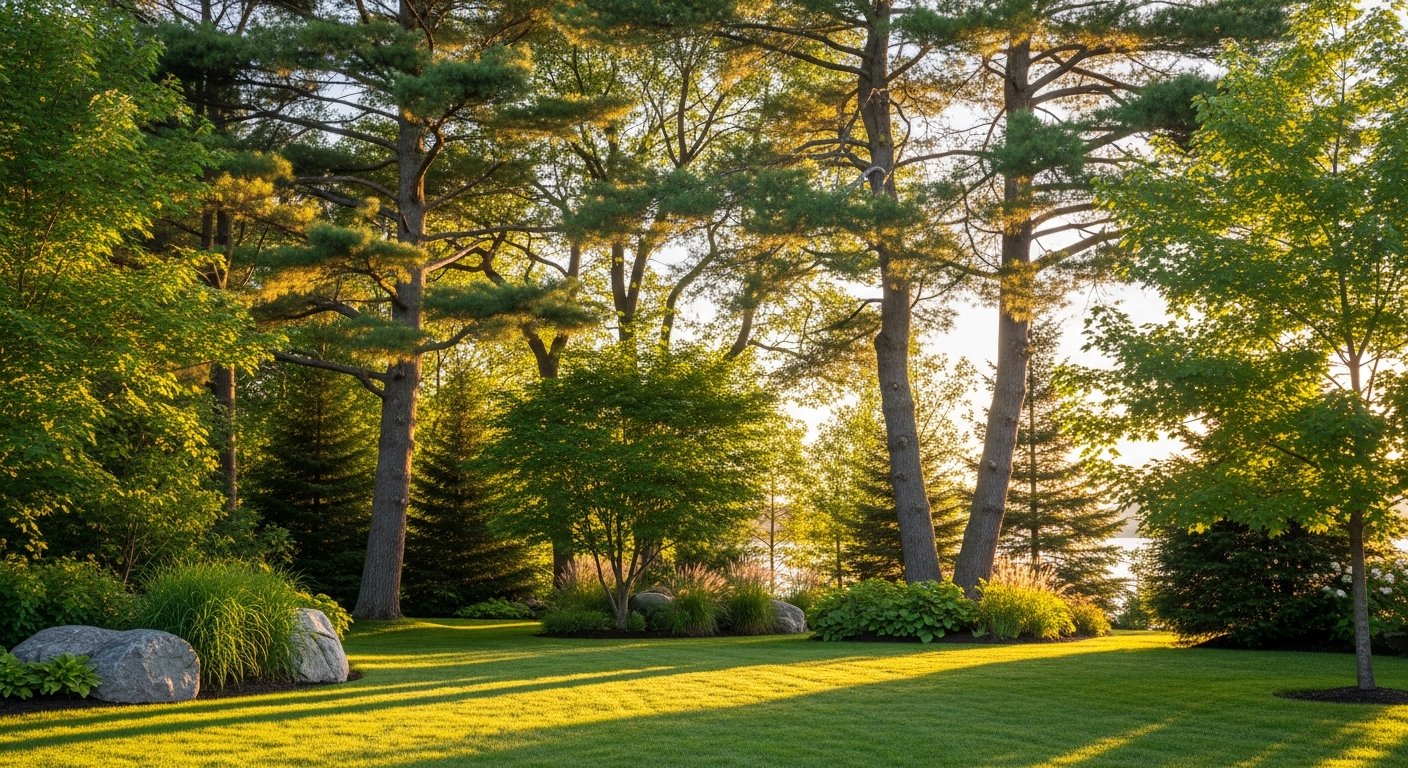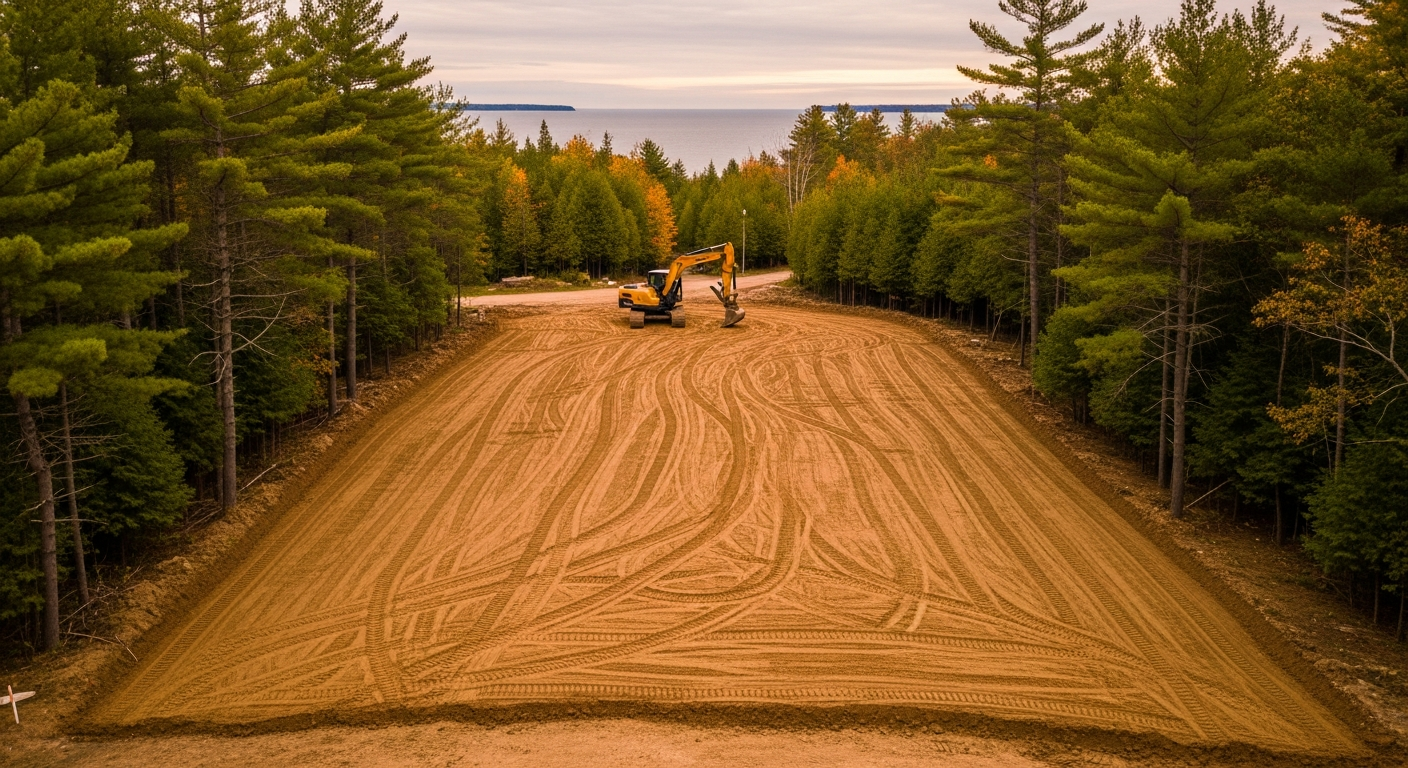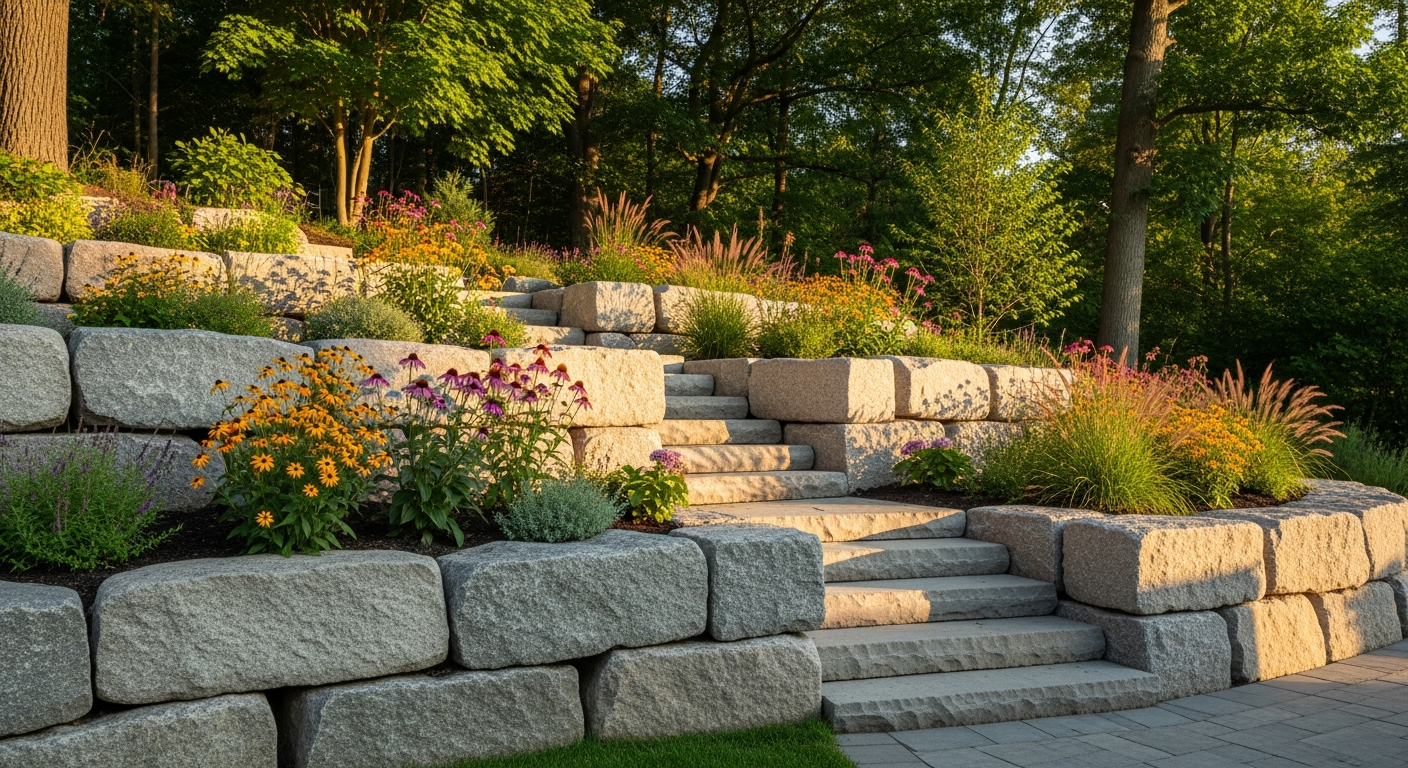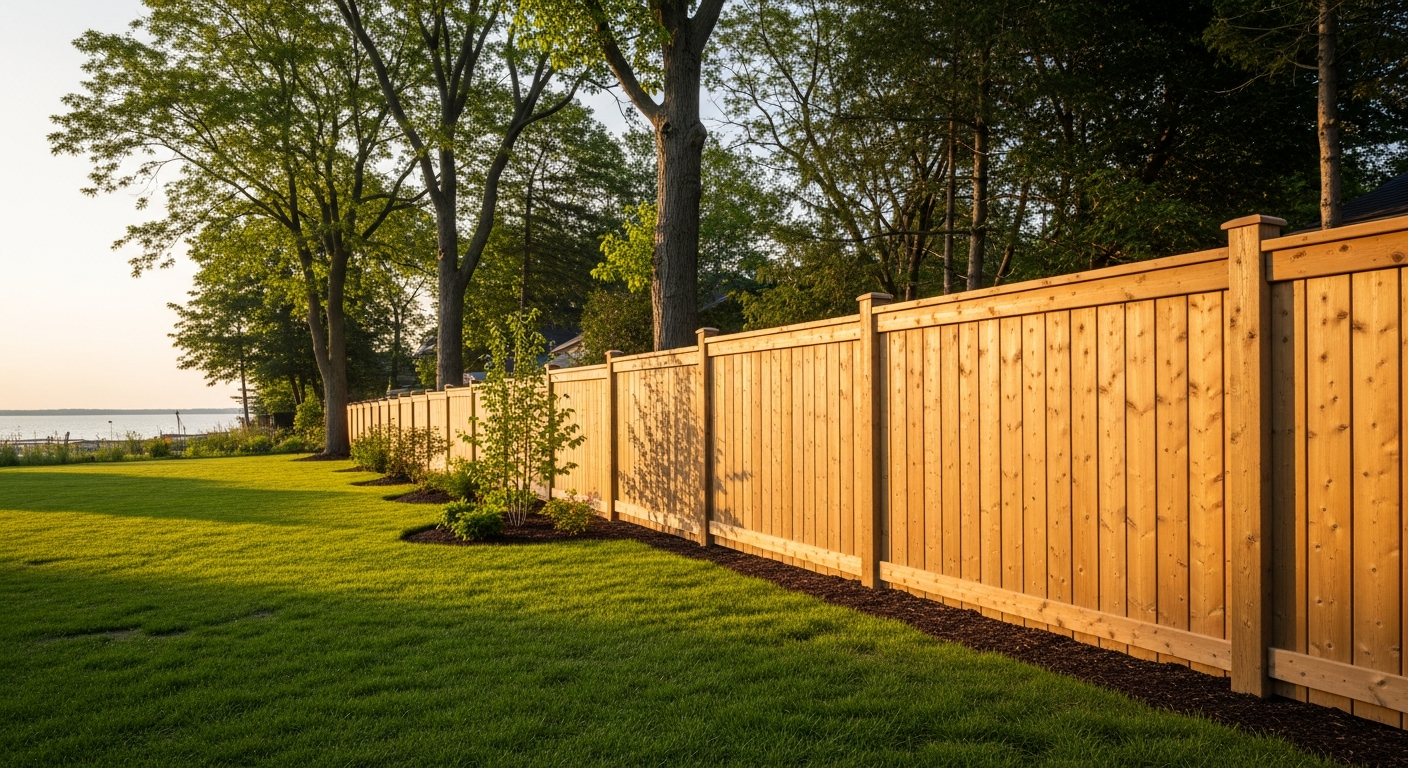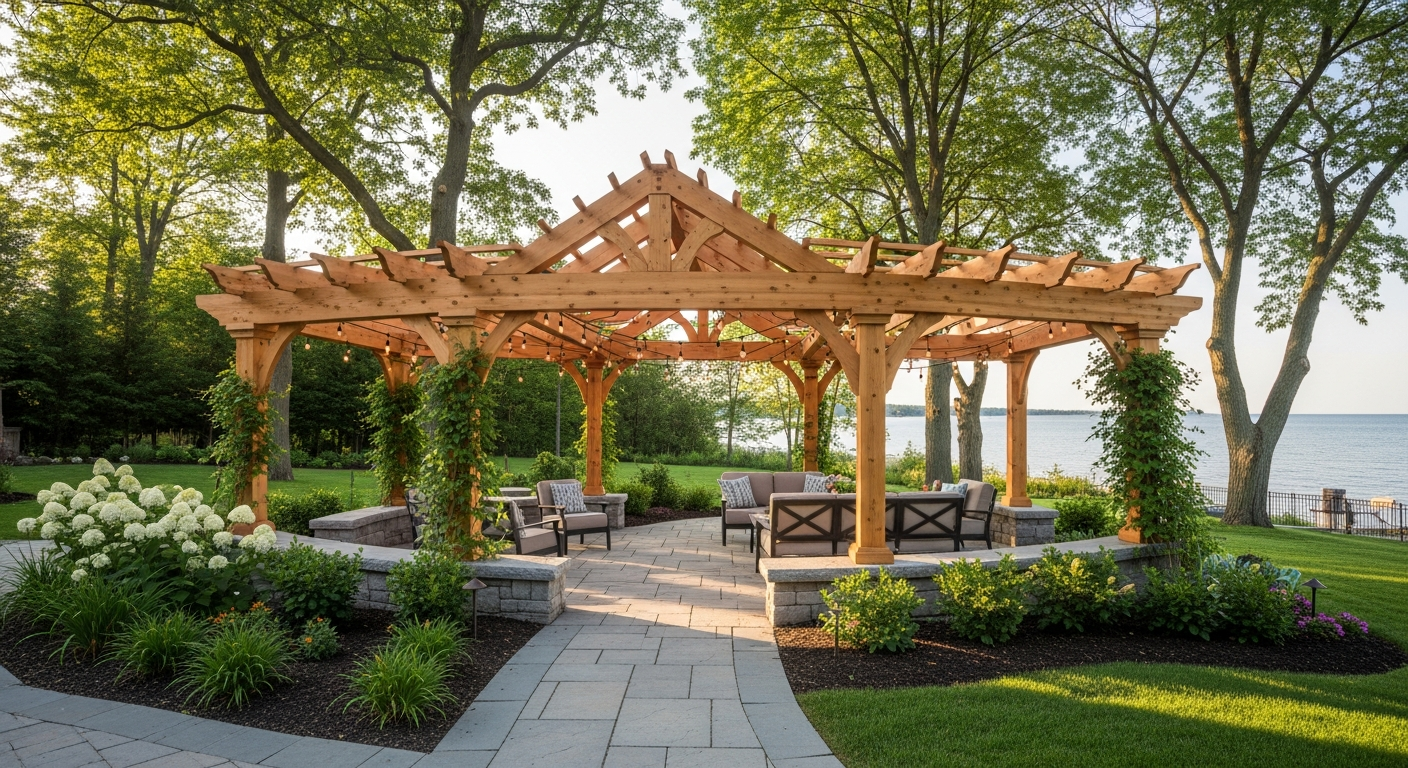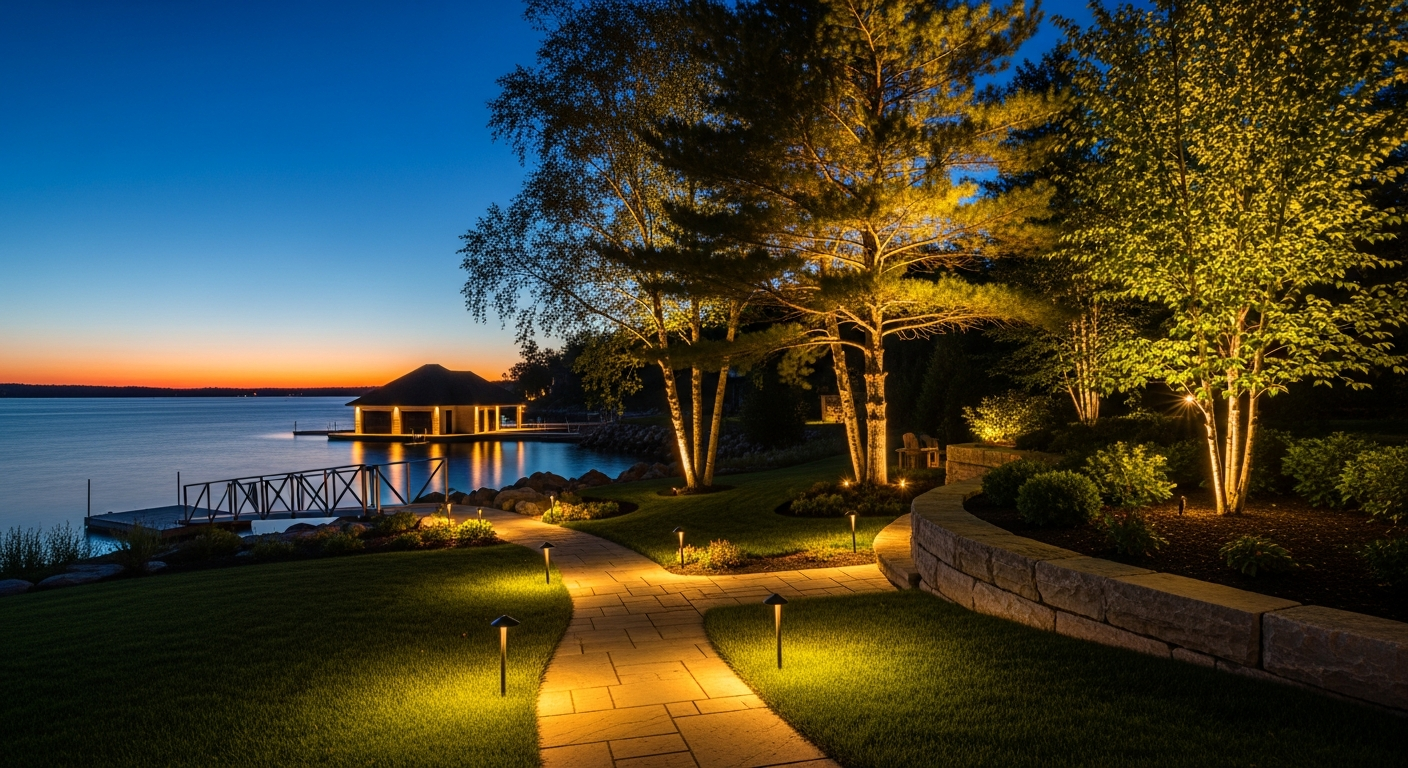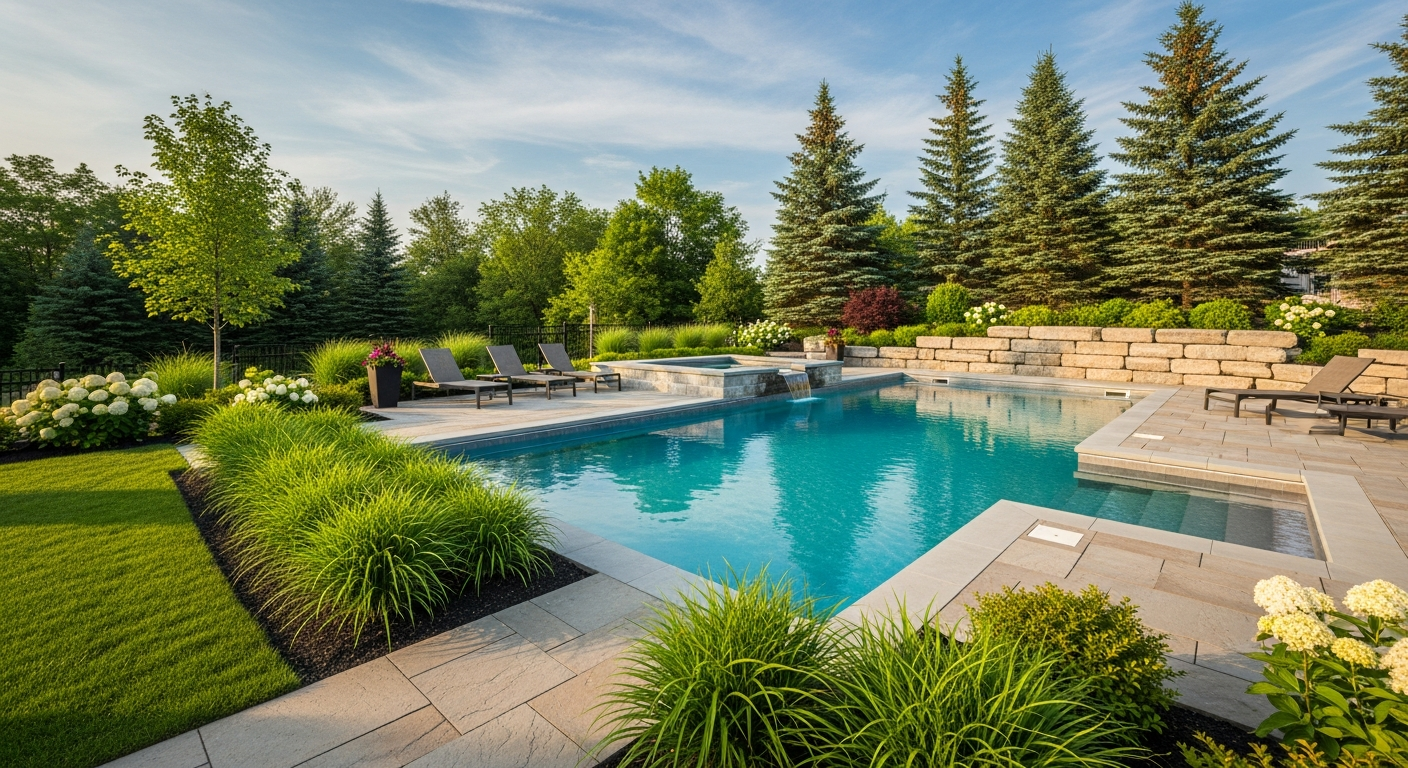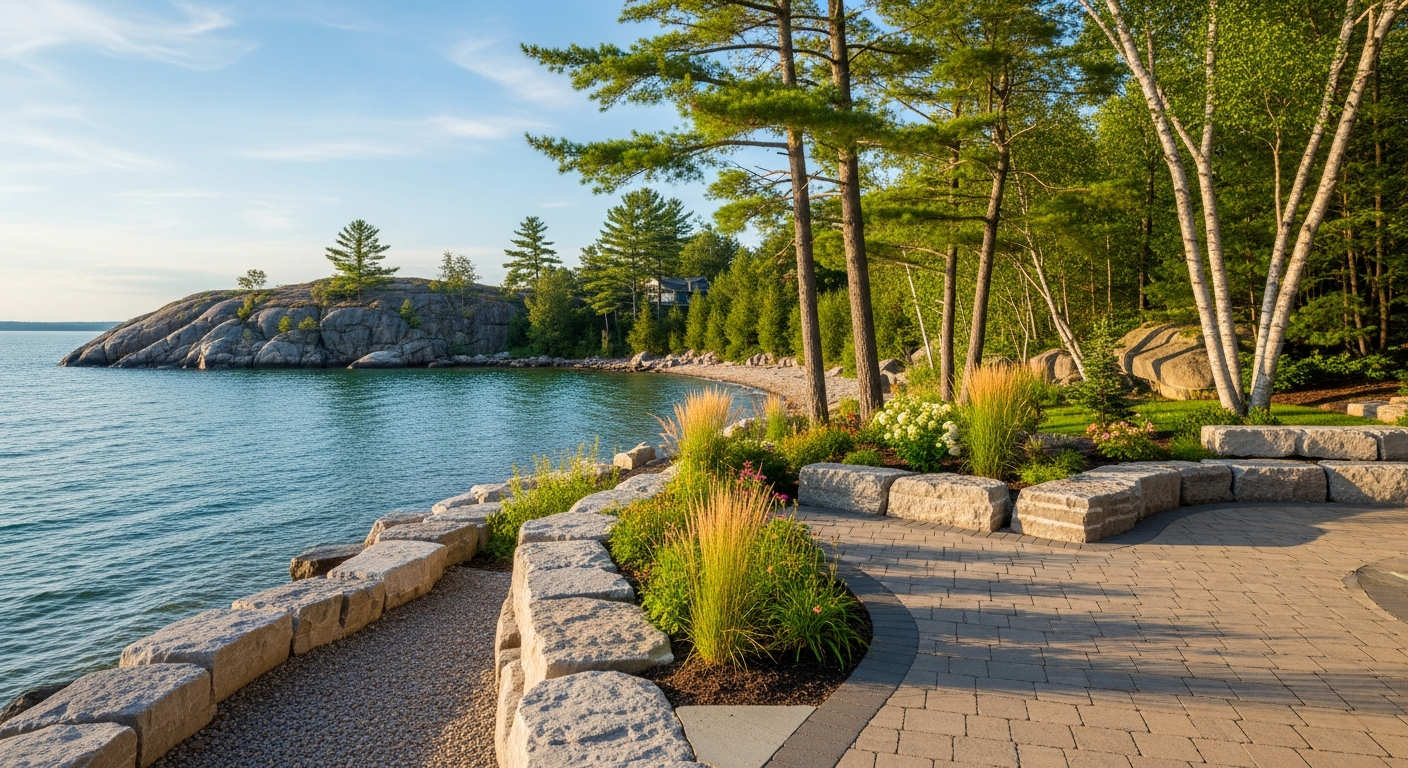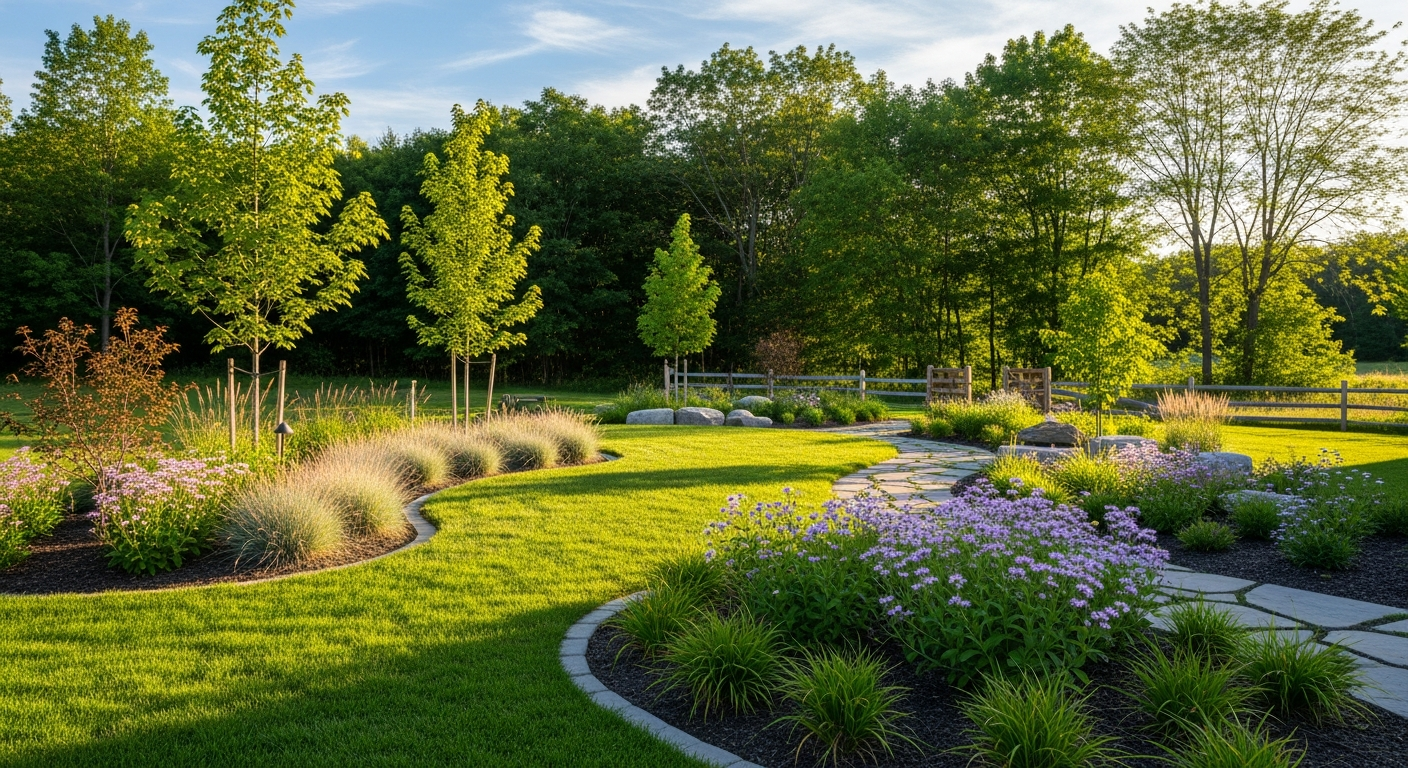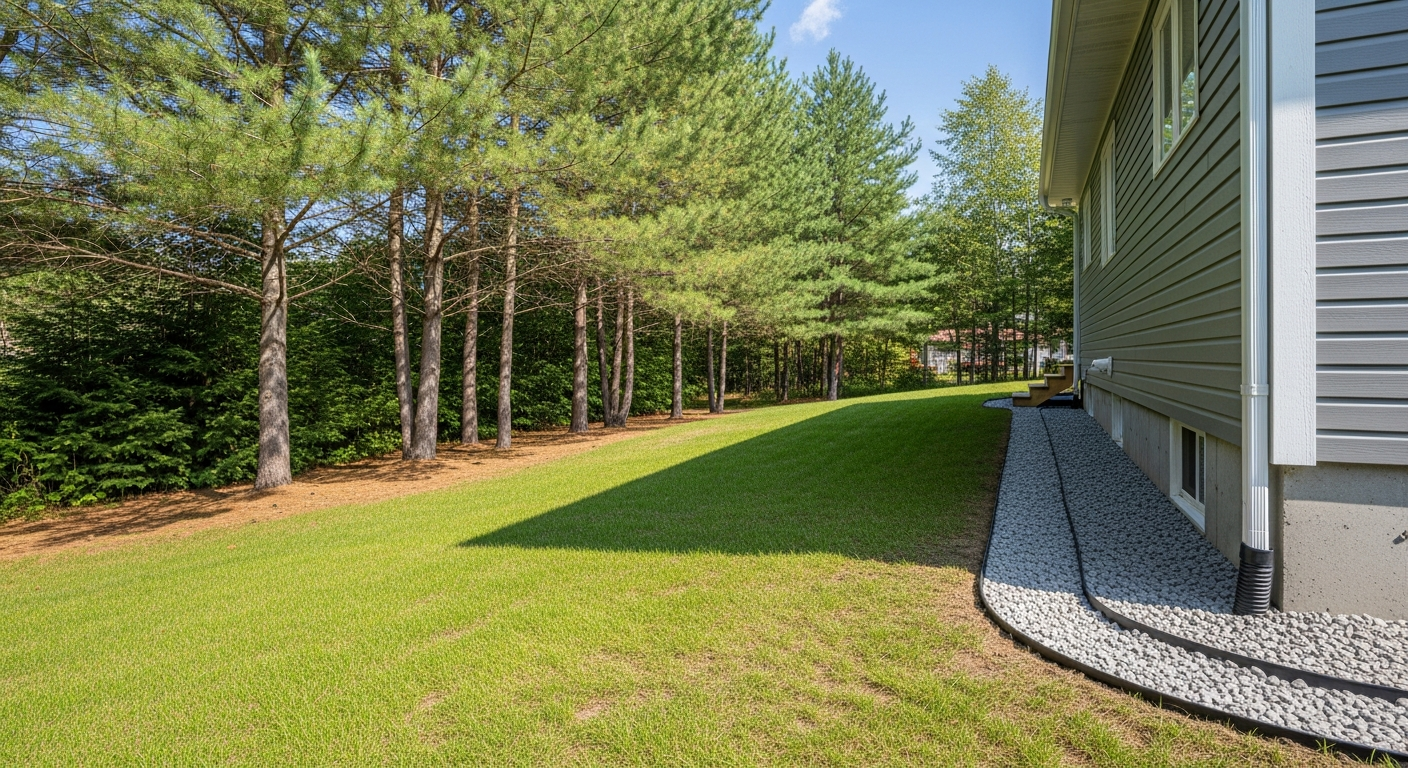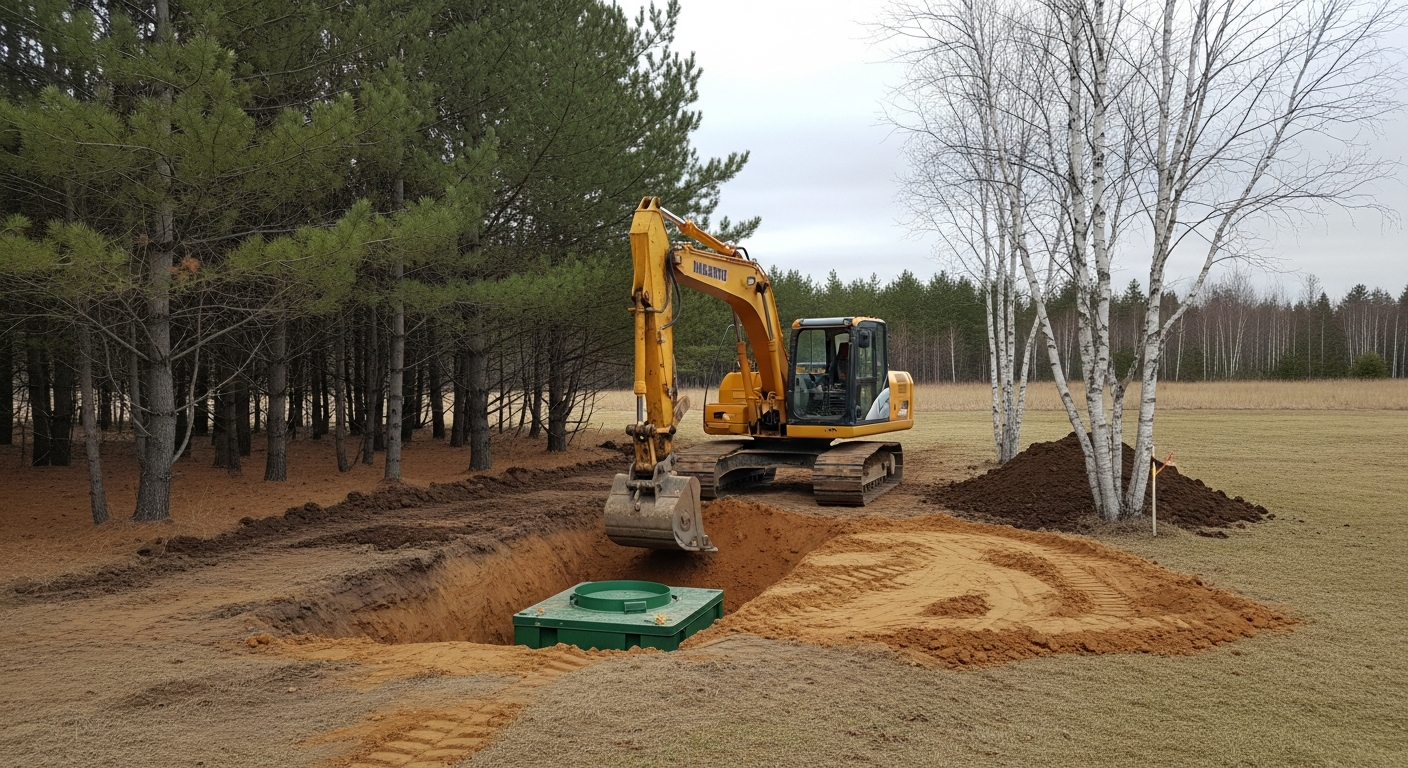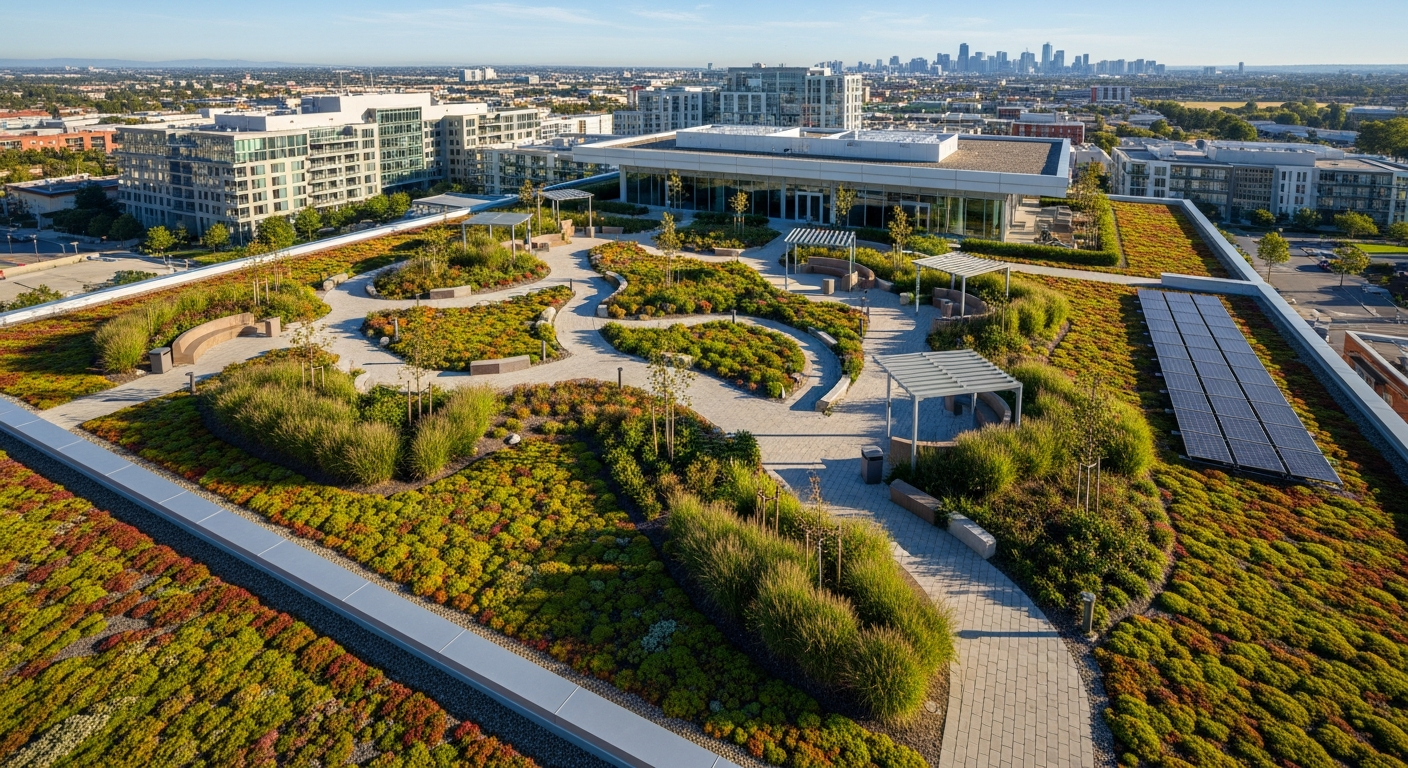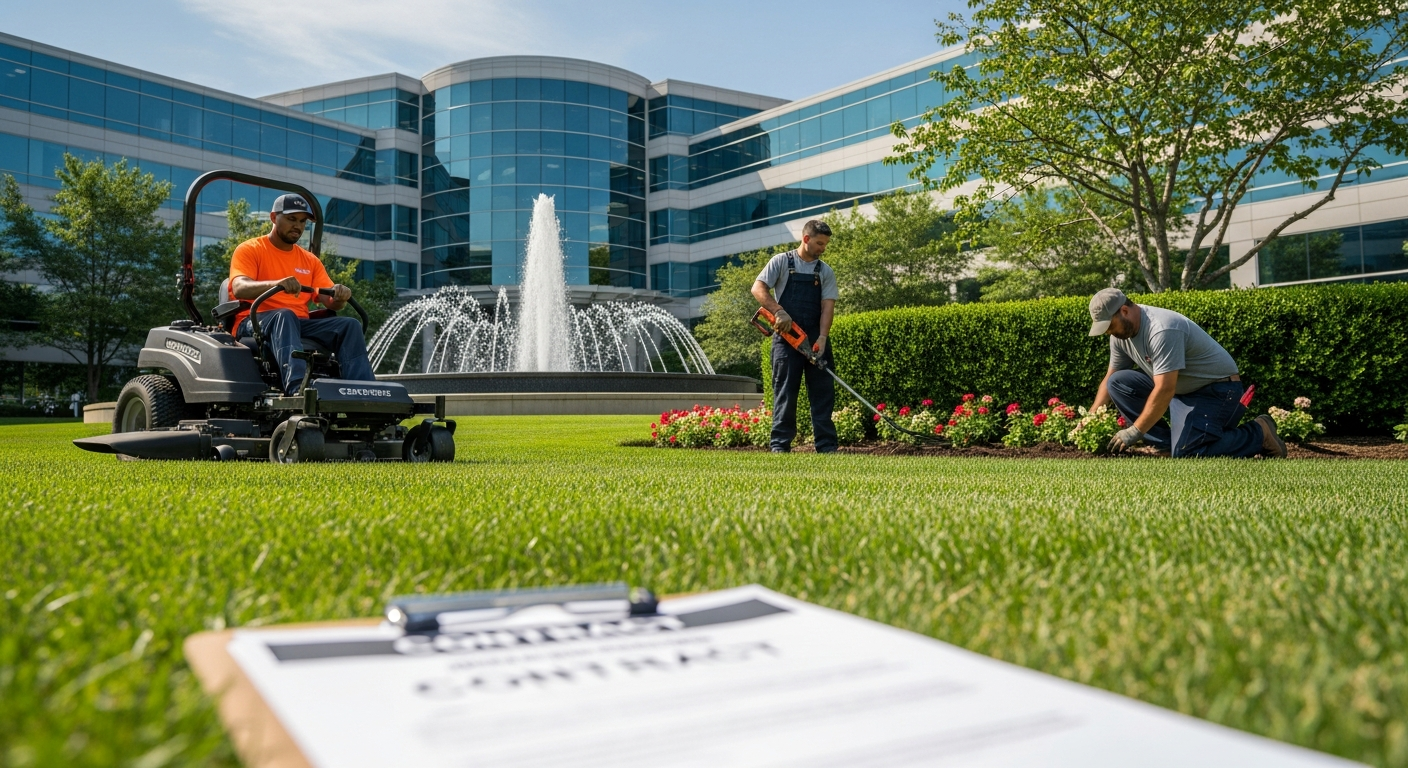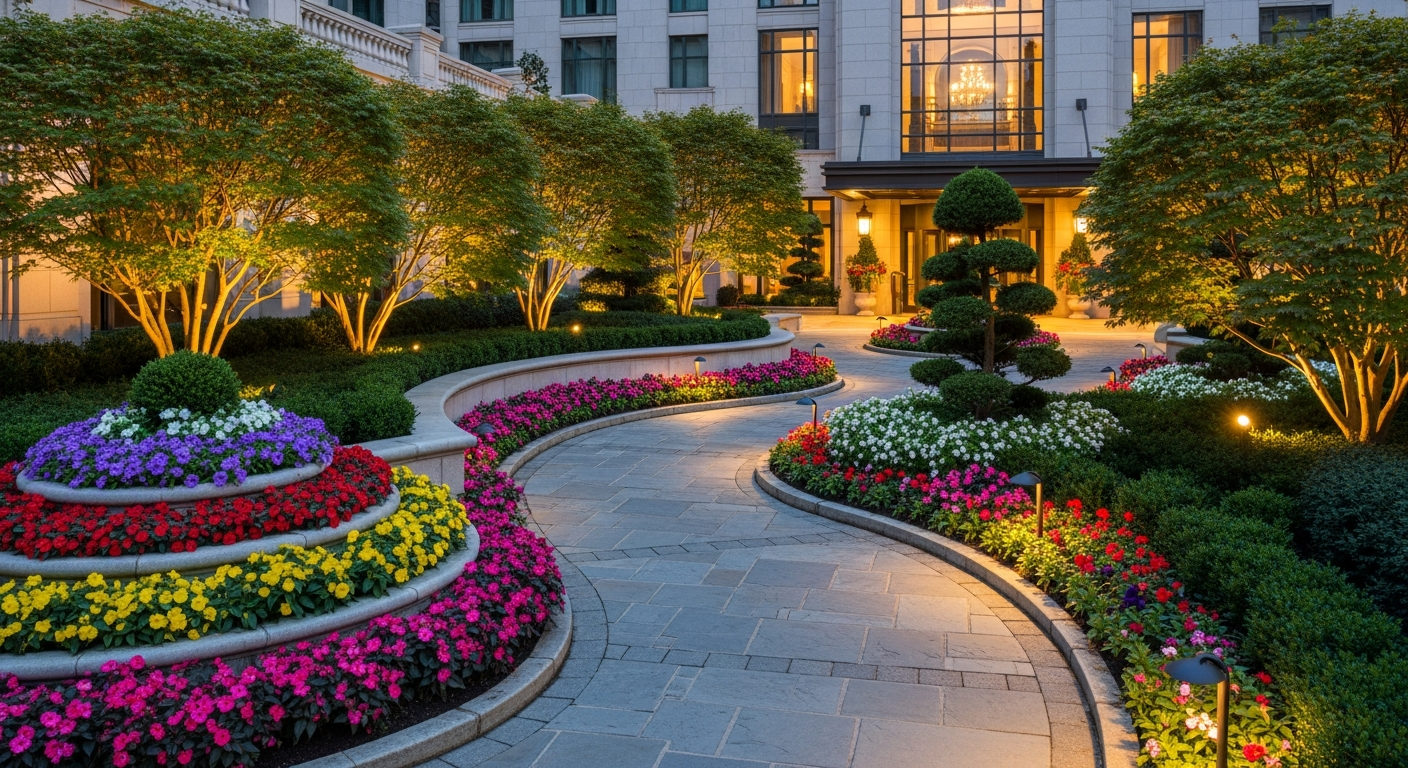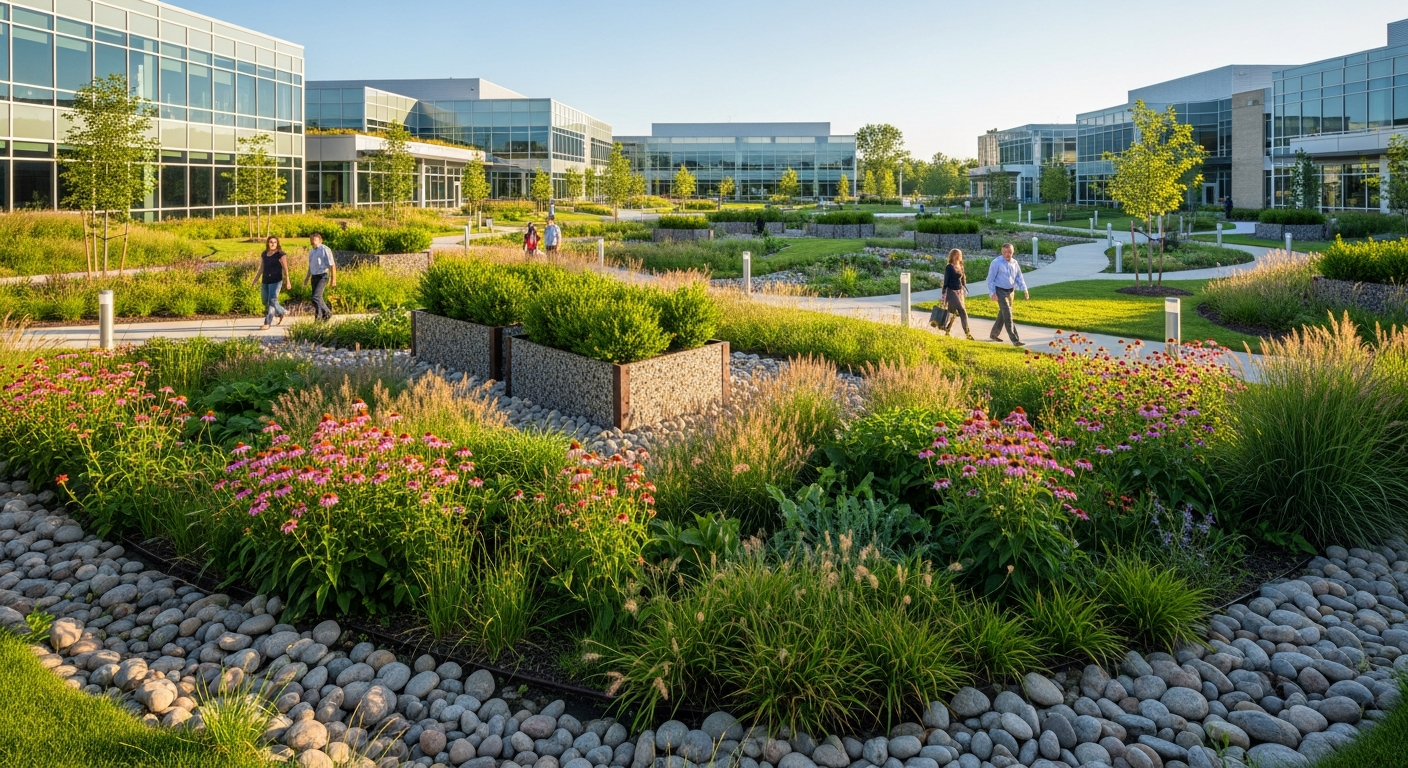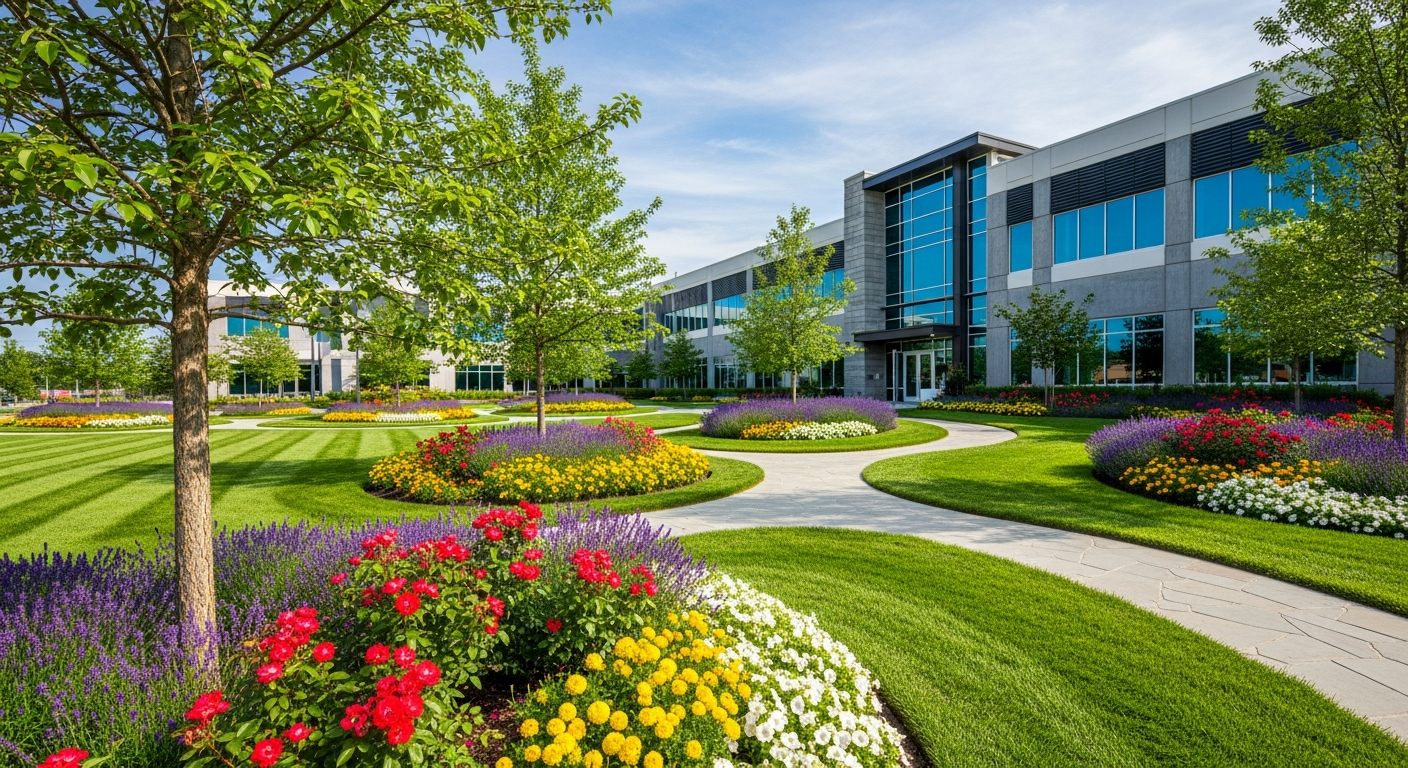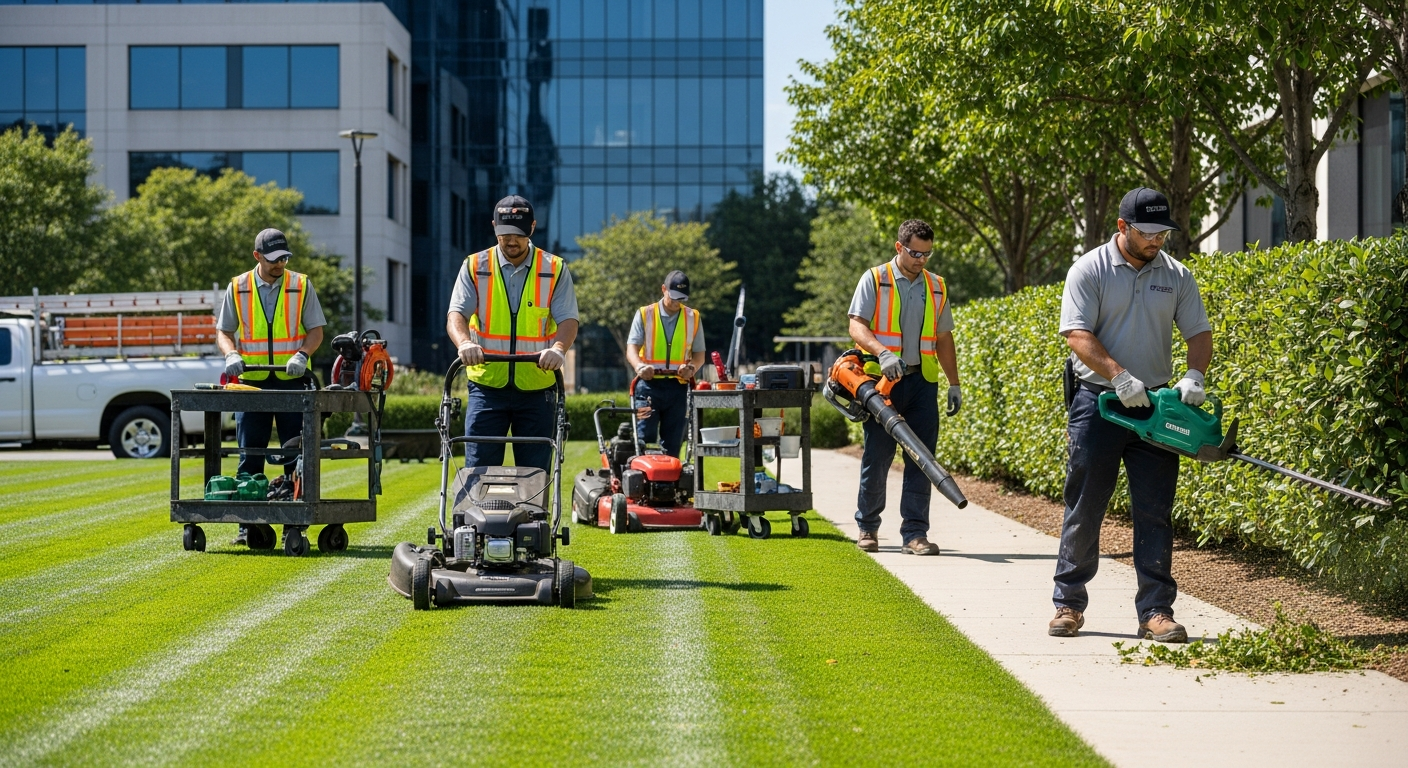
Commercial landscape maintenance covers weekly mowing and trimming, spring and fall cleanups, pruning, bed and mulch care, fertilizing, irrigation service and hardscape upkeep, usually under a seasonal contract with a separate winter snow contract. Contracts are priced from measured turf and bed areas, visit frequency and the task list.
Key takeaways
Commercial landscape maintenance covers the recurring work that keeps a business, plaza, office or apartment property tidy and safe: weekly mowing and trimming through the growing season, spring and fall cleanups, pruning, bed and mulch care, fertilizing, irrigation start-up and shut-down, and hardscape upkeep, usually followed by a separate winter snow and ice contract. Most properties sign a seasonal contract that lists each task and how often it happens.
At Forty Five Scapes, we maintain commercial properties in Midland, Penetanguishene, Collingwood, Wasaga Beach and Muskoka. This guide walks through the services a large commercial landscape needs, a realistic schedule, how contracts are scoped and priced, and how to plan for the 2027 season.
The Importance of Landscape Maintenance for Commercial Properties
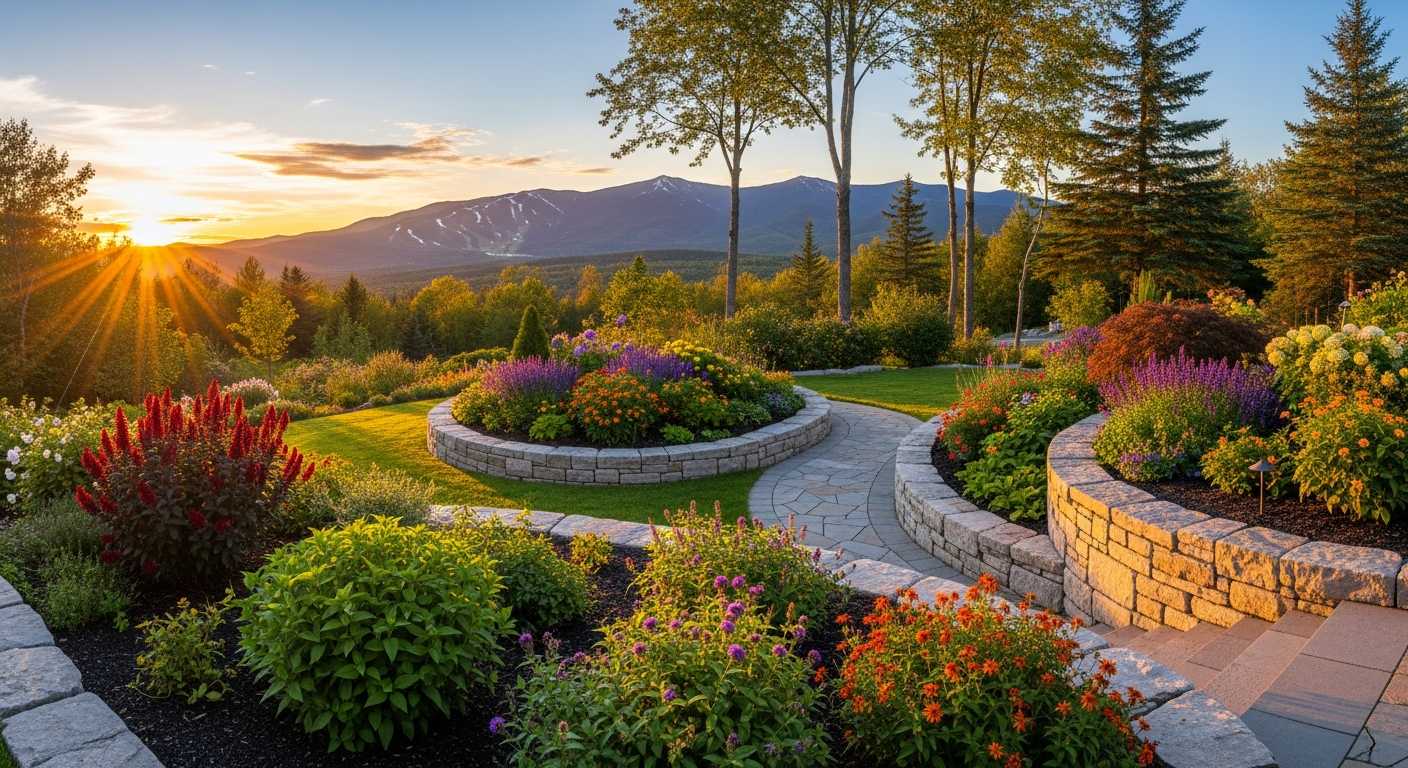
A well-maintained landscape serves as a reflection of your business's professionalism and commitment to quality. Here's why regular landscape maintenance is crucial for commercial properties:
- First Impressions: The exterior of your property is often the first thing clients, customers, and visitors see. A well-maintained landscape creates a positive first impression, encouraging people to engage with your business.
- Employee Well-being: Green, well-kept outdoor spaces provide a pleasant environment for employees to relax and recharge, boosting morale and productivity.
- Environmental Sustainability: Proper maintenance practices promote eco-friendly initiatives, conserve resources, and support local biodiversity.
- Property Value: A neglected landscape is one of the first things a prospective tenant or buyer notices. Steady upkeep protects what you have already spent on plants, turf and hardscape.
- Safety and Accessibility: A tidy landscape reduces hazards such as overgrown plants, uneven pathways, and debris, ensuring a safe and accessible environment for everyone.
Essential Services for Large-Scale Commercial Landscapes
Maintaining large commercial landscapes requires a range of specialized services to address the diverse needs of expansive outdoor spaces. Here are the key components of comprehensive landscape maintenance:
1. Lawn Care
Maintaining Healthy and Attractive Lawns
A lush, green lawn is a cornerstone of any commercial landscape. Regular lawn care ensures that your turf remains healthy and visually appealing.
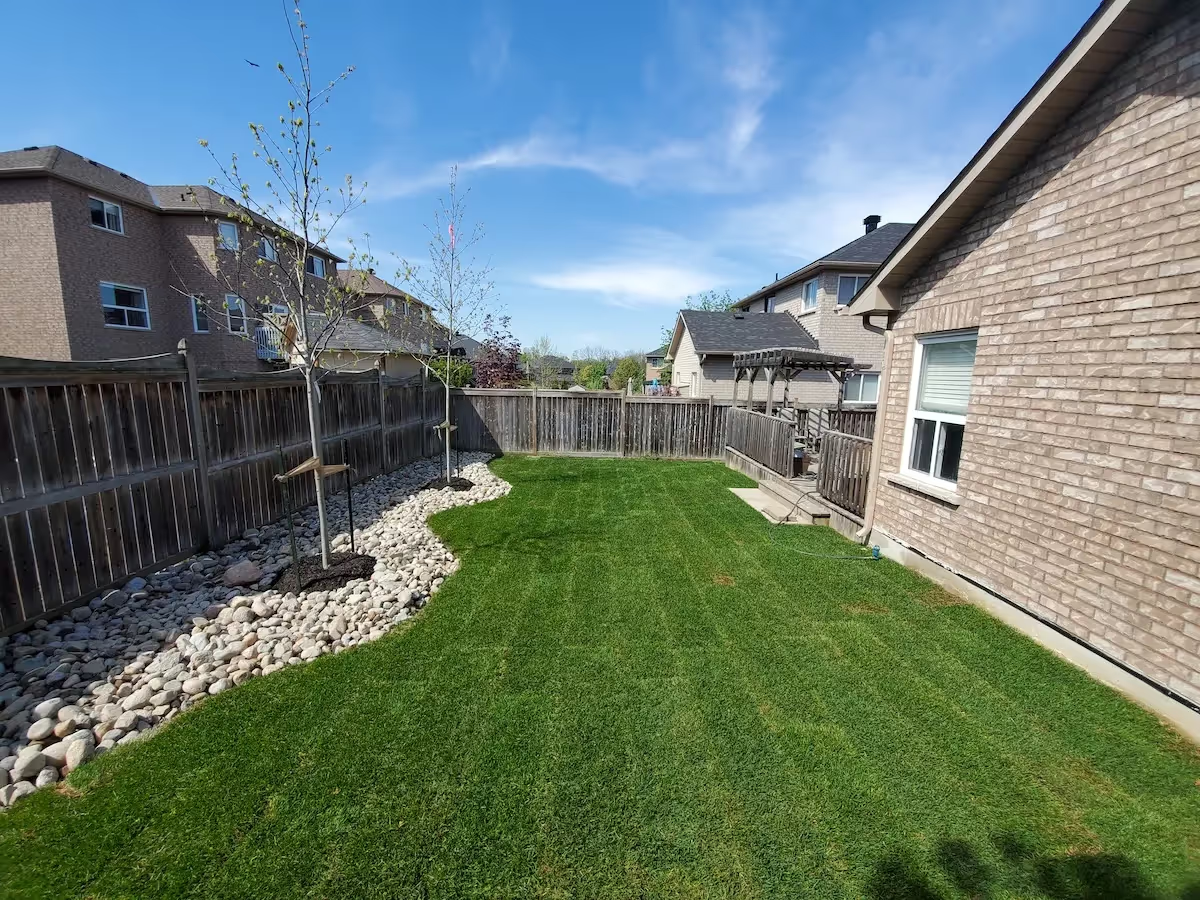
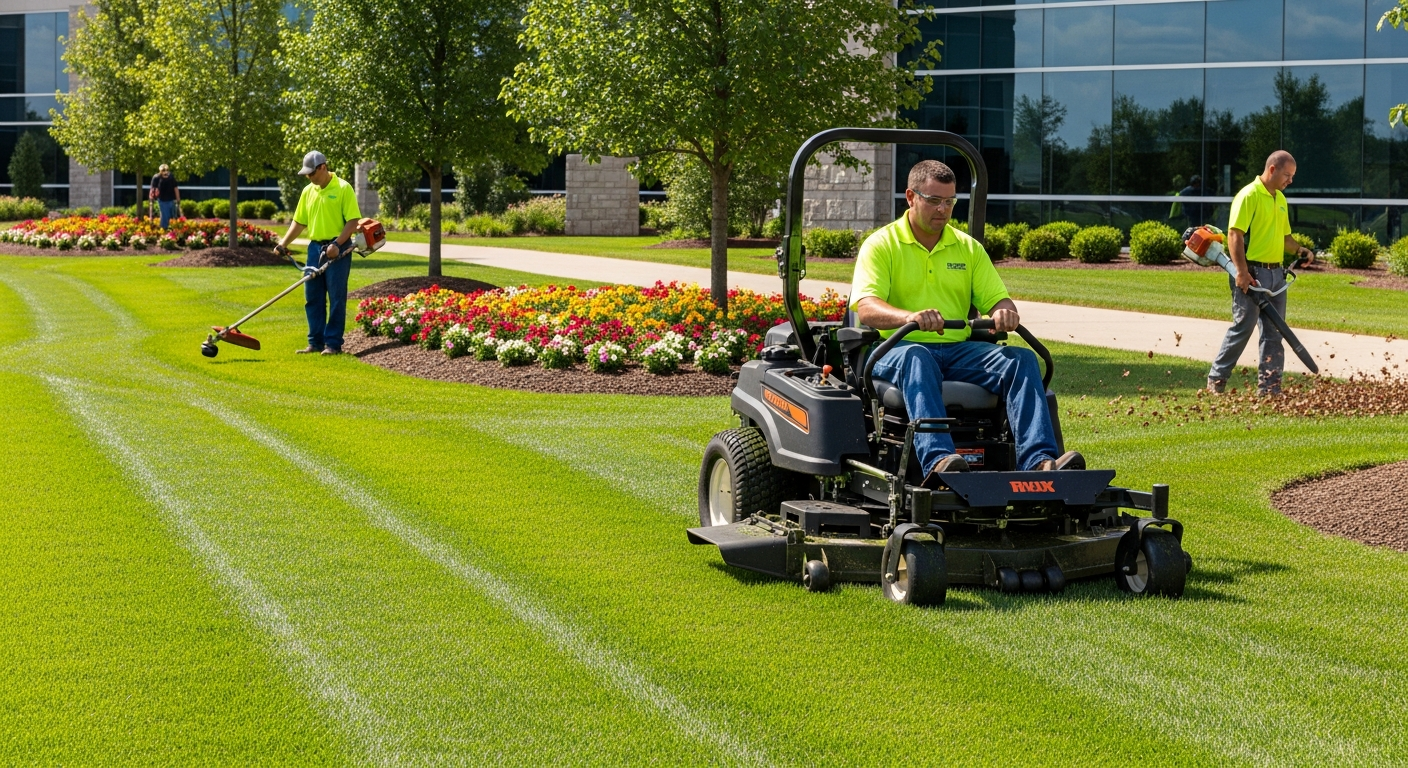
- Mowing and Trimming: Consistent mowing keeps the grass at a steady height (most cool-season commercial turf is kept around 6 to 8 cm), which promotes dense growth that crowds out weeds. Taking no more than a third of the blade at a time keeps the turf from stressing in summer heat. Trimming edges along walkways, driveways, and garden beds creates a neat and professional appearance.
- Fertilizing: Applying the right balance of nutrients supports robust grass growth, enhances color, and improves resilience against pests and diseases.
- Aeration: Aerating the soil reduces compaction, allowing air, water, and nutrients to penetrate deeper into the root zone, promoting healthier grass.
2. Pruning and Trimming
Enhancing Plant Health and Aesthetics
Regular pruning and trimming are essential for maintaining the shape, health, and appearance of trees, shrubs, and other plants.
- Tree Pruning: Removing dead or diseased branches improves tree health and safety while maintaining a desirable shape.
- Shrub and Bush Trimming: Shaping and thinning shrubs enhances their appearance and prevents overgrowth that can obstruct walkways and sightlines.
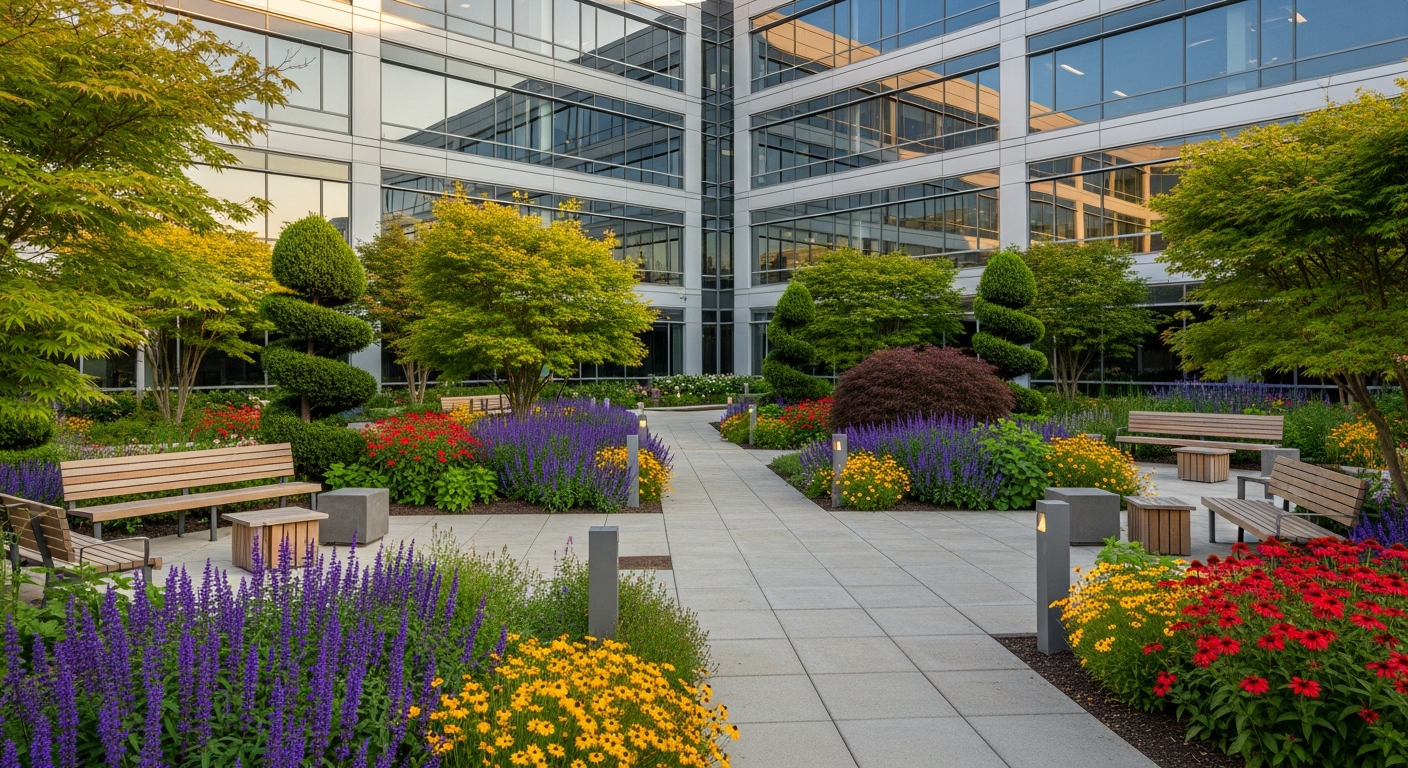
- Flower Bed Maintenance: Deadheading spent flowers encourages new blooms and keeps garden beds looking full and well-kept.
3. Irrigation System Maintenance
Ensuring Efficient Watering Practices
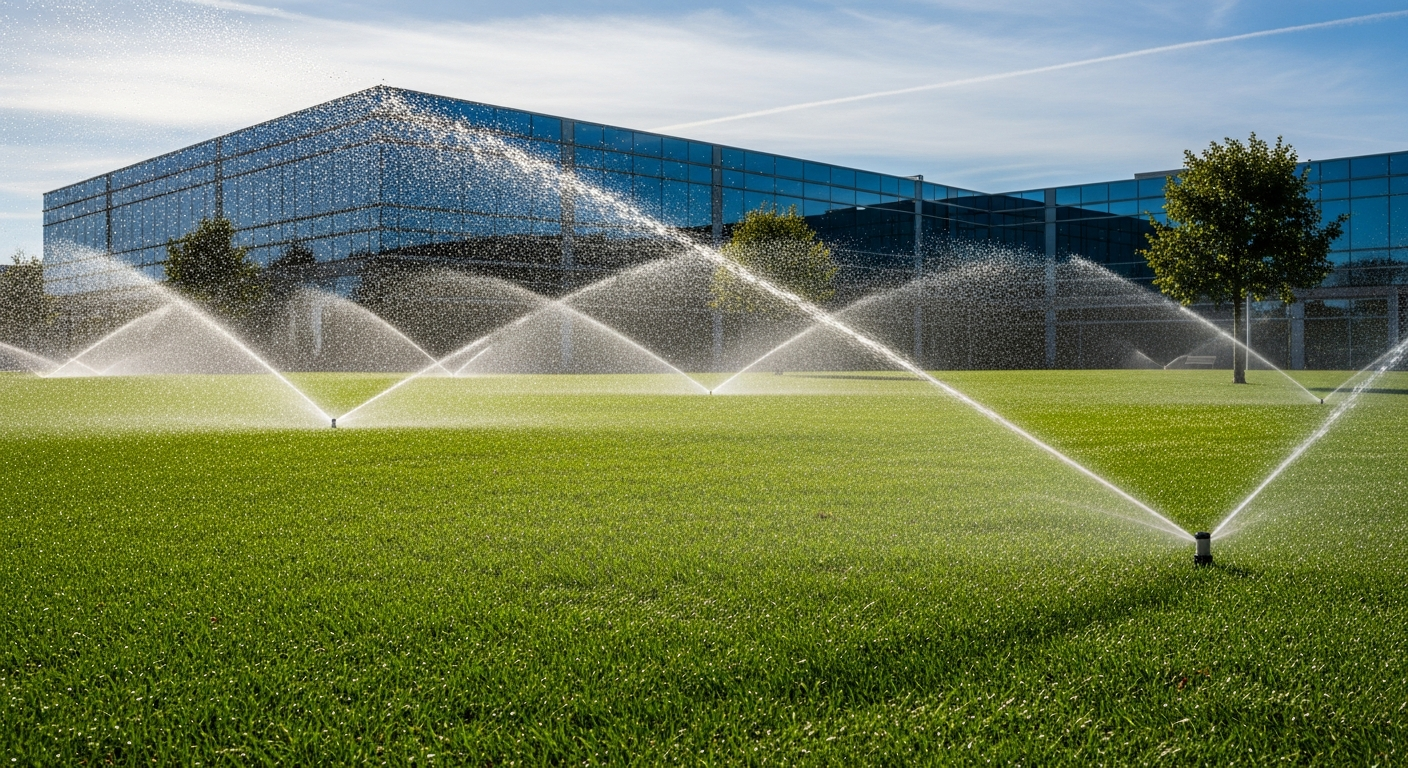
A well-maintained irrigation system is vital for sustaining the health of your landscape, especially during dry spells.
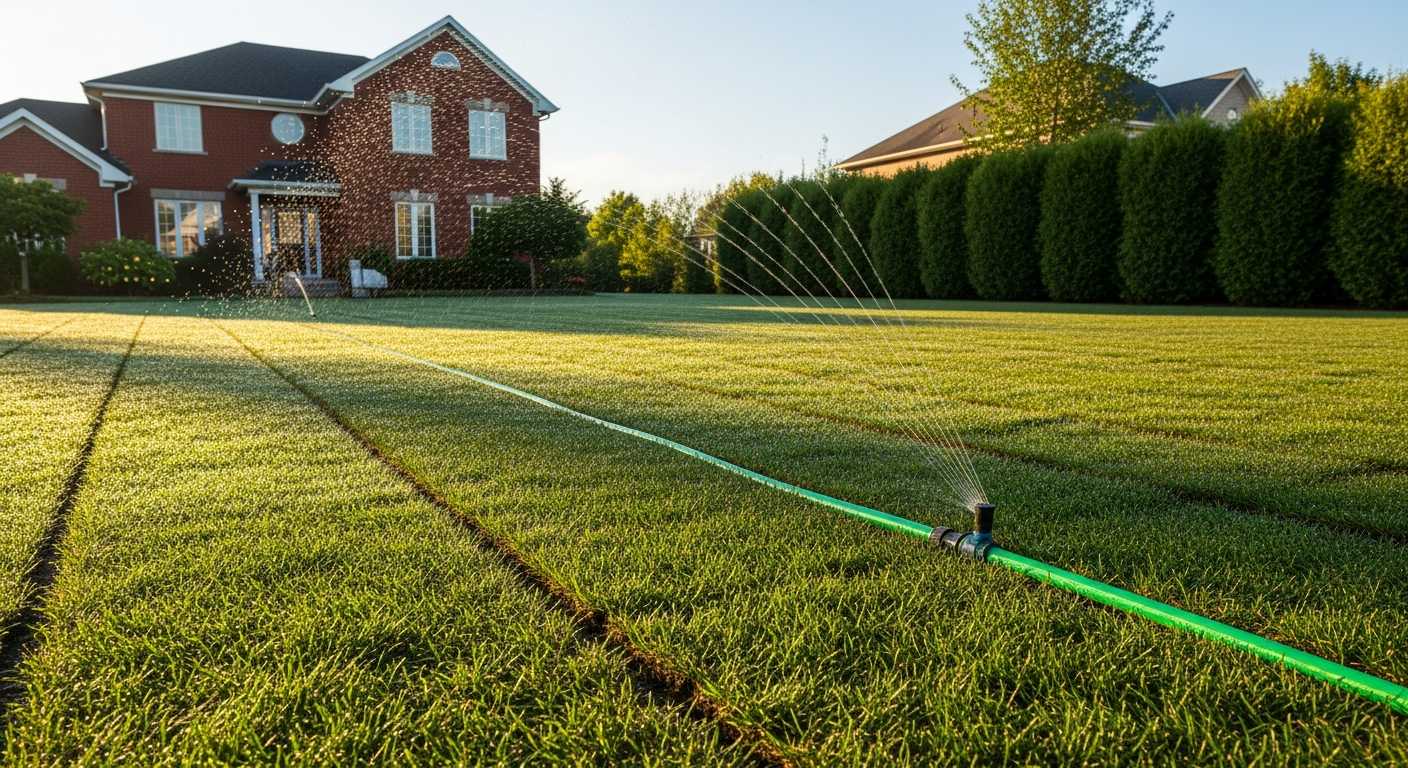
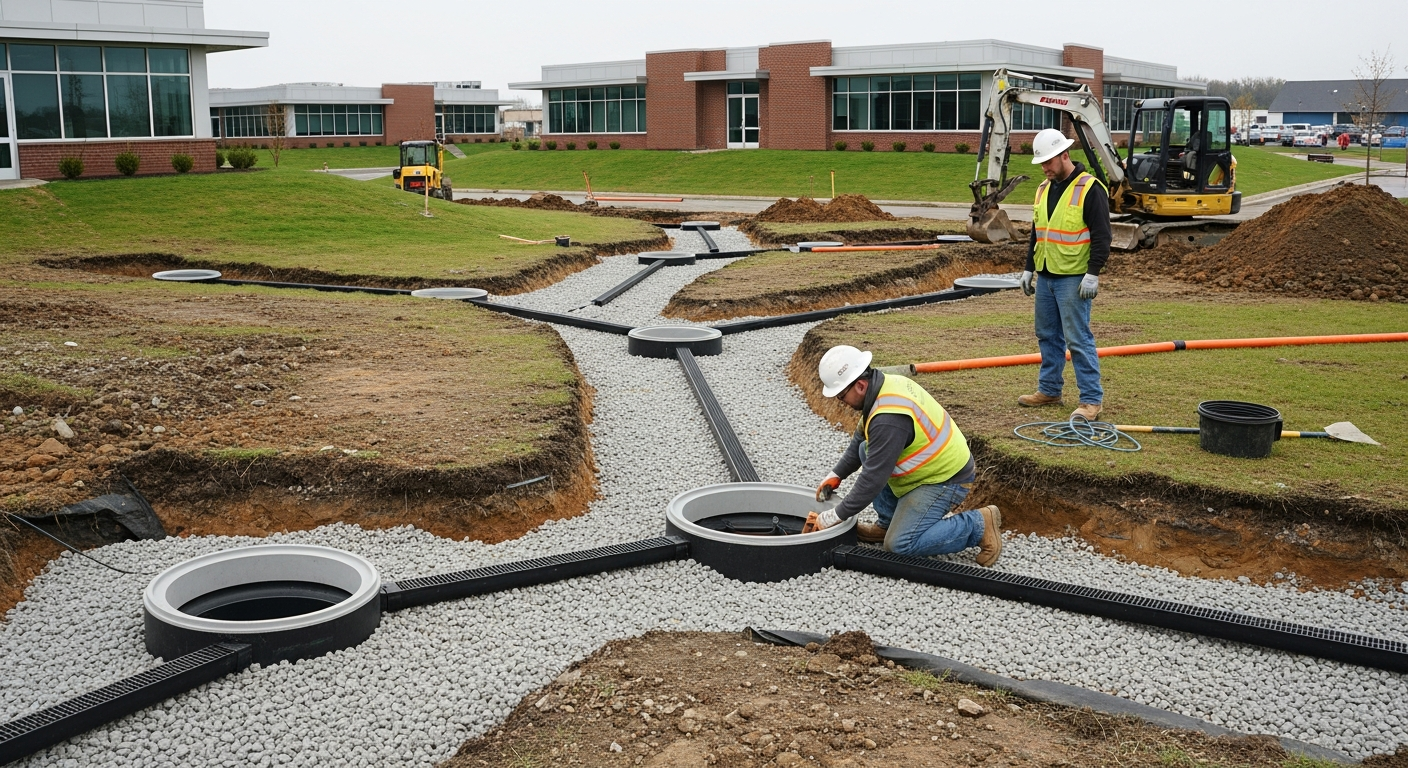
- System Inspections: Regularly check for leaks, clogs, and malfunctioning components to ensure the system operates efficiently.
- Adjustments and Upgrades: Modify watering schedules based on seasonal changes and weather conditions to optimize water usage and prevent overwatering or underwatering.
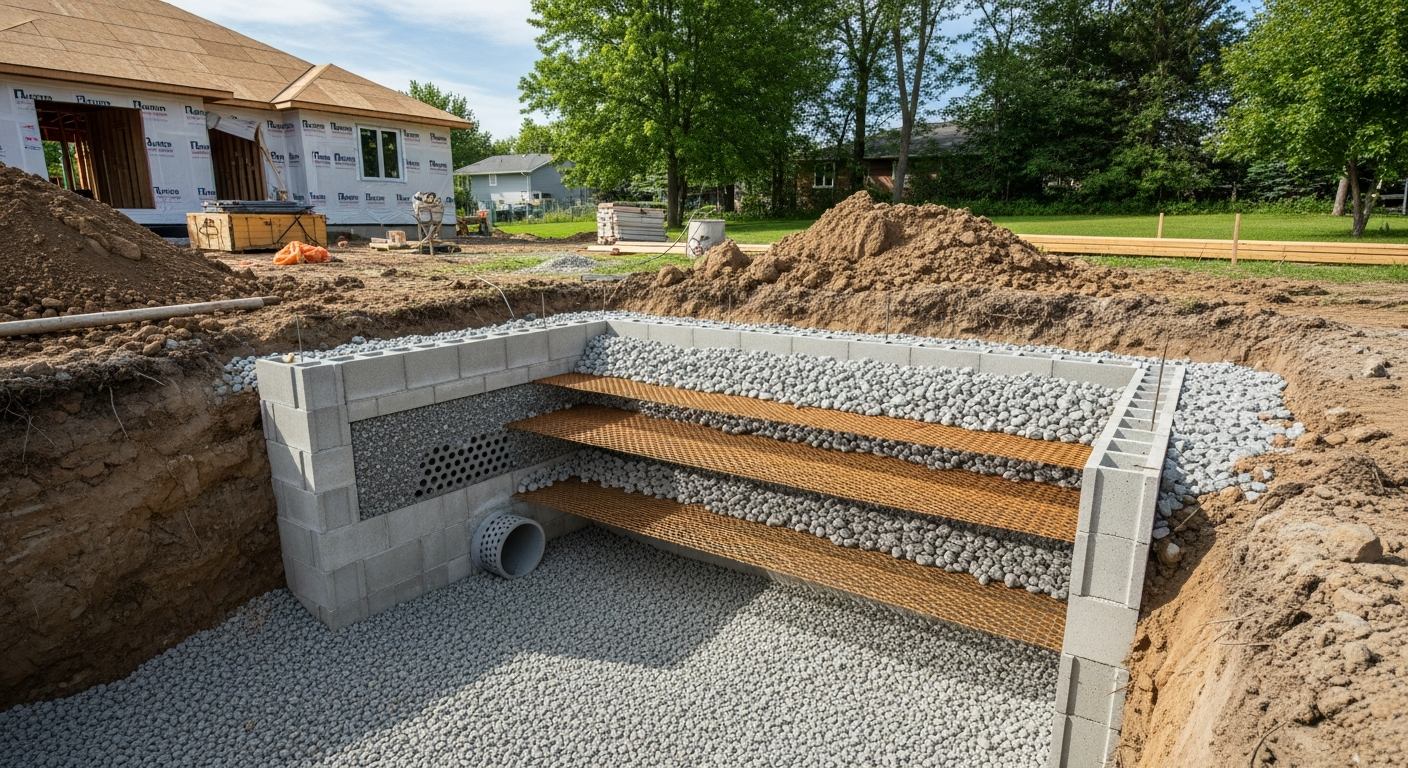
- Rainwater Harvesting Integration: Incorporate rainwater harvesting systems to collect and reuse rainwater for irrigation, promoting sustainability and reducing water bills.
4. Pest and Disease Control
Protecting Plants from Harmful Threats
Proactively managing pests and diseases is crucial for maintaining a healthy landscape.
- Integrated Pest Management (IPM): Combine monitoring, cultural practices and biological controls, and use pesticides only when needed. In Ontario, cosmetic pesticide use on lawns and gardens is restricted to lower-risk products on the province's Allowable List unless an exception applies, so a healthy, thick turf is the main line of defence.
- Disease Monitoring: Regularly inspect plants for signs of disease and implement appropriate treatments to prevent spread and minimize damage.
- Preventive Measures: Use mulch and proper spacing to reduce the risk of fungal infections and other plant diseases.
5. Seasonal Clean-Up
Preparing Landscapes for Changing Seasons
Seasonal clean-up ensures that your landscape remains attractive and functional throughout the year.
- Spring Cleanup: Remove winter debris, prune damaged branches, and prepare plant beds for new growth.
- Summer Maintenance: Focus on irrigation management, pest control, and regular mowing to maintain lush greenery.
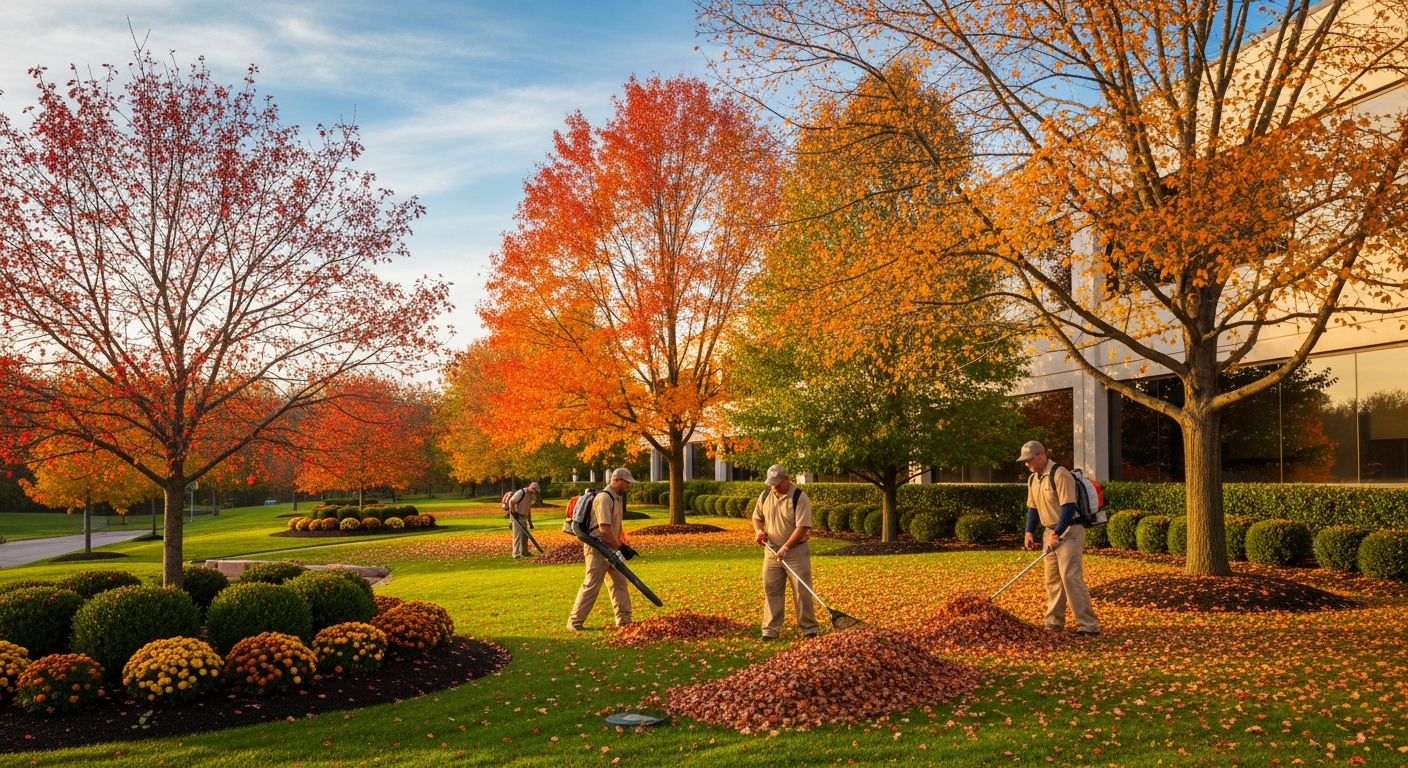
- Fall Clean-Up: Rake and remove fallen leaves, prepare plants for dormancy, and apply mulch to protect roots.
- Winter Preparation: Implement snow removal and ice management to ensure safety and protect plants from frost damage.
6. Mulching and Soil Health
Promoting Soil Moisture and Plant Growth
Mulching plays a critical role in maintaining soil health and supporting plant growth.
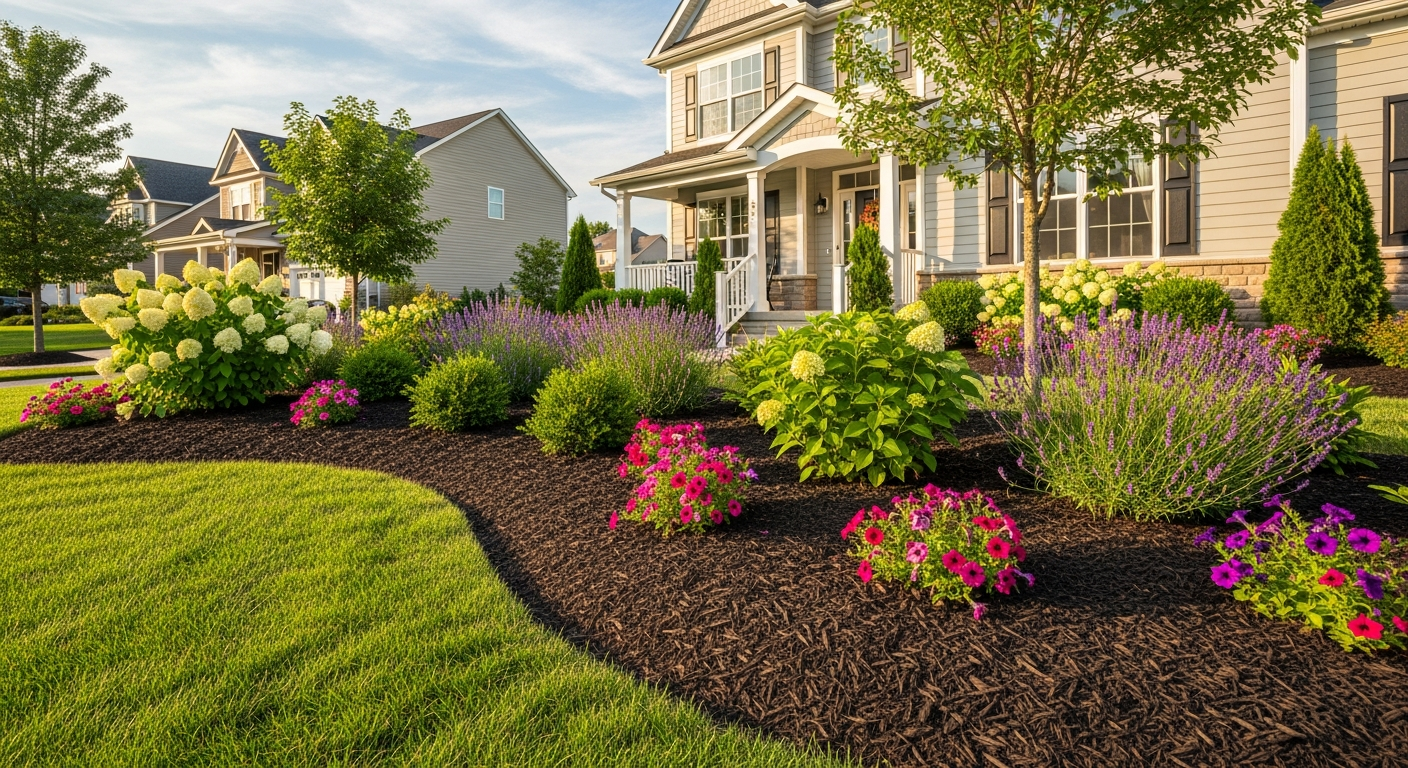
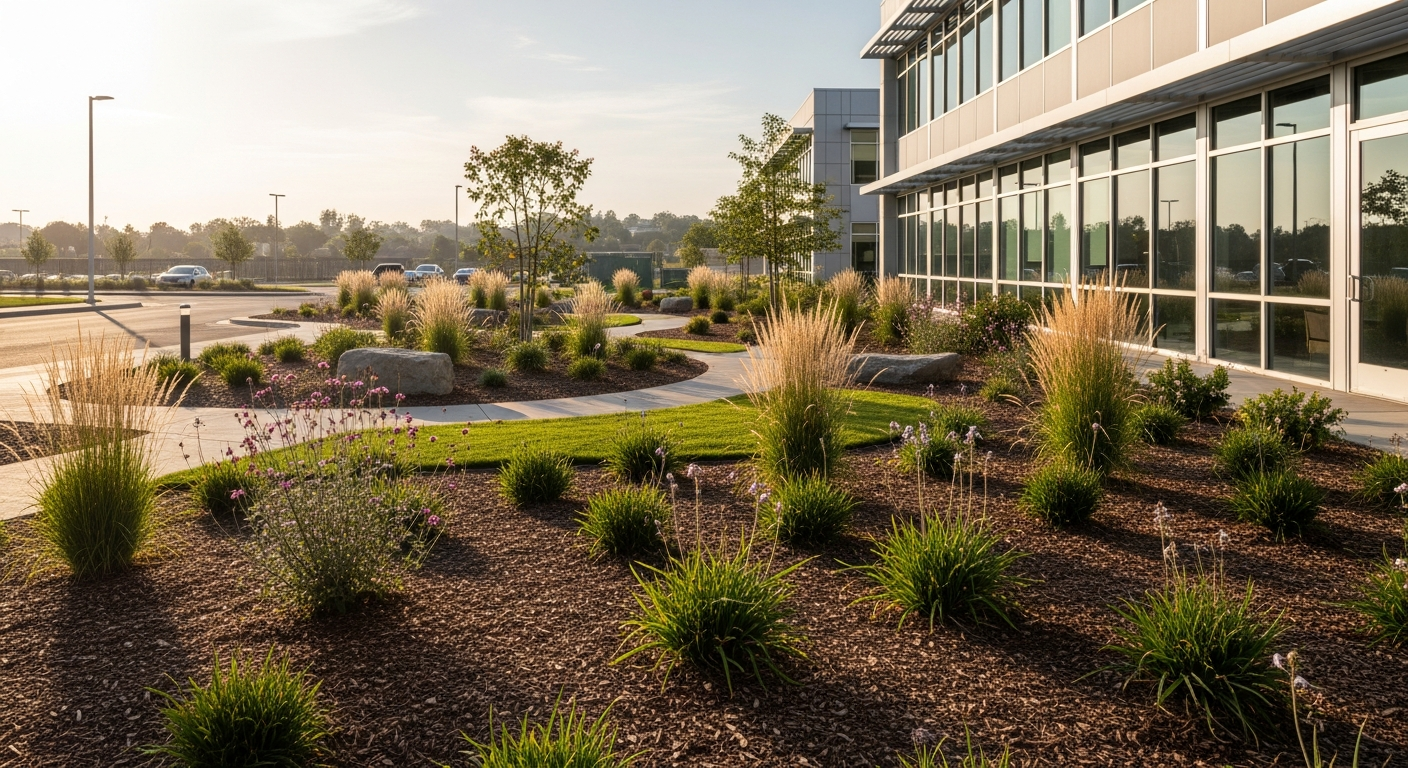
- Organic Mulches: Apply bark, wood chips, or compost to retain soil moisture, suppress weeds, and enrich the soil as they decompose.
- Inorganic Mulches: Use river rock or gravel in areas where organic mulch washes out or blows away, such as along parking lot edges and downspout splash zones.
- Soil Testing and Amendment: Conduct regular soil tests to assess nutrient levels and amend the soil as needed to support plant health.
7. Hardscape Maintenance
Preserving Structural Elements
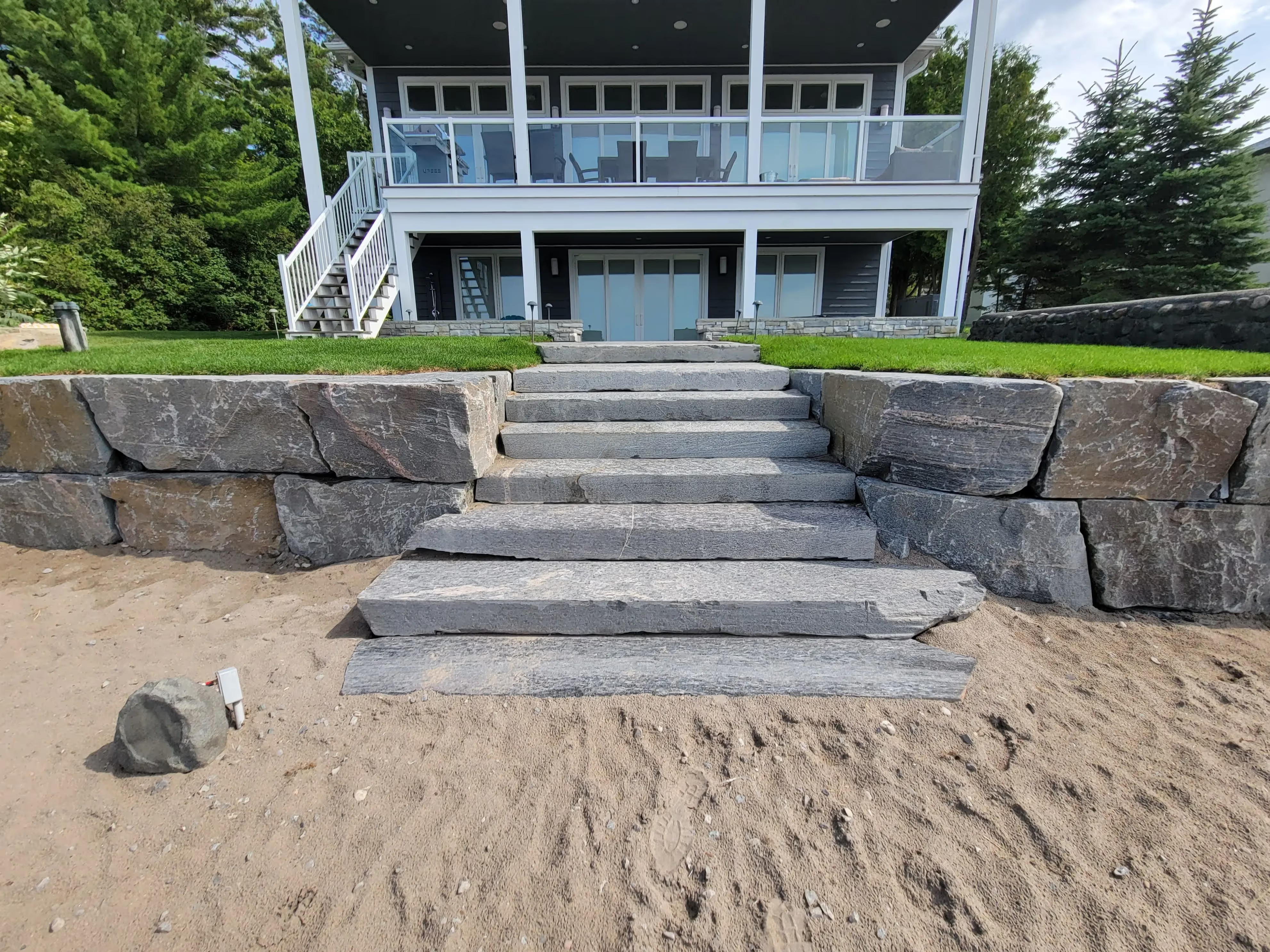
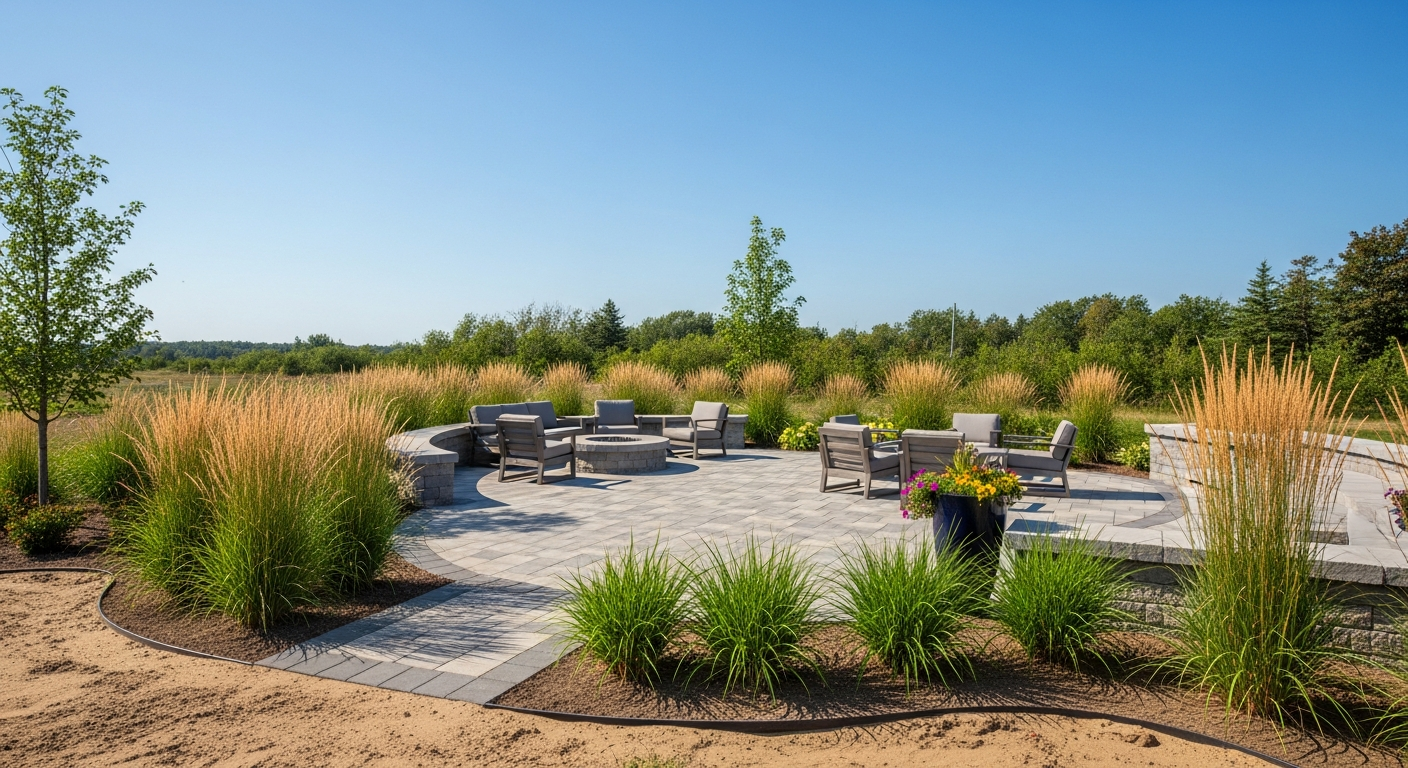
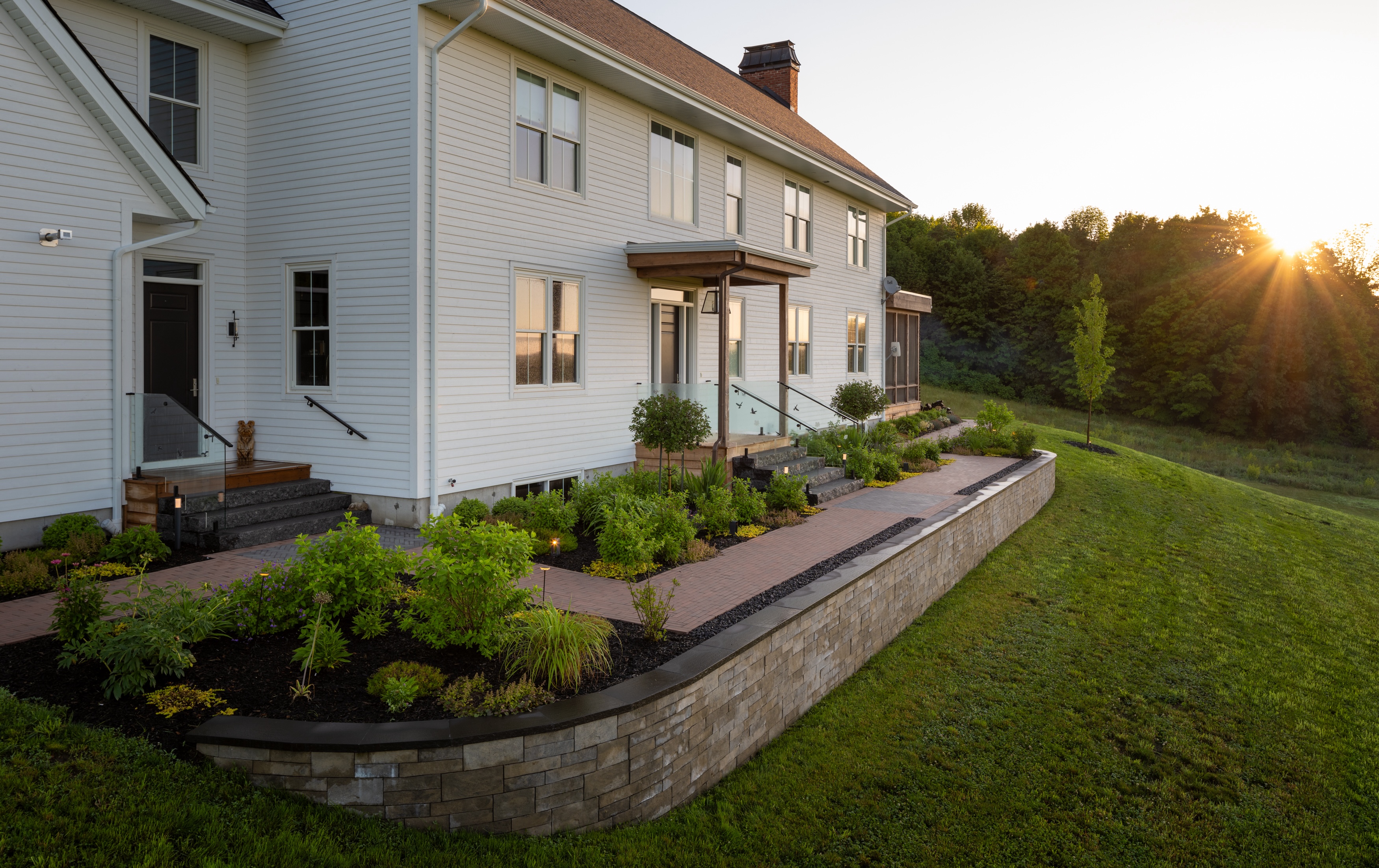
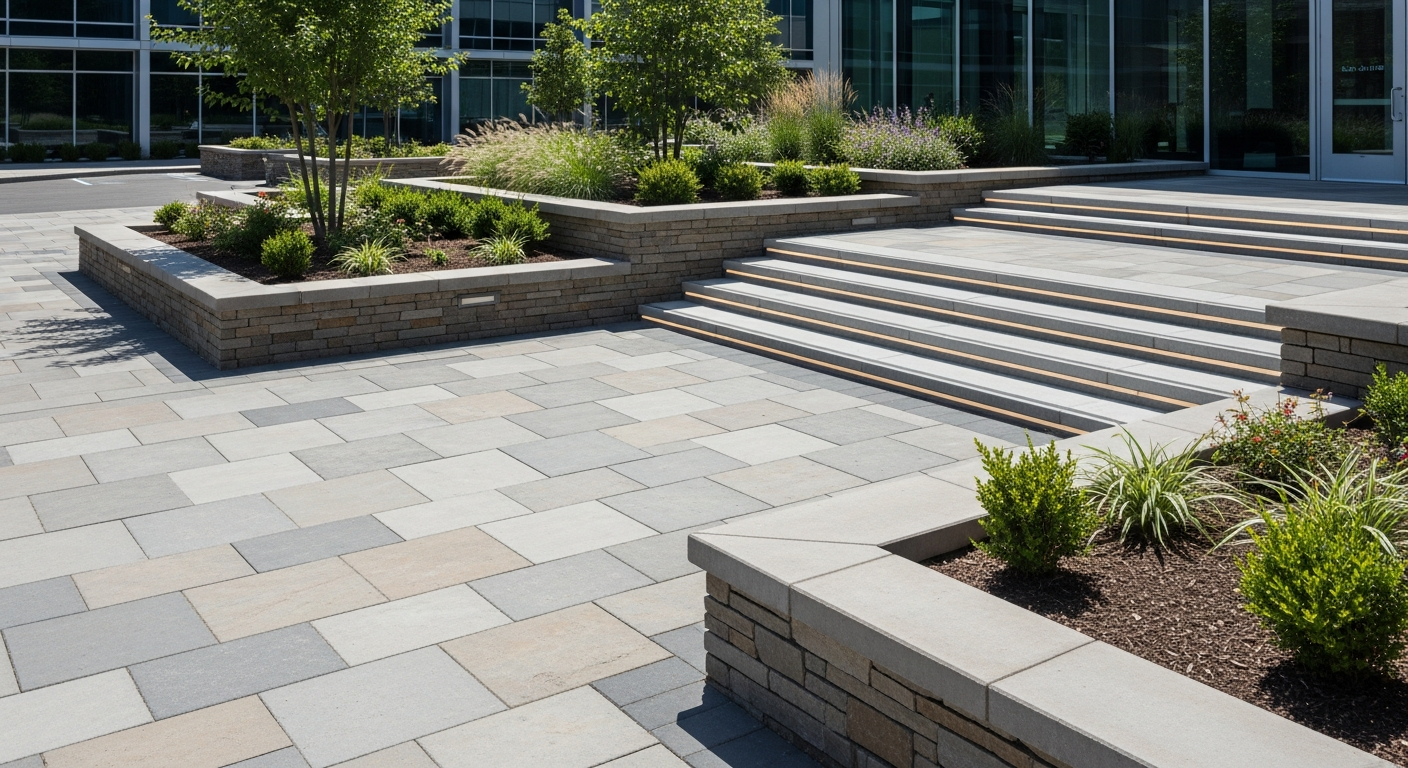
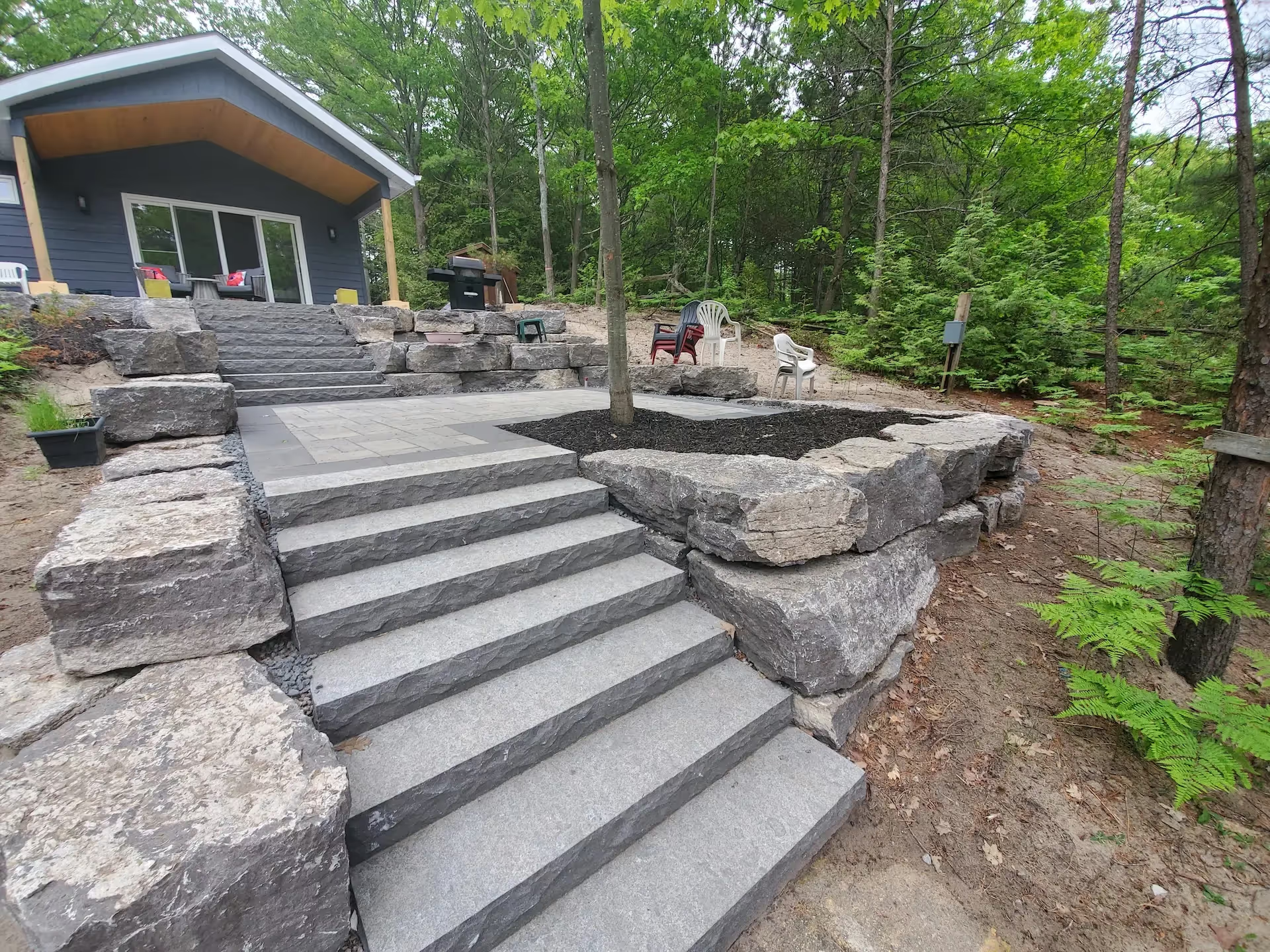
Hardscape features such as walkways, patios, and retaining walls require regular maintenance to ensure their longevity and appearance.
- Power Washing: Clean hardscape surfaces to remove dirt, grime, and stains, maintaining a fresh and inviting look.
- Repairs and Upgrades: Address any cracks, loose pavers, or structural issues promptly to prevent further damage and maintain safety.
- Sealing and Finishing: Apply sealants to protect surfaces from weathering and extend their lifespan.
8. Plant Health Monitoring
Ensuring Vibrant and Thriving Plants
Continuous monitoring of plant health is essential for identifying and addressing issues early.
- Regular Inspections: Conduct routine checks for signs of stress, pest infestations, and nutrient deficiencies.
- Nutrient Management: Adjust fertilization schedules based on plant needs and soil conditions to promote healthy growth.
- Watering Adjustments: Modify watering practices to accommodate seasonal changes and specific plant requirements.
Routine Maintenance Schedules
Establishing a consistent maintenance schedule ensures that all aspects of your landscape receive the necessary attention. Here's a suggested breakdown of routine tasks:
Daily/Weekly
- Mowing and Trimming: Keep grass at the recommended height and trim overgrown areas.
- Irrigation System Checks: Monitor and adjust irrigation systems to ensure proper functioning.
- Debris Removal: Clear walkways and common areas of litter, leaves, and other debris.
Monthly
- Fertilization: Most commercial turf gets a few applications spread through the growing season rather than one every month. Time them from a soil test and the weather.
- Pest and Disease Inspections: Check for signs of pests and diseases, implementing control measures if necessary.
- Mulching: Refresh mulch in garden beds to maintain moisture retention and weed suppression.
Seasonal
- Spring: Perform comprehensive clean-up, plant new additions, and prepare irrigation systems.
- Summer: Focus on irrigation management, pest control, and regular pruning.
- Fall: Conduct leaf removal, prepare plants for dormancy, and apply protective mulches.
- Winter: Snow removal and ice management, plus burlap or guards for shrubs near salted walks and plow piles.
How commercial maintenance contracts are scoped and priced
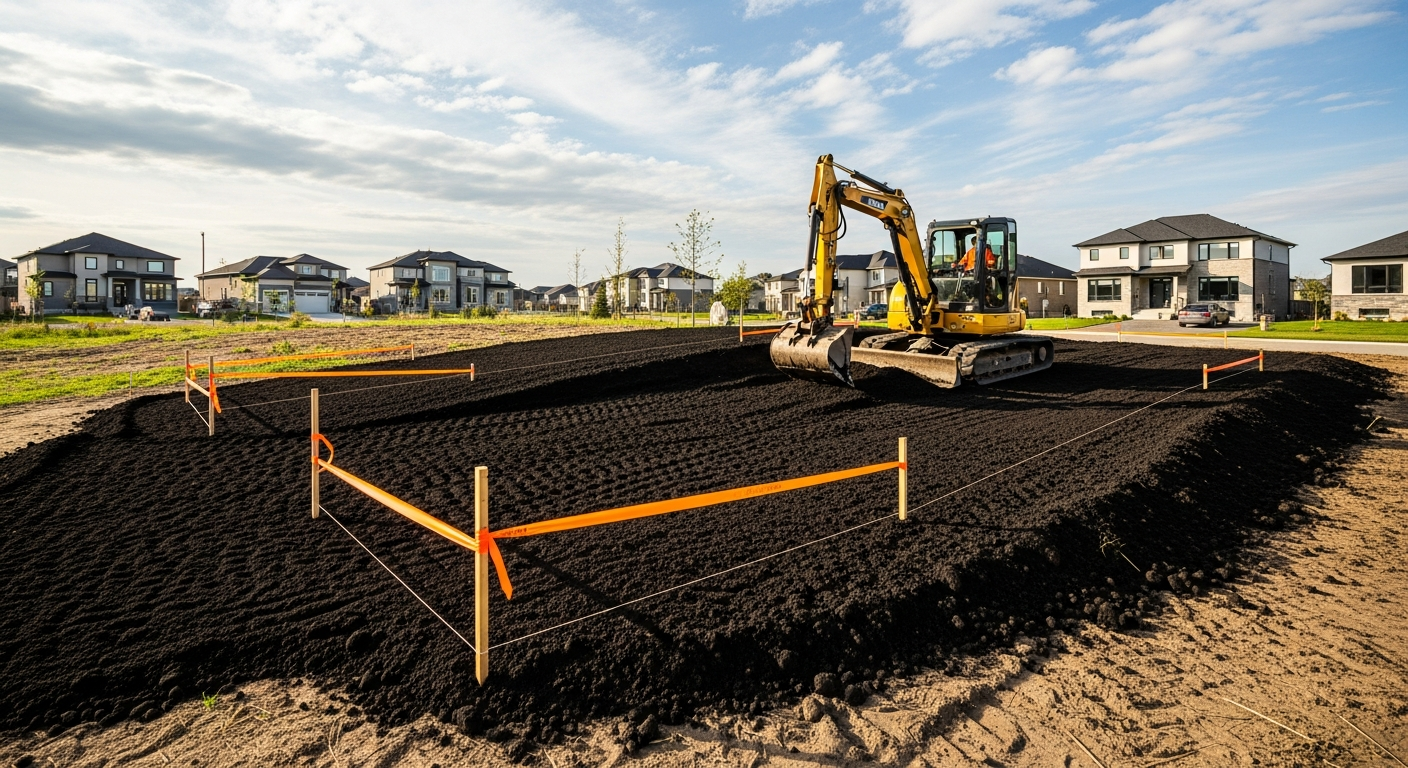
Commercial maintenance is usually sold as a seasonal contract, billed monthly or per visit, with extra work such as tree removal or plant replacement quoted separately. A good contract lists every task, how often it happens, and what triggers an extra charge. Contractors price from the site itself: how much turf there is to mow, the length of edging and the area of planting beds, the volume of mulch needed to top them up, and how much of the property must be trimmed by hand.
That is why the first step is a measured site walk. Turf and bed areas are taken off in square metres, mulch is worked out as area times depth, and slopes are noted because steep banks take longer to mow and may be better planted. If you are comparing bids, give every contractor the same site map and the same list of tasks and frequencies so the prices line up.
Field drawing 01 · Measuring
Measure area, slope and volume before you order
Three numbers drive every landscape quote: square metres, fall and cubic metres.
Swipe to see the full drawing →
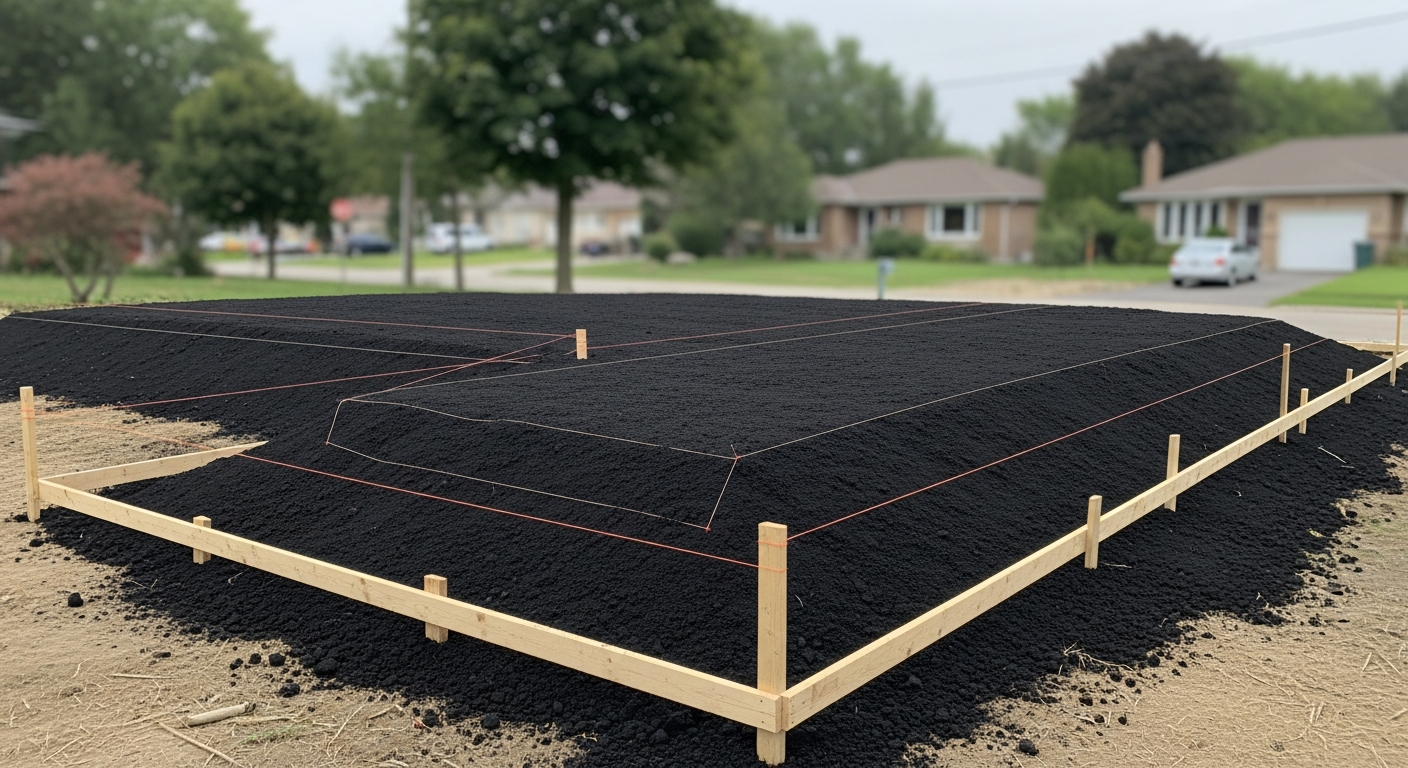
- Split odd shapes. Break the yard into rectangles, triangles and circle segments, measure each, then add them.
- Level a string line. Stretch it between two stakes and set a line level in the middle so the string is dead level.
- Measure down at each stake. The difference is the rise. Divide by the run between stakes and multiply by 100 for percent.
- Volume = area × depth. Convert depth to metres first. Tell the supplier the compacted depth you need.
- Check against the standard. In Midland, grass must fall at least 2% away from buildings and hard surfaces at least 1%.
Ask each bidder to price these lines separately: weekly mowing and trimming, spring and fall cleanups, bed maintenance and mulch, fertilizing, irrigation start-up and shut-down, and hardscape care. For more on contract terms, see our guide to commercial landscaping contracts.
Benefits of Professional Landscape Maintenance
Investing in professional landscape maintenance offers numerous advantages for your commercial property:
1. Consistent Curb Appeal
Regular maintenance ensures that your property remains attractive and inviting throughout the year, making a positive impression on clients and visitors.
2. Cost Savings
Proactive maintenance prevents costly repairs and extensive damage by addressing issues early, ultimately saving you money in the long run.
3. Time Efficiency
Outsourcing landscape maintenance allows you to focus on your core business activities without the hassle of managing garden care.
4. Expert Knowledge
Professional landscapers have the expertise to diagnose and address landscape issues effectively, ensuring optimal health and appearance.
5. Sustainability
Adopting eco-friendly maintenance practices promotes environmental responsibility and aligns your business with green initiatives.
Why Choose Forty Five Scapes for Landscape Maintenance?
At Forty Five Scapes, we maintain large commercial properties across Midland, Penetanguishene, Collingwood, Wasaga Beach and Muskoka. We also design and build landscapes and run commercial snow removal, so one company can look after a property through all four seasons. Here is what that looks like:
- Customized Maintenance Plans: We design tailored maintenance schedules that align with your property's unique requirements and your business goals.
- Experienced Team: Our crews maintain landscapes they often designed and built, so they know what is under the beds and where the irrigation lines run.
- Quality Materials and Equipment: We run commercial-grade mowers, trimmers and loaders sized for large properties.
- Sustainable Practices: Our commitment to sustainability means we implement eco-friendly maintenance techniques that benefit both your landscape and the environment.
- Comprehensive Services: From routine lawn care and pruning to irrigation management and pest control, we offer a full spectrum of maintenance services to cover all aspects of your landscape.
- Customer Satisfaction: Property managers get one point of contact and a written record of each visit.
Planning 2027 commercial landscape maintenance
Most commercial maintenance contracts in Simcoe County and Muskoka are renewed or tendered over the winter so crews are booked before the first spring cleanup. Ground thaw around Midland usually comes in late April or May, and cleanups, irrigation start-up and the first cut follow soon after. If you want to change contractors or add services for 2027, have a scope ready by late winter.
Use the off-season to walk the property with your contractor and decide what to change. Turf on steep banks, narrow strips and shaded corners costs the most to maintain and is often better replaced with planting or stone. Beds that need weekly weeding can be redesigned with groundcovers and native shrubs. Irrigation should be checked against the areas that actually need water. Line up your winter contract at the same time, since snow and summer work are often bundled.
- Update the site map with turf, bed and hardscape areas.
- Set the task list and visit frequency for each area.
- Decide on any redesign work and get it quoted for early spring.
- Confirm insurance, WSIB coverage and the start date in writing.
Frequently asked questions
What is included in commercial landscape maintenance?
A typical contract includes mowing and trimming, edging, spring and fall cleanups, pruning, bed weeding and mulching, fertilizing, irrigation start-up and shut-down, litter pickup and hardscape care. Snow and ice management is usually a separate winter contract.
How often should a commercial property be mowed?
Weekly through the main growing season is standard, with visits stretched out during summer dry spells when the grass slows down. Contracts often set a fixed number of cuts per season.
How is commercial landscape maintenance priced?
Most contractors price from the measured turf and bed areas, the visit frequency and the list of tasks, then bill monthly or per visit over the season. Extra work such as plant replacement, tree work or repairs is usually quoted separately.
Who is liable for slip-and-fall injuries from snow and ice?
Property owners and occupiers can be liable, and so can the snow contractor they hire. Since January 29, 2021, Ontario's Occupiers' Liability Act requires anyone injured by snow or ice on private property to give written notice within 60 days to the occupier or the snow contractor, with some exceptions. Keep a written log of every snow and salt visit.
Keeping a commercial landscape on schedule
Steady maintenance keeps large commercial properties looking their best and working as they should. By implementing essential services and adhering to regular maintenance routines, you can ensure that your landscape remains attractive, healthy, and sustainable year-round. A professional crew like Forty Five Scapes in Midland, Collingwood, Wasaga Beach and Muskoka can take the schedule off your plate and keep your property presentable for tenants and customers.
Planning next season's maintenance? Contact Forty Five Scapes to book a site walk and get a written maintenance proposal for your property.
Planning a project this season?
We’ll walk the site, scope it properly and give you a straight price.
Mark and Matt are amazing. Not only do they do high-quality work, but they are also collaborative every step of the way. They are also great at problem-solving for unforeseen issues, or if you are just stuck on what to do in a certain area. I highly recommend Forty-Five Scapes for your landscaping needs.
Frequently asked questions