Fix road salt damage in early spring by flushing the soil with water, adding gypsum on heavy soils, then reseeding or re-sodding dead strips. Prevent it next winter with better snow-pile placement, measured salting, stone edging and salt-tolerant plants.
Key takeaways
Last updated: November 2026
Salt damage lawn repair comes down to four steps in early spring: flush the salty strip with plenty of water, spread pelletized gypsum on heavy soils, rake out the dead grass, and reseed or re-sod whatever does not recover. Shrubs and trees need the same deep watering, plus pruning once you can see what came back. Then change where the snow and salt go next winter so you are not repeating the job.
Around Georgian Bay, a long snow season means a long salt season, and spring is when the bill arrives. The brown strip along the driveway, the hedge that went rusty on the road side, the interlock walkway that started flaking: they all trace back to the same winter. We are a design-build landscaper that also plows snow, so we see both ends of the problem. Here is how to spot salt damage, fix it, and keep it from coming back.
Key Takeaways
- Salt damage shows up in spring as brown strips of turf along walks, drives and roads while the rest of the lawn greens up.
- Start repairs in early spring: flush the soil heavily with water, then apply pelletized gypsum on heavy or clay soils.
- Rake the damaged area. If the grass pulls out with no roots, reseed or re-sod that strip.
- Evergreens brown from the needle tip back, usually on the road side; deciduous shrubs may leaf out late or not at all.
- Prevent next year's damage with smarter snow-pile placement, measured salting, salt-tolerant plants and hard edges along drives.
- Over-salting also damages concrete and interlocking pavers, not just plants.
How do you know if your lawn has salt damage?
Look at where the brown is. Salt damage follows the path of the salt and the plowed snow. The classic sign is a band of dead or thin grass running along the edge of the driveway, the sidewalk or the road, often a metre or two wide, while the rest of the lawn is greening up normally. Corners where the plow or the snowblower throws snow, and spots where you piled shovelled snow all winter, are usually the worst.
What is happening underneath? Road salt is mostly sodium chloride. The sodium displaces the calcium and other minerals that hold soil in a loose, crumbly structure, so the soil seals up, drains poorly and holds less air. Grass roots struggle to take up water even when the ground is wet. The University of Wisconsin horticulture extension notes that turf can die outright from heavy soil salt.
Salt damage or something else?
A few other problems look similar in April. Snow mould shows up as matted grey or pinkish patches in spots where snow sat longest, not neatly along the edge of the pavement. Plow scrape tears up sod and soil in visible ruts. Dog spots are round. If the damage hugs the hard surface and gets better the further you walk into the lawn, salt is the likely cause.
A simple test: once the ground thaws, grab a handful of the brown grass and pull gently. If it holds firm, the crowns may still be alive and the strip will often recover with flushing and a bit of patience. If it lifts out with no roots, that grass is gone and needs to be replaced.
Salt damage or plow damage: who fixes it?
Torn sod, gouged edges and soil pushed up in a ridge are plow damage, not salt. Who repairs it depends on whose plow did it.
- Town crews in Midland: if Town winter maintenance accidentally damaged your lawn, the Town asks you to submit a service request. Send the address and a photo as soon as the snow clears.
- The sidewalk plow in Penetanguishene: the Town says its sidewalk plow sometimes lifts sod and asks residents to call Public Works. It first checks whether the Town's plow or a private contractor caused the damage, and it does not reimburse damage caused by the weight of snow (Town of Penetanguishene).
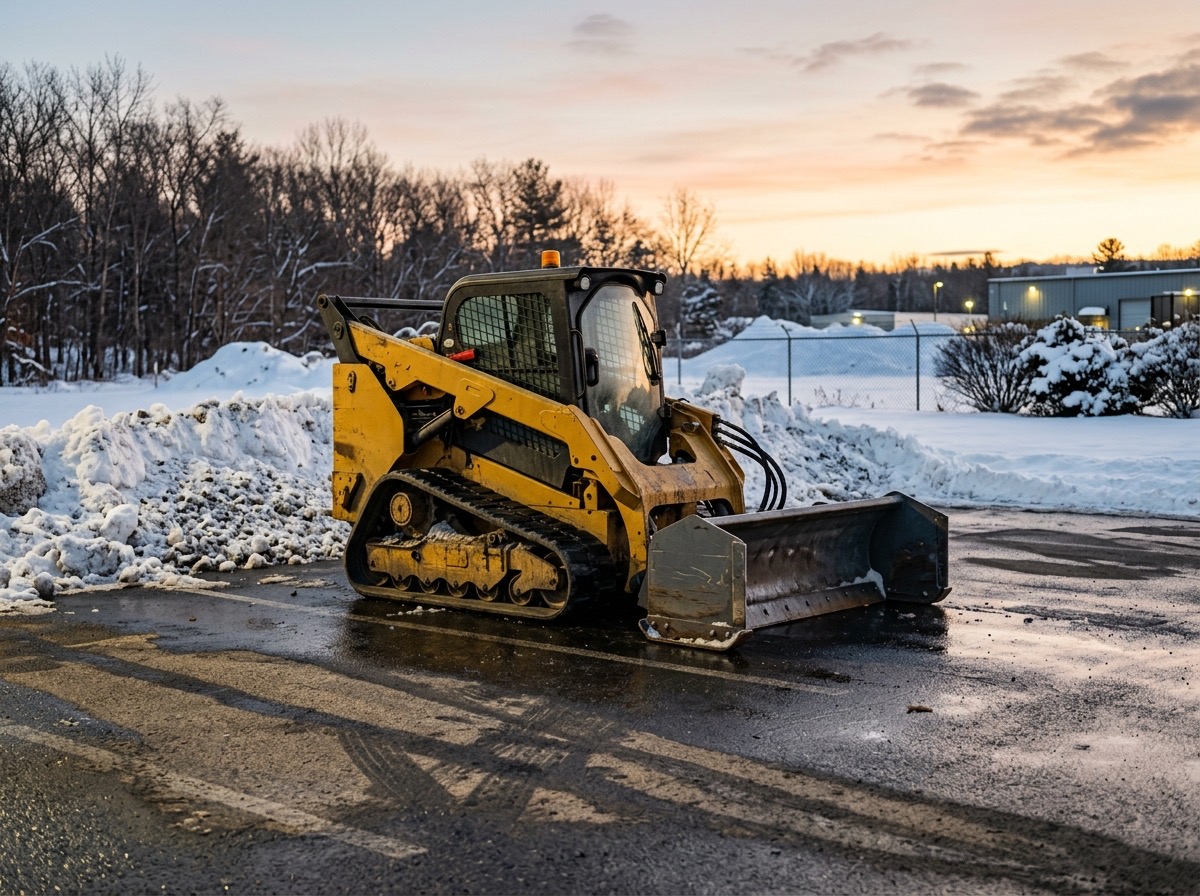
- Your own snow contractor: check the damage clause in your contract and report damage in writing, with photos, before spring cleanup starts.
If a plow peeled back a strip of sod in one piece, lay it back where it came from once the ground thaws and keep it watered. It often roots back in (Spring-Green).
Field drawing 18 · Salt damage
Where road salt goes, and how to fix the damage
Salt damage follows the plow. Most of it is preventable.
Swipe to see the full drawing →
- Spray lands on foliage. Plows and traffic throw salty slush onto evergreens on the road side, which brown from the needle tip back.
- The plowed bank melts salty. Every pile of plowed snow carries salt into the soil below it when it thaws.
- Sodium seals the soil. It displaces calcium, so the soil drains poorly and roots struggle to take up water.
- Brown strip in April. Damage follows the salt: a band along the pavement while the rest of the lawn greens up.
- Evergreens show it first. Wait until late spring before pruning; some shrubs push new growth from inside.
- Flush, then gypsum. Water deeply to move salt below the root zone, add pelletized gypsum on heavy soil, then reseed or re-sod what died.
- Edge it and plant for it. A stone edge gives the plow a line to follow; salt-tolerant perennials and grasses beat turf in the first metre or two.
When should you repair salt damage?
In early spring, as soon as the snow is gone and the ground has thawed. The goal is to move salt down and out of the root zone before the grass and plants come out of dormancy and start pulling up water. Waiting until June means the turf has spent its whole spring growth flush sitting in salty soil.
That said, do not rush seeding into cold, wet ground. Flushing and gypsum can go down early. Seeding and sodding work best once soil temperatures warm up and the ground is firm enough to walk on without leaving footprints. In our part of Simcoe County that usually lands in late April or May, depending on the year.
How do you fix salt-damaged grass?
Here is the sequence we follow on residential and commercial properties.
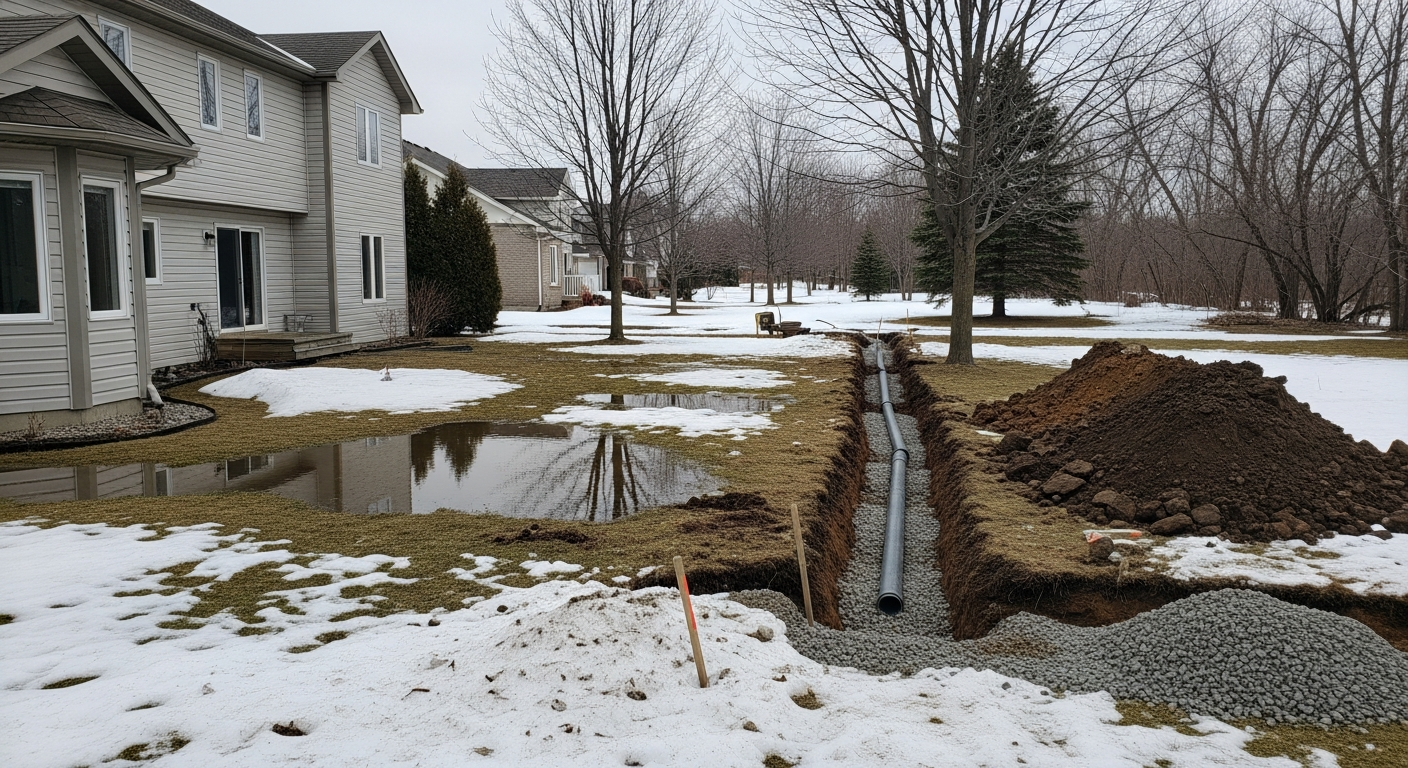
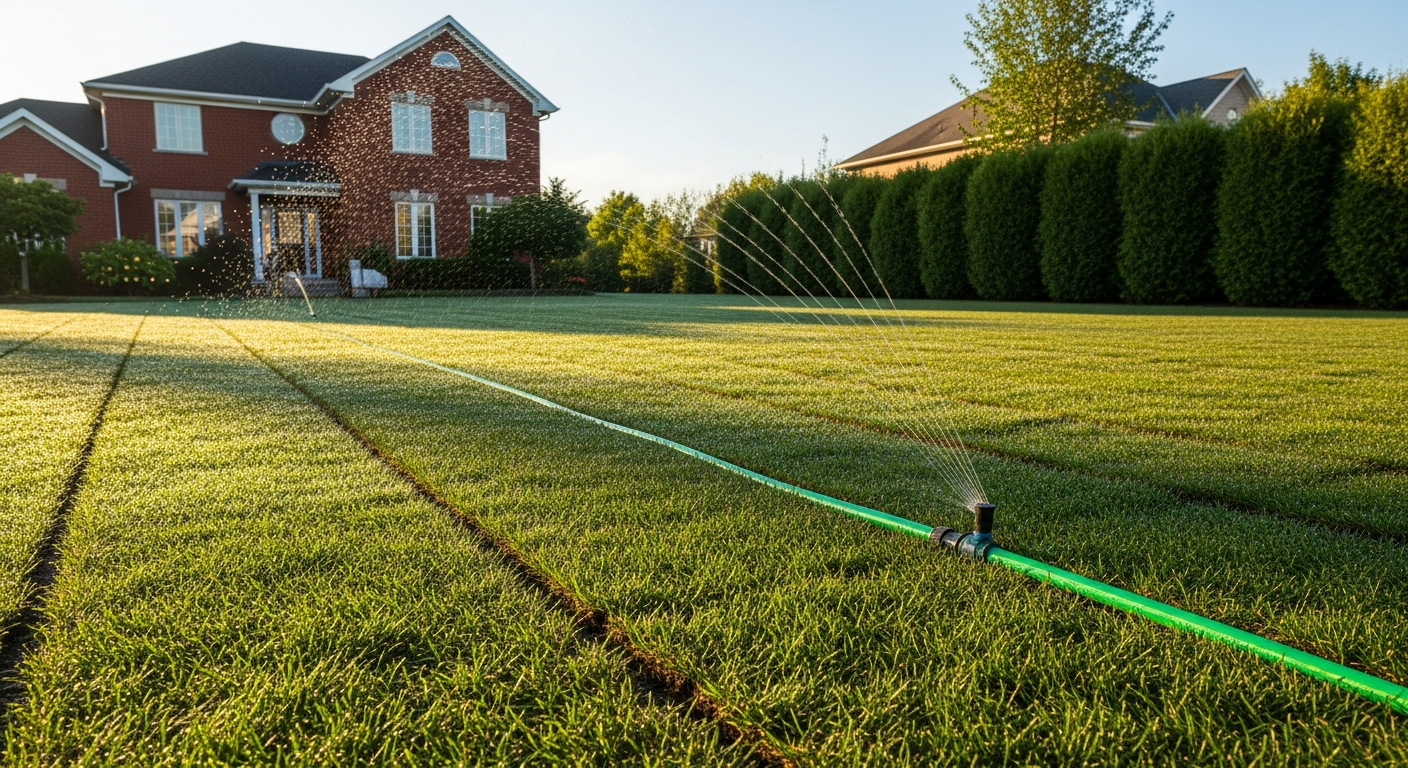
- Flush the soil. Water the damaged strip heavily and slowly so it soaks in instead of running off. The UW extension recommends watering deeply enough to wet at least 6 inches (about 15 cm) of soil to push salt below the root zone. Spread the water over several days so it does not pool. Depth matters: one guide puts the drop in soil salinity at about 50% when you flush to 15 cm, 80% at 30 cm and 90% at 60 cm (Lawn Love). Spring rain helps, but a dry spring may need several deep soakings with a hose or sprinkler.
- Add gypsum on heavy soils. Pelletized gypsum (calcium sulfate) supplies calcium that takes the place of sodium in the soil, which helps the soil open back up and drain. It is most useful on heavy and clay soils. On sandy soil, which drains fast, flushing does most of the work by itself. Published rates vary widely, from 5 to 10 lb per 1,000 sq ft (Spring-Green) to 20 to 40 lb (Lawn Love), so follow the rate on the bag. Spread it in early spring and water it in. Epsom salt is not a substitute: it adds magnesium, not the calcium that pushes sodium out.
- Rake and assess. Once the soil has dried enough to work, rake out the dead grass and do the pull test. This tells you how much area actually needs replacing.
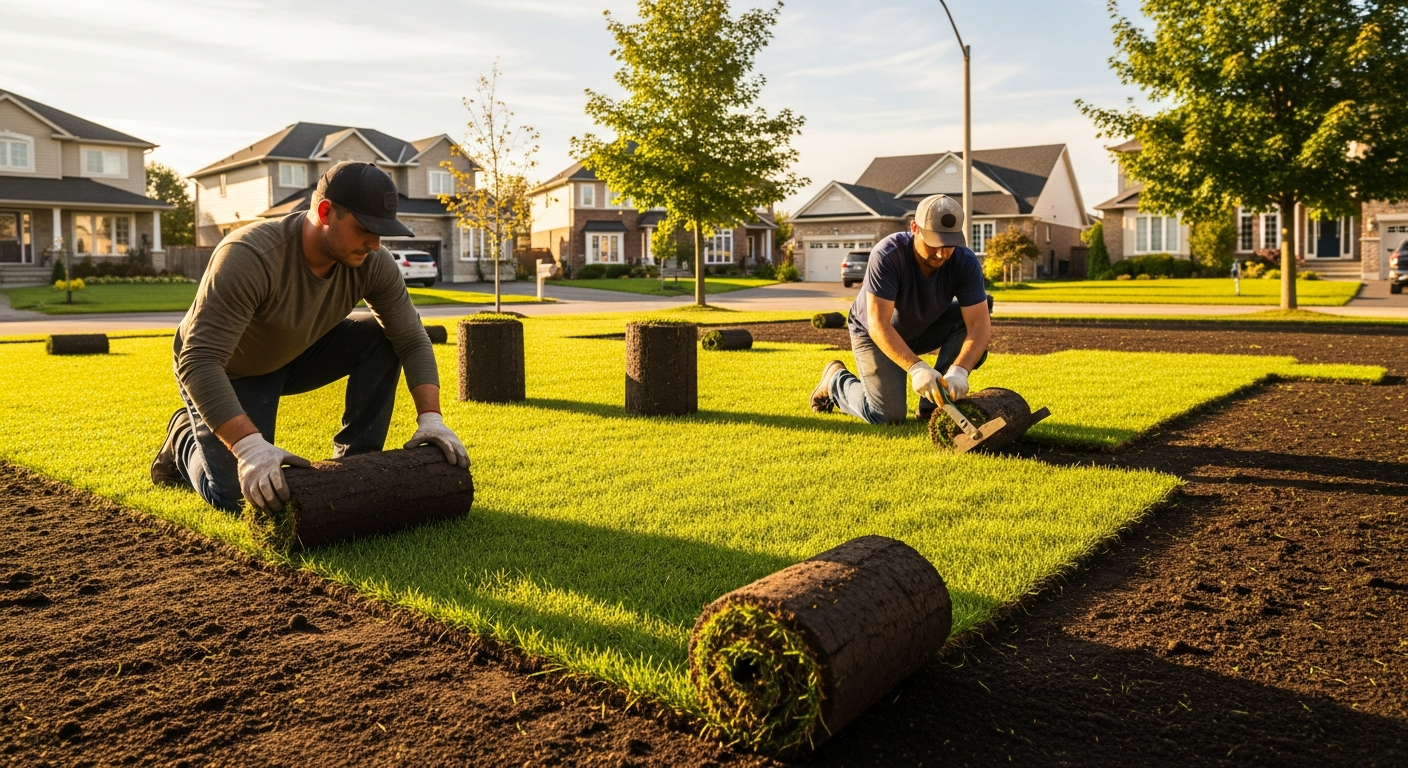
- Reseed or re-sod. For narrow strips, loosen the top few centimetres of soil, add a little fresh topsoil, and overseed with a mix built around tall fescue. In Minnesota roadside trials, tall fescue was the one grass that stood out for salt tolerance, though it can suffer under long ice cover, so the researchers recommend a mix of species rather than a single grass (Minnesota transportation research). For wider or highly visible areas, or anywhere you want an instant result, new sod is the faster fix.
- Keep it watered. New seed and new sod both need steady moisture until they root in. That watering also keeps flushing any leftover salt.
Reseed or re-sod?
Seed is cheaper and fine for a thin strip along a side walk where nobody is looking closely. Sod makes sense along the front of the house, a commercial frontage, or anywhere you need the lawn to look finished quickly. If you are weighing the cost, our guide to sod cost per square foot in Ontario breaks down what a typical repair runs. Our sod installation crews handle everything from a single damaged strip to a full front-yard replacement, including the soil prep that makes new sod last.
How do you help shrubs and trees damaged by salt?
Woody plants get hit two ways: salt spray from passing plows and traffic lands on branches and needles, and salty meltwater soaks into the soil around the roots. The symptoms are different from lawns, and they often show up a little later.
- Evergreens such as cedars, pines and spruce brown from the needle tip back toward the branch, usually worst on the side facing the road or driveway. In bad cases the needles drop and twigs die back.
- Deciduous trees and shrubs may leaf out late, show brown leaf edges, or have buds that never open. Repeated damage over several winters can leave branch tips dying back and a thin, struggling canopy.
What to do:
- Water deeply around the root zone in early spring, the same way you flush the lawn.
- Wait before pruning. Give the plant until late spring to show you what survived. A brown cedar sometimes pushes new growth from inside.
- Once new growth appears, prune out branches that are clearly dead.
- Go easy on fertilizer. Most fertilizers add more salts to the soil, and a stressed plant does not need extra.
- If a hedge or shrub on the road side keeps failing year after year, it may be time to replace it with something tougher.
What plants tolerate road salt?
No plant enjoys road salt, but some handle it far better than others. One useful detail from the UW extension's salt-tolerant plant list: a plant can tolerate salt spray but not salty soil, or the reverse, so match the plant to the kind of exposure the spot gets. The UW tables rate each plant separately for spray and for salty soil. Here is how plants that suit our region sort out:
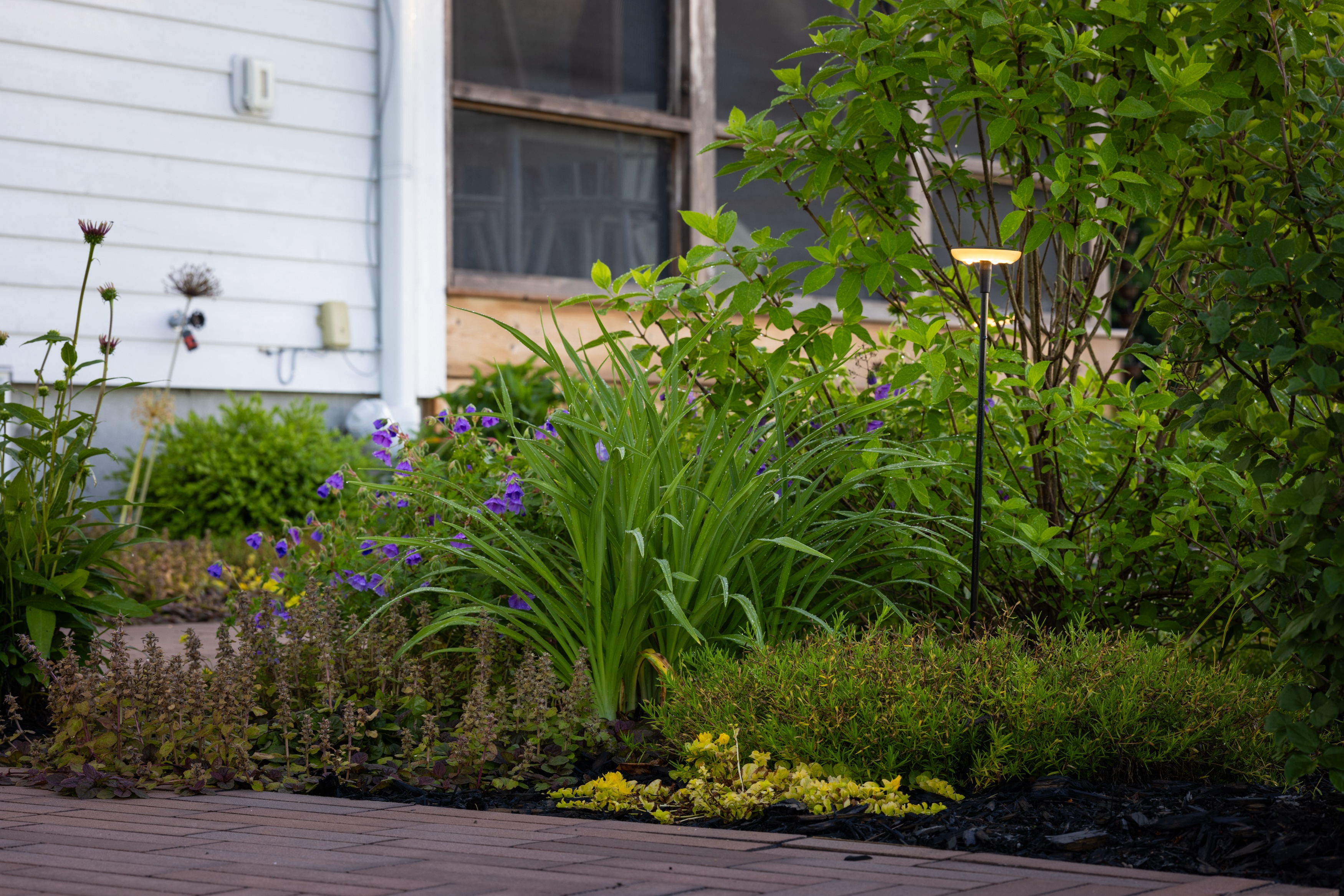
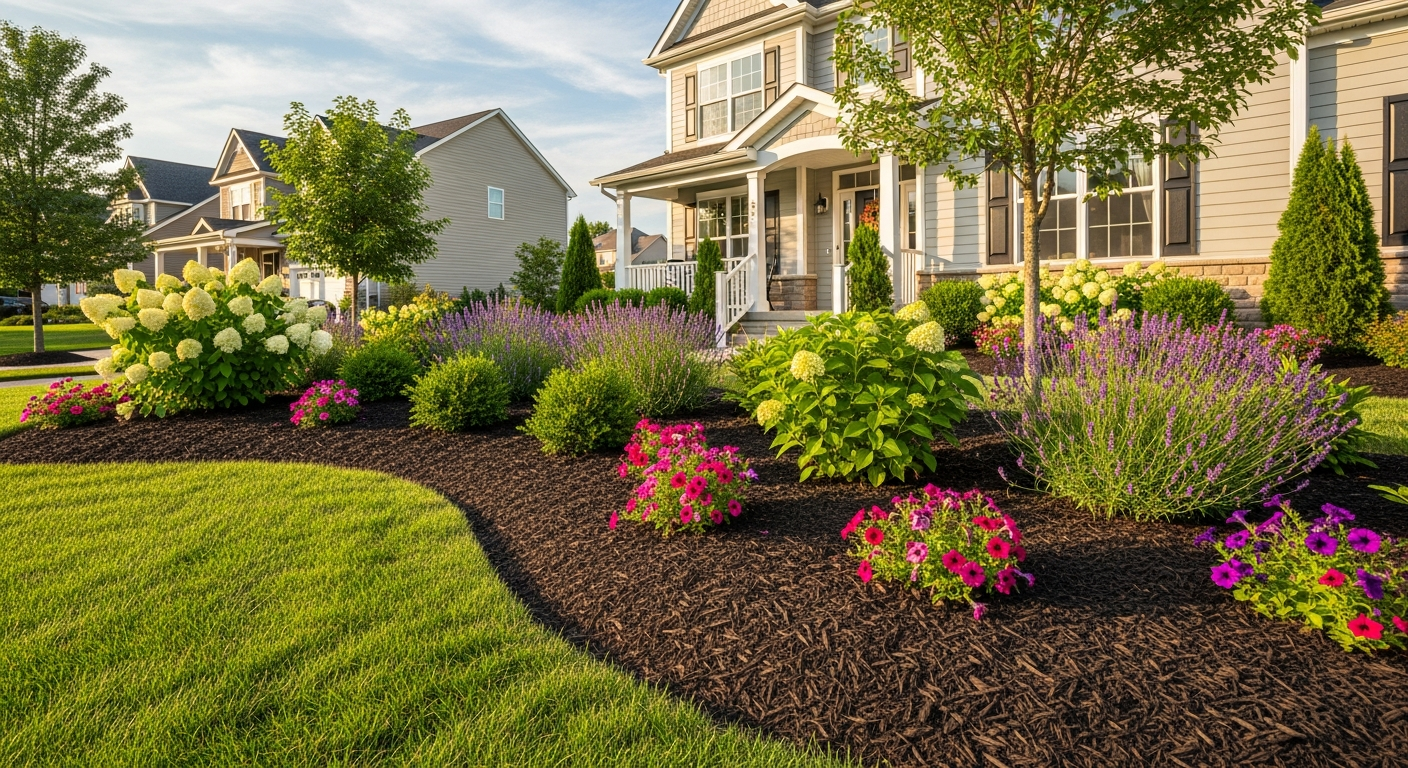
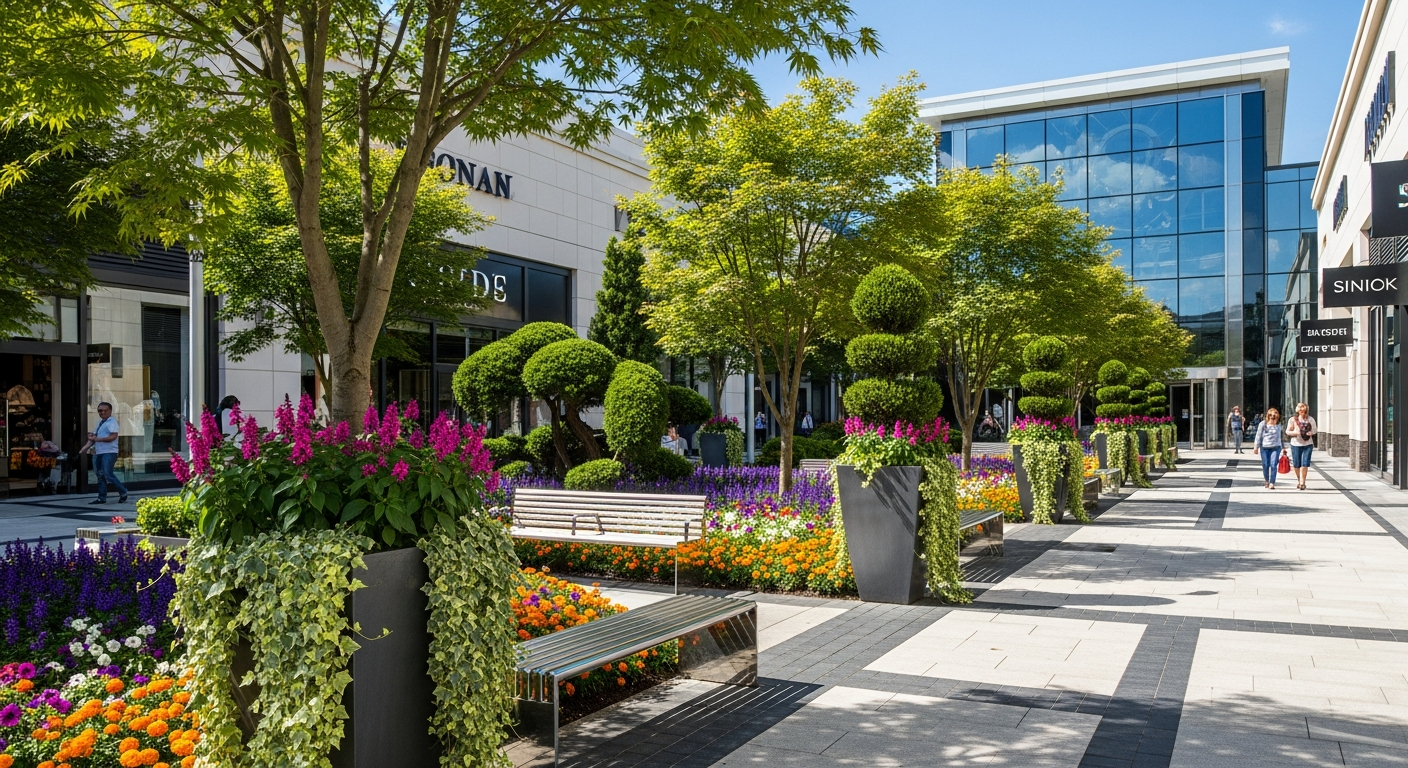
- Rated high for both spray and salty soil (the first metre or two from the pavement): common juniper, eastern red-cedar, bush cinquefoil, snowberry, staghorn sumac, thornless honeylocust, Kentucky coffeetree and Japanese tree lilac.
- Rated high for spray only (a little further back, where meltwater does not collect): Austrian pine, mugo pine, ninebark, nannyberry and arrowwood viburnum, plus Karl Foerster feather reed grass and switch grass.
- Moderate tolerance (give them distance): bur oak, swamp white oak, ginkgo, black chokeberry, little bluestem, and perennials such as daylily, sedum, catmint and yarrow.
Notice that the perennials rate only moderate, and only for spray. So in the strip right against a salted driveway or road, we would rather use tough shrubs like juniper, cinquefoil or snowberry, or a stone or gravel edge, and keep perennials a few metres back. Colorado blue spruce rates high for spray but only moderate for soil, so it is not a front-line choice either.
Can road salt damage interlock and concrete?
Yes. Over-salting is hard on hard surfaces too. Salty meltwater soaks into concrete and pavers and goes through freeze-thaw cycle after freeze-thaw cycle, which slowly breaks the surface apart. That is the flaking and pitting you see on older concrete walks and steps, and on some interlock after a few hard winters.
A few habits help:
- use only as much de-icer as the conditions need;
- clear snow first and salt second, so salt is working on a thin layer of ice instead of a pile of slush;
- sweep up leftover salt once the ice is gone;
- follow your paver or concrete manufacturer's guidance on which de-icers they recommend;
- rinse salt off interlock and concrete in spring.
If your interlocking driveway has heaved, sunk or lost its joint sand over the winter, spring is the time to have it reset before the damage spreads.
How do you prevent salt damage next winter?
Repairs fix this year. Prevention is how you stop paying for the same strip of sod every spring.
Put snow piles in the right place
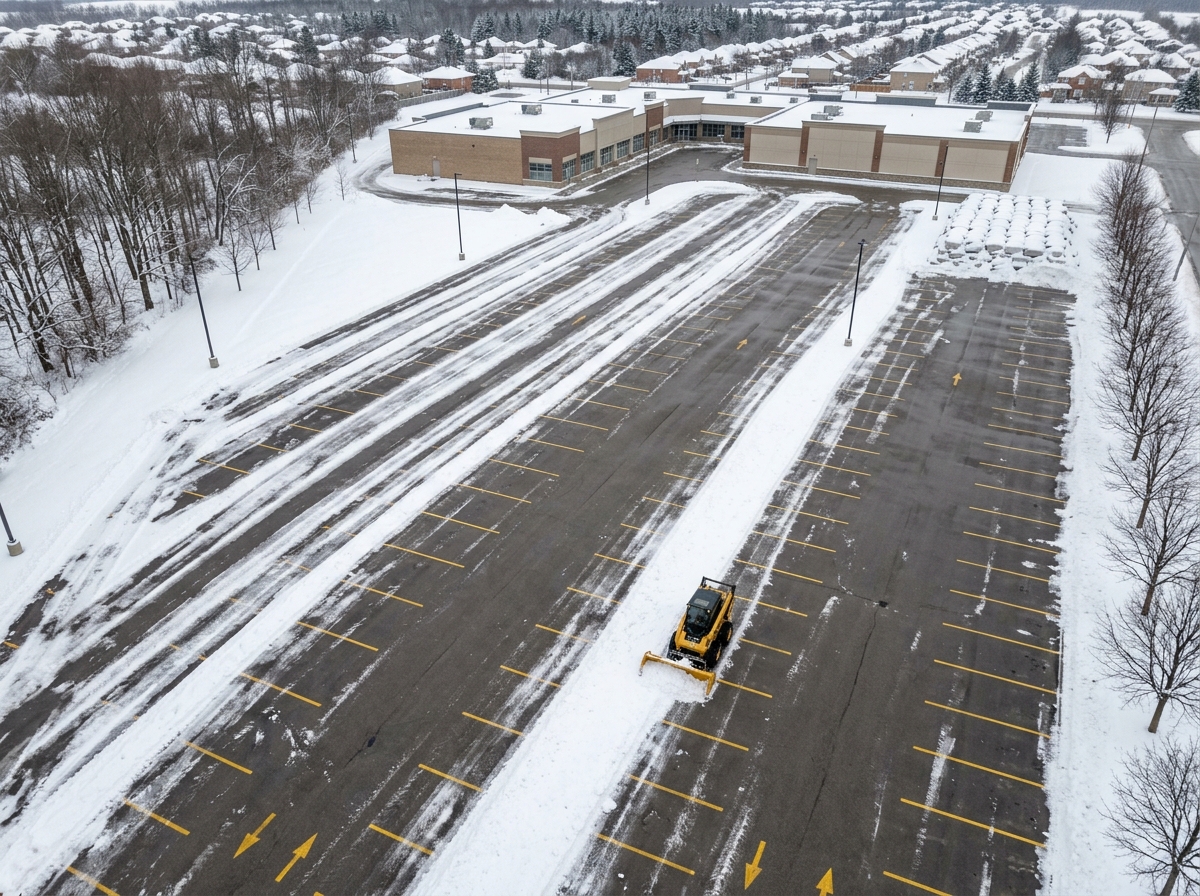
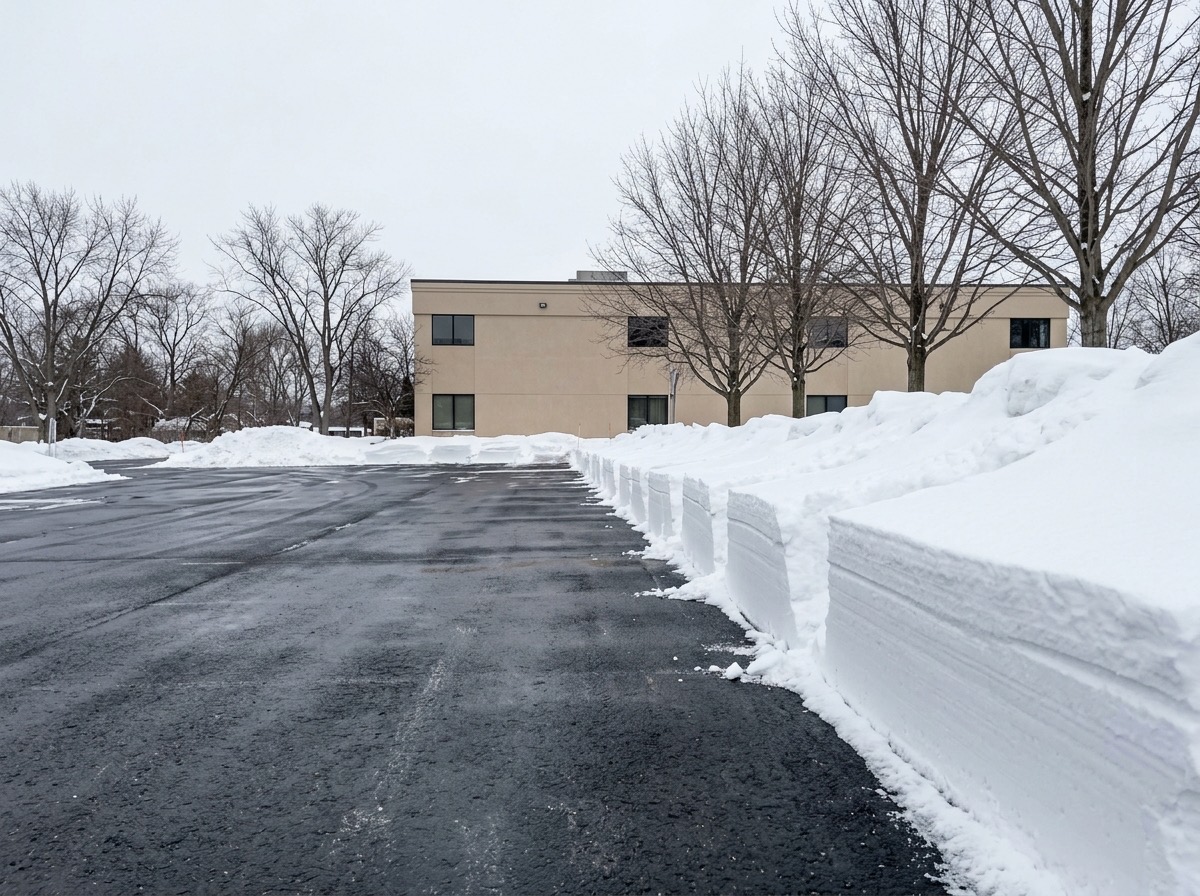
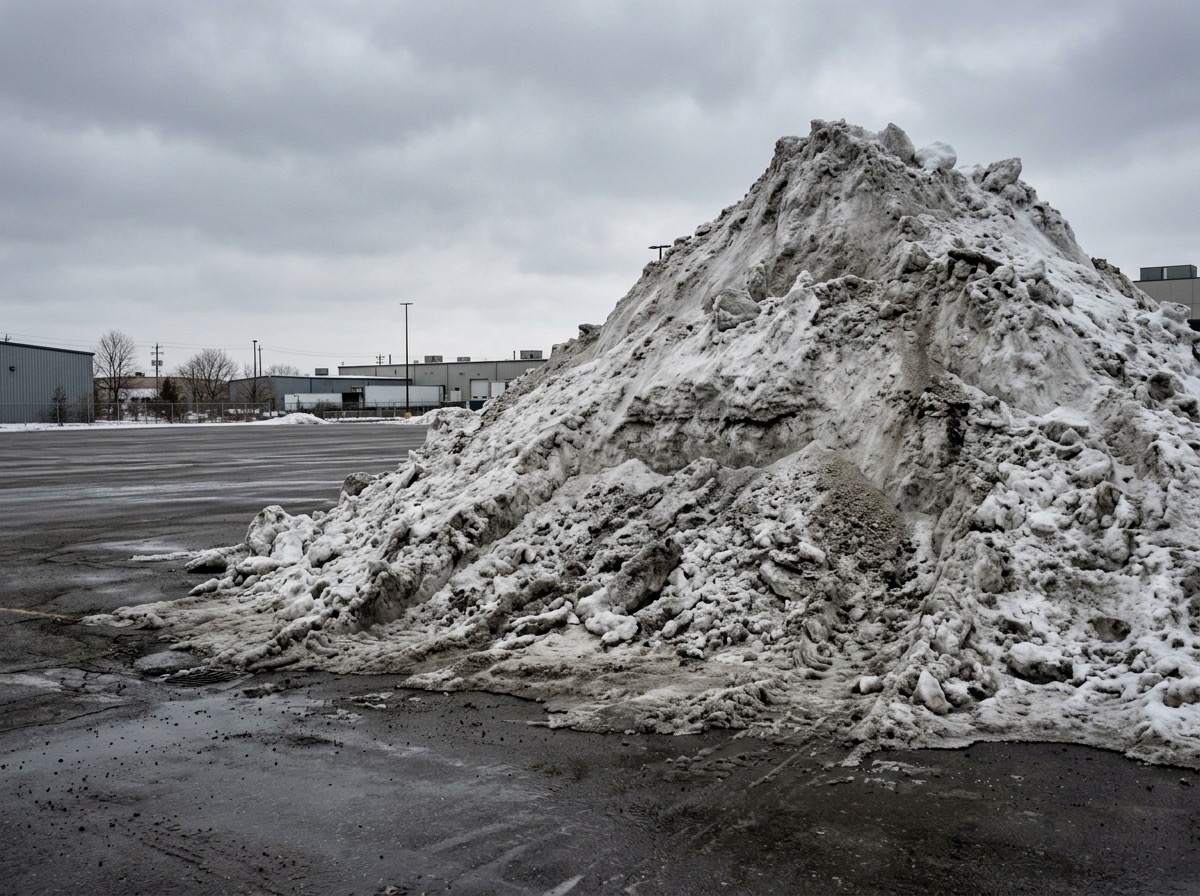
Plowed snow is salty snow. Wherever it sits all winter, the salt sinks into the ground below when it melts. Keep piles off lawns, beds and tree roots, and put them on low-value ground that drains away from your landscaping. We wrote a full guide on snow storage planning for commercial lots, and the same thinking applies at home: do not shovel or blow salty snow onto the garden.
Salt with a measuring cup, not a shovel
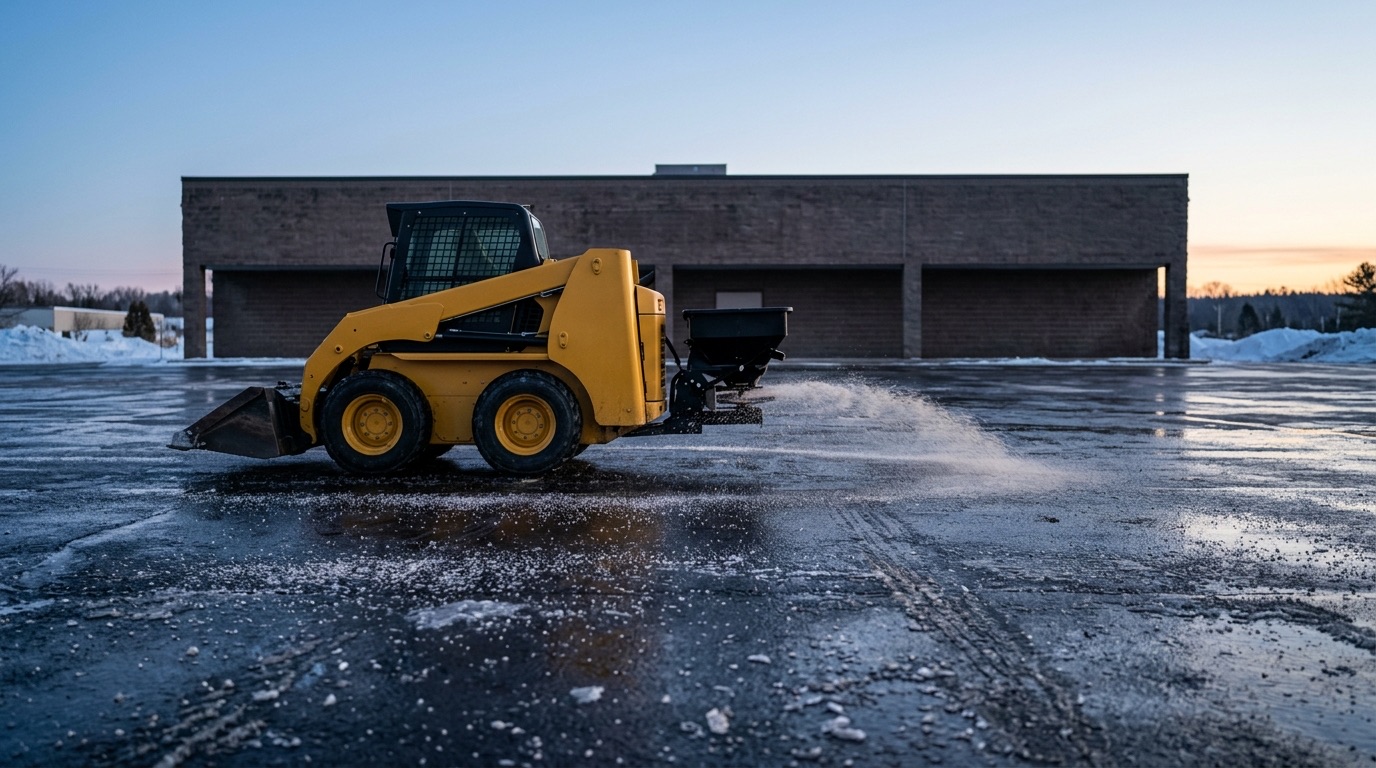
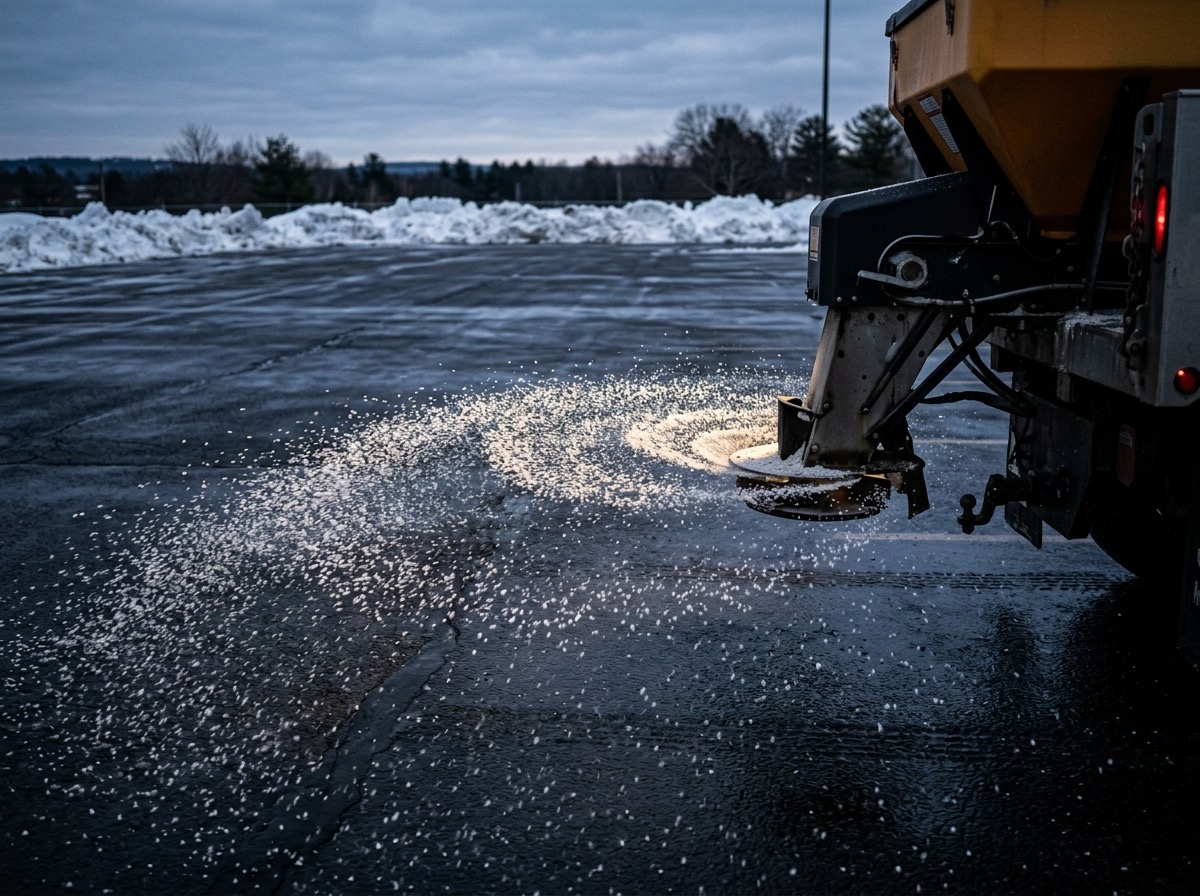
Most properties use far more salt than they need. A useful rule of thumb: a regular coffee mug of rock salt covers a 20-foot driveway or about ten sidewalk squares (Milorganite). Rock salt also stops working well below about minus 7°C (20°F), according to the UW extension, so on our coldest mornings more salt just means more runoff. Use sand or grit for traction instead. The Smart About Salt Council, an Ontario program, offers salt-management training and designation for winter maintenance contractors and properties. If you hire a contractor, ask how they decide when and how much to salt. Our snow and ice management service treats salting as part of protecting the landscape, not separate from it.
Give the plow something solid to follow
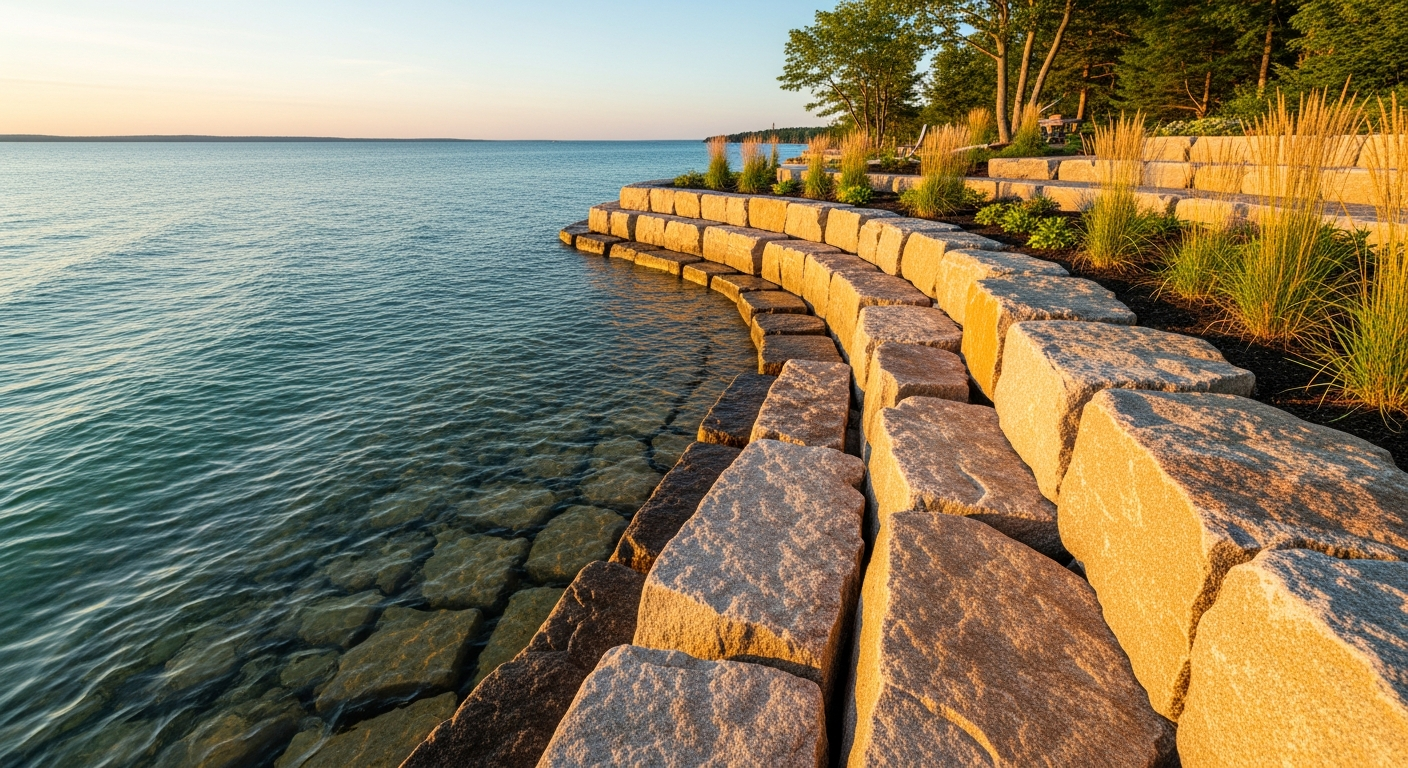
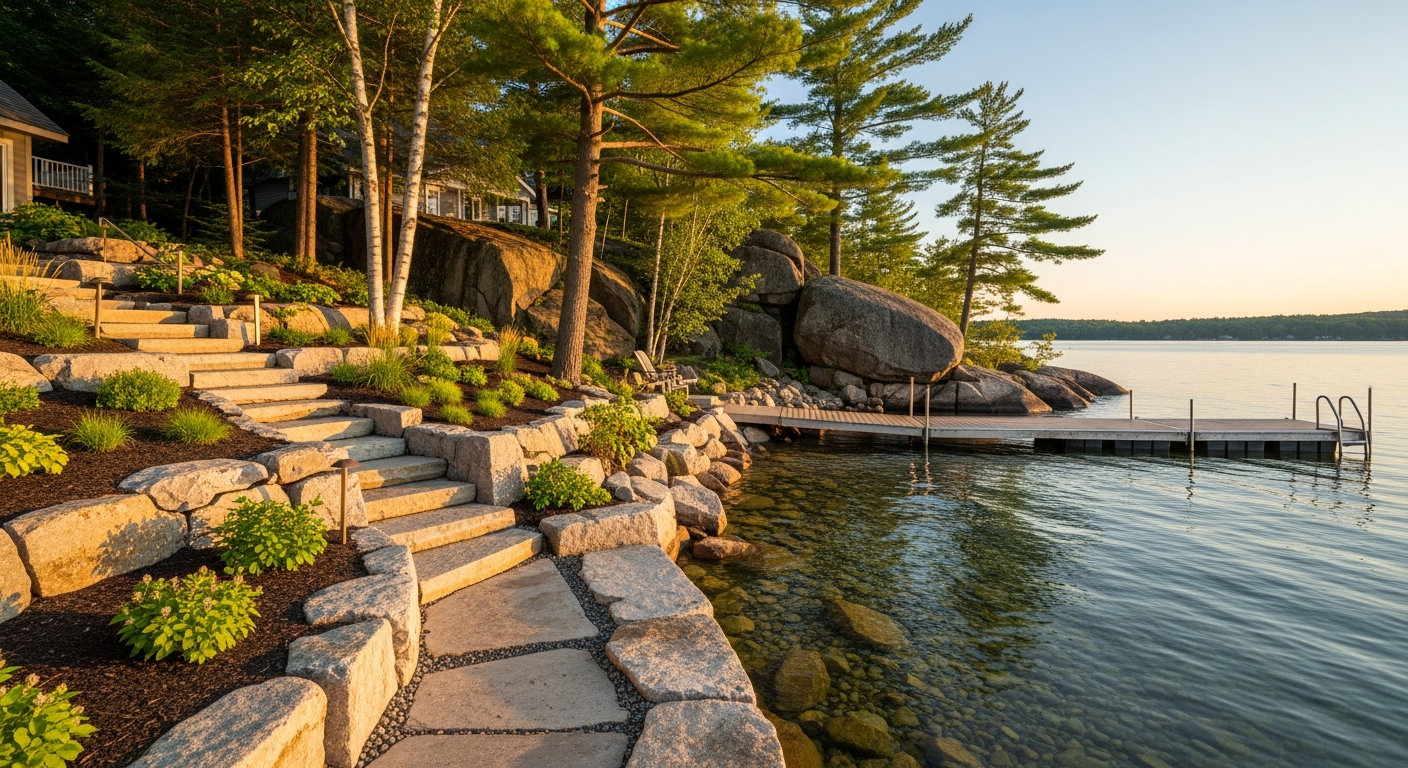
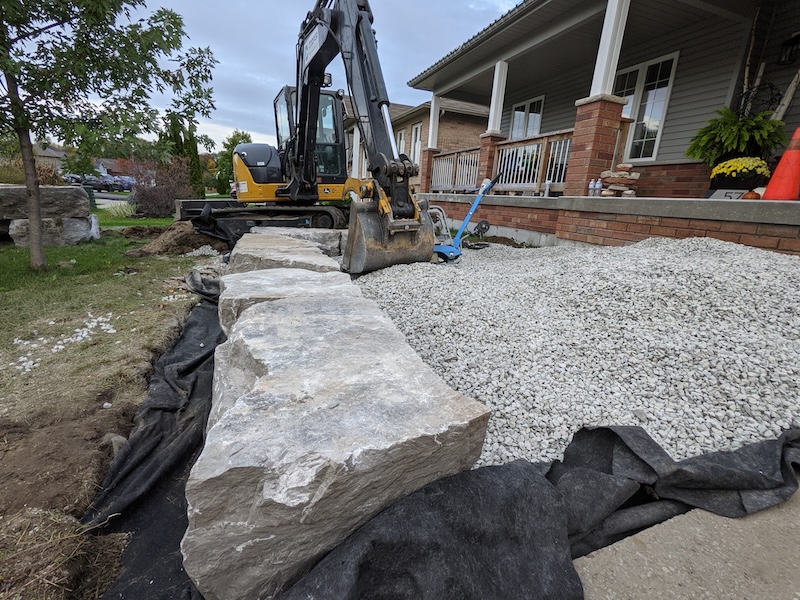
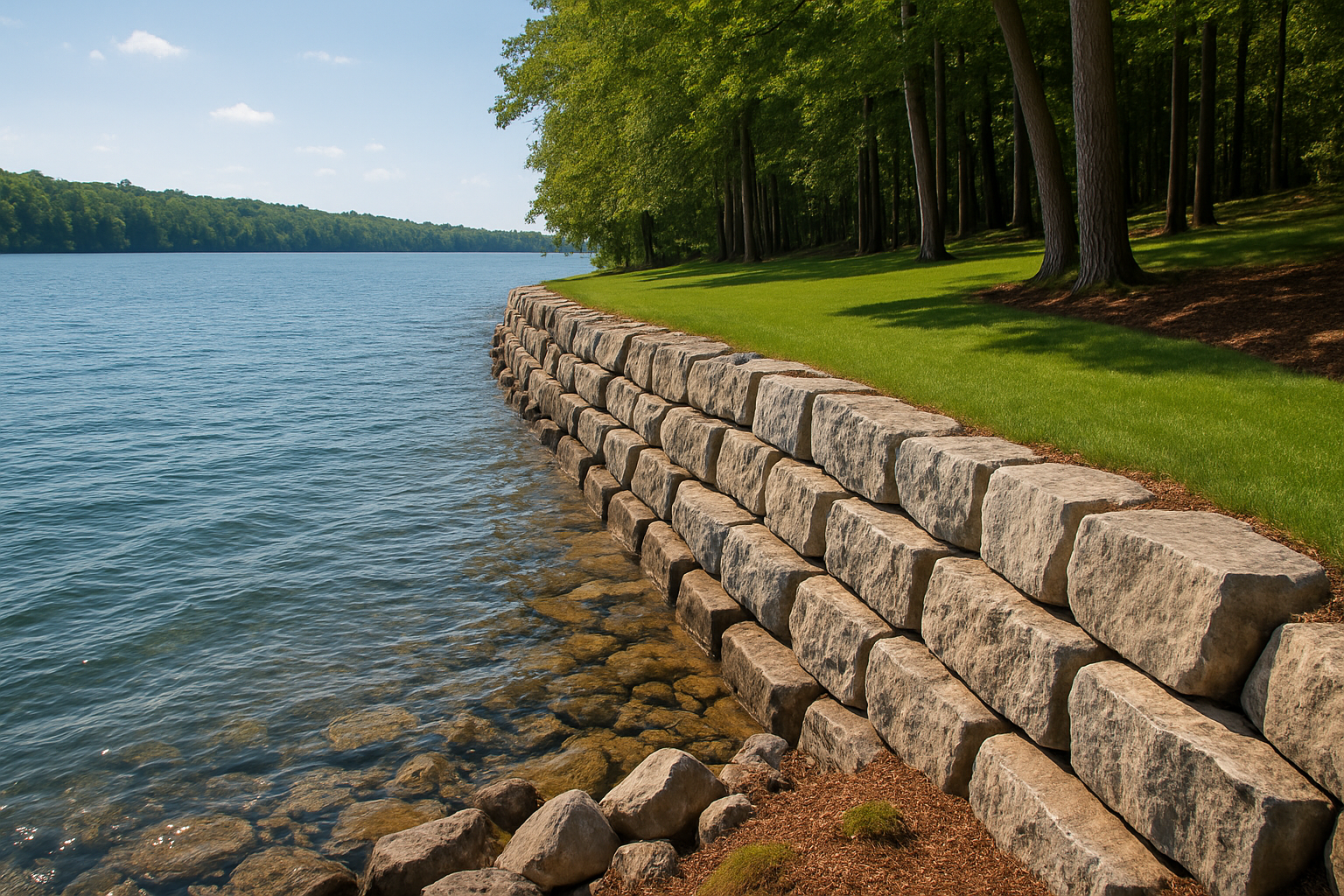
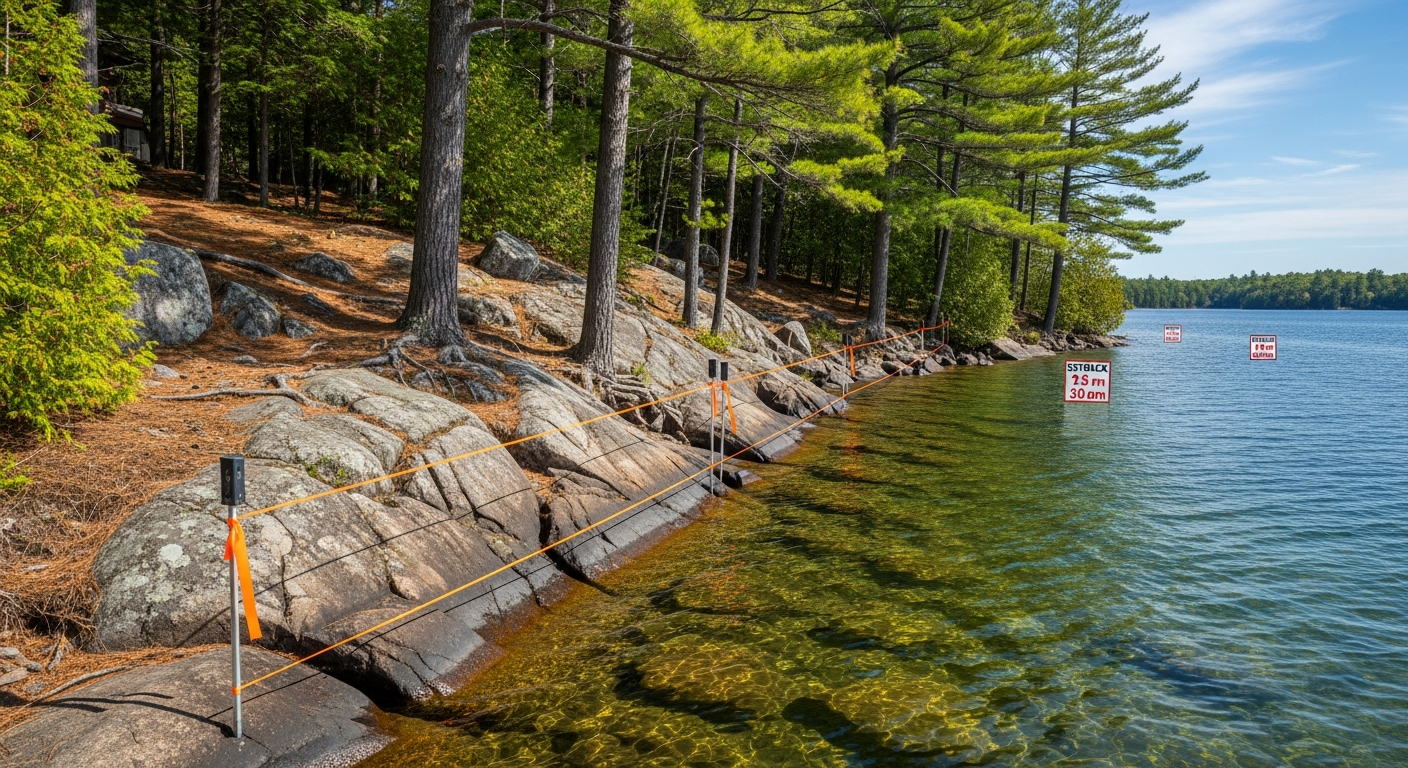
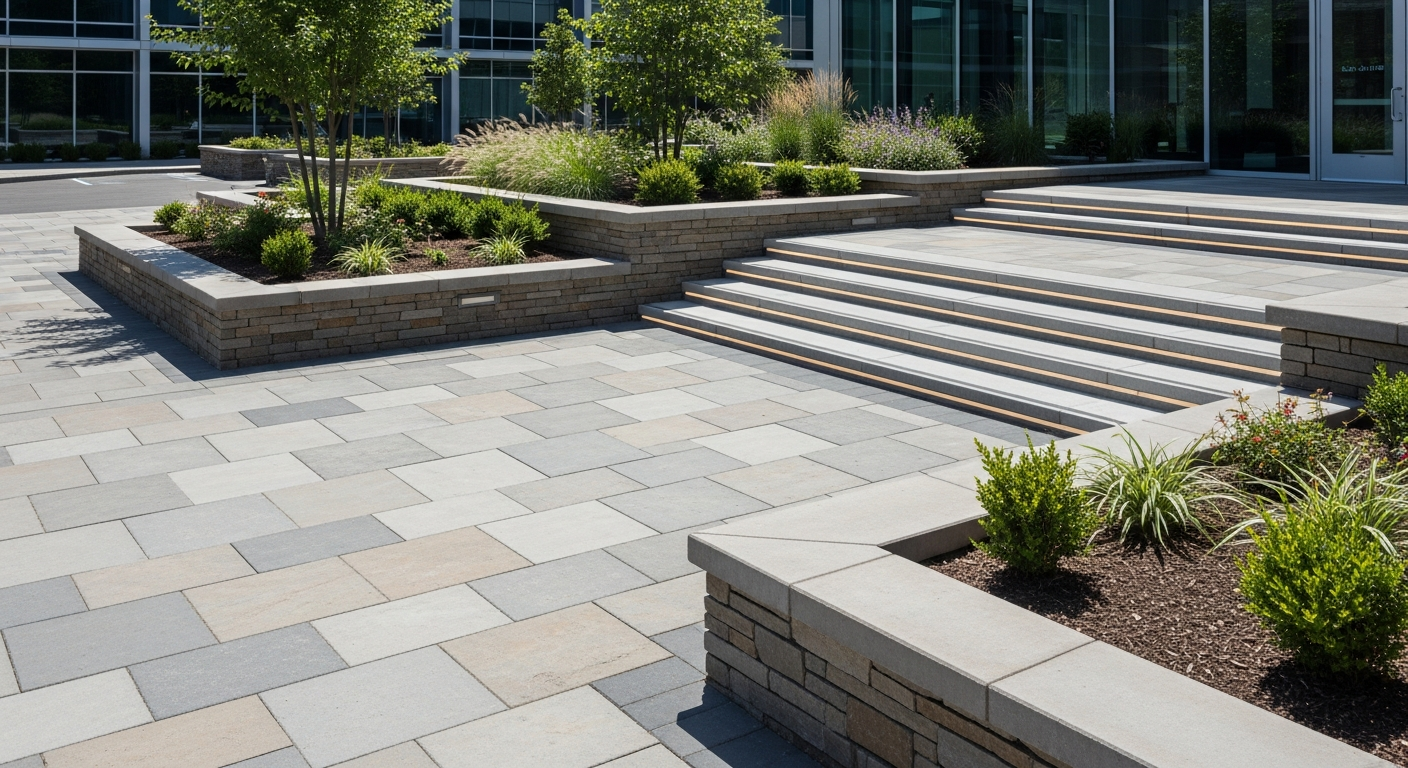
Curbs, stone edging and a defined border between pavement and lawn give plow operators a clear edge. Fewer scraped-up lawn edges, less snow pushed onto beds, and a cleaner line for spring cleanup. Marker stakes along driveway edges before the ground freezes help too.
Screen road-side shrubs before the plows start
For cedars and hedges that brown on the road side every year, a physical barrier works. The UW extension recommends burlap, plastic or snow fencing placed around or near plants in late fall. It also notes that anti-transpirant and dormant oil sprays do not prevent salt spray injury, so skip them.
Choose plants for the spot
If a planting along the road has died twice, a third try with the same plant will probably end the same way. Use salt-tolerant species in the first few metres from any salted surface.
Salt damage around Midland, Penetanguishene and Georgian Bay
Properties along busy roads like Highway 93, Highway 12 and Hugel Avenue take the heaviest salt spray, because traffic and plows throw it well past the curb. Downtown buildings on King Street in Midland and Main Street in Penetanguishene often have narrow planting strips squeezed between the sidewalk and the building, the hardest possible spot for a shrub to survive. Out in Tiny and Tay townships, Victoria Harbour and Port McNicoll, long driveways and road frontage mean long brown strips. And on waterfront lots around Midland Bay and Penetang Bay, salty melt that runs downhill toward the shoreline is one more reason to keep salt use measured and snow piles away from the slope.
Book your spring salt damage repairs
Spring schedules around Georgian Bay fill quickly once the snow melts. If you already know you will have a brown strip along the driveway, a few dead shrubs, or interlock that needs resetting, get on the list early.
Request a free estimate and we will walk the property with you, sort out what will recover and what needs replacing, and give you a clear, line-item plan for spring. Repairs like this are often a good moment to rethink that roadside strip for good, with a design that holds up to winter instead of fighting it.
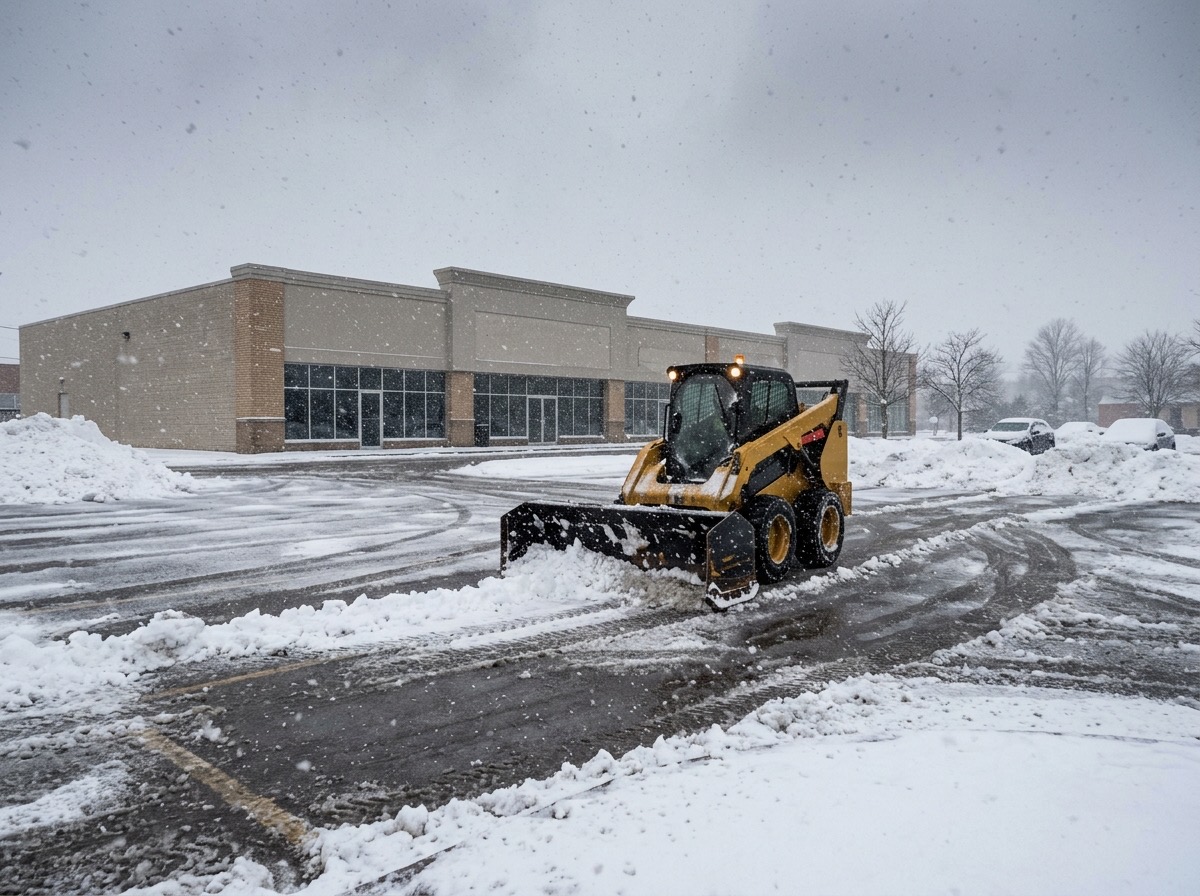
Plan your snow contract before the first squall.
We walk your site, map where the snow goes and send a written proposal. Plazas, offices, condos, churches and industrial yards.
Forty-Five Scapes did an amazing job on my property. I started with such a mess, mud and weeds and poor grading. I met with Mark and he put my mind at ease. He took my wants and needs and budget and created a vision. The crew was always on time and respectful and the end product was amazing. I look forward to many years with my amazing outdoor space.
Frequently asked questions
Often, if the damage is shallow. Damage limited to roughly the first inch of turf along a walk or drive usually recovers once spring rain flushes the salt. Wider strips that stay brown into May, or grass that lifts out with no roots when you tug it, need deep watering, gypsum on heavy soil and new seed or sod.
Follow the bag label. Published rates range from about 5 to 10 lb per 1,000 square feet up to 20 to 40 lb, so the product matters. Use pelletized gypsum, water it in, and keep watering deeply for a few weeks. Epsom salt is not a substitute, because it adds magnesium rather than the calcium that displaces sodium.
It depends on whose plow did it. Midland asks residents to submit a service request if Town crews accidentally damaged their lawn. Penetanguishene asks residents to call Public Works about sidewalk plow damage, first checks whether a private contractor was responsible, and does not reimburse damage from snow load. For a private contractor, check your contract's damage clause.
Choose plants rated for salty soil, not just salt spray. In University of Wisconsin tables, common juniper, eastern red-cedar, bush cinquefoil, snowberry and staghorn sumac rate high for both. Pines, ninebark and most ornamental grasses rate high for spray only, so plant them a few metres back, where salty meltwater does not collect.