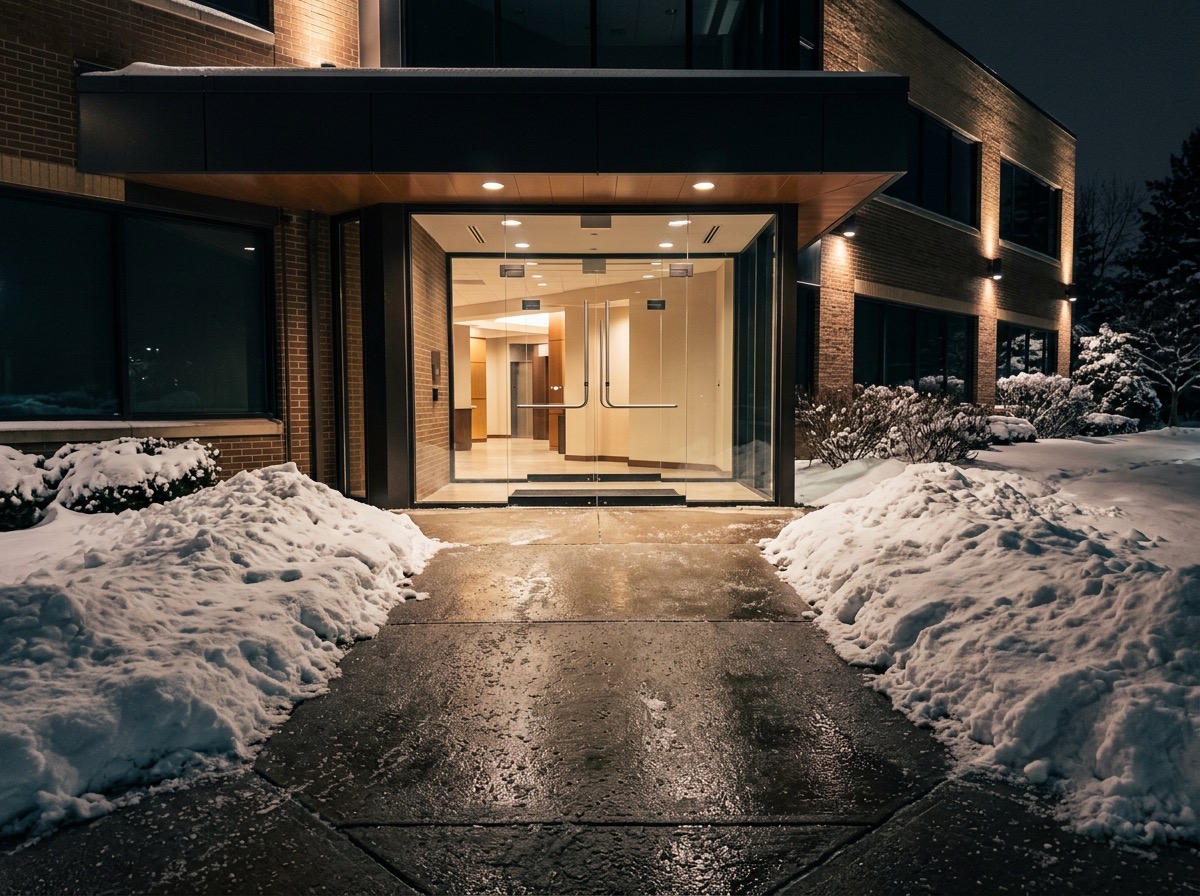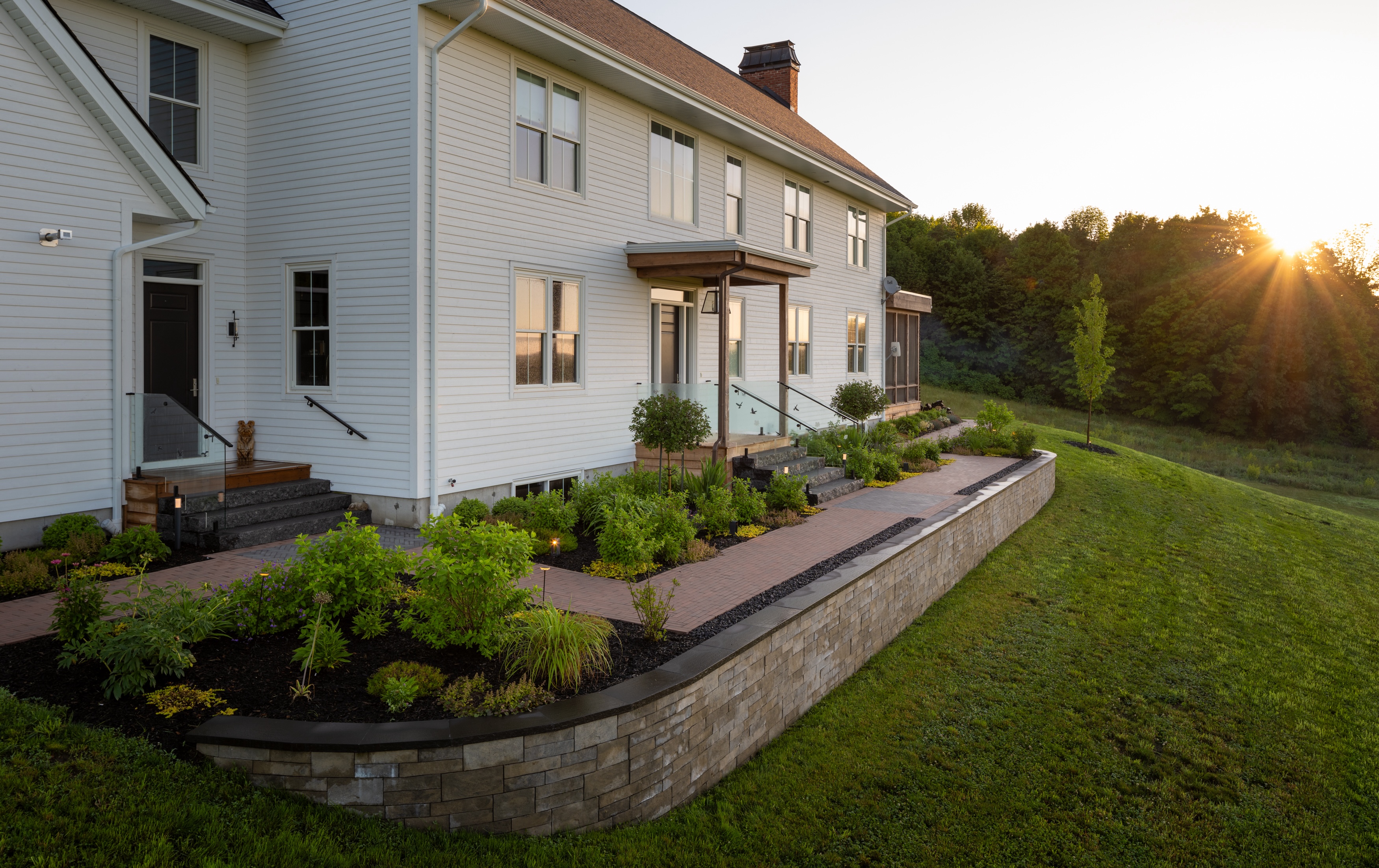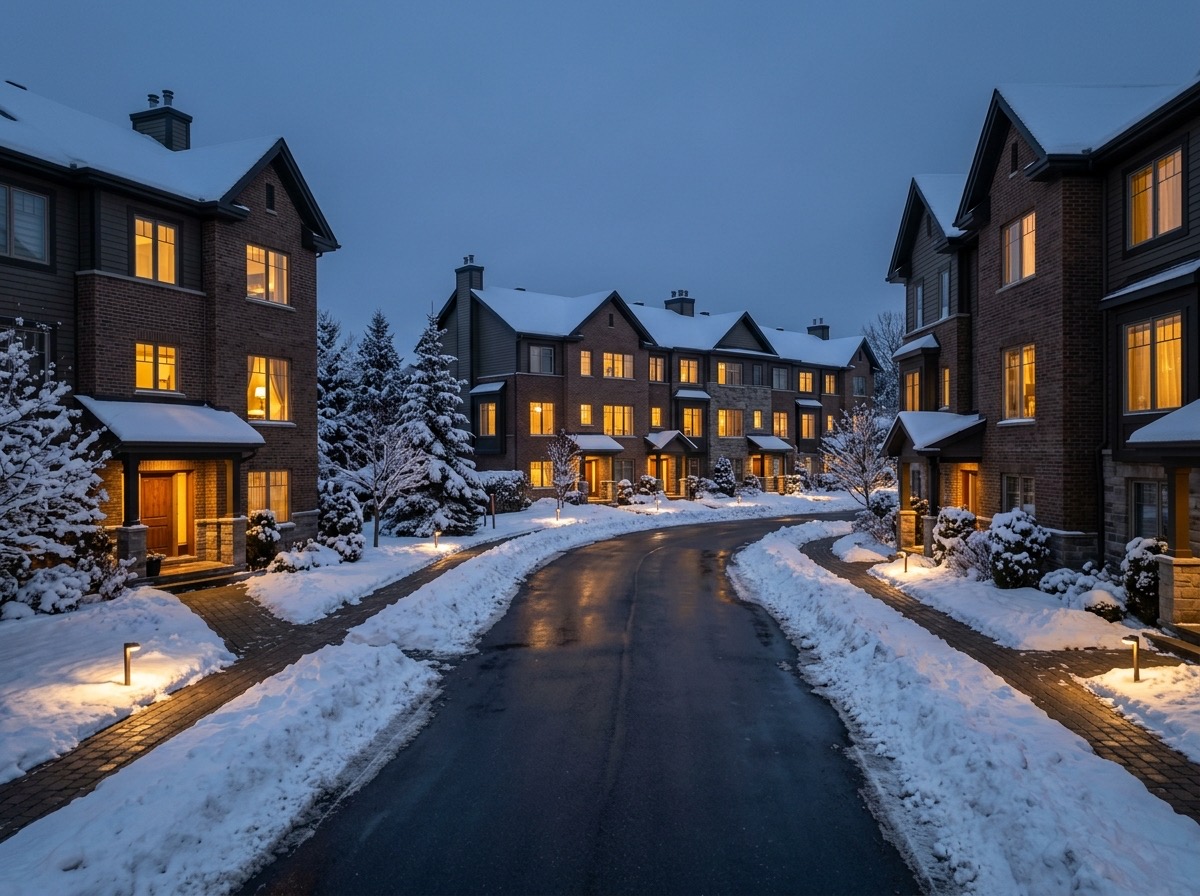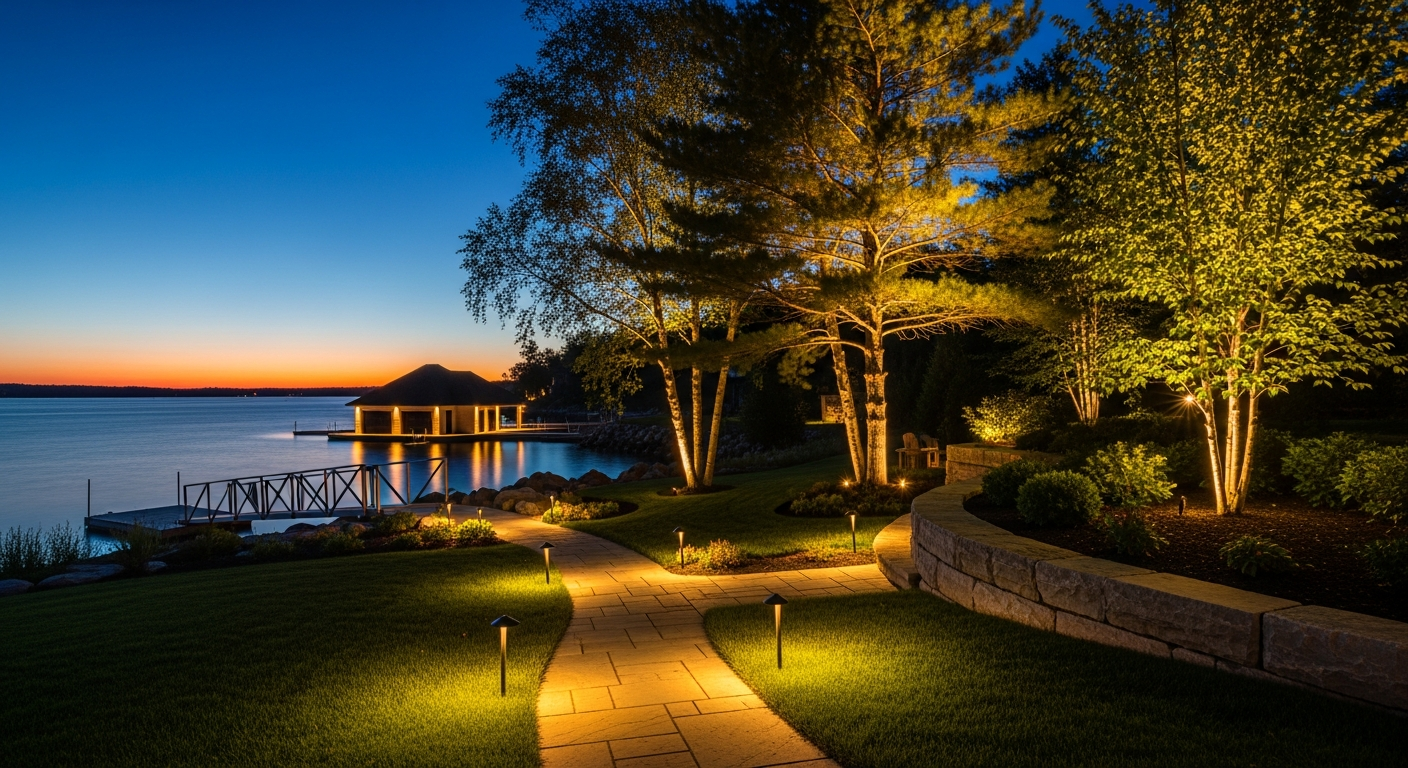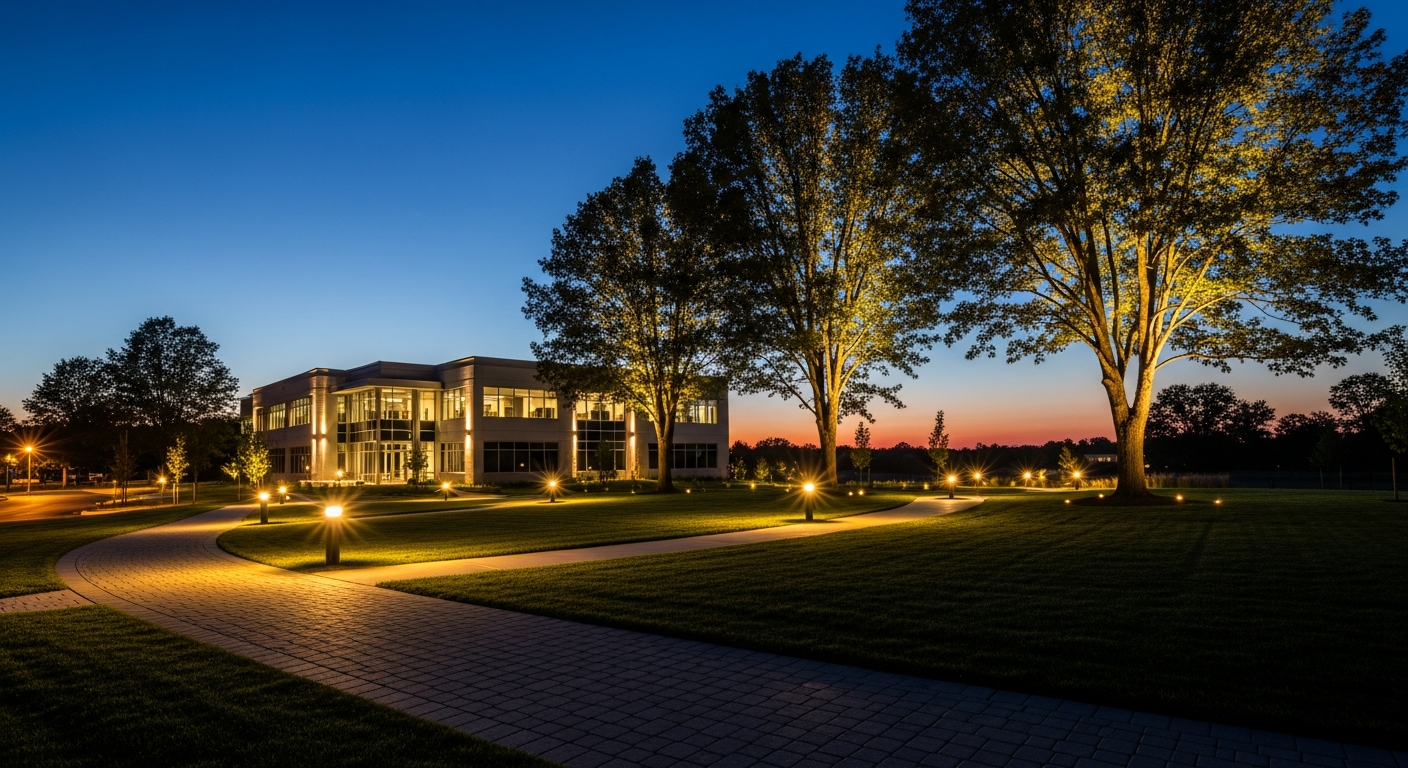
Commercial landscape lighting should layer pathway, area and accent light using shielded LED fixtures on timers or sensors. In Midland, site plan applications can require a photometric plan and full cut-off, dark-sky compliant fixtures, and in Ontario landscape lighting needs an ESA electrical permit.
Key takeaways
Good commercial landscape lighting does three jobs: it lets people walk, drive and park safely after dark, it makes the property harder to approach unseen, and it shows off the building and planting. The best systems layer pathway, area and accent lighting, use shielded LED fixtures on timers or sensors, and keep light on the property instead of spilling onto neighbours or the sky. In Midland, site plan applications can require a photometric plan and full cut-off, dark-sky compliant fixtures, so the rules matter as much as the look.
For commercial property managers, a safe, welcoming site after dark is part of the job. Outdoor lighting plays a central role by improving security and visibility and by showing the property at its best. At Forty Five Scapes, we specialize in designing and implementing outdoor lighting solutions tailored to the unique needs of your commercial property. In this blog post, we'll explore how landscape lighting can improve your commercial space, the various types of outdoor lighting available, best practices for installation, and the benefits of partnering with Forty Five Scapes for your lighting needs.
The Importance of Outdoor Lighting in Commercial Landscapes
Outdoor lighting is more than just a functional necessity; it's a strategic element that can significantly impact the perception and functionality of your commercial property. Here's why outdoor lighting is essential:
- Security Enhancement: Proper lighting deters potential intruders and ensures that your property is safe for employees, customers, and visitors after dark.
- Improved Visibility: Well-lit pathways, entrances, and parking areas enhance safety by preventing accidents and making navigation easier.
- Aesthetic Appeal: Thoughtful lighting design highlights architectural features, landscaping, and other elements, creating an inviting and professional appearance.
- Extended Usability: Outdoor lighting allows your commercial spaces to be used effectively during evening hours, increasing the operational hours and usability of outdoor areas.
- Brand Image: High-quality lighting reflects your business's commitment to excellence and attention to detail, reinforcing your brand's identity.
Types of Outdoor Lighting for Commercial Landscapes
Different types of outdoor lighting serve various purposes, each contributing to the overall functionality and beauty of your commercial space. Here are the primary categories:
1. Security Lighting
Security lighting is designed to protect your property by deterring crime and ensuring the safety of those on your premises.
- Floodlights: Provide broad, intense illumination to cover large areas such as parking lots, entrances, and building exteriors.
- Motion Sensor Lights: Activate when movement is detected, alerting you to potential intruders and conserving energy by only operating when needed.
- Path Lights: Illuminate walkways and pathways to prevent trips and falls, ensuring safe navigation during nighttime hours.
2. Visibility Lighting
Visibility lighting ensures that essential areas are well-lit, enhancing functionality and safety.
- Accent Lighting: Highlights specific architectural features, signage, and landscaping elements, making them stand out.
- Canopy Lighting: Installed above entrances or seating areas to provide ample light for gatherings and enhance the welcoming atmosphere.
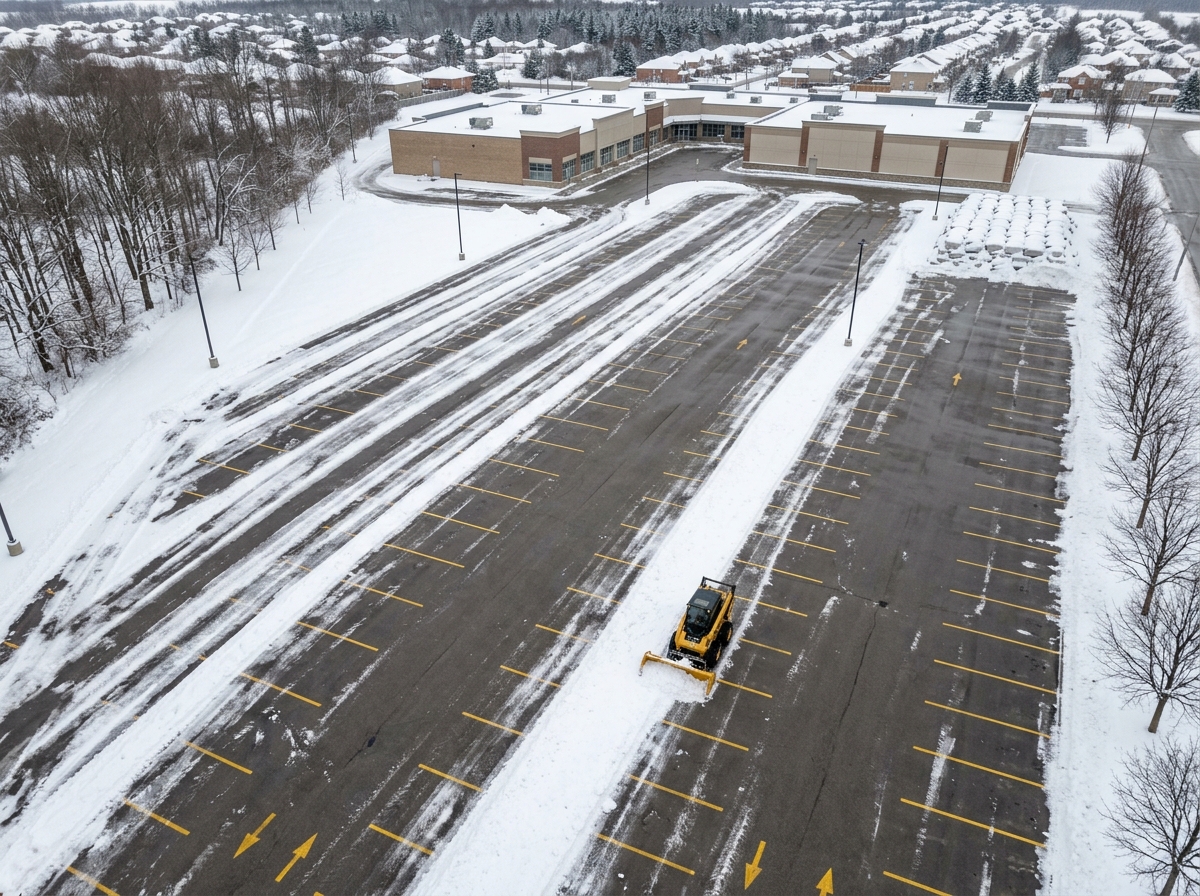
- Parking Lot Lighting: Ensures that parking areas are well-lit, reducing the risk of accidents and making it easier for customers to find their vehicles.
3. Aesthetic Lighting
Aesthetic lighting enhances the visual appeal of your property, creating an inviting and impressive atmosphere.
- Spotlights and Uplights: Illuminate trees, sculptures, and other landscape features from below or above, adding depth and dimension to your outdoor space.
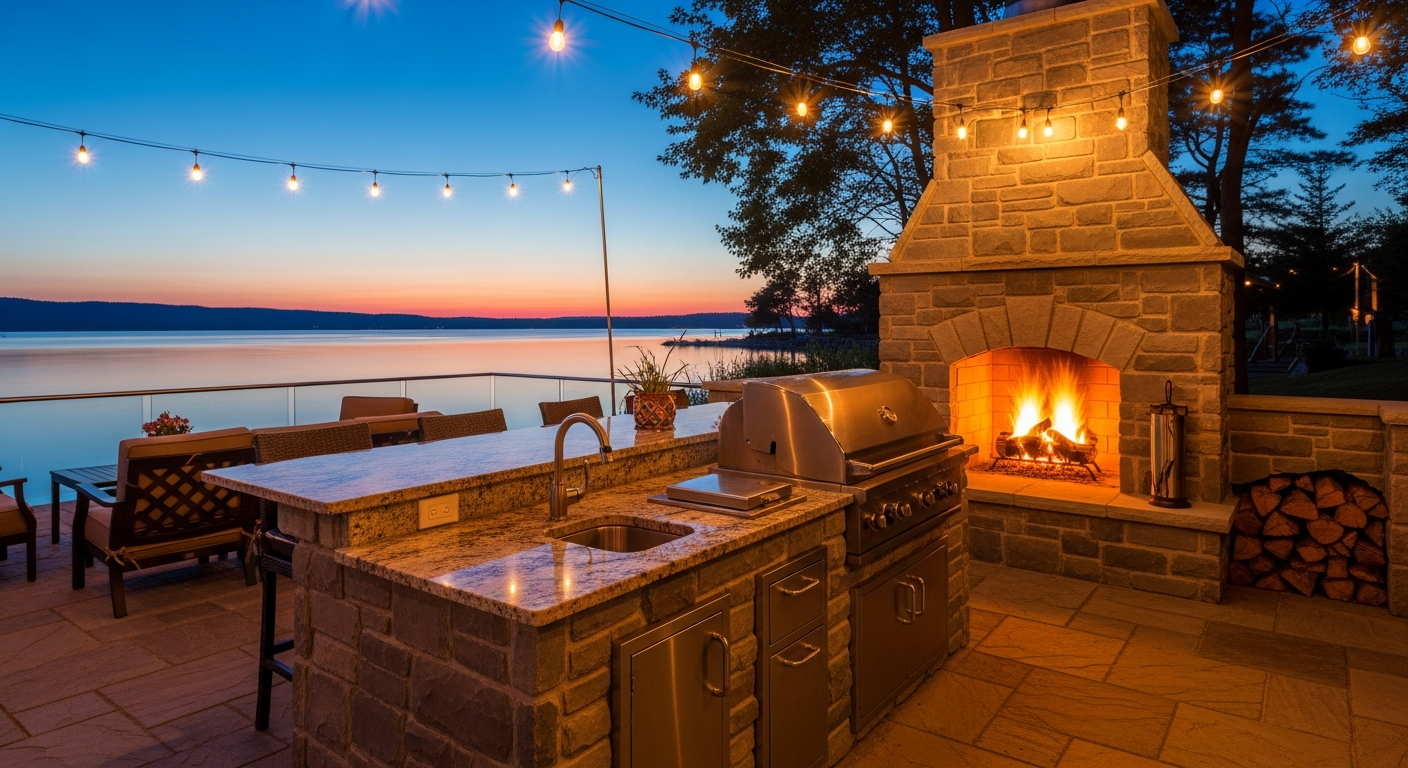
- String Lights and Decorative Fixtures: Create a warm and inviting ambiance in outdoor seating areas, patios, and walkways.
- Water Feature Lighting: Enhances the beauty of fountains, ponds, and waterfalls by highlighting their movement and reflections.
Best Practices for Outdoor Lighting Design
Designing an effective outdoor lighting system requires careful planning and consideration of various factors. Here are some best practices to ensure your lighting setup is both functional and beautiful:
1. Assess Your Needs
Begin by evaluating the specific needs of your property. Identify areas that require enhanced security, improved visibility, and aesthetic highlights. Consider the layout of your property, the natural light available during different times of the day, and the primary activities that take place in outdoor spaces.
Then put numbers on the site. Measure the area of parking lots and plazas in square metres, the length of each walkway, and every change in grade. Steps, ramps and sloped walks need more light than flat paving, and a walkway that falls toward a catch basin may also be where ice forms in winter. These measurements let a designer estimate fixture counts and spacing before any trenching starts.
Field drawing 01 · Measuring
Measure area, slope and volume before you order
Three numbers drive every landscape quote: square metres, fall and cubic metres.
Swipe to see the full drawing →
- Split odd shapes. Break the yard into rectangles, triangles and circle segments, measure each, then add them.
- Level a string line. Stretch it between two stakes and set a line level in the middle so the string is dead level.
- Measure down at each stake. The difference is the rise. Divide by the run between stakes and multiply by 100 for percent.
- Volume = area × depth. Convert depth to metres first. Tell the supplier the compacted depth you need.
- Check against the standard. In Midland, grass must fall at least 2% away from buildings and hard surfaces at least 1%.
Bring a site plan or survey to the first meeting if you have one. It shows property lines, which matter for light trespass limits, and existing underground services that wiring has to avoid.
2. Choose Energy-Efficient Options
Opt for energy-efficient lighting solutions such as LED fixtures, which consume less power and have a longer lifespan compared to traditional lighting options. Incorporating solar-powered lights can also reduce energy costs and promote sustainability.
3. Implement Layered Lighting
A layered lighting approach combines different types of lighting to achieve a balanced and versatile outdoor environment. Combine ambient lighting for general illumination, task lighting for specific functions, and accent lighting for visual interest.
4. Focus on Placement and Angle
Proper placement and angling of lights are crucial for maximizing their effectiveness. Position security lights to cover entry points and dark corners, while aesthetic lights should be strategically placed to highlight key features without causing glare or light pollution.
5. Incorporate Smart Lighting Controls
Integrate smart lighting controls such as timers, dimmers, and motion sensors to enhance convenience and efficiency. These controls allow you to customize lighting schedules, adjust brightness levels, and ensure that lights are only active when needed.
6. Prioritize Safety and Compliance
Ensure that your lighting design adheres to safety standards and local regulations. Properly lit walkways, emergency exits, and signage are essential for ensuring the safety of everyone on your property.
7. Plan for Site Plan Lighting Rules
Municipalities increasingly control commercial lighting through site plan approval. The Town of Midland's Lighting Guidelines, for example, can require a lighting plan and photometric plan from a qualified lighting designer. Fixtures should normally be full cut-off, dark-sky compliant LED units that emit no light at or above 90 degrees from straight down, and wall packs that shine horizontally are not allowed. The guidelines also cap light spilling over property lines, with lower limits in darker, environmentally sensitive areas, and ask that non-essential lighting be switched off or put on timers outside operating hours.
8. Use the Right Electrical Permits
In Ontario, landscape lighting installations need an electrical permit from the Electrical Safety Authority (ESA), even low-voltage systems whose transformers plug into an outdoor receptacle. Any change to 120-volt wiring must be done by a licensed electrical contractor. Ask your installer who will pull the permit before work starts.
Benefits of Professional Outdoor Lighting
Investing in professional outdoor lighting offers numerous advantages for your commercial property:
1. Enhanced Security
Well-lit properties give intruders fewer places to hide and make security cameras far more useful. Lighting works best as one part of a security plan alongside cameras, locks and regular patrols, not as a replacement for them.
2. Increased Visibility and Safety
Well-lit areas prevent accidents by making walkways, parking lots, and entrances more visible. Improved lighting reduces the risk of trips, falls, and other injuries, ensuring a safer environment for everyone.
3. Improved Aesthetic Appeal
Aesthetic lighting highlights architectural features and landscaping after dark. A property that looks cared for at night makes a better impression on customers and tenants.
4. Extended Operational Hours
Outdoor lighting allows you to utilize your commercial spaces beyond daylight hours, enabling evening events, extended business hours, and enhanced customer experiences during nighttime.
5. Energy and Cost Efficiency
Energy-efficient lighting solutions reduce electricity consumption and lower utility bills. Smart lighting controls further optimize energy usage by ensuring that lights are only active when necessary.
6. Positive Brand Image
A well-lit, attractive property reflects positively on your business, conveying professionalism, attention to detail, and a commitment to customer satisfaction. This enhances your brand's reputation and encourages customer loyalty.
Planning a 2027 commercial landscape lighting project
If you manage a commercial property and want new or upgraded outdoor lighting in 2027, start the design over the winter. Lighting that is part of a site plan application needs a photometric plan and fixture sheets before approval, and that review takes time. Trenching for new wiring and pole bases has to wait until the ground thaws, which around Midland is usually late April or May, so a plan finished in winter lets installation start as soon as conditions allow.
Winter is also the right time to audit what you already have. Walk the site after dark and note burnt-out fixtures, glare toward the road or neighbours, dark spots in the parking lot and walkways that ice up. Those notes become the brief for the new design.
- Check whether site plan approval applies. New buildings and major changes often trigger a lighting plan requirement.
- Choose full cut-off LED fixtures. They meet dark-sky expectations and cut glare.
- Plan controls with the fixtures. Timers, photocells and motion sensors are easier to wire in from the start.
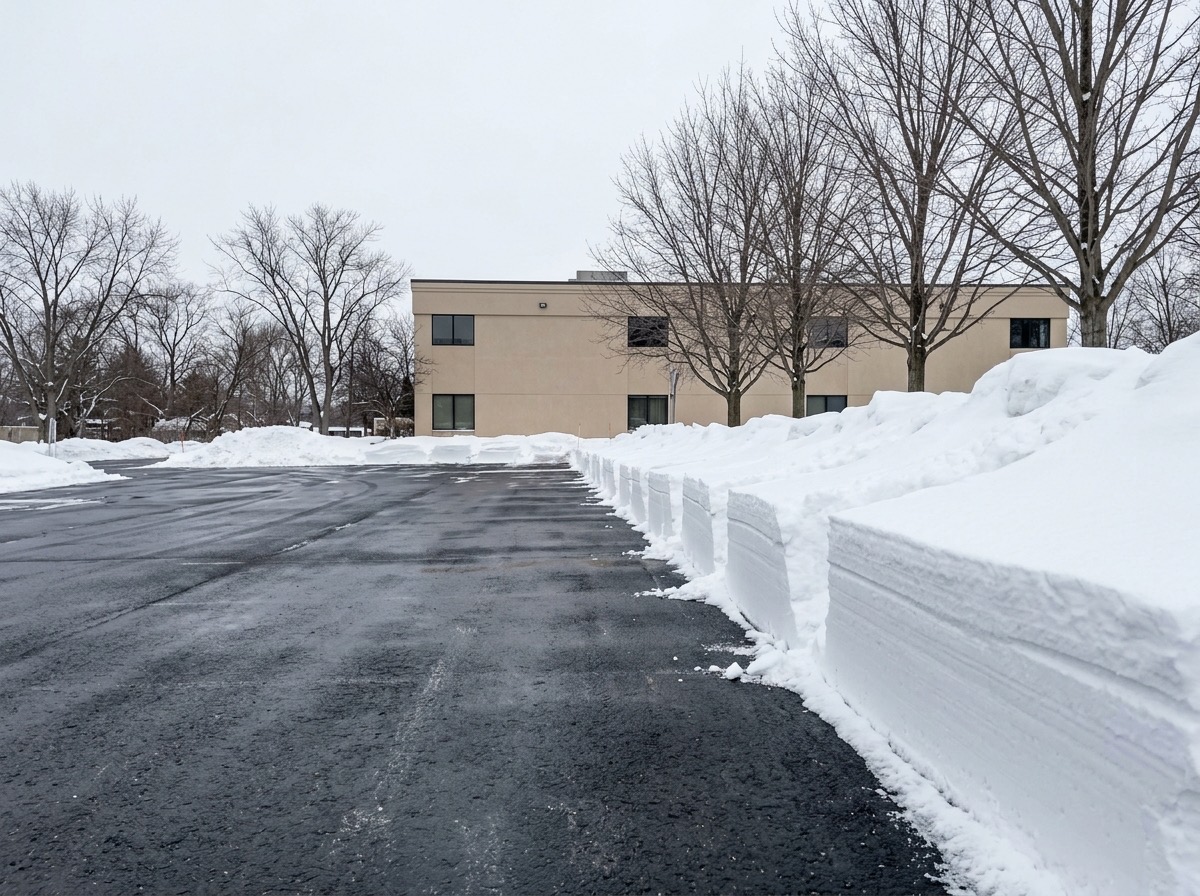
- Coordinate with snow clearing. Keep low fixtures out of plow and snow storage areas.
Frequently asked questions
Do I need a permit for commercial landscape lighting in Ontario?
Yes. ESA requires an electrical permit for landscape lighting installations, including low-voltage systems, and work on 120-volt wiring must be done by a licensed electrical contractor. New commercial sites may also need a lighting plan approved through the municipality's site plan process.
What is a photometric plan?
A photometric plan is a drawing, usually prepared with lighting software, that shows the predicted light level across a site from the chosen fixtures and pole heights. Municipalities such as Midland use it to check light spill at property lines and even coverage across parking areas.
What does full cut-off or dark-sky compliant mean?
A full cut-off fixture sends no light upward above the horizontal. Dark-sky compliant fixtures limit glare and sky glow, which is why many Ontario towns now ask for them on commercial sites.
Is solar lighting a good choice for a commercial property?
Solar fixtures can work for low-traffic paths or remote signs, but short winter days around Georgian Bay limit their output. For parking lots and main entrances, hard-wired LED lighting on timers or sensors is more reliable.
Why Choose Forty Five Scapes for Your Outdoor Lighting Needs?
At Forty Five Scapes, we are committed to delivering exceptional outdoor lighting solutions that enhance the security, visibility, and aesthetics of your commercial property. Here's what we offer on commercial lighting projects. Our commercial landscaping services also cover the planting, hardscape and drainage the lighting sits in.
- Customized Lighting Designs: We tailor our lighting solutions to meet the unique needs and preferences of your property, so the lighting fits your building and site.
- Experienced Professionals: Our team of skilled lighting designers and technicians brings extensive expertise in landscape lighting, ensuring high-quality installations and optimal performance.
- Energy-Efficient Solutions: We prioritize energy-efficient lighting options that reduce costs and promote sustainability, helping you achieve your environmental goals.
- Advanced Technology: We utilize the latest lighting technologies, including smart controls and LED fixtures, to enhance the functionality and efficiency of your outdoor lighting system.
- Comprehensive Services: From initial consultation and design to installation and ongoing maintenance, we offer a full range of services to support your outdoor lighting needs.
- Close Communication: We work closely with you throughout the process to ensure that every aspect of your lighting project meets your expectations.
Conclusion
Outdoor lighting is a powerful tool for enhancing the security, visibility, and aesthetics of commercial landscapes. By implementing a well-designed lighting system, you can create a safer, more inviting environment that people notice for the right reasons. At Forty Five Scapes, we specialize in delivering customized outdoor lighting solutions that meet the unique needs of your commercial property, ensuring that your space remains secure, functional, and beautiful day and night.
Planning lighting for a commercial property? Contact Forty Five Scapes to learn more about our outdoor lighting services and discover how we can help you create a bright and inviting outdoor environment that supports your business goals.
Planning a project this season?
We’ll walk the site, scope it properly and give you a straight price.
Mark and Matt are amazing. Not only do they do high-quality work, but they are also collaborative every step of the way. They are also great at problem-solving for unforeseen issues, or if you are just stuck on what to do in a certain area. I highly recommend Forty-Five Scapes for your landscaping needs.
Frequently asked questions