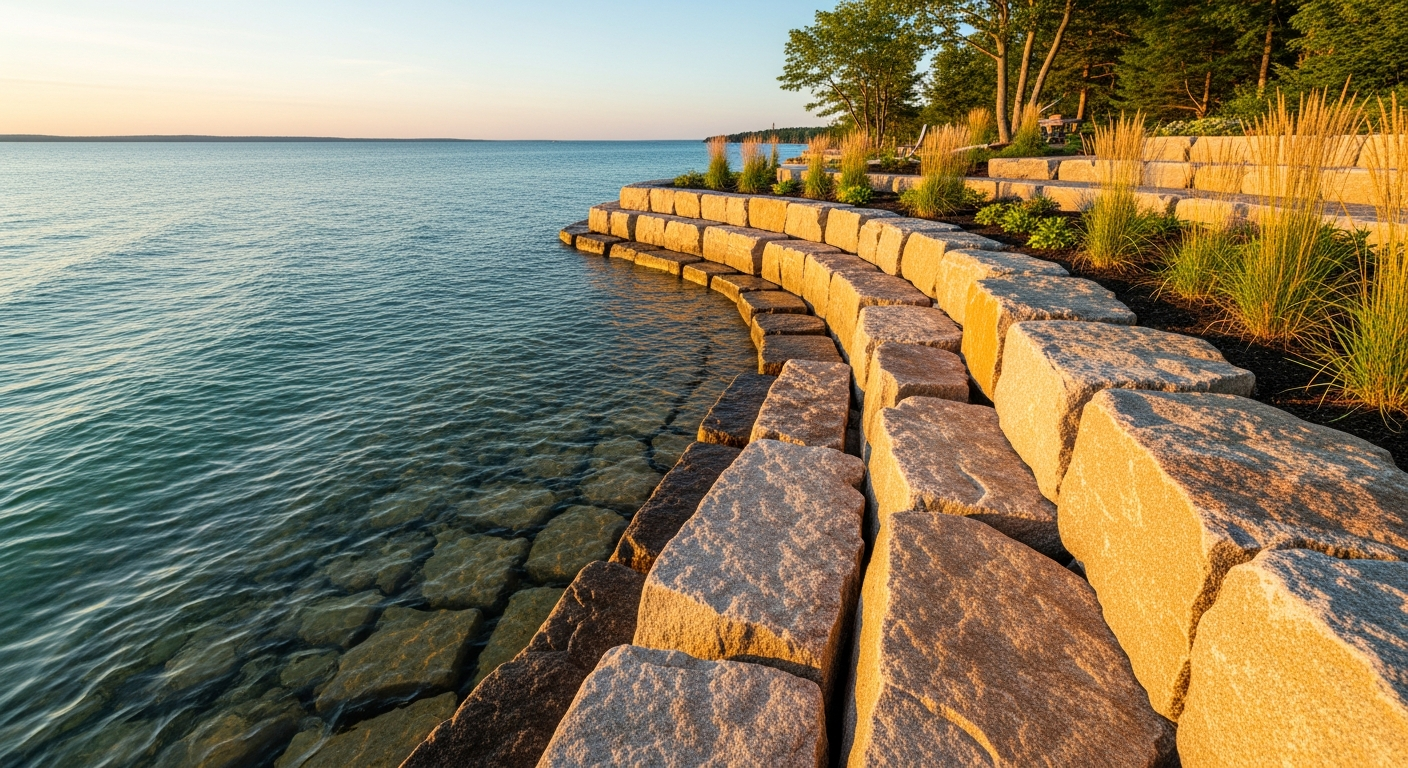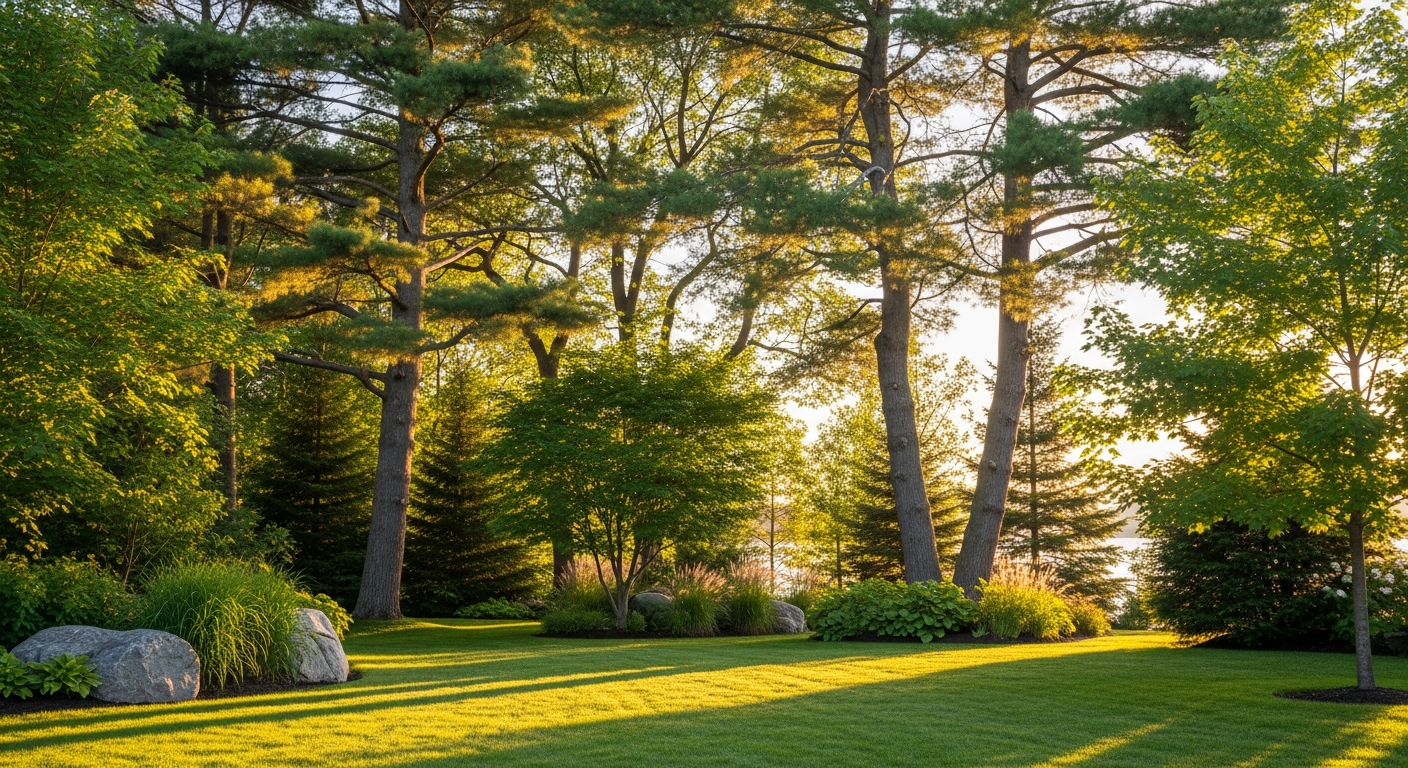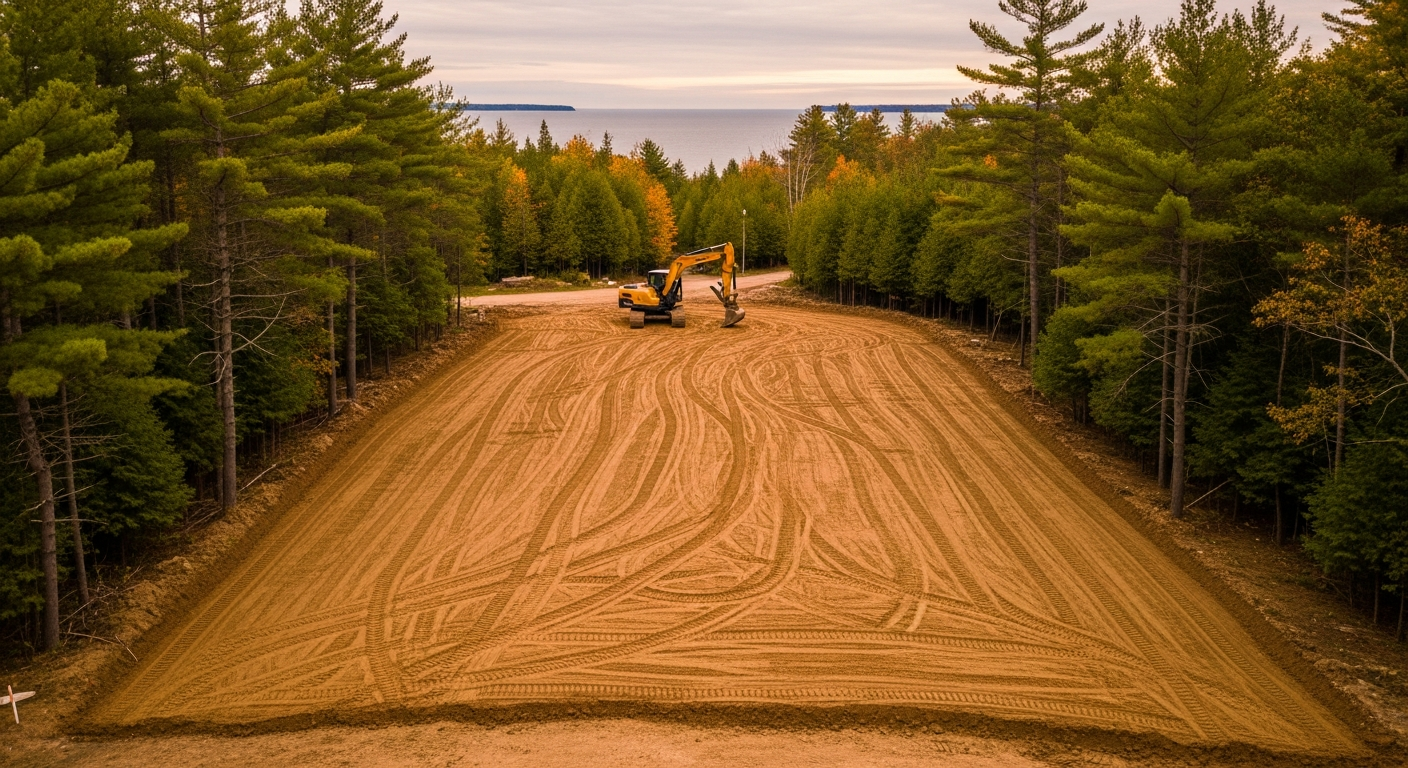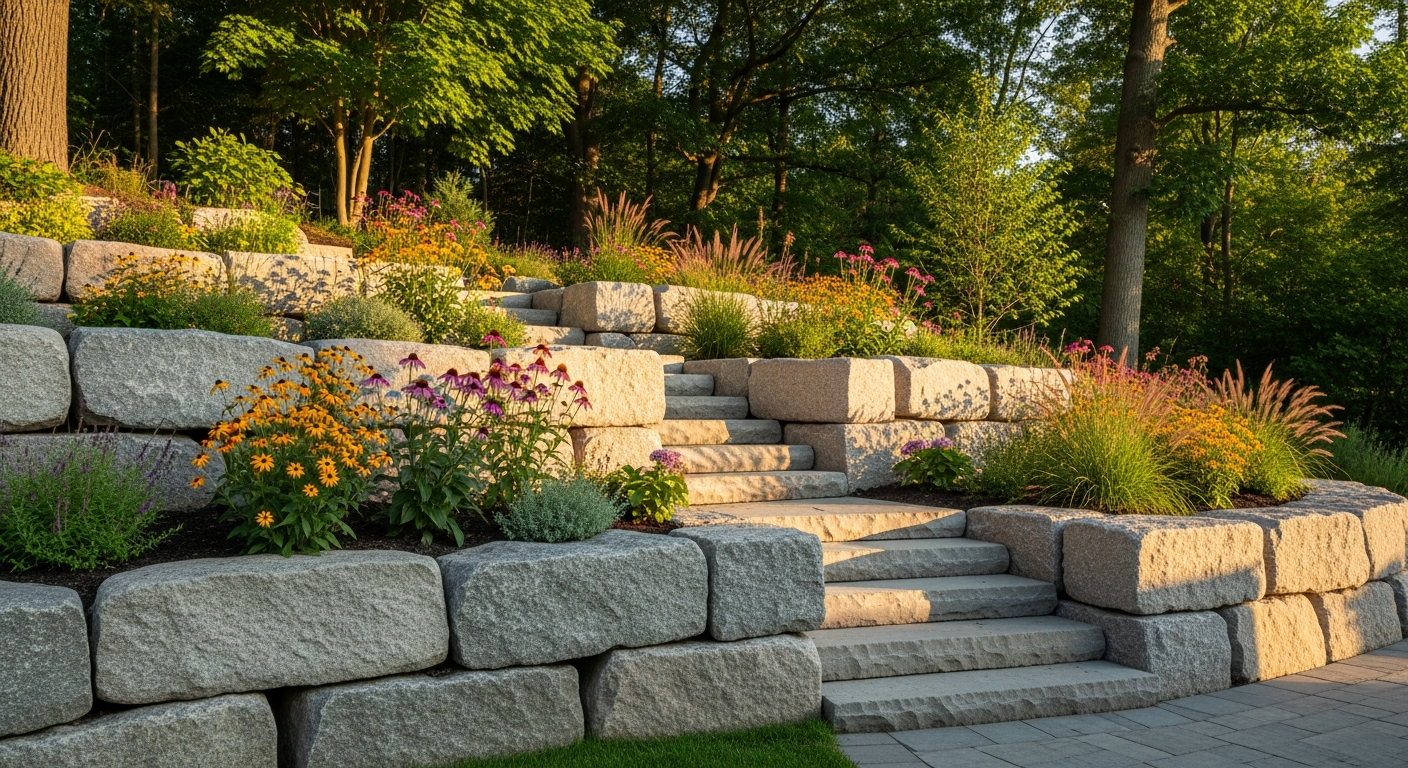
Modern landscaping centres on native and drought-tolerant planting, smart irrigation and lighting controls, less lawn with well-built hardscape, and outdoor living areas. These designs save water and upkeep, but only if the basics underneath, like soil, drainage and the base under pavers, are done properly.
Key takeaways
The landscaping designs shaping modern outdoor spaces come down to a few practical ideas: plant native and drought-tolerant species, use smart controls for irrigation and lighting, replace high-upkeep lawn with well-built hardscape and ground covers, and design yards as usable outdoor rooms. Each one saves time or water once it is in, and each depends on getting the basics right underneath, from soil and drainage to the base under a patio.
This guide covers those trends, what they look like in a Georgian Bay or Simcoe County yard, and how to plan them for next season.
Sustainable Gardening: A Growing Trend
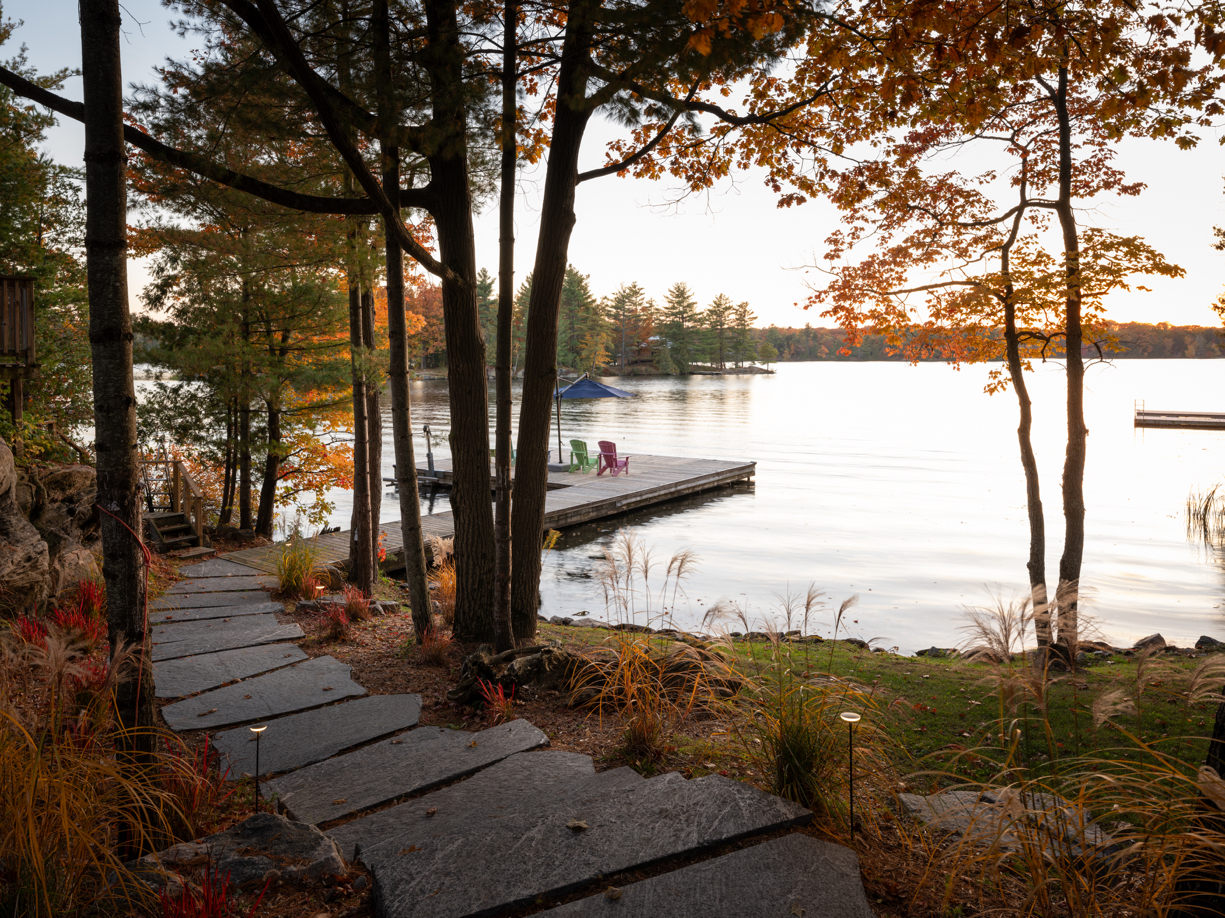
Sustainable gardening practices are becoming increasingly popular as homeowners seek to reduce their environmental impact. This approach emphasizes the use of native plants, organic gardening methods, and water-efficient irrigation systems. By choosing plants that thrive in your local climate, you can create a garden that needs less water and care. Around Midland and Penetanguishene that often means native perennials and grasses that handle sandy soil and dry summer spells.
Benefits of Sustainable Gardening
- Environmental Impact: Reduces water usage and chemical runoff.
- Cost-Effective: Lowers maintenance costs over time.
- Wildlife Friendly: Attracts beneficial insects and pollinators.
Smart Outdoor Technology
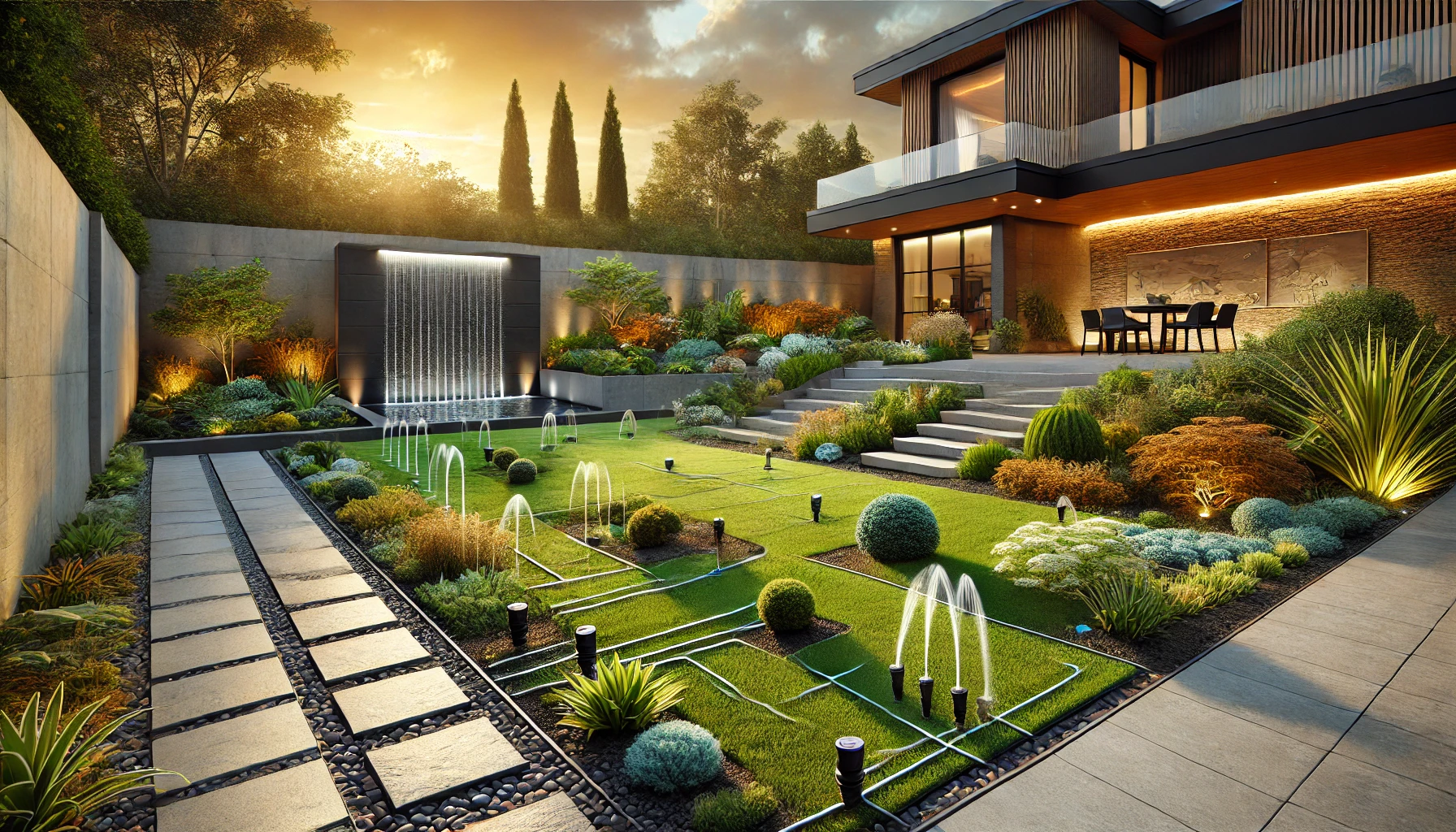
Integrating smart technology into landscaping is another trend gaining traction. Homeowners can now control irrigation systems, outdoor lighting, and even garden features through smartphone apps. The useful part is not the app; it is that a weather-aware controller skips watering after rain and lights run on schedules instead of all night.
Examples of Smart Outdoor Tech
- Automated Irrigation Systems: Adjust watering schedules based on weather conditions.
- Smart Lighting: Set timers and control brightness remotely.
- Garden Sensors: Monitor soil moisture and plant health.
Low-Maintenance Greenery
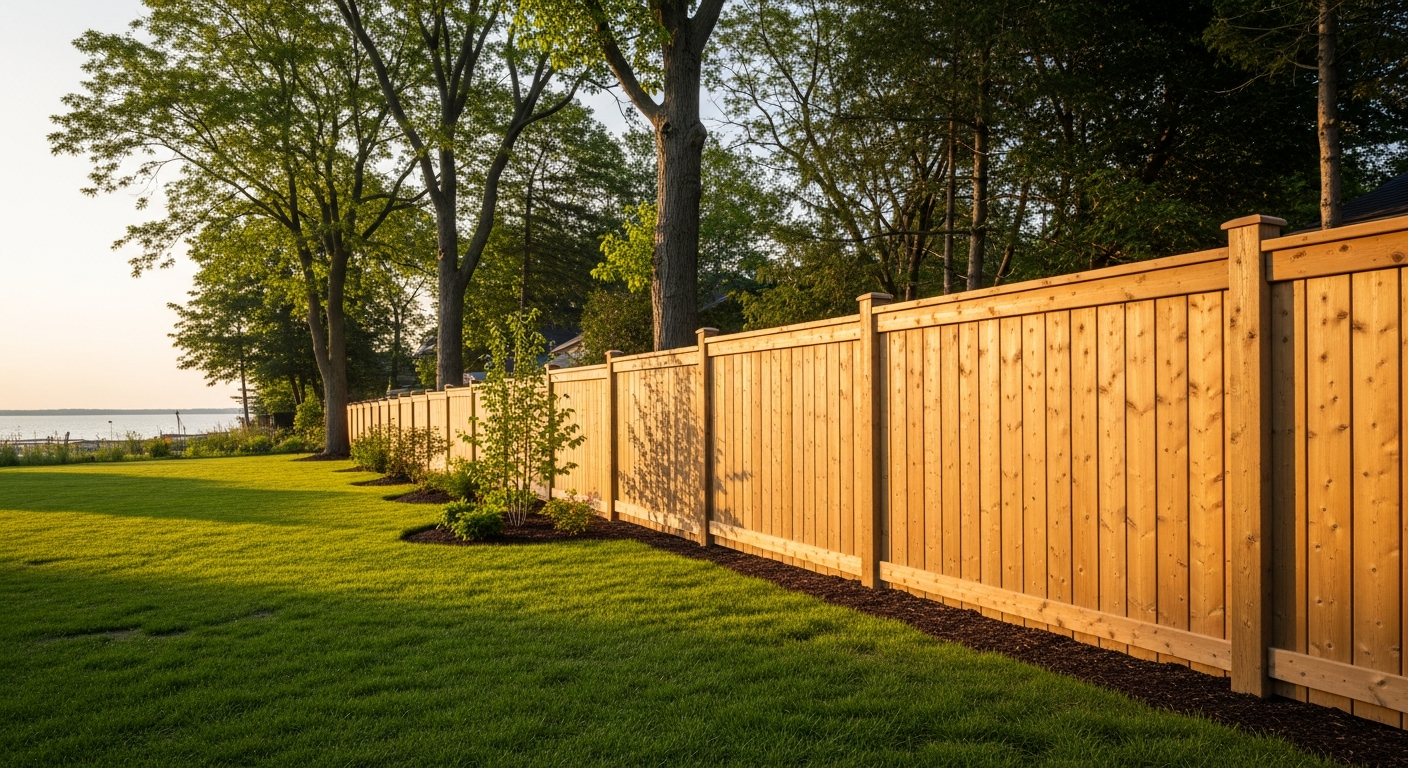
For busy homeowners, low-maintenance landscaping options are essential. This trend includes the use of drought-resistant plants, ground covers, and hardscaping elements that require minimal upkeep. By selecting the right materials and plants, you can build a landscape that looks good across the seasons without constant care.
Tips for Low-Maintenance Landscaping
- Choose Native Plants: They are adapted to local conditions and require less water.
- Incorporate Hardscaping: Use stones, gravel, and pavers to reduce lawn areas.
- Mulch Beds: Helps retain moisture and suppress weeds.
Swapping lawn for a patio or paver walk only lowers maintenance if the hardscape is built properly. Interlocking pavers at least 60 mm thick sit on a nominal 25 mm bedding layer over 100 to 150 mm of compacted Granular A for patios and walks, or 150 to 200 mm under a driveway, compacted to at least 98% Standard Proctor and held by an edge restraint. Skimp on that base and the low-maintenance patio turns into a weeding and re-levelling job within a few winters.
Field drawing 11 · Patios and driveways
The base under interlock is the real patio
Pavers are only the wearing surface. Settling, heaving and ruts start in the layers below.
Swipe to see the full drawing →
- Pavers. At least 60 mm thick for pedestrian areas and residential driveways.
- Bedding layer. A nominal 25 mm, screeded flat. Never use bedding to fix a bad base.
- Compacted Granular A. 100–150 mm under walks and patios, 150–200 mm under driveways, compacted to at least 98% Standard Proctor.
- Firm subgrade. Strip topsoil and soft spots and compact before the base goes in. Clay or wet sites need more base.
- Edge restraint. Spiked or concrete edge so the field can't creep. The base runs past the edge to carry it.
Permeable pavers are worth a look on well-drained sites: they let rain soak through the joints and an open-graded base instead of running off. Either way, slope hard surfaces at least 1% away from the house.
Outdoor Living Spaces
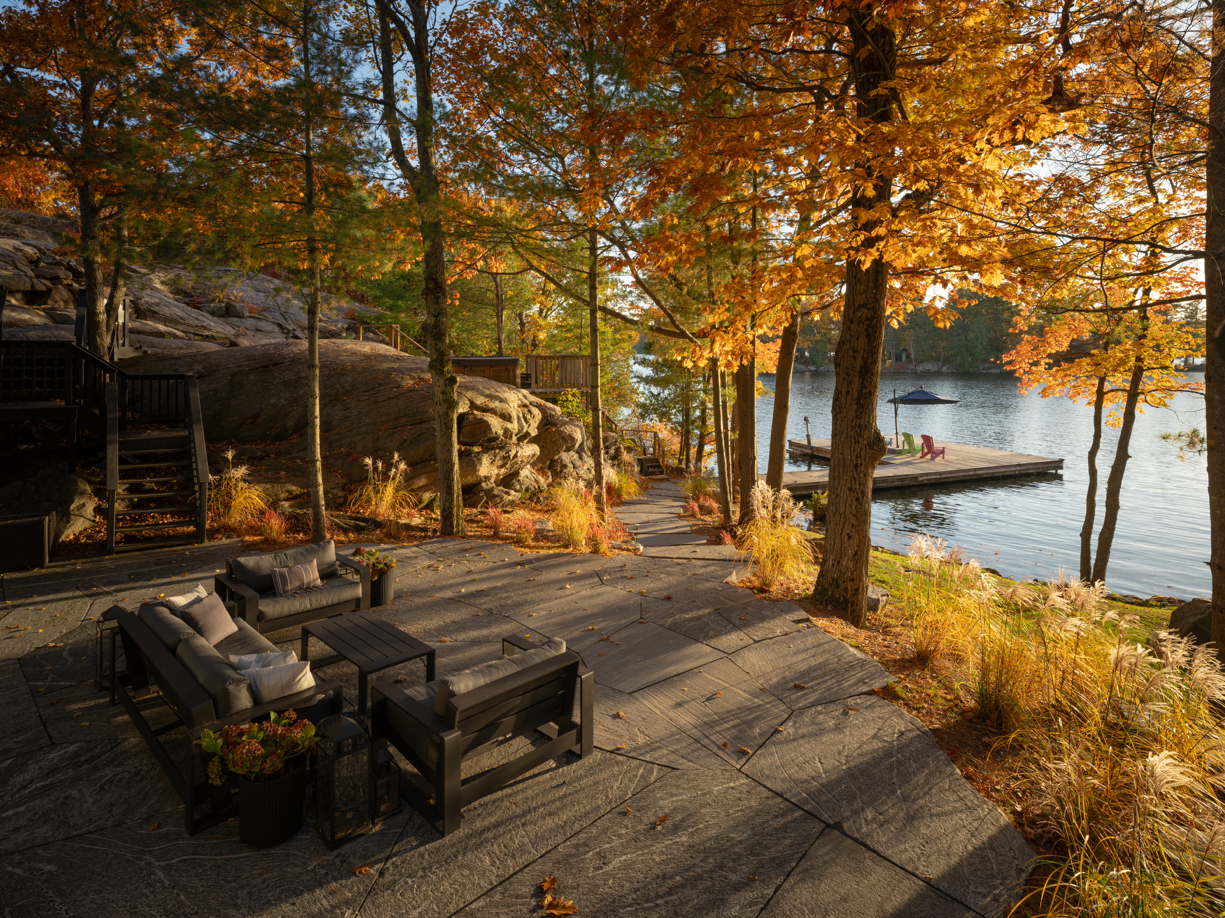
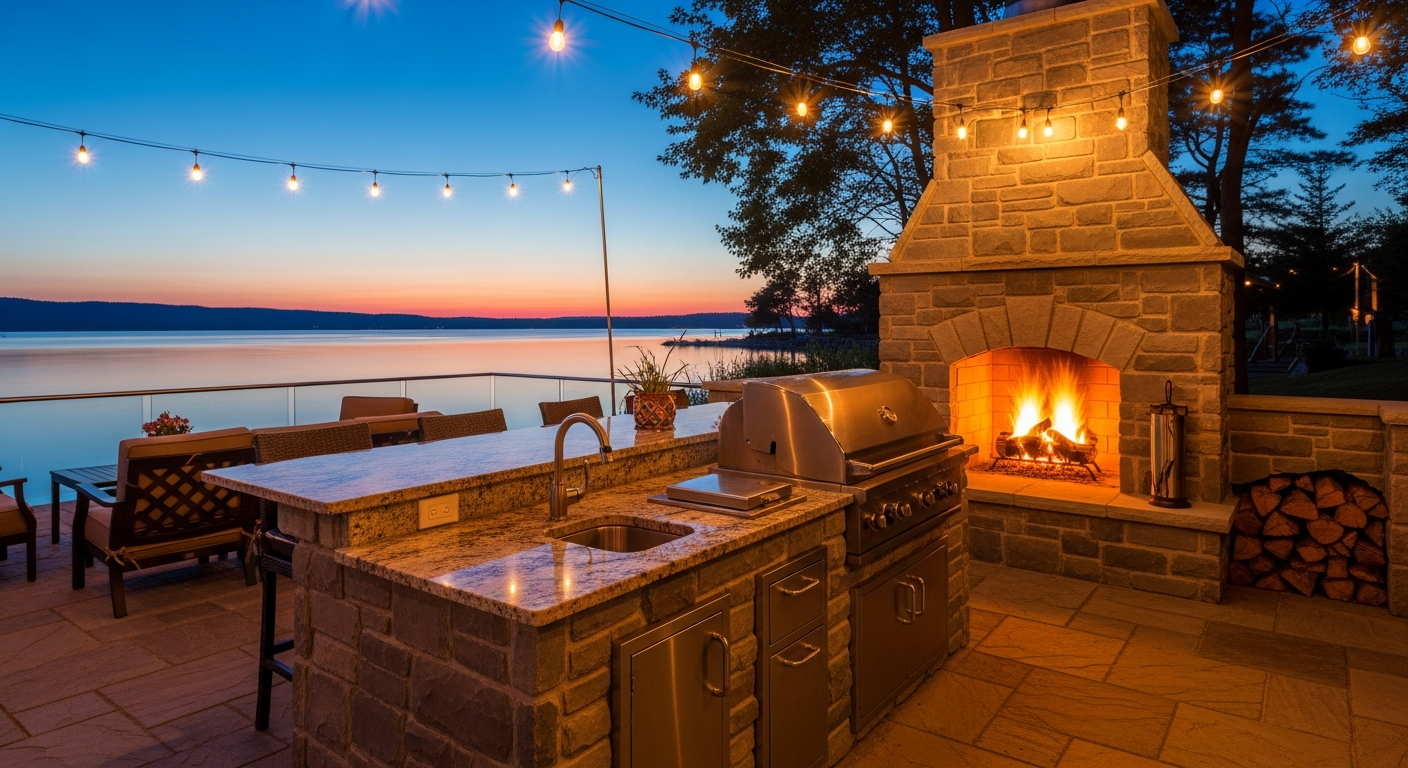
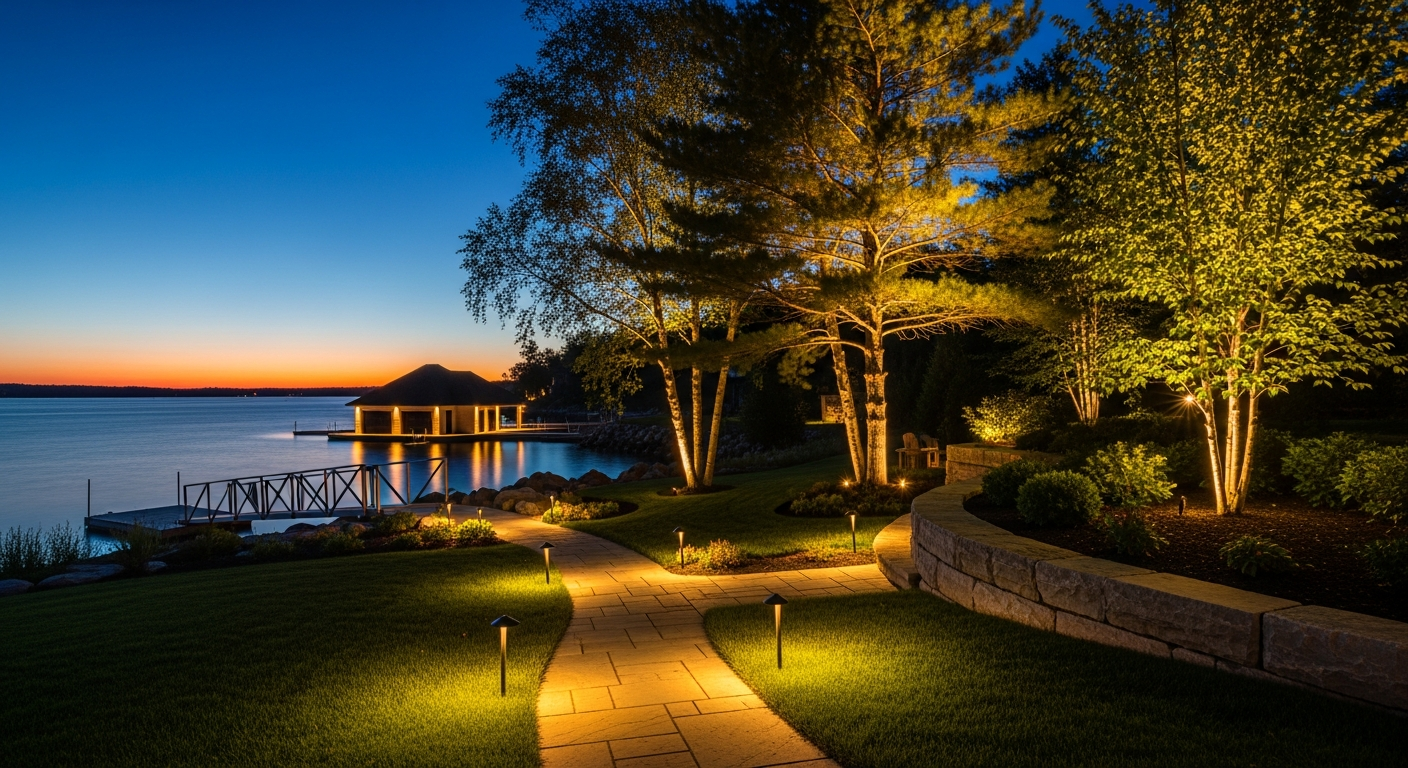
More homeowners are treating the yard as an extension of the house: a patio sized for a dining table, an outdoor kitchen or fire feature, a pergola for shade, and lighting that makes the space usable after dark. The design work is in the connections, such as how you step out of the house, where the sun sits in the evening, and how the space drains and handles snow in winter.
Inspiring Examples of Modern Landscaping
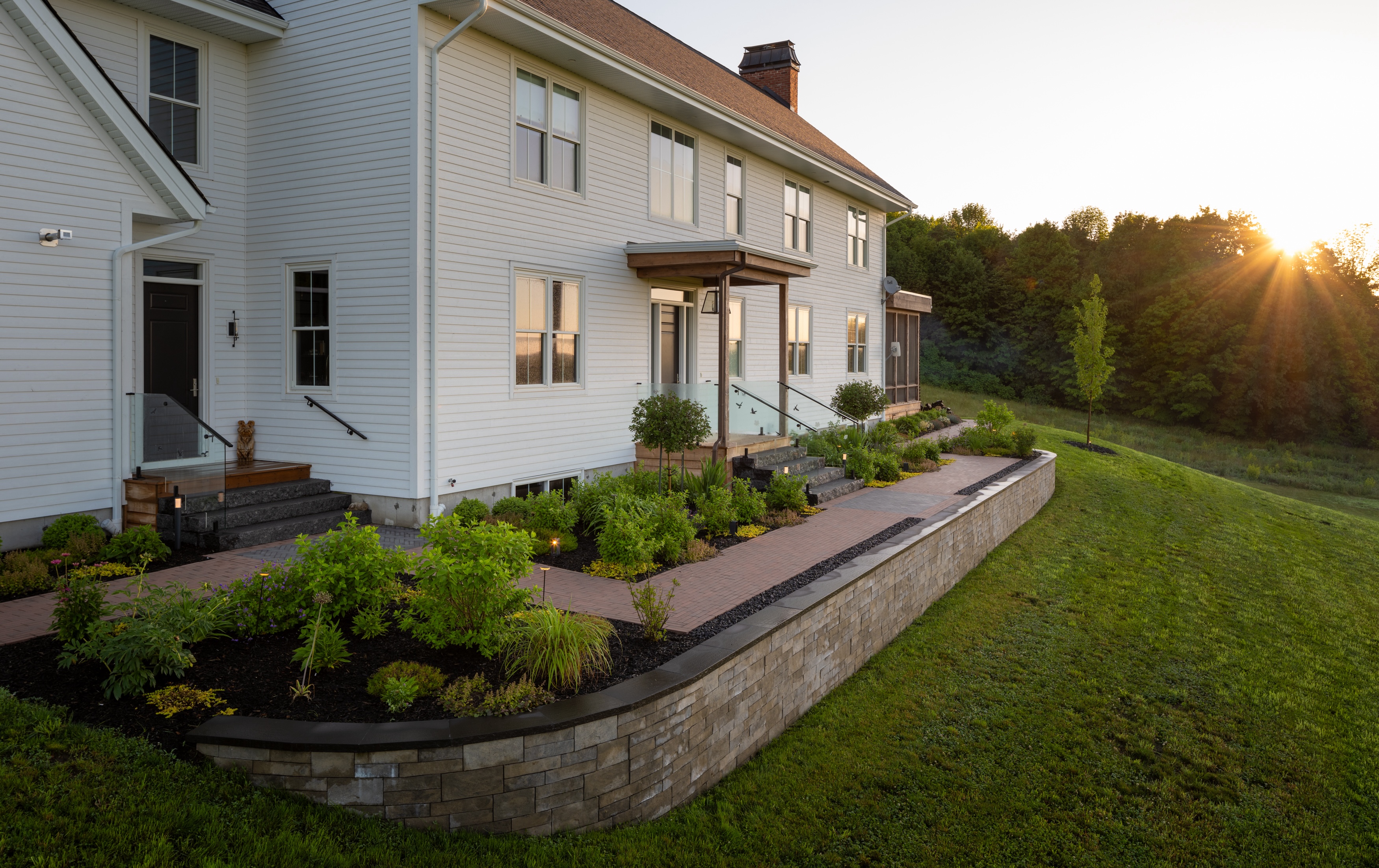
Here is how these trends tend to come together. A suburban backyard might replace part of its lawn with native perennial beds, add a rain garden where downspouts used to flood the grass, and put irrigation on a weather-based controller. A new-build property might pair a modest lawn with ground covers, a well-built paver patio and LED path lighting, so it looks finished on day one and stays easy to keep up.
2027 landscaping trends worth planning for
If you want to try any of these ideas in the 2027 season, the planning happens over the winter. Start by deciding what you want the yard to do: entertain, grow food, cut mowing time, handle drainage or all of the above. Then get a design that shows grades, drainage and materials, because that is what lets contractors quote the same job and what your municipality will need if the plan includes retaining walls over 1 m beside public areas, a pool, a deck or grading changes.
Ground in Simcoe County is usually workable for excavation in late April or May, and landscape contractors book their spring calendars over the winter, so aim to finish design by late winter. For 2027 designs, the choices worth making early are native and pollinator plantings, permeable or properly based paver surfaces, smart irrigation and lighting controls, and outdoor living areas sized for how you actually use them.
- List what you want the yard to do before choosing features.
- Get a measured design with grades and drainage over winter.
- Check whether any part of the plan needs a permit.
- Book installation before the spring rush.
Frequently asked questions
What is the most popular landscaping trend right now?
Low-maintenance, sustainable yards: native plants, less lawn, efficient irrigation and durable hardscape. They suit busy households and cut water use.
Are native plants really lower maintenance?
Once established, yes, as long as they are matched to the site's sun and soil. They usually need less watering and fertilizer than exotic ornamentals, though new plantings still need regular water in their first season.
Is smart irrigation worth it for a home?
For any yard with an in-ground system, a weather-based controller or rain sensor is a low-cost upgrade that stops the system watering in the rain.
Bringing modern design to your yard
As landscaping designs continue to evolve, embracing innovative trends can lead to outdoor spaces that are not only beautiful but also functional and sustainable. By incorporating sustainable gardening practices, smart technology, and low-maintenance options, you can create a landscape that suits how you live and uses fewer resources.
If you are in Midland, Penetanguishene or the Georgian Bay area, our design-build landscaping and 3D landscape design services can help you plan it. For more ideas, see 7 Landscape Design Trends.
Planning a project this season?
We’ll walk the site, scope it properly and give you a straight price.
Mark and Matt are amazing. Not only do they do high-quality work, but they are also collaborative every step of the way. They are also great at problem-solving for unforeseen issues, or if you are just stuck on what to do in a certain area. I highly recommend Forty-Five Scapes for your landscaping needs.
Frequently asked questions