Commercial lawn care services cover regular mowing and trimming, fertilizing based on a soil test, core aeration, weed and pest management that follows Ontario's cosmetic pesticide ban, irrigation checks, and spring and fall cleanups. Commercial lawns also need repairs for plow, salt and foot-traffic damage, so plan the season's scope over the winter.
Key takeaways
Commercial lawn care services keep the turf on a business property healthy, tidy and safe through the whole season. A typical program covers regular mowing and trimming, fertilizing based on a soil test, core aeration, weed and pest management that follows Ontario's pesticide rules, irrigation checks, and spring and fall cleanups, plus repairs where turf has worn out or been damaged by snow and salt. At Forty Five Scapes, we look after lawns on commercial properties around Midland, Penetanguishene and Georgian Bay. This guide explains what each service involves, how to plan a program, and what to sort out over the winter for next season.
The Importance of Professional Commercial Lawn Care
A lawn on a commercial property gets more traffic, more salt and less attention than a home lawn, so it needs a plan. Here is why professional care is worth it:
- First Impressions Matter: Clients, visitors and job applicants see the grounds before they see the inside of the building. Neat, healthy turf shows the property is looked after.
- Employee Well-being: Green space gives staff somewhere to take a break outside.
- Environmental Benefits: Healthy turf holds soil in place, slows runoff and stays cooler than pavement.
- Property Value: Grounds that are kept up are part of what tenants and buyers judge a property on.
Essential Lawn Care Services for Commercial Properties
A good commercial lawn program combines several services on a regular schedule. Here are the key parts:
1. Mowing and Trimming
Regular mowing and trimming keep the property looking consistent. A professional crew should provide:
- Consistent Height: Cutting high, around 6 to 8 cm for most cool-season lawns, and never removing more than a third of the blade at once, helps grass shade out weeds and handle summer heat.
- Precision Trimming: Edging walkways, driveways and beds for clean lines.
- Efficient Scheduling: Mowing at times that avoid peak customer or staff traffic, usually weekly through late spring and early summer when growth is fastest.
2. Fertilizing and Soil Health
Fertilizer works best when it is based on what the soil actually needs. Our lawn care services include:
- Soil Testing: A soil test shows pH and nutrient levels so fertilizer is applied only where it helps.
- Balanced Fertilizing: Applying nitrogen, phosphorus and potassium in the amounts the test calls for, with most feeding in late spring and early fall.
- Aeration: Core aeration pulls plugs of soil to relieve compaction, so air, water and nutrients reach the roots. Commercial lawns along walkways and parking edges benefit most.
3. Weed Control
Weed control in Ontario has to follow the province's cosmetic pesticide rules. Since 2009, Ontario's Pesticides Act and O. Reg. 63/09 have banned most pesticides, including common lawn herbicides, for cosmetic use on lawns and gardens, and that applies to commercial properties as well as homes. A compliant program looks like this:
- Thick turf first: Mowing high, fertilizing properly and overseeding thin areas are the most effective long-term weed control.
- Low-risk products: Where weeds still need treatment, use only products permitted for lawns under the regulation, such as certain iron-based or other lower-risk weed controls, and follow the label.
- Integrated Pest Management: Combine monitoring, cultural practices and targeted treatment so problems are dealt with early and only where they occur.
4. Irrigation Management
Watering properly keeps turf healthy without wasting water. Our irrigation services offer:
- System Installation and Maintenance: Spring start-up, head adjustment so sprinklers hit turf and not pavement, and fall blow-out before freeze-up.
- Smart Controllers: Rain and soil moisture sensors that adjust watering to the weather.
- Leak Detection and Repair: Finding and fixing broken heads and leaks that waste water and create soggy spots.
5. Pest and Disease Control
Grubs, chinch bugs and fungal diseases can thin a lawn quickly. Our services include:
- Regular Inspections: Checking for brown patches, lifting turf and other early signs.
- Targeted Treatments: Using biological controls such as beneficial nematodes for grubs, and other permitted products where needed.
- Preventive Measures: Proper watering, mowing and aeration that make the lawn less attractive to pests and disease.
6. Seasonal Lawn Care
Lawn care follows the seasons. Our seasonal services include:
- Spring Cleanup: Removing debris, sand and gravel left by plows, raking out snow mould and salt damage, and repairing turf along walkways and parking edges.
- Summer Maintenance: Raising the mowing height in heat, keeping irrigation tuned, and watching for pests.
- Fall Preparation: Aerating, fertilizing and overseeding to strengthen the lawn before winter.
- Winter Protection: Marking lawn edges with stakes so plows stay on pavement, and keeping snow piles off turf where possible.
7. Repairing worn and damaged turf
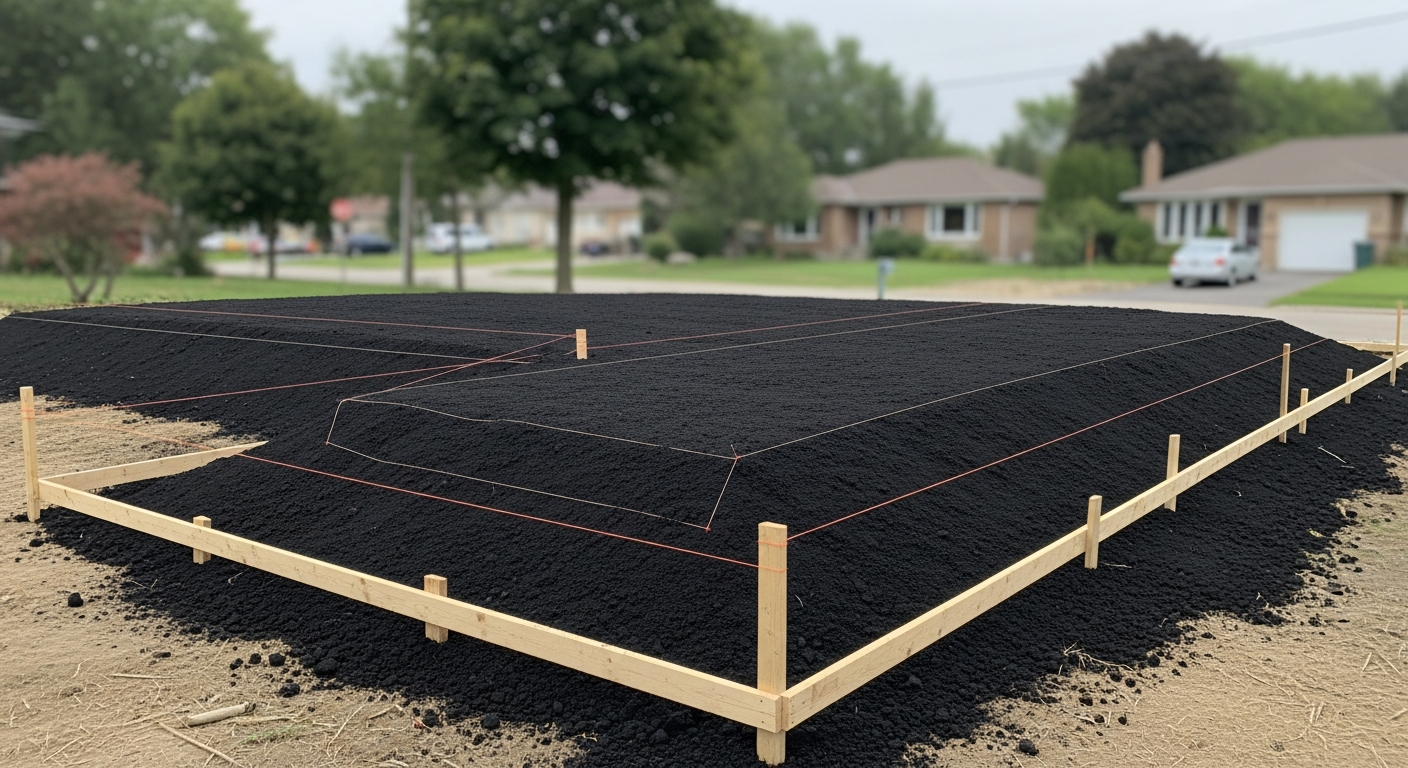
Commercial lawns take damage that home lawns rarely see: plow scrapes, salt burn along sidewalks, and paths worn by people cutting corners. Small areas can be overseeded in late summer or fall. Larger or highly visible areas are usually re-sodded so the property looks finished right away. Sod only lasts if the base is right: screened topsoil at least 150 mm deep, loosened subsoil, and sod laid within 36 hours of harvest with the end seams staggered. If the damage comes from foot traffic, fix the cause at the same time, often with a walkway where people already walk.
Field drawing 03 · Sod installation
Lay sod on a real topsoil bed, seams staggered
Most failed lawns come down to thin soil, poor grade or sod left on the pallet too long.
Swipe to see the full drawing →
- Lay within 36 hours of harvest. Sod heats and yellows on the pallet. Toronto's turf spec sets 36 hours from lifting to laying.
- 150 mm of screened topsoil. Rake it smooth and firm. Many municipal specs ask for 150 to 300 mm.
- Loosen the subsoil first. Scarify compacted ground so roots and water can move into it.
- Stagger the end seams. Lay rows like brickwork so no two seams line up. Seams that line up dry out and open.
- Keep it wet, then wean it. Keep the soil under the sod moist to 75 to 100 mm until the roots knit in, then water deeper and less often.
New sod needs steady moisture until it roots into the soil below, then deeper, less frequent watering. On a commercial site that usually means setting the irrigation for the new area separately for the first few weeks. Our sod installation service covers both the prep and the follow-up watering plan.
Benefits of Professional Commercial Lawn Care
Hiring out lawn care has practical advantages for a commercial property:
1. Enhanced Curb Appeal
Consistent mowing, edging and seasonal care keep the grounds looking cared for every week, not just after a cleanup.
2. Cost Savings
Regular care catches problems like grubs, compaction or broken irrigation before they turn into full lawn replacement.
3. Time Efficiency
Your staff do not have to manage equipment, schedules or seasonal work.
4. Expert Knowledge
An experienced crew can diagnose why turf is failing, whether it is soil, drainage, shade, pests or traffic, and fix the cause.
5. Sustainable Practices
Soil-test-based fertilizing, smart irrigation and integrated pest management use fewer inputs and keep the program within Ontario's pesticide rules.
Why Choose Forty Five Scapes for Your Commercial Lawn Care Needs?
Forty Five Scapes is a family-owned design-build landscaping, excavation and snow removal company based in Penetanguishene. For commercial lawn care we offer:
- Customized Solutions: Lawn care plans built around your property's size, use and budget.
- Experienced Team: Crews who also handle grading, drainage and sod, so turf problems with a deeper cause get fixed properly.
- Quality Equipment: Commercial mowers, aerators and trimmers sized for larger properties.
- Sustainable Approach: Practices that follow Ontario's pesticide rules and use water carefully.
- Reliable Service: A set schedule and one contact who knows your property.
Planning 2027 commercial lawn care
Most commercial lawn care contracts are set for the season, so the winter is the time to decide what next year's program should cover. Walk the property in late fall or early spring and note thin areas, salt damage along walkways, plow damage and spots that stay wet. Those notes decide whether 2027 needs simple maintenance or some repair work first. Around Midland and Penetanguishene, spring cleanup usually starts once the snow is gone and the ground firms up in April, and sod or seed repairs follow when the soil has thawed and dried, typically late April or May. Late summer and early fall is the other good window for overseeding.
- Set the scope early: mowing frequency, aeration, fertilizing, irrigation start-up and blow-out, and spring and fall cleanups.
- Test the soil in spring so 2027 fertilizing is based on real numbers.
- Coordinate with snow removal so lawn edges are staked and snow storage stays off turf.
- Budget for repairs on high-traffic edges, or for a walkway where people keep cutting across the grass.
Frequently asked questions
What do commercial lawn care services include?
Usually mowing, trimming and edging, fertilizing, aeration, weed and pest management, irrigation maintenance, and spring and fall cleanups. Many contracts also include turf repair and can be combined with snow removal.
Can commercial properties in Ontario use weed killers on lawns?
Most herbicides are banned for cosmetic use on lawns in Ontario, including on commercial properties. Weed control relies on healthy turf and the lower-risk products the regulation allows.
How often should a commercial lawn be mowed?
Usually weekly during peak growth in late spring and early summer, and every one to two weeks in slower periods. The goal is never to remove more than a third of the grass blade at one time.
When is the best time to aerate a commercial lawn?
Early fall is the best time for most lawns in this area, with spring as a second option. Aerating before overseeding helps the seed reach the soil.
Getting started
A healthy commercial lawn comes from regular mowing, soil-based fertilizing, aeration, careful watering and weed control that follows Ontario's rules, plus quick repairs where turf gets damaged. For the wider maintenance picture, see our guide to landscape maintenance for commercial properties.
Contact Forty Five Scapes to set up a commercial lawn care program for your property.
Planning a project this season?
We’ll walk the site, scope it properly and give you a straight price.
Mark and Matt are amazing. Not only do they do high-quality work, but they are also collaborative every step of the way. They are also great at problem-solving for unforeseen issues, or if you are just stuck on what to do in a certain area. I highly recommend Forty-Five Scapes for your landscaping needs.
Frequently asked questions