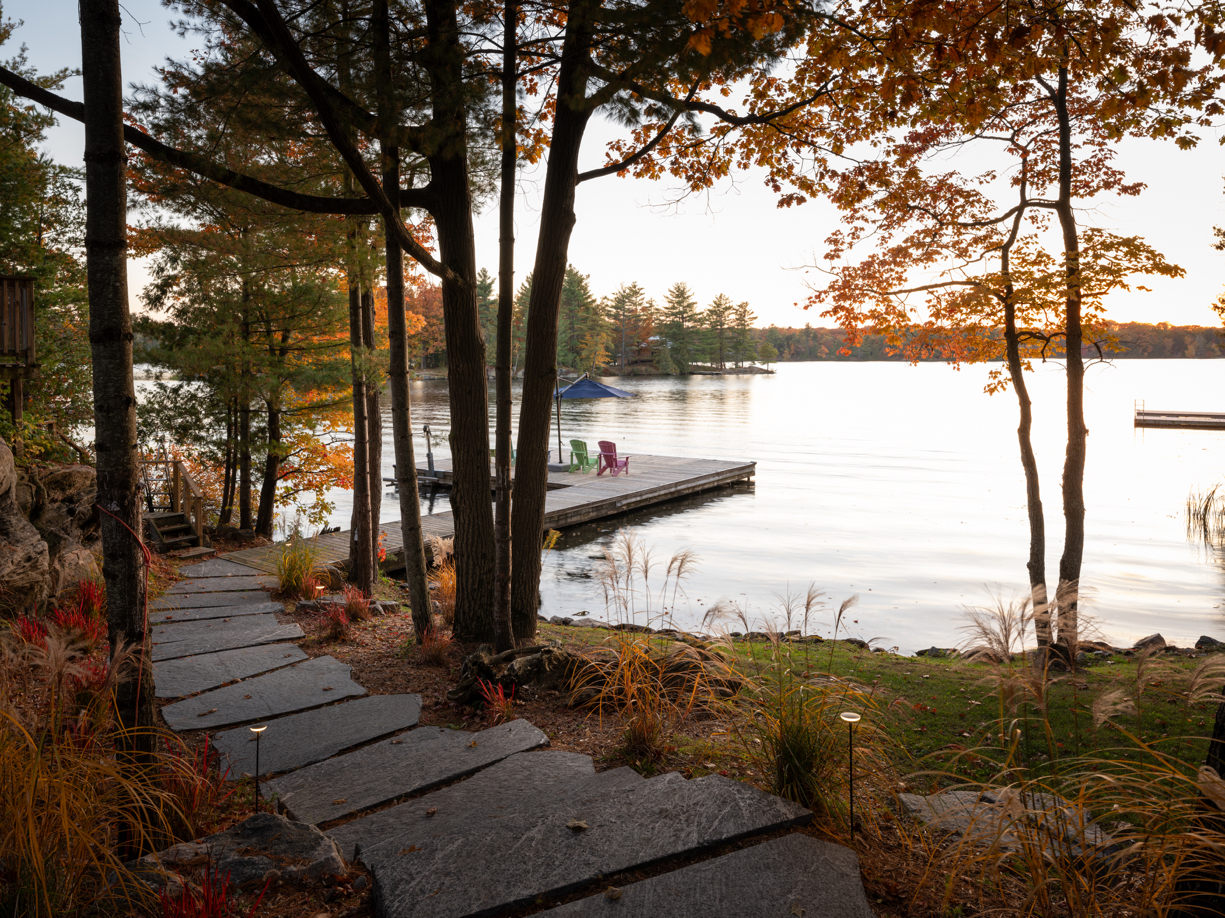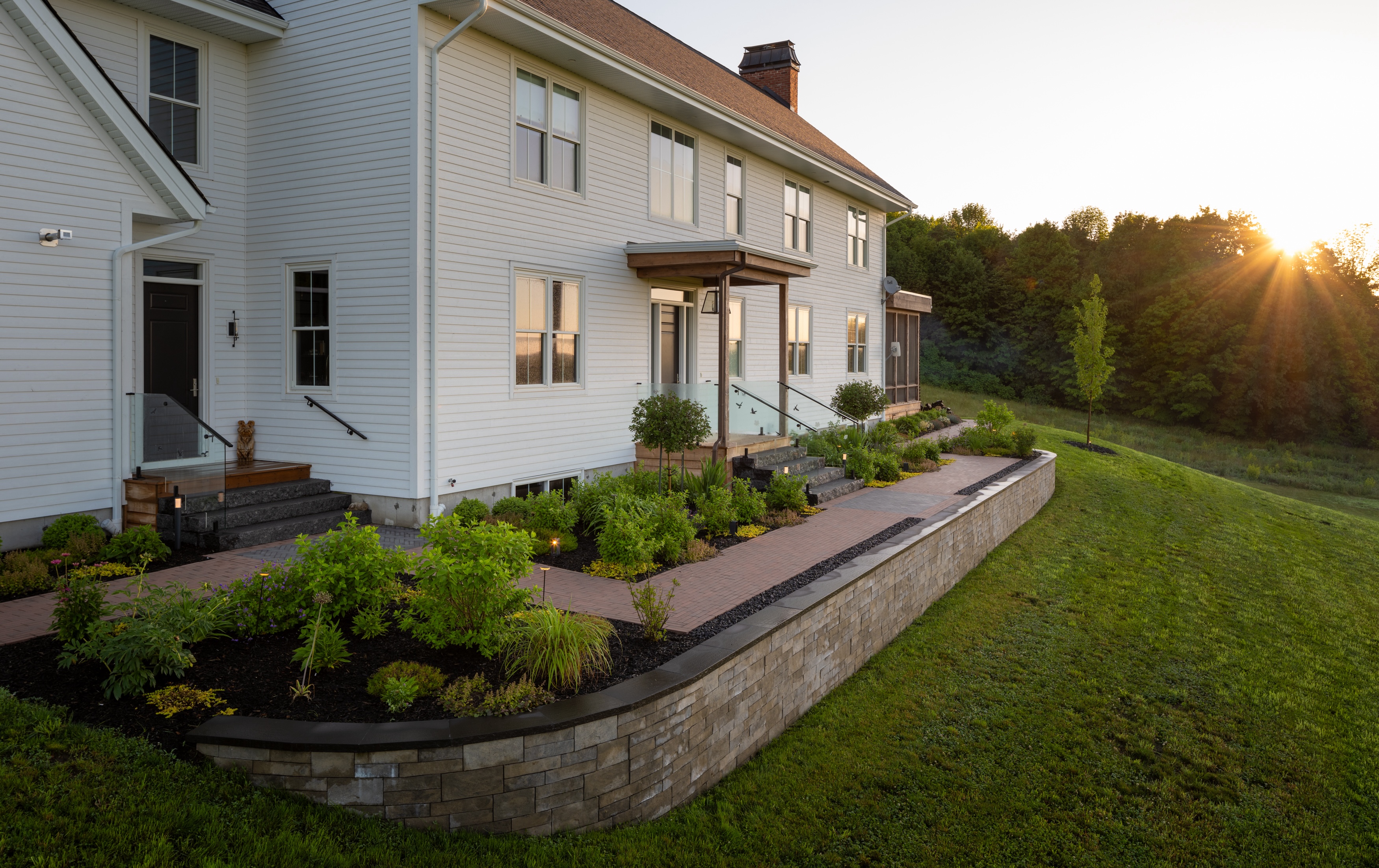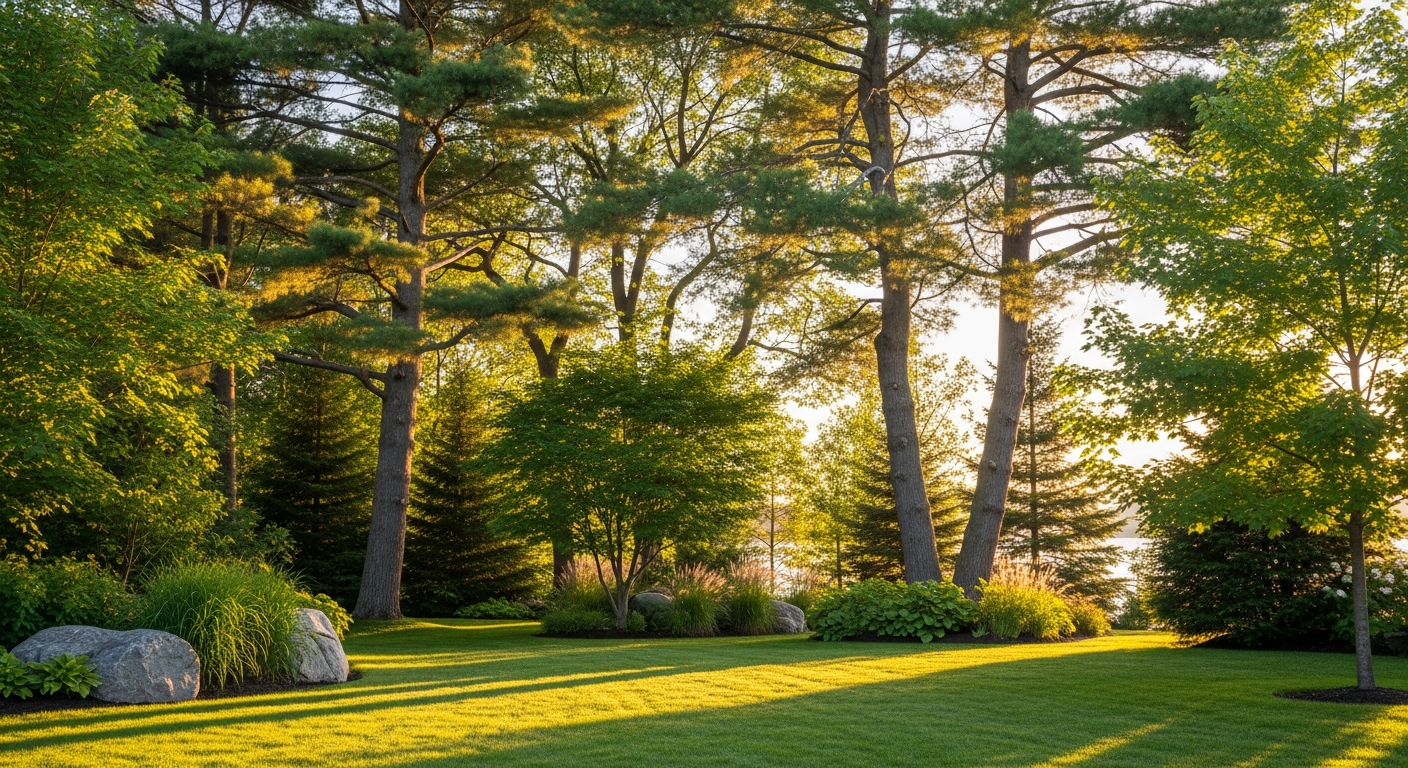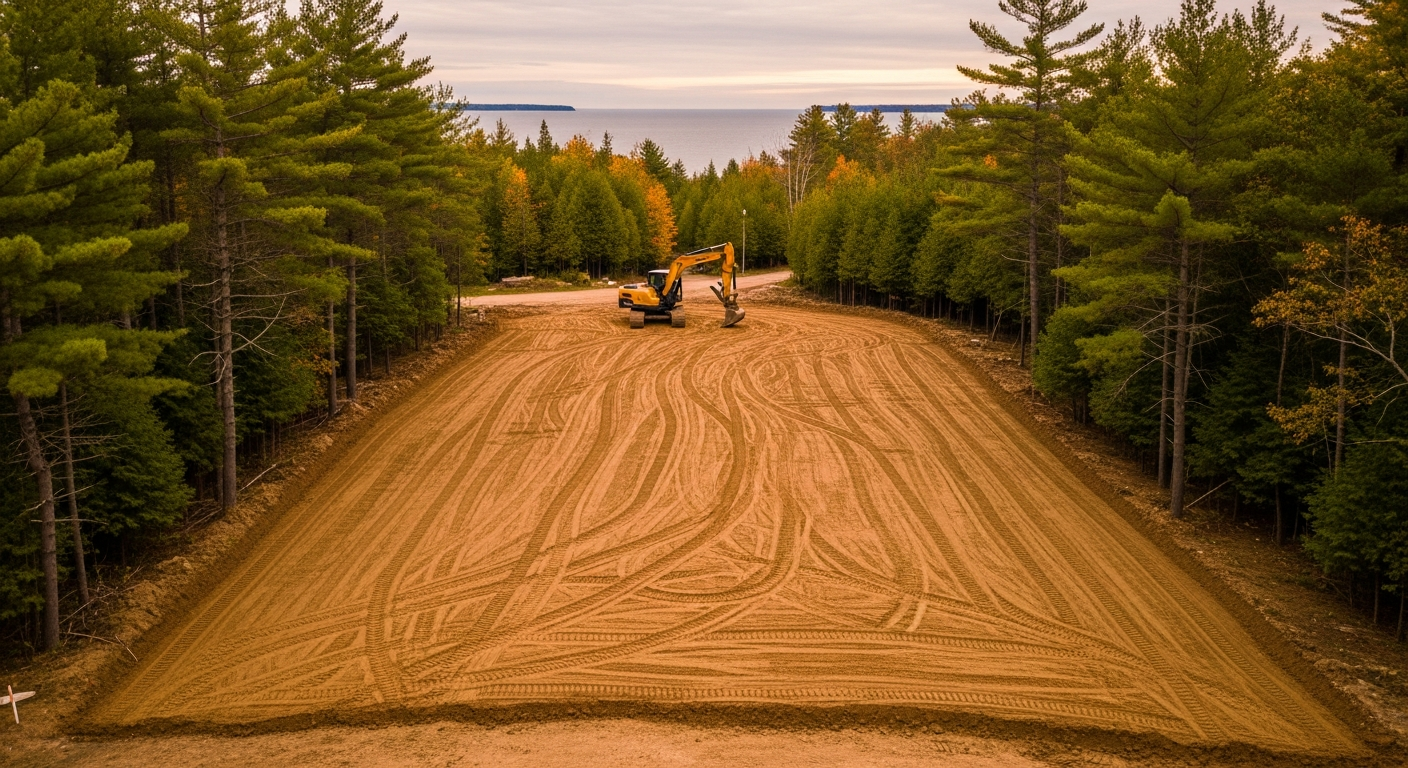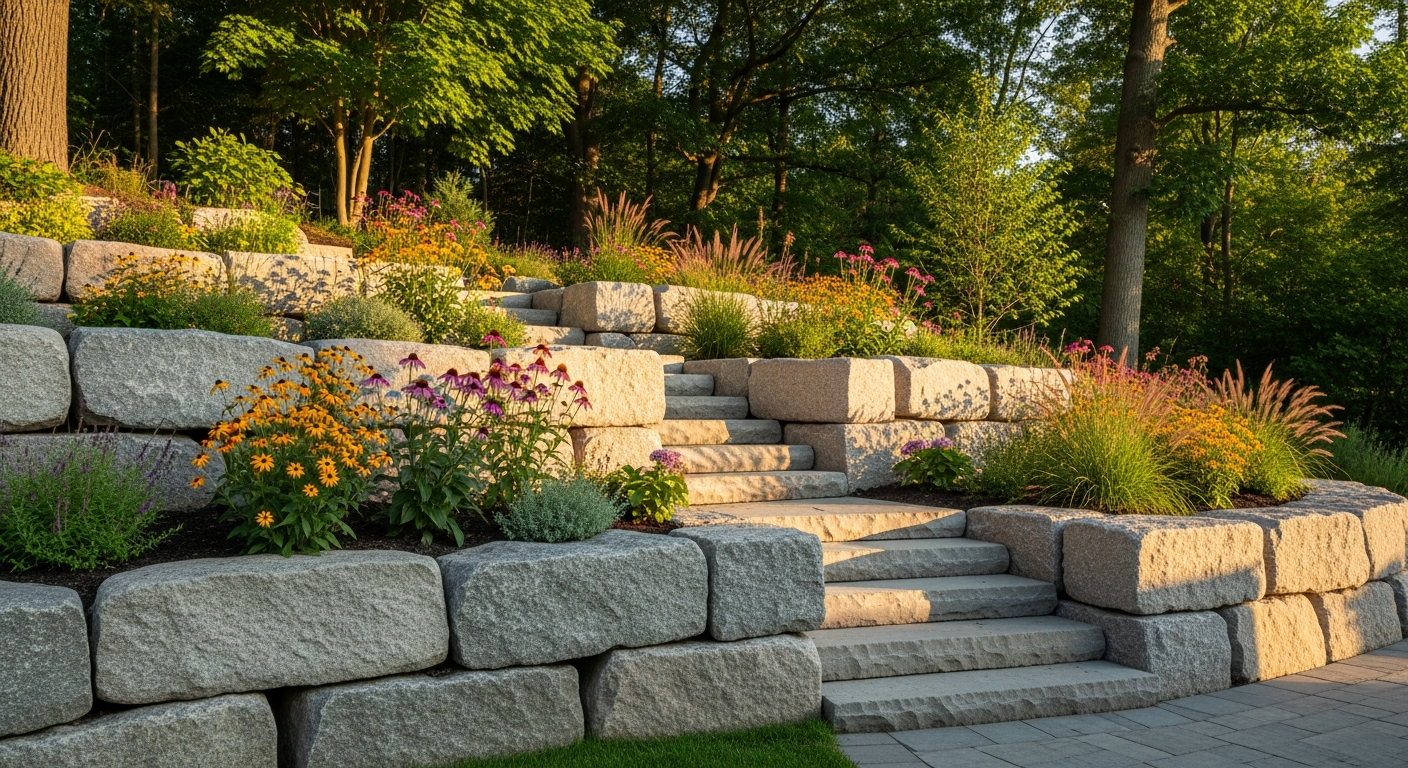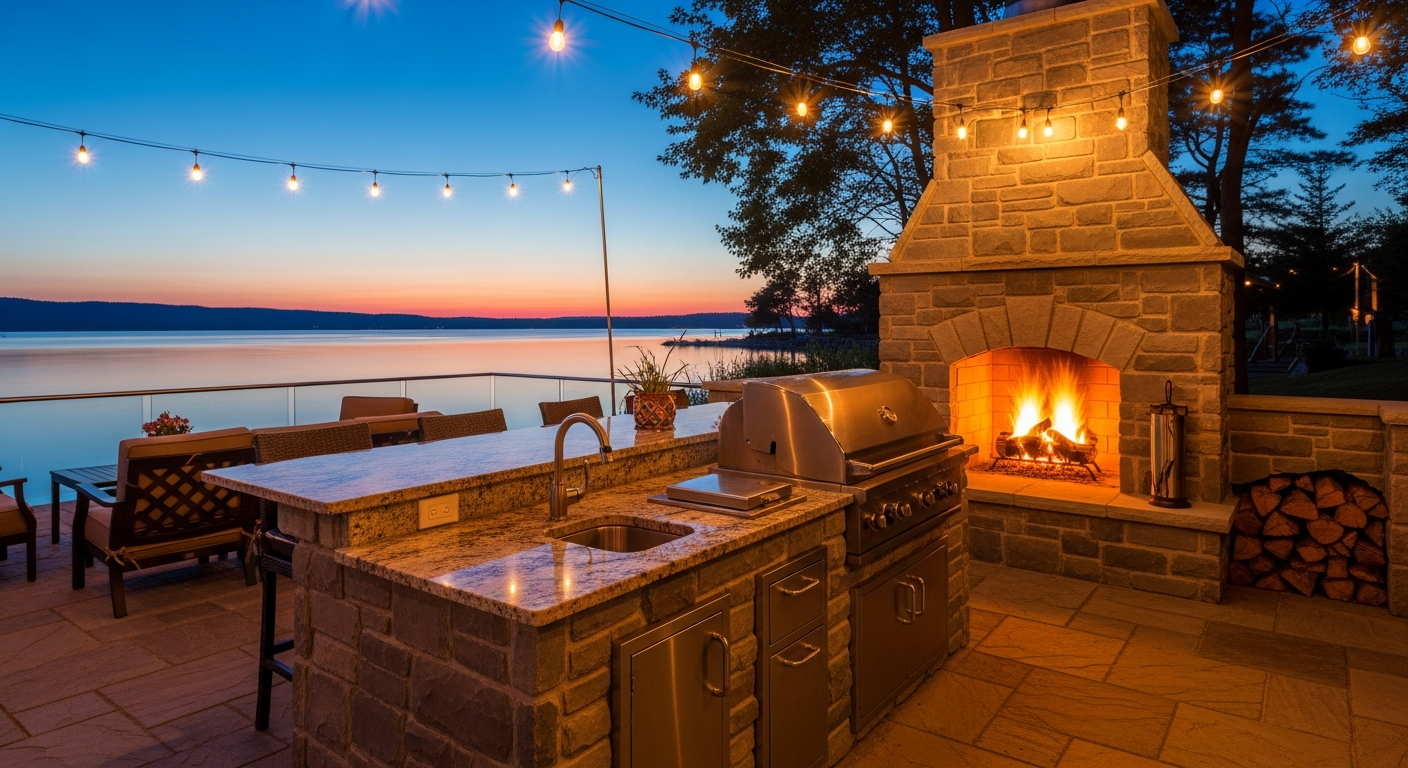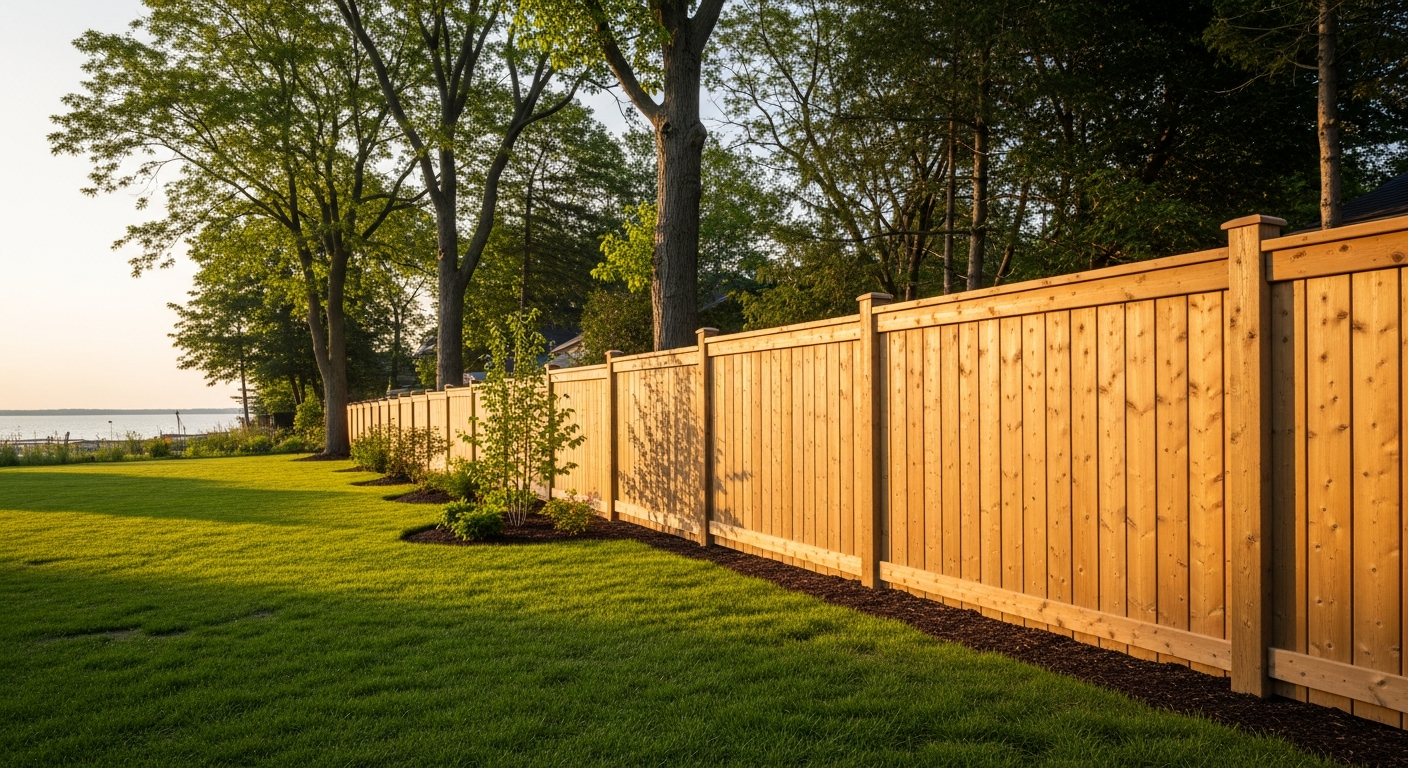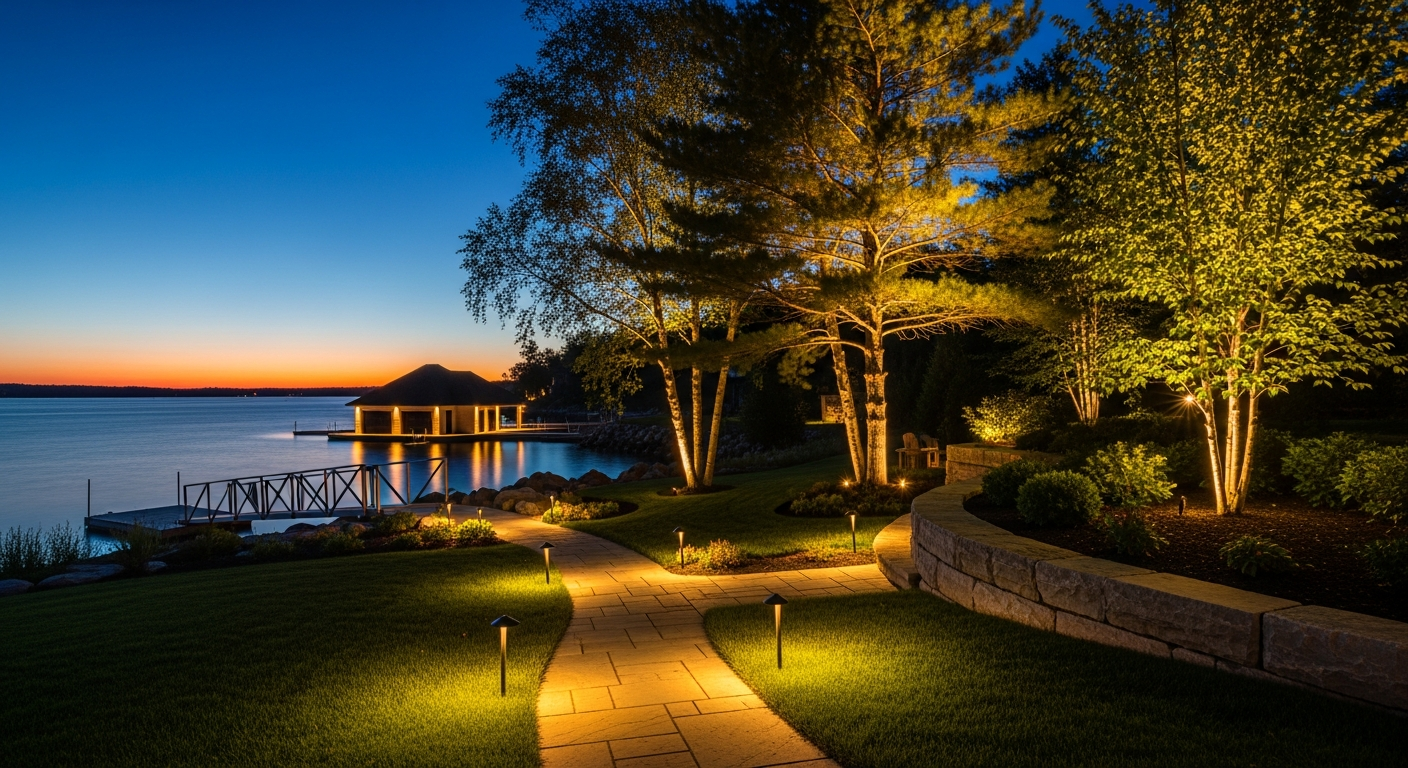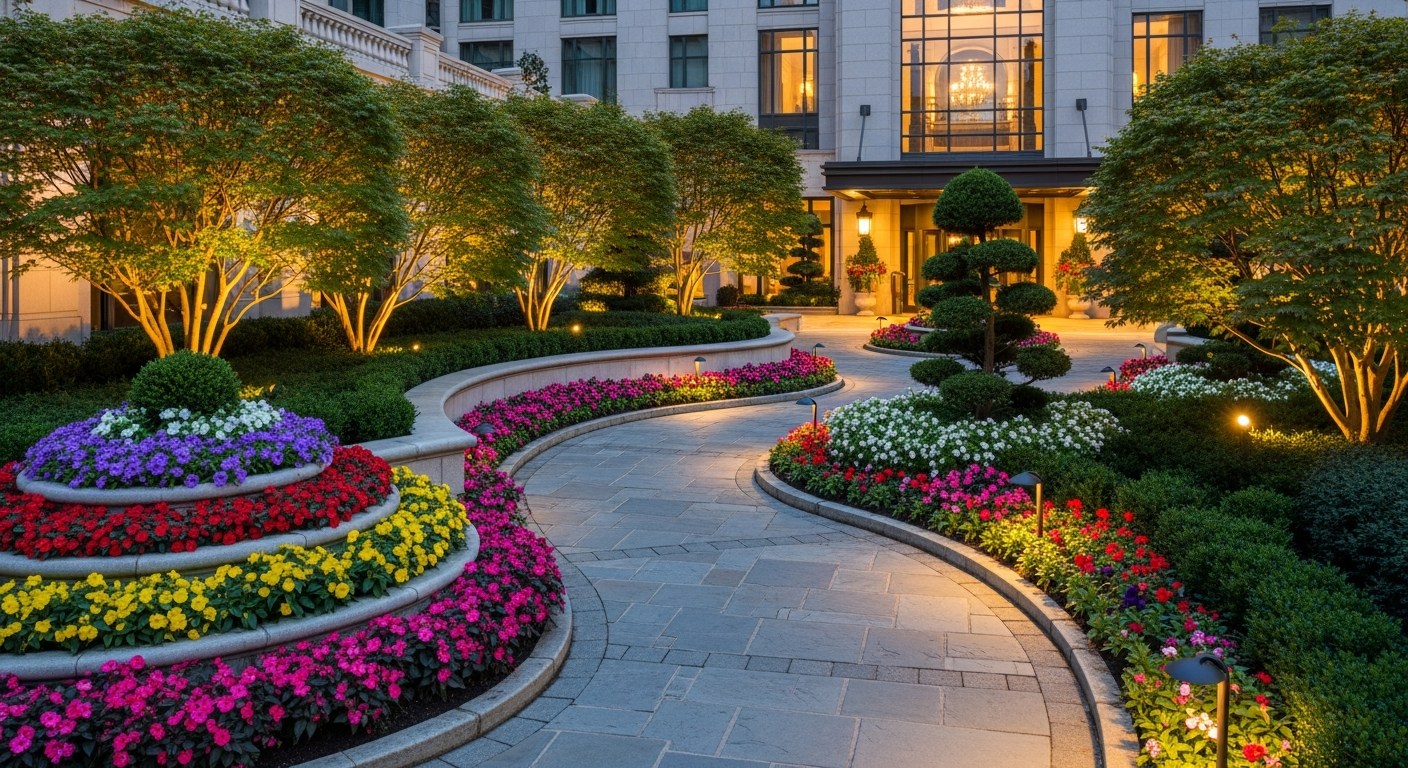
Commercial landscaping for hotels, resorts and event venues covers the arrival area, patios and pool decks, event lawns, lighting, drainage, and year-round maintenance including snow and ice management. Around Georgian Bay, the landscape has to work in a short, busy summer and a long winter, so plan construction for the shoulder seasons and design over the winter.
Key takeaways
Commercial landscaping for the hospitality industry covers everything a guest sees and walks through outside a hotel, resort, inn or event venue: the arrival drive and entrance, patios and pool decks, gardens and event lawns, lighting, drainage, and the maintenance and snow clearing that keep it all usable through four seasons. Done well, it shapes the first impression, gives guests places to spend time outdoors, and keeps paths safe in every season. This guide covers what to include, how to plan the work around guests, and how to compare quotes.
At Forty Five Scapes, we design, build and maintain commercial landscaping for properties in Midland, Penetanguishene, Collingwood, Wasaga Beach and Muskoka. Hospitality sites around Georgian Bay have a short, busy summer and a long winter, so the landscape has to look good in July and still work in January.
The Importance of Landscaping in the Hospitality Industry
Landscaping is more than adding greenery. For a hotel, resort or venue it affects how guests feel on arrival, how they use the property and how safely they move around it. Here's why it matters:
- First Impressions: The exterior is the first thing guests see when they arrive. A tidy, well-planted entrance sets the tone for the stay before anyone reaches the front desk.
- Guest Experience: Outdoor spaces give guests places to relax, eat, gather and play, which makes the property more than a place to sleep.
- Environmental Sustainability: Native plants, efficient irrigation and good drainage reduce water use and maintenance, and many travellers notice and value those choices.
- Property Value: Well-built hardscape and mature planting can add to a property's value and make it easier to sell or lease later.
- Safety and Accessibility: Level, well-lit, well-drained paths reduce slips and trips and make the property usable for guests with mobility needs.
Landscaping Strategies for the Hospitality Industry
These are the areas where landscaping does the most work on a hospitality property:
1. Create Inviting Entrance Areas
Welcoming Entrances and Lobbies
The entrance of your hotel or resort is where landscaping makes its first and strongest impression.
- Clear Arrival Sequence: Design the drop-off with well-defined pathways, good lighting and signage guests can read from a car, so nobody has to guess where to park or check in.
- Ornamental Plantings: Layer shrubs, perennials and seasonal colour near the door. Pick salt-tolerant plants for beds that sit beside driveways and walks that get de-iced in winter.
Themed Gardens and Outdoor Seating
- Themed Gardens: A pollinator garden, a native woodland planting or a cutting garden for the restaurant adds interest and suits the local climate. Choose themes that are hardy here rather than tropical looks that need replanting every year.
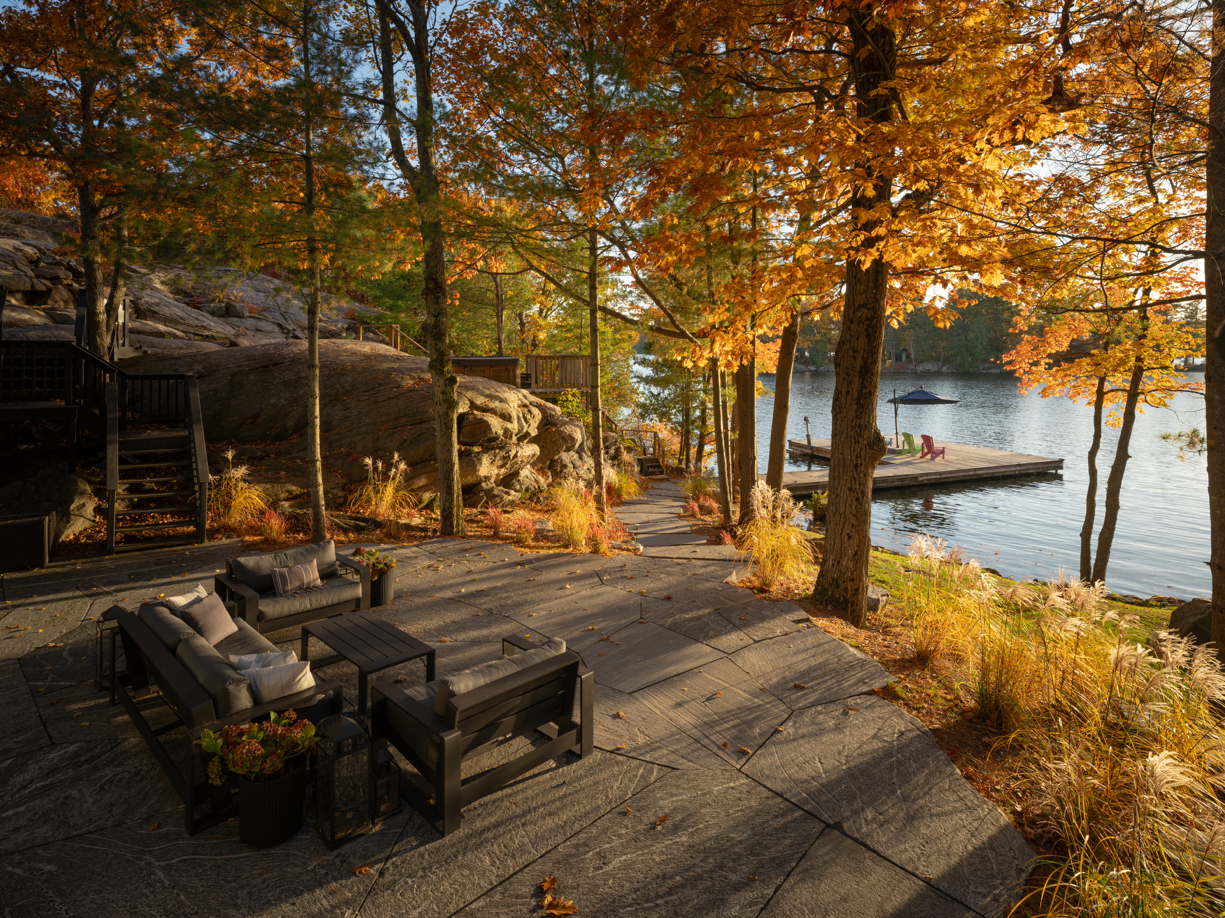
- Outdoor Seating: Give guests comfortable places to sit, eat or have a drink outside, with shade in summer and shelter from the wind off the water.
2. Design Functional Outdoor Spaces
Recreational and Leisure Areas
Create spaces that give guests something to do outdoors.
- Swimming Pools and Spas: Surround pools and hot tubs with planting and screening for privacy, and use non-slip paving that drains away from the water.
- Playgrounds and Sports Facilities: Add play areas or courts for families and active guests, placed where noise won't carry to guest rooms.
Event and Gathering Spaces
Versatile outdoor areas that can host events add revenue as well as looks.
- Outdoor Event Spaces: Build level lawns, terraces or patios sized for wedding ceremonies, receptions and corporate events, with power, lighting and service access planned in.
- Fire pits and gazebos: Fire features and covered structures extend the evening and the season. Check local open-air burning and fire rules before choosing wood-burning over gas.
Accessible Paths and Patios
In Ontario, the Accessibility for Ontarians with Disabilities Act (AODA) Design of Public Spaces Standards apply when an organization builds new outdoor public spaces or makes major changes to existing ones. Businesses with 50 or more employees must meet the requirements for outdoor paths of travel and outdoor public eating areas, including limits on path width and slope. For example, when buying 10 or more new outdoor tables, at least 20% must be accessible. Smaller businesses still have to meet the rules for off-street parking and outdoor service counters. Existing paths don't have to be rebuilt just to comply, but any redesign is the time to get width, slope and surfaces right (Ontario.ca).
3. Implement Sustainable Landscaping Practices
Native and Drought-Tolerant Plants
- Plant Selection: Choose native and drought-tolerant plants that suit the local climate and soil, which cuts watering and maintenance.
- Biodiversity Support: Mix species to support pollinators like bees and butterflies and give the landscape interest across the seasons.
Water Conservation Techniques
- Smart Irrigation Systems: Use controllers that adjust watering to weather and soil moisture, and schedule watering for early morning so lawns and patios are dry when guests are out.
- Rainwater Harvesting: Collect roof water in cisterns or rain gardens to reuse for irrigation and reduce runoff from parking areas.
4. Enhance Outdoor Lighting
Security and Safety
Good lighting serves both safety and atmosphere on a hospitality property.
- Pathway Lighting: Light walkways, steps and entrances so guests can find their way after dark without tripping.
- Security Lighting: Light parking areas and service zones to discourage intruders and help staff see.
Aesthetic Lighting
- Accent Lighting: Highlight architectural features, trees and garden elements so the property looks good at night.
- Ambient Lighting: Use soft, warm, shielded light in seating and gathering areas. It feels better and keeps glare out of guest-room windows.
5. Incorporate Water Features
Creating Calm Spaces
Water features add sound and movement, and they mask road noise near patios and courtyards.
- Fountains and Waterfalls: Use a fountain or waterfall as a focal point at the entrance or in a courtyard.
- Ponds and Reflecting Pools: Ponds and reflecting pools give guests a quiet place to sit and a backdrop for event photos. Plan how they will be drained and protected over winter.
6. Maintain Year-Round Beauty and Health
Regular Maintenance
A hospitality landscape is judged every day, so maintenance has to be consistent and scheduled around guests.
- Pruning and Trimming: Prune on a regular schedule to keep plants healthy, sightlines open and paths clear.
- Pest and Disease Management: Watch for problems early and treat them before they spread across beds or lawns.
- Quiet Hours: Schedule mowing, blowing and other noisy work outside early-morning and late-evening guest hours, and away from event times.
Seasonal Adjustments
Adapt maintenance to the season so the landscape stays healthy and usable all year.
- Spring and Summer Care: Focus on clean-up, fertilizing, irrigation start-up and seasonal flowers before the first busy weekend.
- Fall and Winter Preparation: Mulch beds, protect sensitive plants and check hardscaping joints and drainage before freeze-up.
Winter Operations
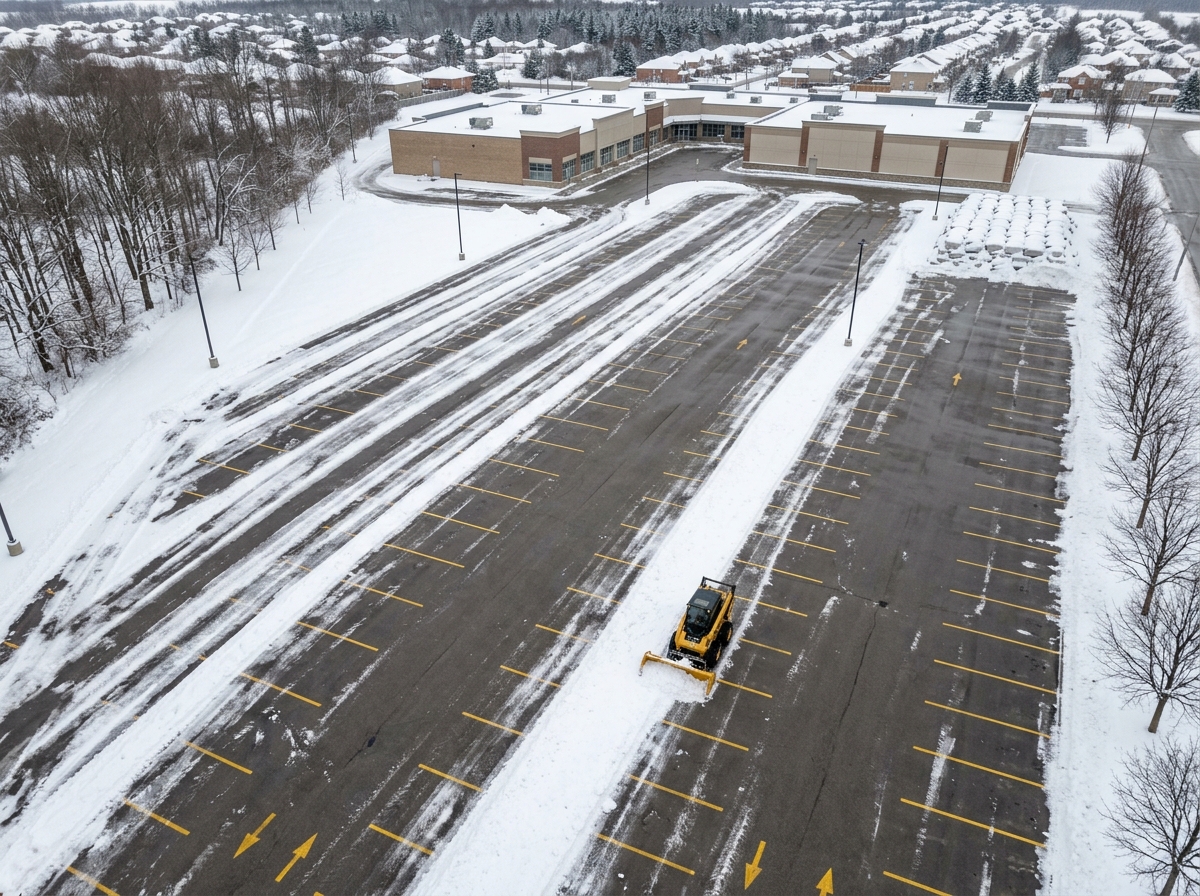
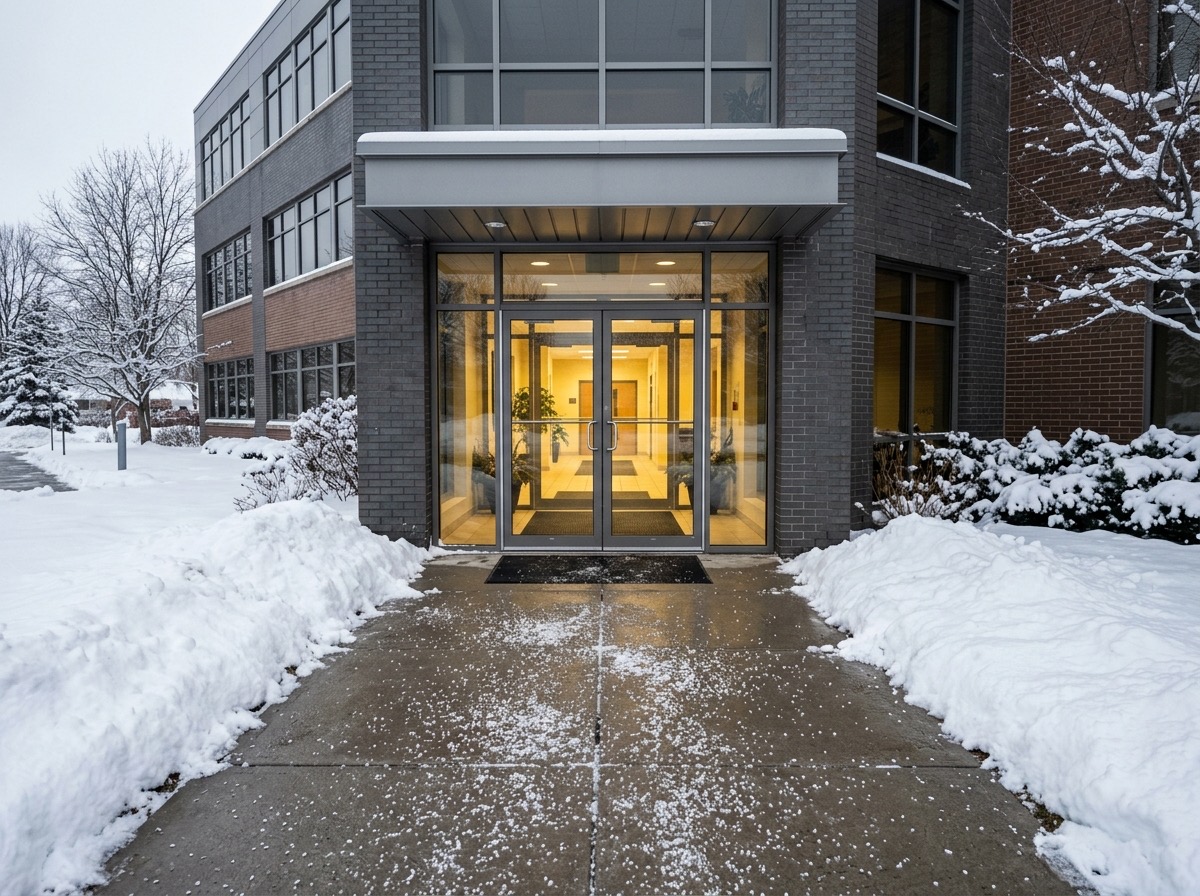
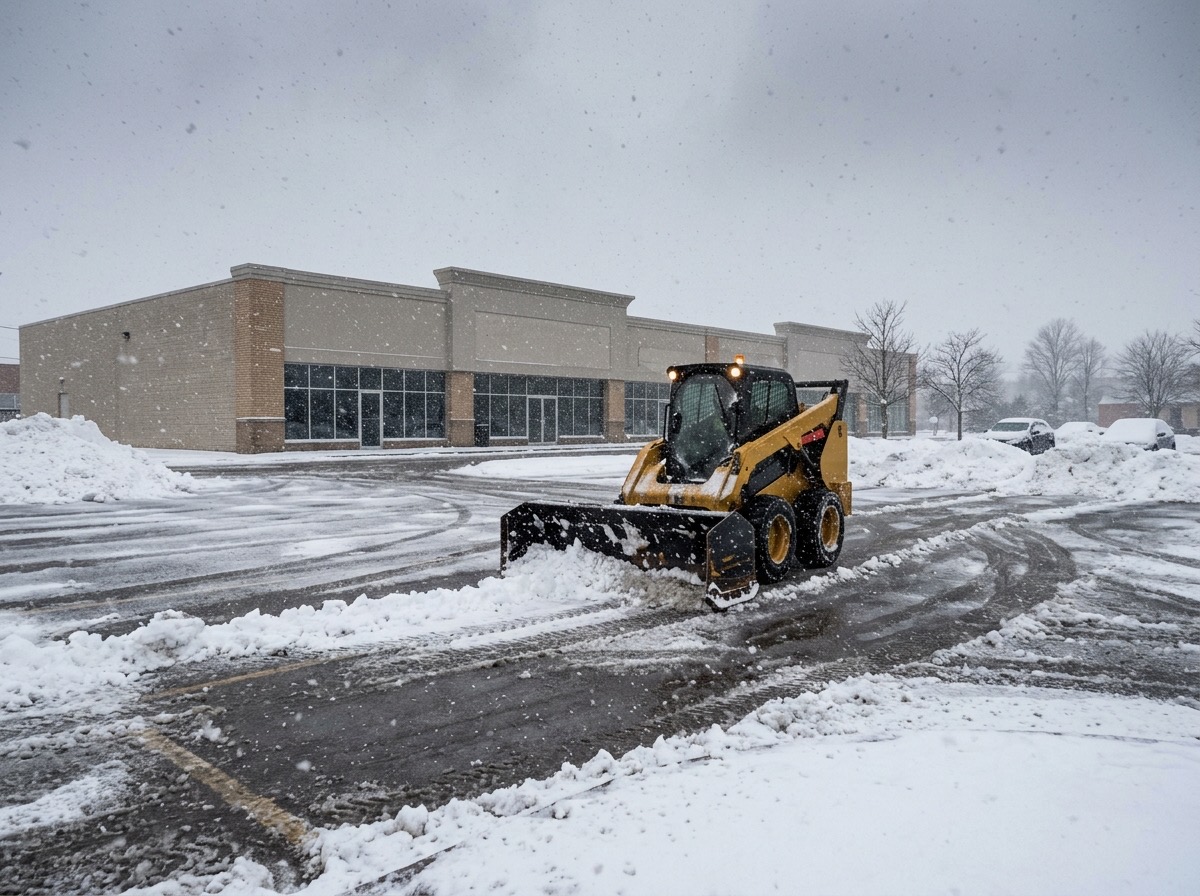
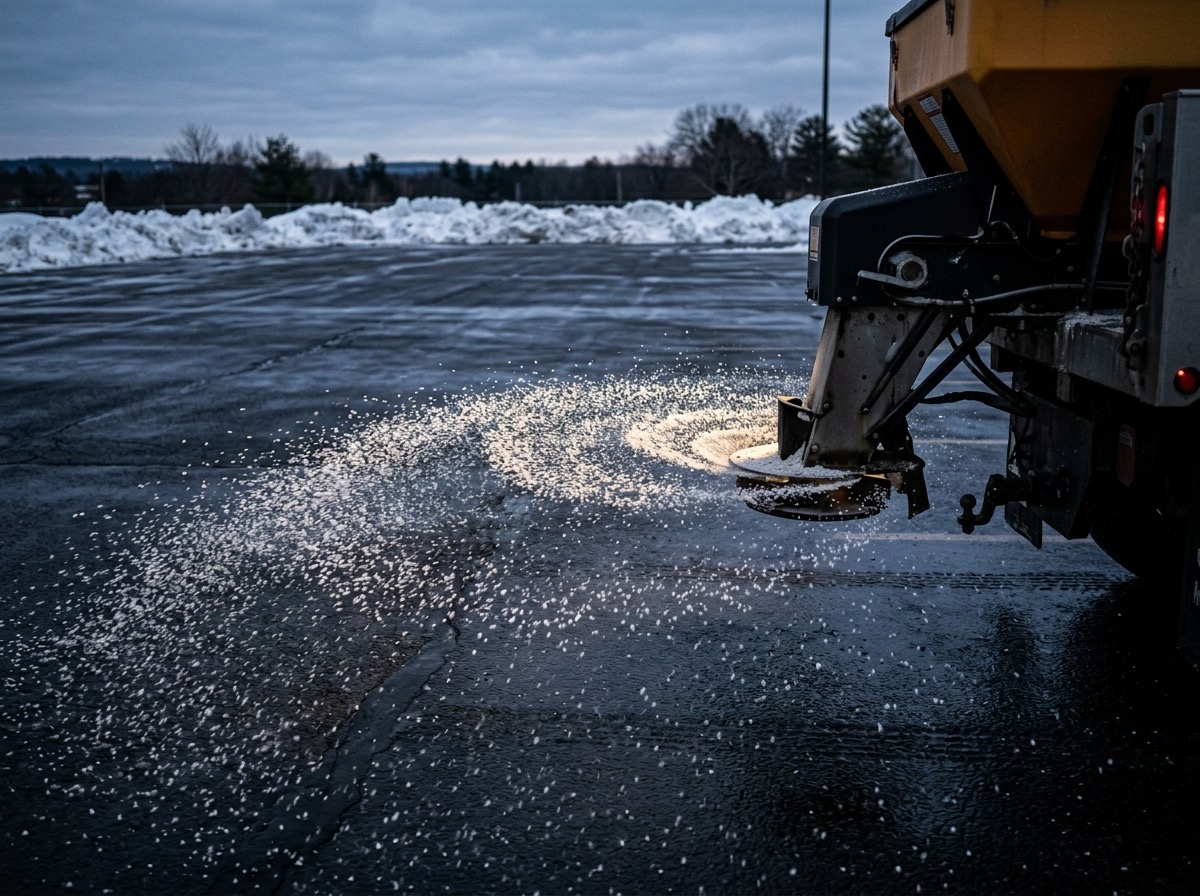
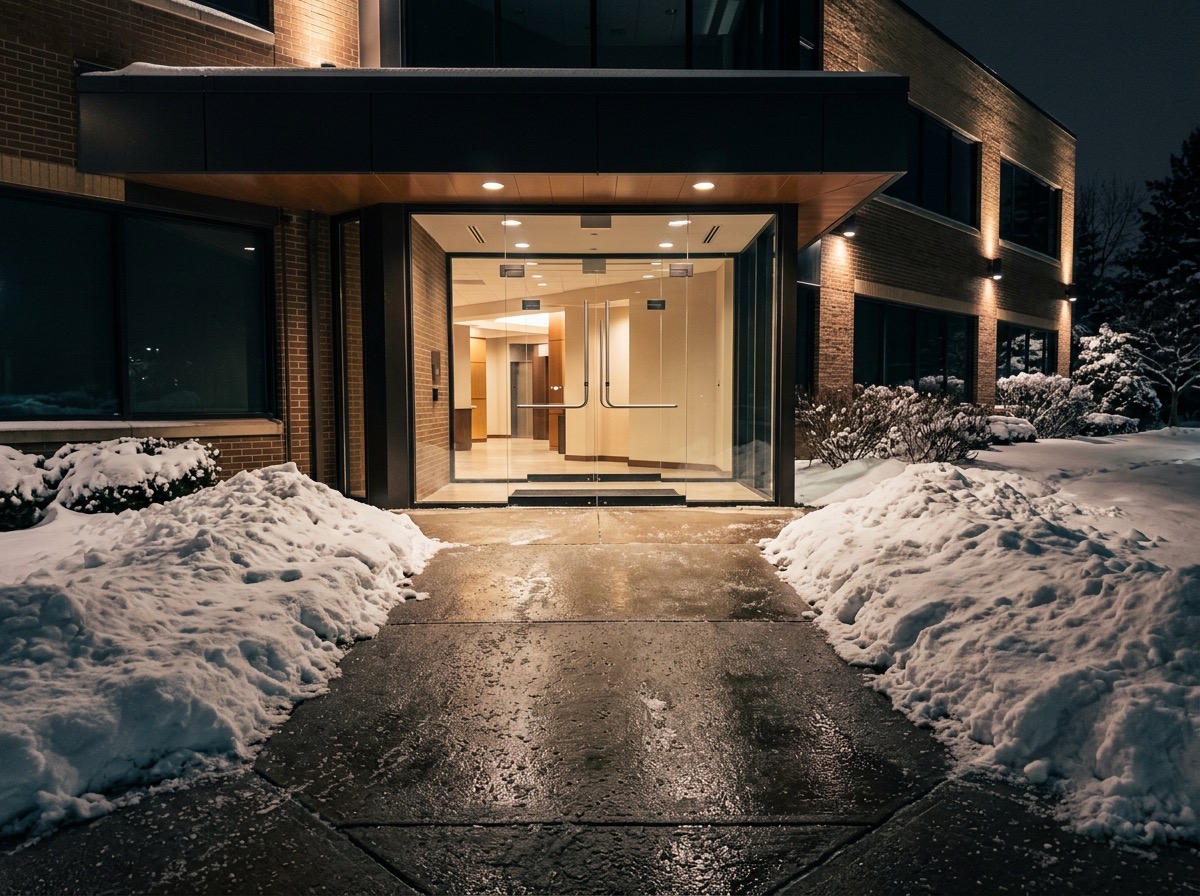
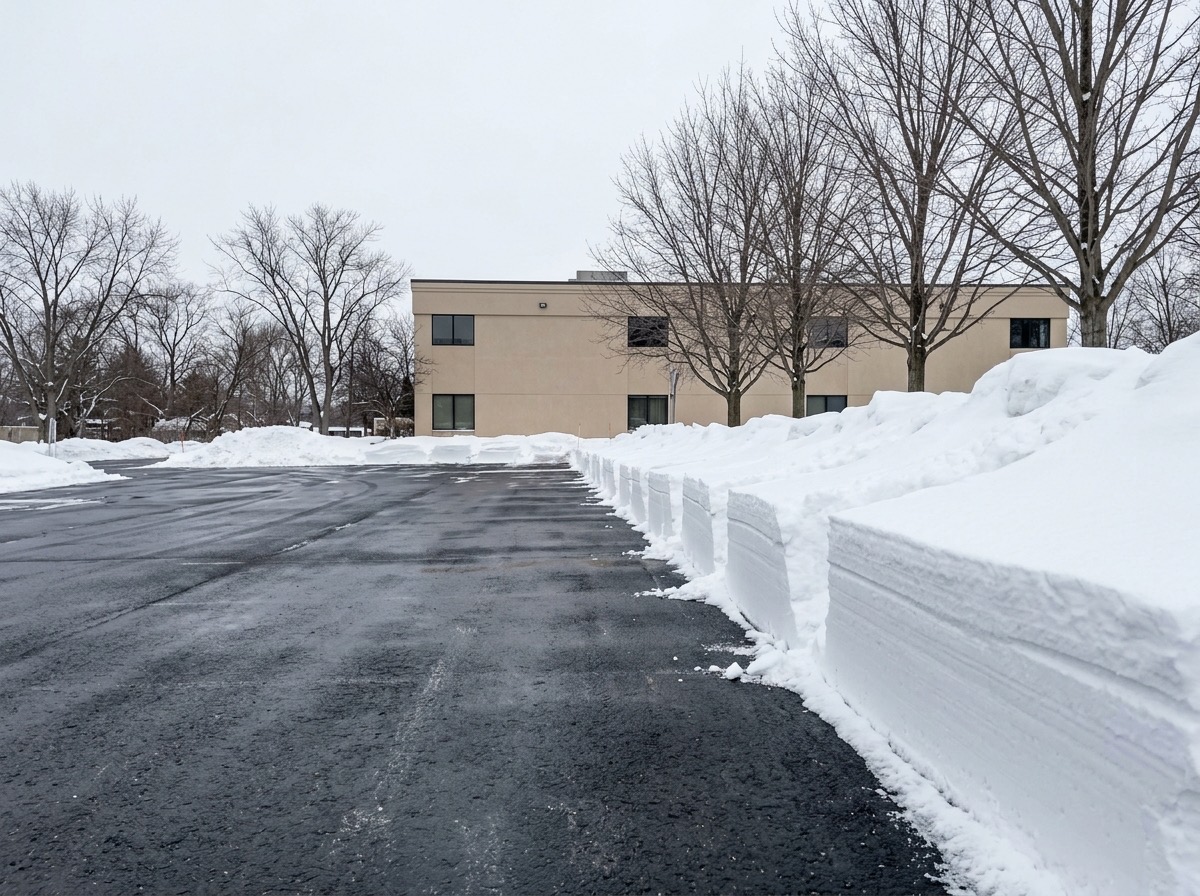
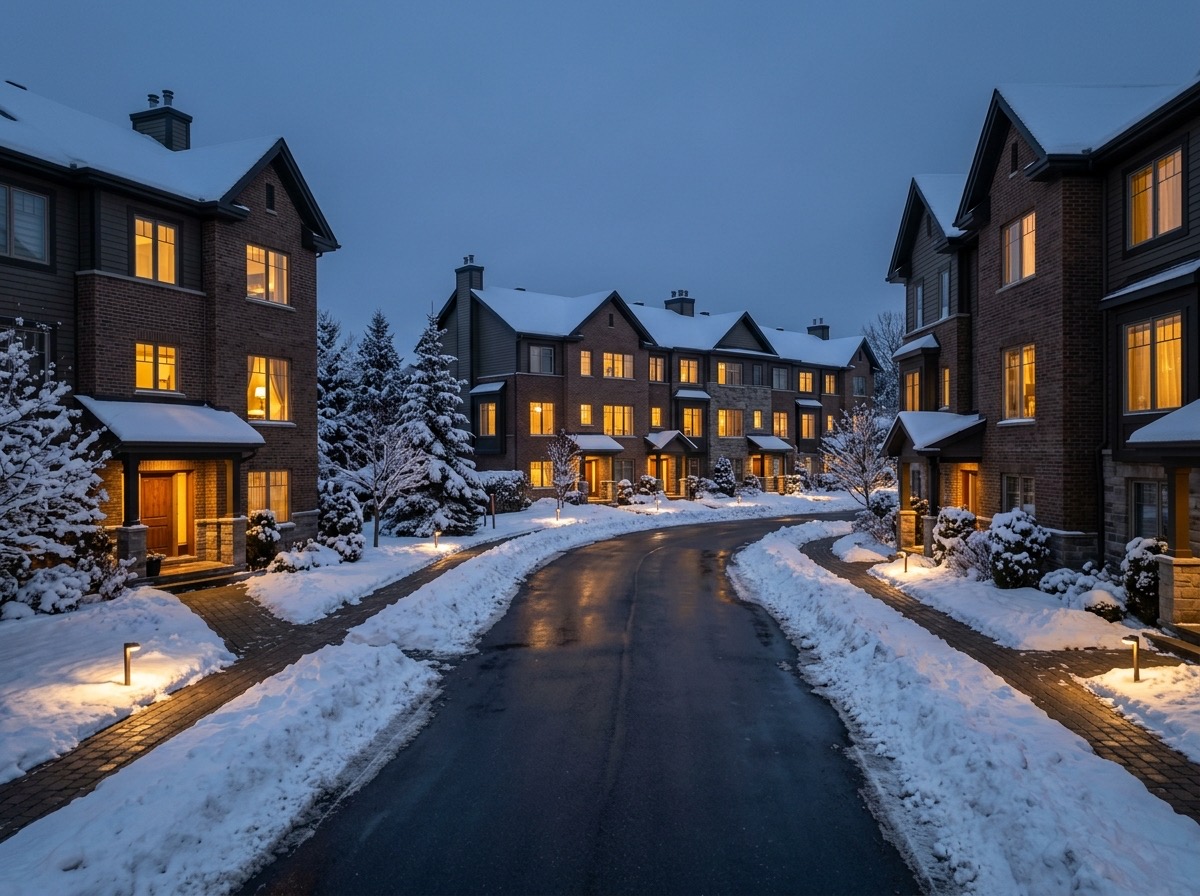
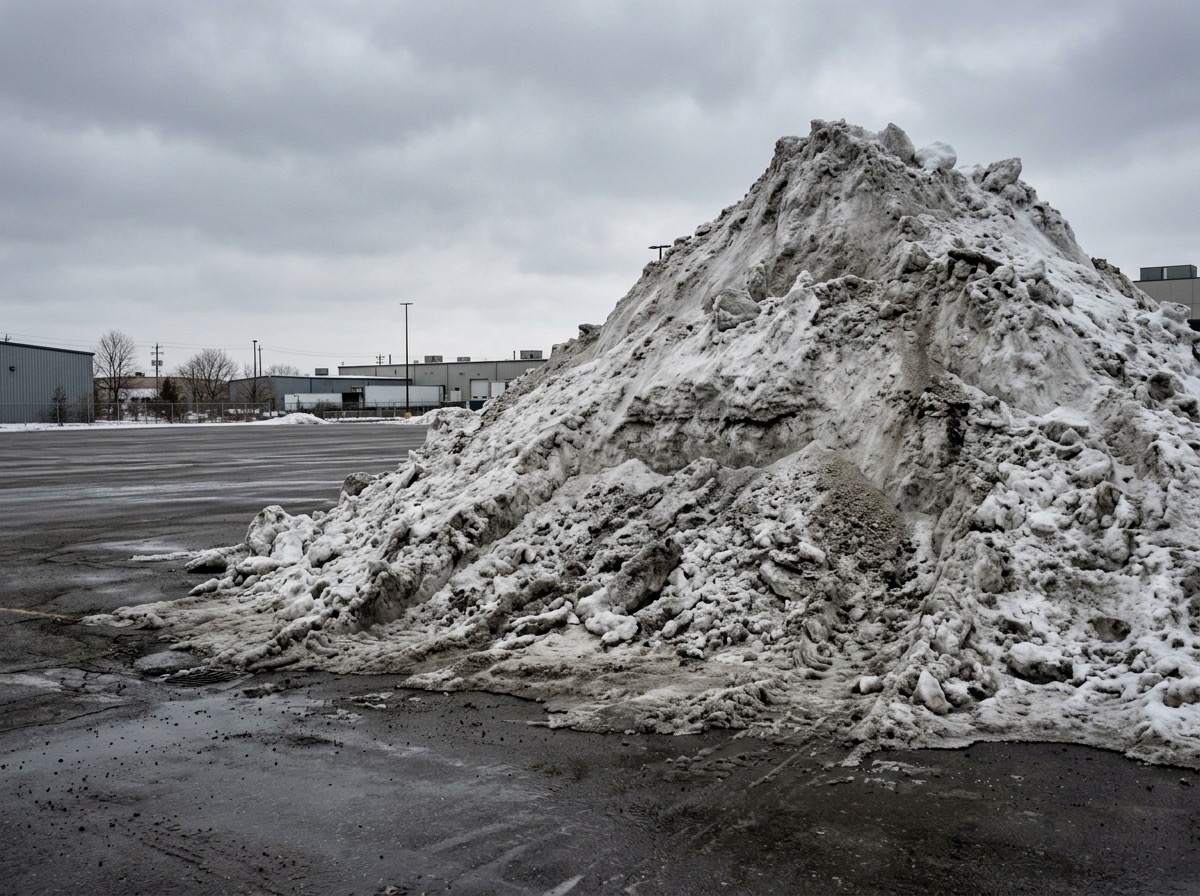
Around Georgian Bay, winter is often the season when a hospitality property is judged most harshly. Guests arriving for ski weekends, holiday events or winter weddings expect clear, safe entrances and parking. Plan snow and ice management as part of the landscape: leave room for snow storage that won't melt across walkways, keep salt-sensitive plants out of the throw zone, and grade paving so meltwater drains instead of refreezing at the door.
7. Measure and Grade Before You Build
Most problems we see on hospitality sites come down to water: a patio that puddles, an event lawn that stays soggy, or an entrance walk that ices over. Fixing them starts with three measurements: the area in square metres, the slope in percent, and the volume of base or soil in cubic metres. The Town of Midland's lot grading standards call for grass and planting areas to fall at least 2% away from buildings and hard surfaces at least 1%, and they are a sensible minimum anywhere in the region.
Field drawing 01 · Measuring
Measure area, slope and volume before you order
Three numbers drive every landscape quote: square metres, fall and cubic metres.
Swipe to see the full drawing →
- Split odd shapes. Break the yard into rectangles, triangles and circle segments, measure each, then add them.
- Level a string line. Stretch it between two stakes and set a line level in the middle so the string is dead level.
- Measure down at each stake. The difference is the rise. Divide by the run between stakes and multiply by 100 for percent.
- Volume = area × depth. Convert depth to metres first. Tell the supplier the compacted depth you need.
- Check against the standard. In Midland, grass must fall at least 2% away from buildings and hard surfaces at least 1%.
Those same three numbers let you compare quotes on equal terms. If two contractors are pricing different areas or base depths, their numbers are not comparable. Ask for quotes that list area, depth of base and finished slope so you know what you're paying for.
Benefits of Professional Landscaping for the Hospitality Industry
Working with a professional landscaping company offers several advantages for hospitality properties:
1. Stronger Curb Appeal
A well-kept exterior helps the property stand out in photos, reviews and first impressions.
2. Property Value
Durable hardscape and established planting can add to the value of the property, which matters for future resale or leasing.
3. Guest Satisfaction and Return Visits
Comfortable, usable outdoor spaces give guests more to enjoy and more reasons to come back.
4. Cost Efficiency
Planned maintenance, efficient irrigation and plants suited to the site reduce long-term costs compared with constant replacement and emergency repairs.
5. Environmental Sustainability
Native planting, water-saving irrigation and good drainage reduce the property's environmental footprint and support green-certification goals.
6. Safety and Security
Good lighting, clear pathways, sound drainage and winter maintenance make the property safer for guests and staff.
Why Choose Forty Five Scapes for Landscaping in the Hospitality Industry?
At Forty Five Scapes, we understand what hospitality properties need from their grounds. Serving Midland, Penetanguishene, Collingwood, Wasaga Beach and the Muskoka area, we handle landscape design, construction and maintenance under one roof, so the people who build your landscape understand how it will be maintained. Here's what we bring:
- Designs Built Around Your Property: We plan around your brand, your guests and how your staff actually use the site.
- Experienced Crews: Our team handles design, hardscaping, planting, grading and maintenance, so one company is accountable for the whole job.
- Sustainable Practices: We use native plants, efficient irrigation and long-lasting materials where they suit the site.
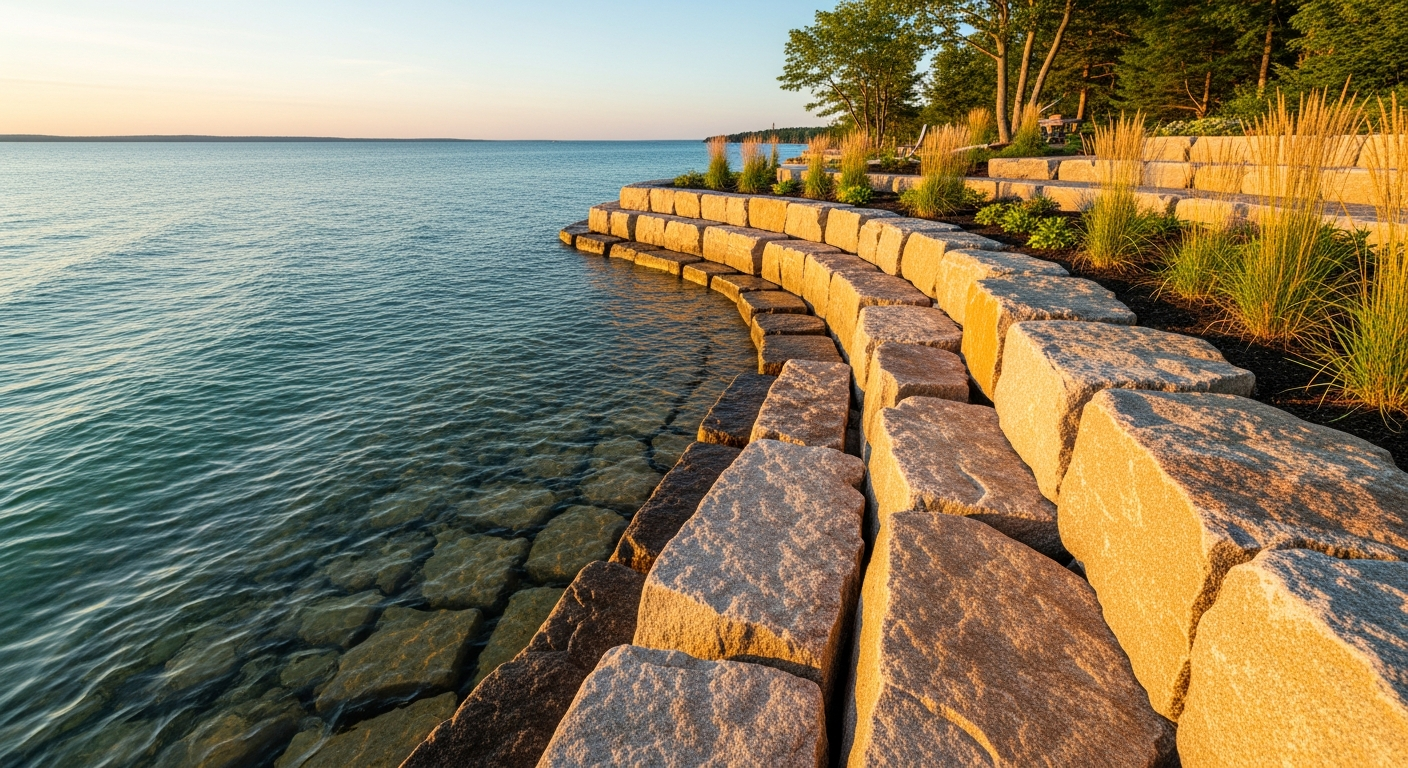
- Durable Materials: We choose stone, pavers and plants that stand up to Georgian Bay winters and heavy foot traffic.
- Full Service: From the first consultation and design to installation, maintenance and snow clearing, we cover the whole year.
- Clear Communication: We schedule work around your bookings and keep you informed at each stage.
Planning a 2027 hospitality landscaping project
For hotels, resorts and venues, the best time to build is when guests aren't there, and the best time to plan is now. Around Midland and Penetanguishene the ground usually thaws and dries enough for excavation in late April or May, which leaves a short window before the busy season starts. A design finished over the winter lets you order materials, line up approvals and start as soon as conditions allow. Larger jobs can be split, with the work nearest guest areas done in spring and the rest in the fall shoulder season.
- Walk the site with your staff this winter. Note where snow piles up, where water pools in spring and which paths guests actually use.
- Check approvals early. Changes to parking, grading or drainage on a commercial site can need municipal review, so ask your planning department before you finalize the design.
- Book around your calendar. Block out wedding dates and long weekends, and give your contractor the dates that are off-limits.
- Sign maintenance and snow contracts before the season. Crews and equipment fill up early in the year.
Frequently asked questions
When should a hotel or resort schedule landscape construction?
Build in the shoulder seasons. In Simcoe County that usually means late April to June, once the ground has thawed and dried, or after Thanksgiving before freeze-up. Plan and approve the design over the winter so construction can start as soon as the site is ready.
Do hotel patios and paths have to meet accessibility rules in Ontario?
When you build new outdoor public spaces or make major changes, the AODA Design of Public Spaces Standards apply. Organizations with 50 or more employees must meet the requirements for outdoor paths and eating areas; all businesses with employees must meet the parking and service counter rules. Existing paths don't have to be rebuilt just to comply.
What plants work well for hospitality properties near Georgian Bay?
Hardy native shrubs, perennials and grasses that handle cold winters, wind and dry spells, with salt-tolerant choices next to drives and walks. They need less water and less replacement than tender annual displays, which can be saved for planters at the entrance.
Should landscaping and snow removal be one contract?
It often makes sense. One company that maintains the grounds in summer and clears snow in winter knows where the beds, lights and drains are, and can plan snow storage that doesn't damage plants or hardscape.
Planning Your Hospitality Landscape
Commercial landscaping for the hospitality industry is an investment in first impressions, guest comfort and safe access through every season. Planned and maintained well, it supports bookings, events and repeat visits for years.
Ready to plan your property's next season? Contact Forty Five Scapes to talk about design, construction, maintenance and snow management for your hotel, resort or venue.
Planning a project this season?
We’ll walk the site, scope it properly and give you a straight price.
Mark and Matt are amazing. Not only do they do high-quality work, but they are also collaborative every step of the way. They are also great at problem-solving for unforeseen issues, or if you are just stuck on what to do in a certain area. I highly recommend Forty-Five Scapes for your landscaping needs.
Frequently asked questions