For most homes, dark brown or black mulch gives the best curb appeal: both make plants stand out and suit most house colours, and dyed versions hold their colour through a season. Use natural undyed mulch when soil health matters most, and red only as an accent. Spread any mulch 50 to 100 mm deep and keep it off stems and tree trunks.
Key takeaways
For most homes, the best mulch colour for curb appeal is dark brown or black. Both make green foliage and flowers stand out, both suit most house colours, and dyed versions hold their colour through a season. Choose dark brown for warm-toned or traditional homes, black for grey, white or navy exteriors and modern planting, and natural undyed mulch when soil health matters more than a uniform look. Red works as an accent but can clash with brick and red-toned siding. The right colour helps your plants look their best and ties the beds to your house.
What Is Mulch and Why Is It Important?
Mulch isn't just for looks; it does several jobs:
- Keeps soil moist and cool.
- Stops weeds from growing.
- Prevents soil from washing away.
- Adds colour and texture to your yard.
Popular Mulch Colours and Their Benefits
Black Mulch: Modern and Stylish
- Why Use It? Creates a sharp contrast with green plants and bright flowers for a clean, modern look.
- Best For: Modern gardens and homes with grey, white or navy exteriors. Black absorbs more heat in full sun, so watch moisture in hot, exposed beds.
Brown Mulch: A Classic Favourite
- Why Use It? Works with almost any garden or home. Its neutral colour blends with plants, stone and wood.
- Best For: Traditional gardens, homes with earthy colours, brick, or rustic and cottage styles.
Red Mulch: Bright and Bold
- Why Use It? Adds warmth and draws attention to a feature area.
- Best For: Accent beds and borders along walkways, or homes with tan, beige or light exteriors. It can clash with red brick and pink-flowering plants.
Natural Mulch Colours: Subtle and Eco-Friendly
- Why Use It? Undyed shredded bark or wood chips break down and feed the soil, and they give a relaxed, natural look. Expect them to fade to grey over a season.
- Best For: Woodland gardens, cottage properties, and homes with wood or stone exteriors.
How to Pick the Best Mulch Colour
- Match Mulch to Your Home
- Dark-coloured homes look good with medium brown or natural mulch.
- Light-coloured homes stand out with darker mulch, like black or dark brown.
- Think About Your Plants
- Bright flowers pair well with dark brown or black mulch, which lets the blooms stand out.
- Silver, gold and variegated foliage looks sharpest against black.
- Coordinate with Paths and Borders
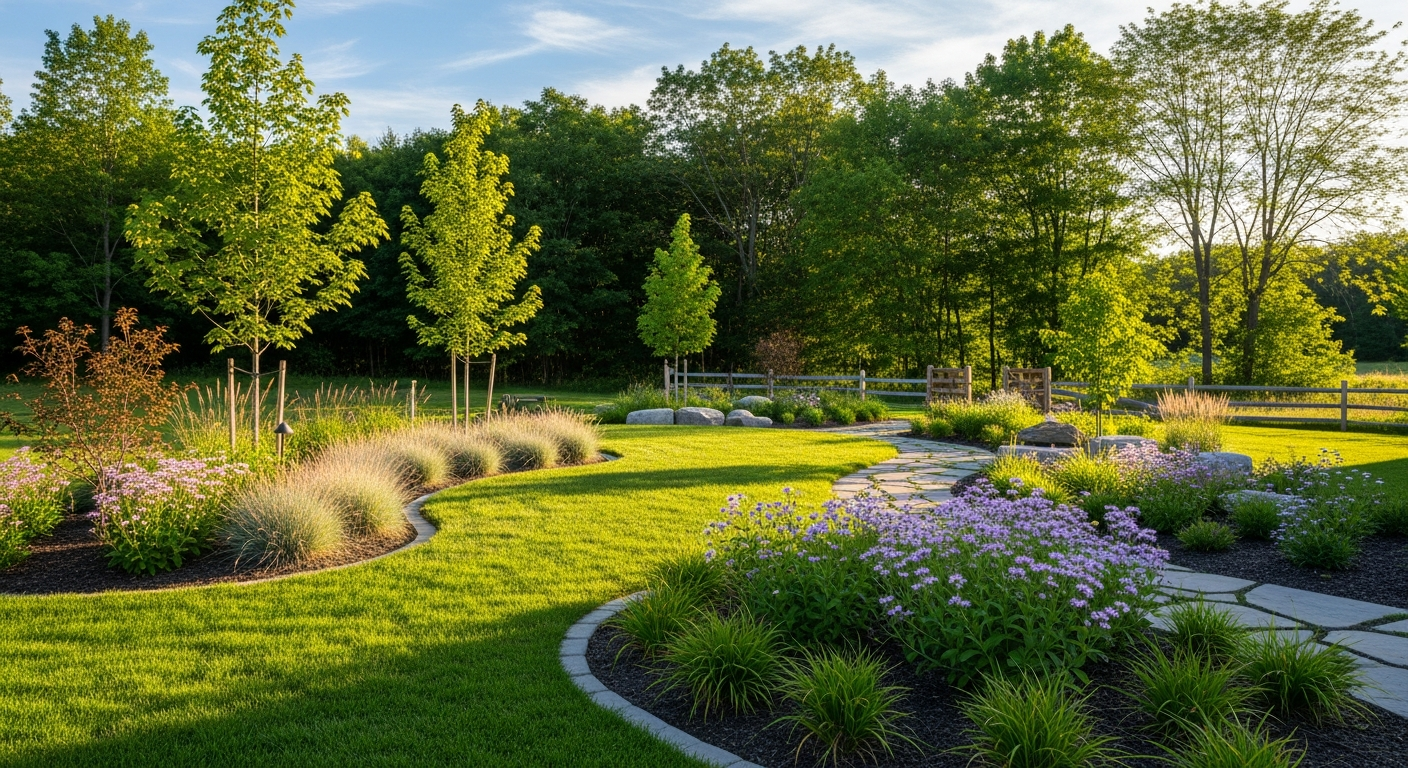
- Match mulch with stone paths, fences or borders so the yard looks consistent.
Our post on front yard design strategies for curb appeal has more ideas for planting and layout.
Seasonal Tips for Mulch Colours
Spring: Late spring, once the soil has warmed, is the usual time to refresh beds, so the new colour is fresh for summer.
Fall: A fall top-up looks tidy against bare stems and fallen leaves, and helps insulate roots over winter.
Tips for Keeping Mulch Looking Great
- Refresh Faded Mulch: Sunlight fades mulch, especially undyed wood. Rake the old layer to loosen it and top up with a thin fresh layer rather than adding a full new layer every year.
- Spread It Correctly: Keep the total depth at about 50–100 mm (2–4 inches) and keep mulch a few centimetres away from plant stems.
- Avoid Common Mistakes: Don't pile mulch against tree trunks. These "mulch volcanoes" hold moisture against the bark and invite rot and pests.
Trees are where mulch mistakes do the most damage. Spread a flat ring of wood chip mulch 50–100 mm deep out to the edge of the planting hole or beyond, and pull it back several centimetres from the trunk so the root flare stays visible. That flare should sit at or just above grade; a tree planted too deep and then buried in mulch is one of the most common reasons young trees fail.
Field drawing 16 · Tree planting
Plant trees wide and shallow, flare showing
Most young trees that fail were planted too deep. Find the root flare before you dig.
Swipe to see the full drawing →
- Root flare at grade. Scrape back soil until the trunk widens. That point sits at or just above finished grade.
- Mulch ring, not a volcano. 50–100 mm of wood chip mulch out to the hole edge, kept several centimetres off the trunk.
- Wide, shallow hole. Two to three times the root ball width with roughened sides so roots can spread.
- Undisturbed soil underneath. Dig no deeper than the ball so the tree can't settle low.
- Strip the packaging. Remove the wire basket, burlap and twine from the top of the ball and cut circling roots. Backfill with native soil and water it in.
If you are adding trees along with new beds, our tree planting and installation crews plant and mulch them this way.
Eco-Friendly Mulch Options
- Organic Mulch: Undyed wood chips, shredded bark, leaves and straw break down and improve the soil.
- Recycled Rubber Mulch: Long-lasting and colourfast, and sometimes used under play equipment, but it never breaks down or feeds the soil. Organic mulch is the better choice for planting beds.
Budgeting for Mulch
Think about both cost and appearance over time. Dyed mulch usually costs a little more and holds its colour longer, but the wood underneath breaks down at about the same rate as undyed mulch, so it still needs topping up. Ask your supplier what the mulch is made from; clean, untreated wood is what you want in a garden. To estimate quantity, multiply bed area by depth: one cubic yard covers about 100 sq ft at 3 inches (roughly 1 m³ for 13 m² at 75 mm).
Planning a 2027 mulch refresh
If you want fresh mulch in your beds for the 2027 season, a little planning over the winter makes spring easier. Walk the property and note which beds need edging, weeding or reshaping, and whether any need new plants first, since mulch should go down after planting, not before. Decide on a colour while you can look at the house and beds without leaves in the way. Around Midland and Penetanguishene, beds are usually ready for mulch in May once the ground has thawed, dried and warmed, and bulk mulch suppliers and crews are busiest in late spring, so order early.
- Measure your beds. Area times depth gives the volume to order and avoids extra deliveries.
- Pick one colour for the front. A consistent colour across front beds reads cleaner from the street.
- Check existing depth. If old mulch is still 50 mm or more deep, a light top-up is enough.
- Plan tree rings. Pull mulch back from any trunks where it has built up.
Frequently asked questions
Which mulch colour lasts the longest?
Dyed black and dark brown mulches usually hold their colour longest. Undyed natural mulch fades to grey fastest, often within one season.
Is black mulch bad for plants?
Not if it is made from clean wood and spread at the right depth. Black mulch does absorb more heat in full sun, so plants in hot, exposed beds may need extra water.
How much mulch do I need?
Multiply bed area by depth. One cubic yard covers about 100 sq ft at 3 inches deep, or about 1 cubic metre for every 13 m² at 75 mm.
When should I mulch in Ontario?
Late spring, once the soil has warmed, is the usual time to mulch, with an optional light top-up in fall. In Simcoe County that usually means May.
Choosing the Right Mulch Colour
The right mulch colour makes the yard look finished and keeps plants healthy. Dark brown and black suit most homes, natural mulch is best for the soil, and red works in small doses. Pick a colour that works with your house, your plants and your paths, and spread it at the right depth.
Planning a project this season?
We’ll walk the site, scope it properly and give you a straight price.
Forty-Five Scapes did an amazing job on my property. I started with such a mess, mud and weeds and poor grading. I met with Mark and he put my mind at ease. He took my wants and needs and budget and created a vision. The crew was always on time and respectful and the end product was amazing. I look forward to many years with my amazing outdoor space.
Frequently asked questions