Plan a 2027 landscape project in winter: estimate, site walk, design, costing, permits and locates. Build once the spring thaw passes and the ground firms up, then finish with planting and sod.
Key takeaways
Last updated: November 2026
If you want a new patio, retaining wall or shoreline finished in 2027, the planning starts this winter, not when the snow melts. A realistic landscape project timeline for Midland and Georgian Bay puts design, budgeting, permits and booking in the winter months, site work once the ground thaws and firms up in spring, the main build through late spring and summer, and planting and finishing as the build wraps up.
That order matters more here than it does in the city. Our winters are long, the spring thaw brings soft ground and reduced-load limits on county roads, and waterfront work can need approvals that take time to line up. We are a family-owned design-build team based in Penetanguishene, and this is the sequence we walk clients through every year. Below is a month-by-month guide, matched to the seven steps of our design-build process, so you know what to do and when.
Key Takeaways
- Winter is for the planning steps: the estimate request, the on-site meeting, design and 3D design, and a line-item cost estimate.
- Permits and approvals belong in winter too. Taller retaining walls can need a building permit, and because Midland, Penetanguishene, Tiny and Tay have no conservation authority, shoreline work is reviewed by the province, Fisheries and Oceans Canada and the municipality.
- Public utility locates are free through Ontario Dig Authority (formerly Ontario One Call). Request them at least five business days ahead, or ten for larger projects. Private lines, such as power to a shed or a gas line to a barbecue, need a separate private locate.
- Spring thaw softens roads and ground. The County of Simcoe lifted its 2026 reduced-load restrictions on April 27, and that window affects when heavy stone and equipment can move.
- The build runs once the ground can carry machines. Every project gets its own tailored timeline rather than a generic number.
- Planting, sod and the final clean-up come last, and then it is time to enjoy the space.
When should you start planning a 2027 landscape project?
Start in late fall or early winter. That sounds early for a project you will not use until summer, but most of the work that decides whether a project goes well happens before a machine ever arrives. Design takes thought. Budgets take a few conversations. Permits take whatever time the municipality and the province need. None of that can be rushed in May without something giving way.
Starting early also gives you choices. When the snow goes, a lot of homeowners look at their yard at the same moment and pick up the phone. If your design is approved, your estimate is signed off and your permits are in hand by then, your project is ready to schedule as soon as the site allows. If you are just starting the conversation in spring, you are starting at the back of the line. We cannot promise any specific start date without seeing your property, but an earlier conversation always leaves everyone with more options. We cover this in more detail in why winter is the best time to book your landscaper.
What does a month-by-month landscape project timeline look like?
Here is how a typical Midland or Penetanguishene project lines up against the calendar. Your months may shift with the size of the job, the weather and any approvals, but the order rarely changes.
November and December: get an estimate and walk the site
Step one of our process is simple. You fill out the form on our free estimate page and tell us what you have in mind. From there we schedule a conversation and set up step two, the on-site meeting.
Winter site walks work better than most people expect. Snow hides some details, but we can still read the grades, the access, the trees, the house and the shoreline, and talk through how your family actually uses the yard. Summer photos help fill the gaps, so dig out a few if you have them. This is also a good time to read through our free 2027 landscape planning guide, which helps you sort your ideas before the meeting.
January: design and 3D design
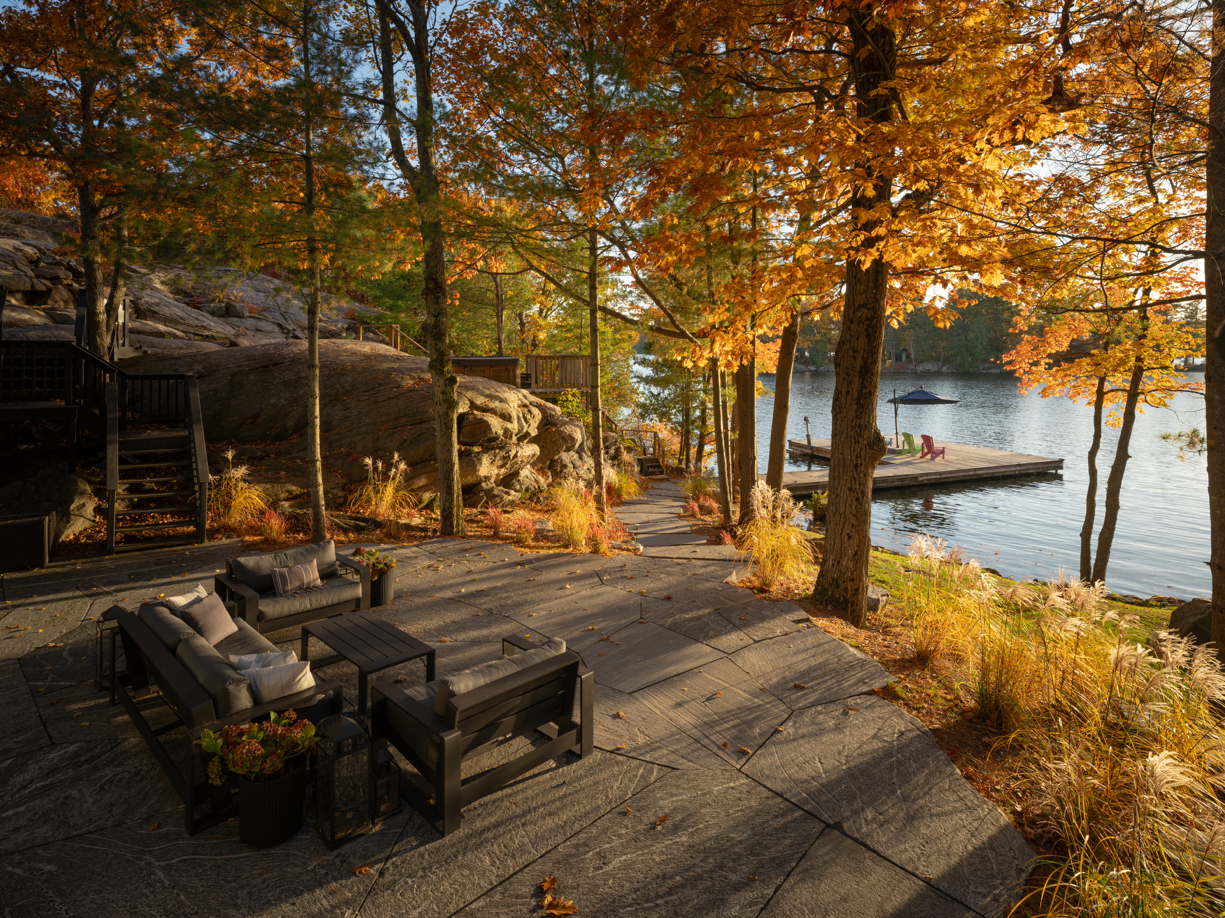
Step three is the design phase. We turn the ideas from the site walk into a plan you can see and adjust before construction starts. For many projects that means 3D landscape design, which lets you look at the patio from the kitchen window or the wall from the dock before a single stone is ordered.
Winter is the right season for this step because nobody is in a hurry. You have time to live with a design for a week, ask questions and make changes. On our pricing page, 3D designs start in the $2,000 to $15,000 range, and design fees are credited toward construction when you build with our team.
February: cost estimation and budget decisions
Step four is the cost estimate. Once the design is settled, we present a detailed estimate with a transparent breakdown for each part of the project, such as the patio, fireplace, gardens and lighting. Line items make it easy to see where the money goes and to decide what belongs in year one and what can wait.
This is the moment to have an honest budget conversation. Some families build everything at once. Others phase a project over two seasons, doing grading, drainage and walls first and adding the patio or lighting the following year. Our 2027 landscaping cost guide for Midland and Georgian Bay walks through budget ranges by project type and how phasing works.
February and March: permits, approvals and locates
Step five is scheduling and preparation. Our team orders materials, secures permits and books utility locates so the build can start without unnecessary delays. This is the step that most often decides your start date.
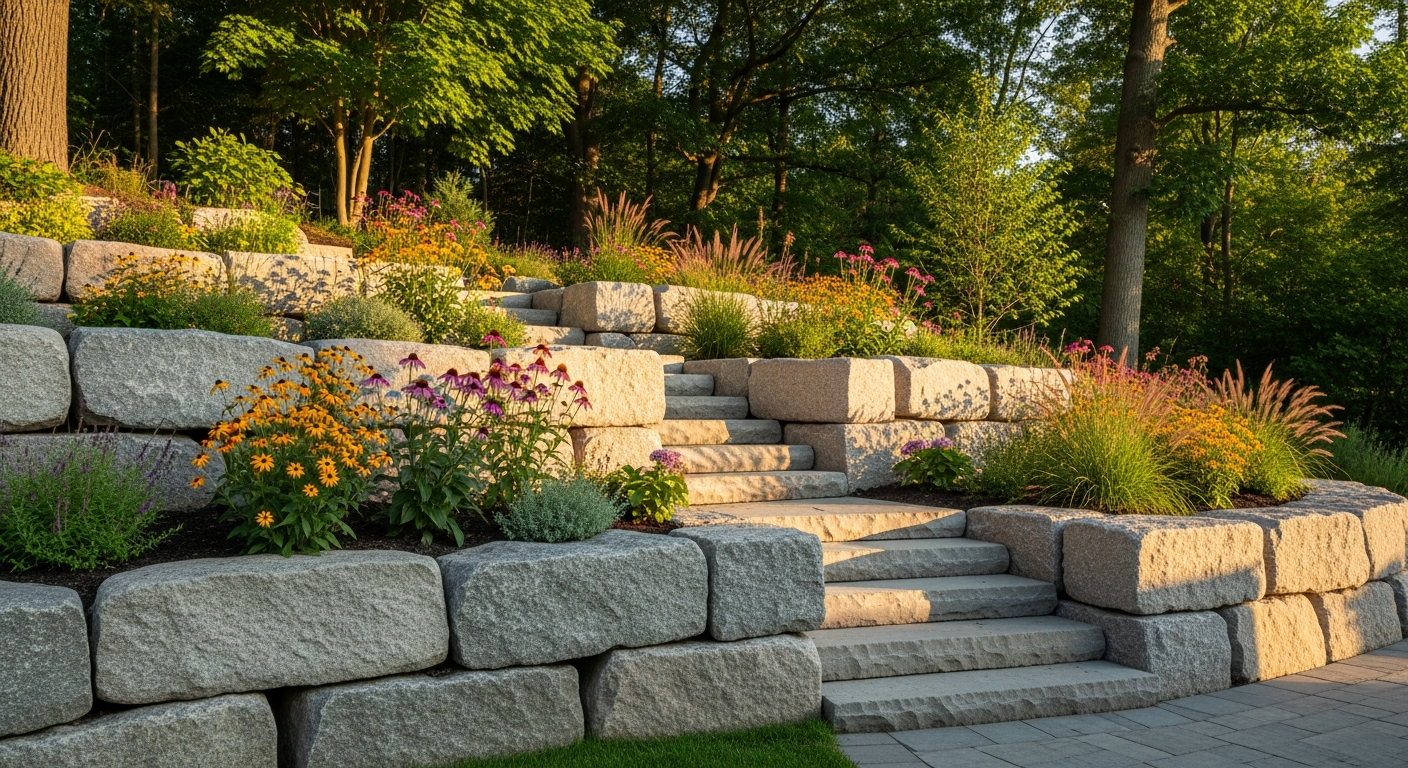
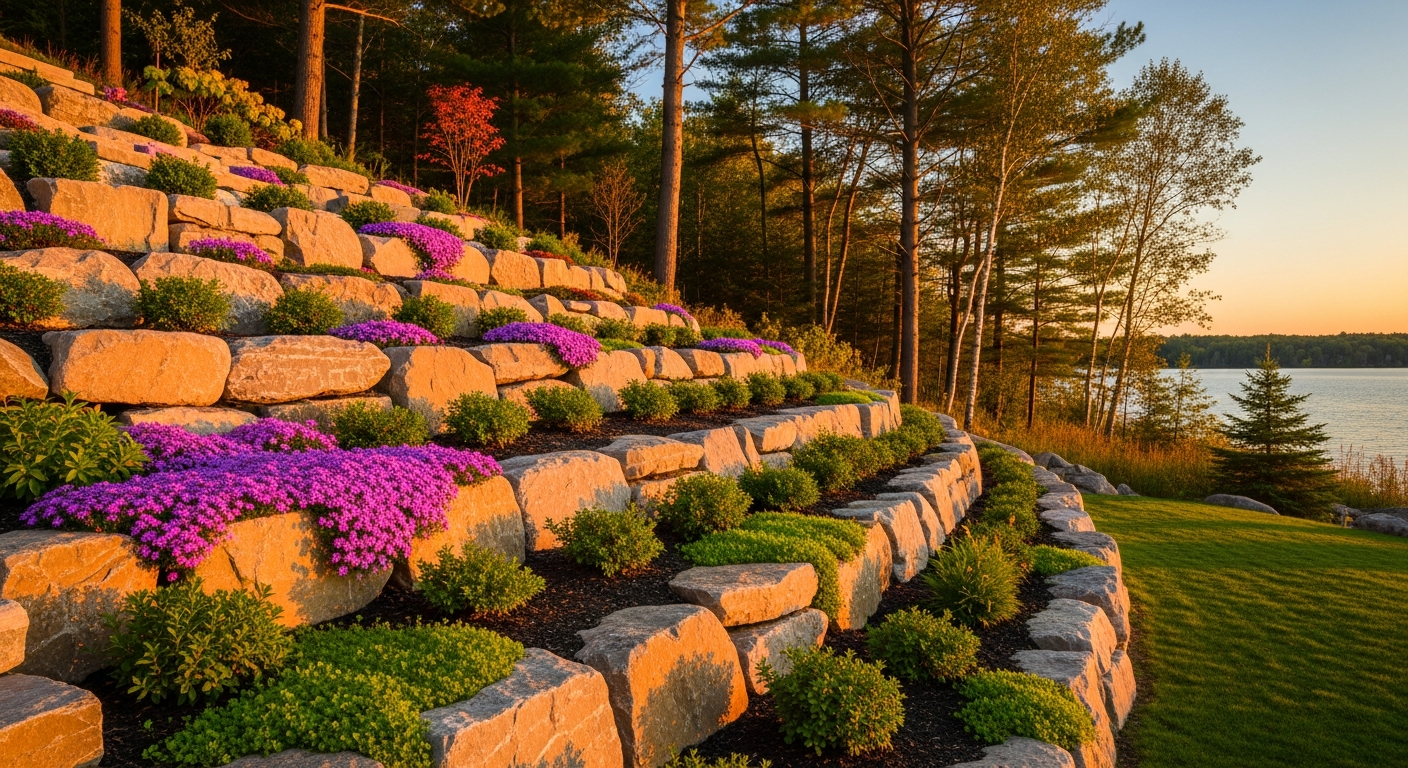
- Retaining walls. In Ontario, a retaining wall over 1 metre of exposed height next to public property, a building access or land the public can enter is a designated structure that needs a building permit and an engineered design. Our guide to retaining wall permits in Ontario explains when a permit applies.
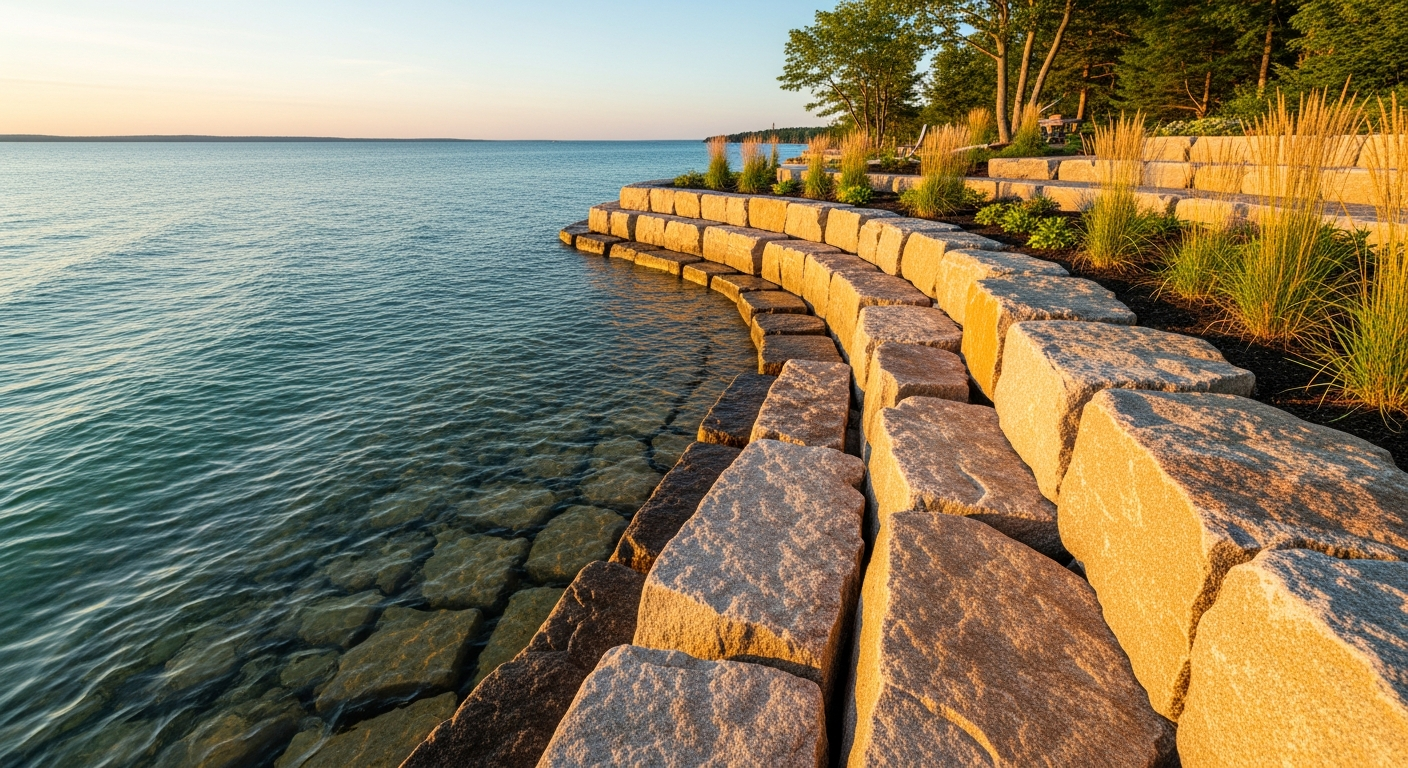
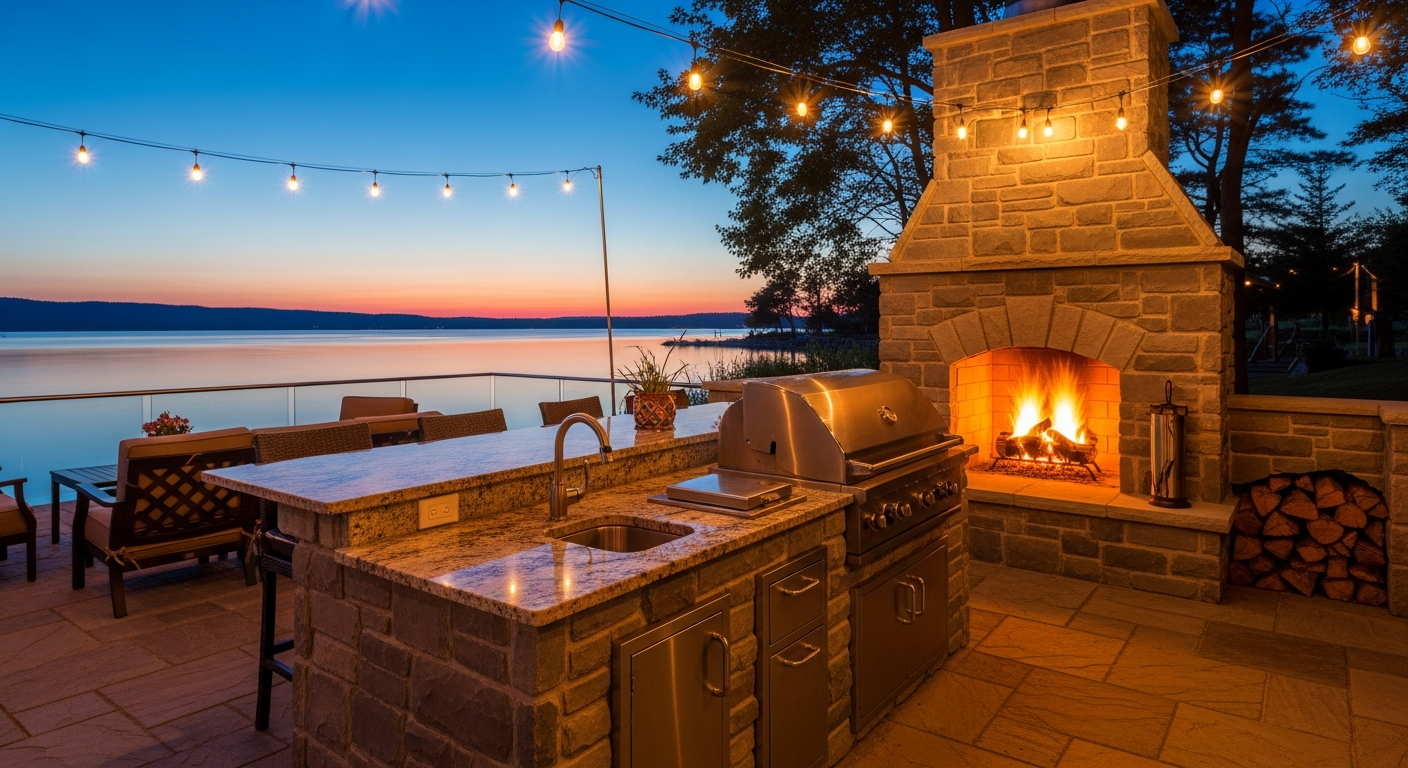
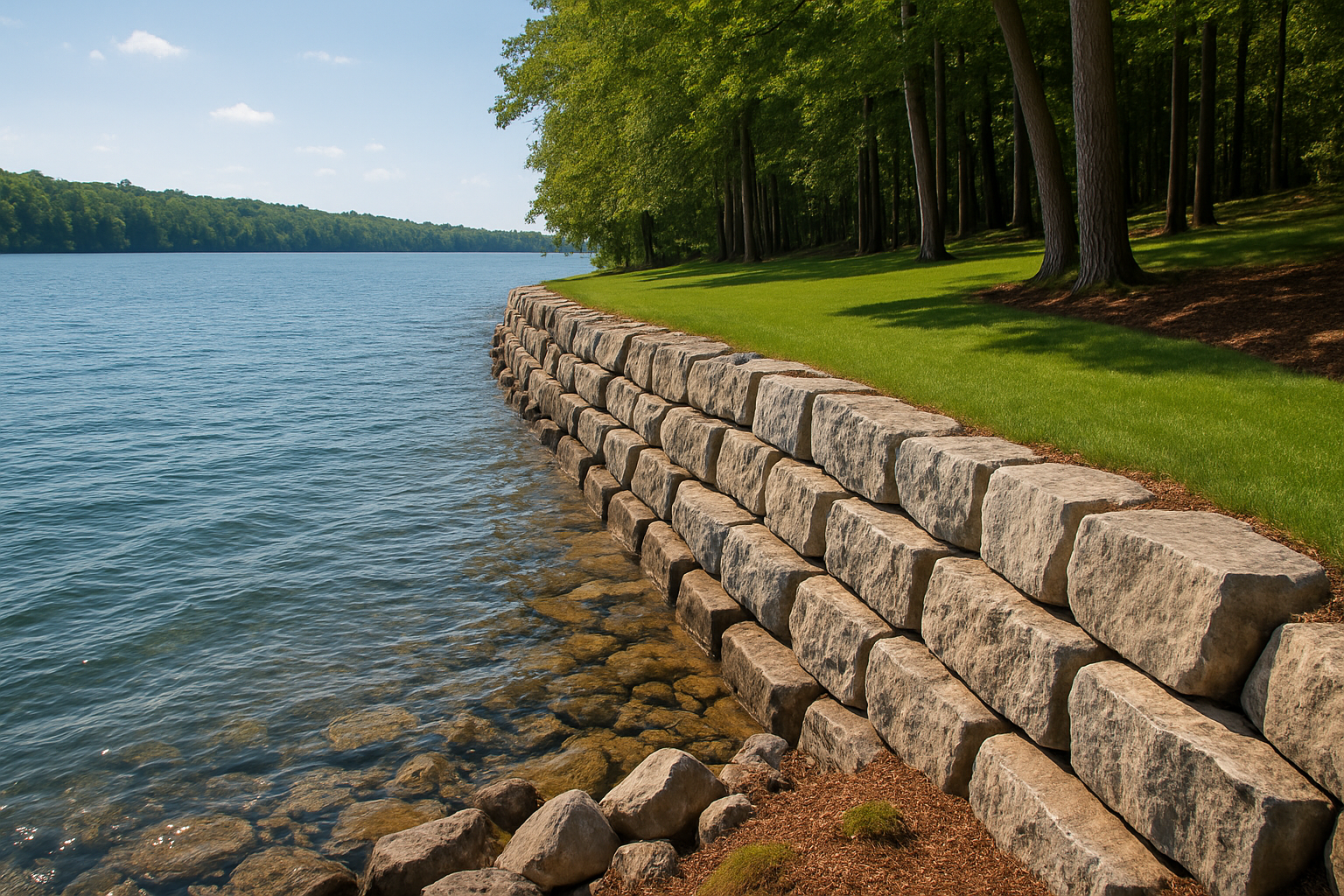
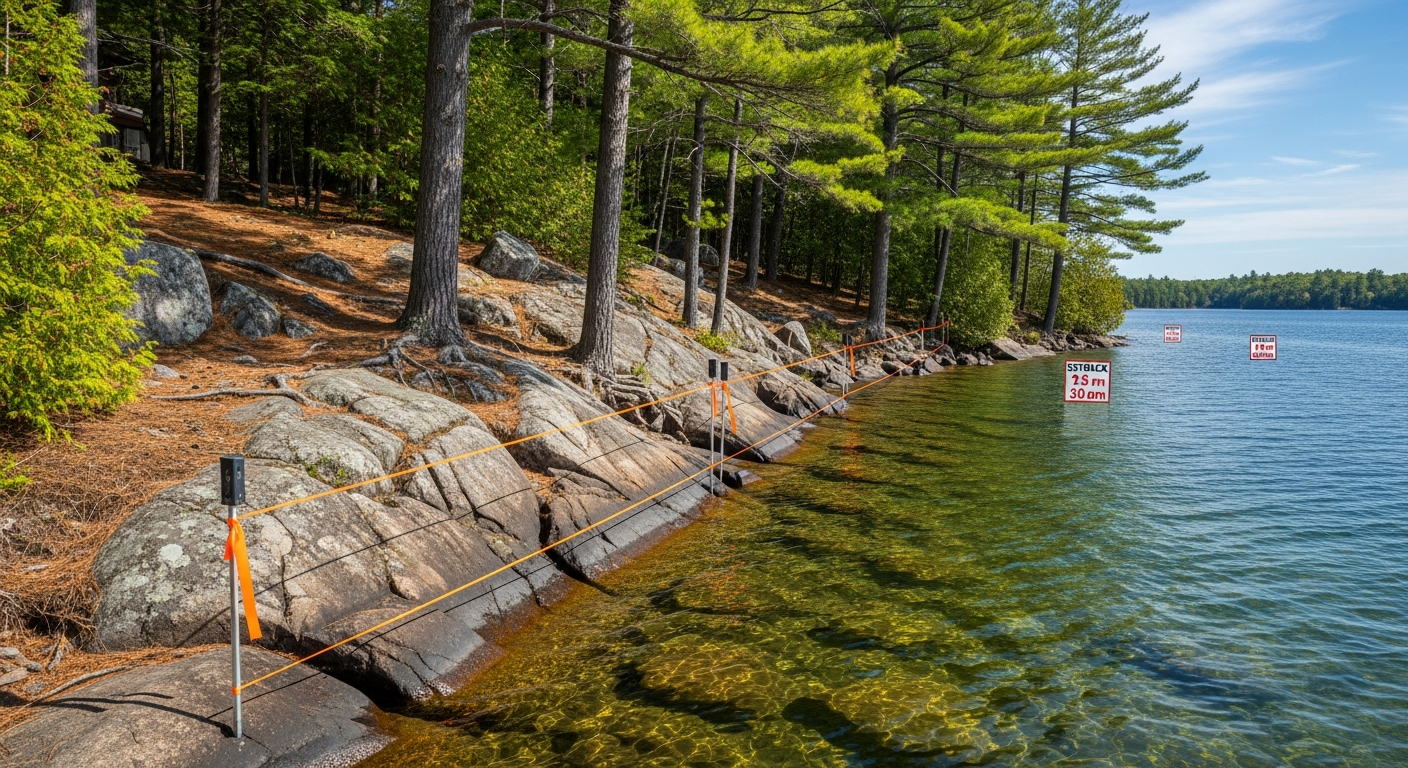
- Shoreline work. Midland, Penetanguishene, Tiny and Tay have no conservation authority. Work on shore lands or the lakebed can need a provincial work permit under the Public Lands Act. The province issues it free, but only reviews a complete application, and you pay for any studies it needs (Government of Ontario). In-water work can also need a Fisheries and Oceans Canada review. Wasaga Beach and Collingwood sit inside the Nottawasaga Valley Conservation Authority instead. Our overview of shoreline landscaping regulations in Ontario sorts out who reviews what.
- Tiny Township waterfront. As of the Township's September 2026 update, new patios, retaining walls, decks, landscaping and site alteration near the 178-metre contour of the Georgian Bay shoreline are still prohibited under an interim control by-law while appeals of its new shoreline by-laws proceed (Township of Tiny). If your property is in Tiny, confirm the current status with the Township before you design anything near the water.
- Locates. Ontario Dig Authority handles free public locates. Private lines are not included: power to a shed or garden lights, a gas line to a barbecue or pool heater, and septic lines all need a private locator. We handle locates as part of our process, and a sketch of where your private lines run speeds it up.
Approvals run on the reviewing agency's schedule, not ours. Getting applications in during the quiet months is the single best way to keep a summer build on track.
March and April: spring thaw, soft ground and half-load season
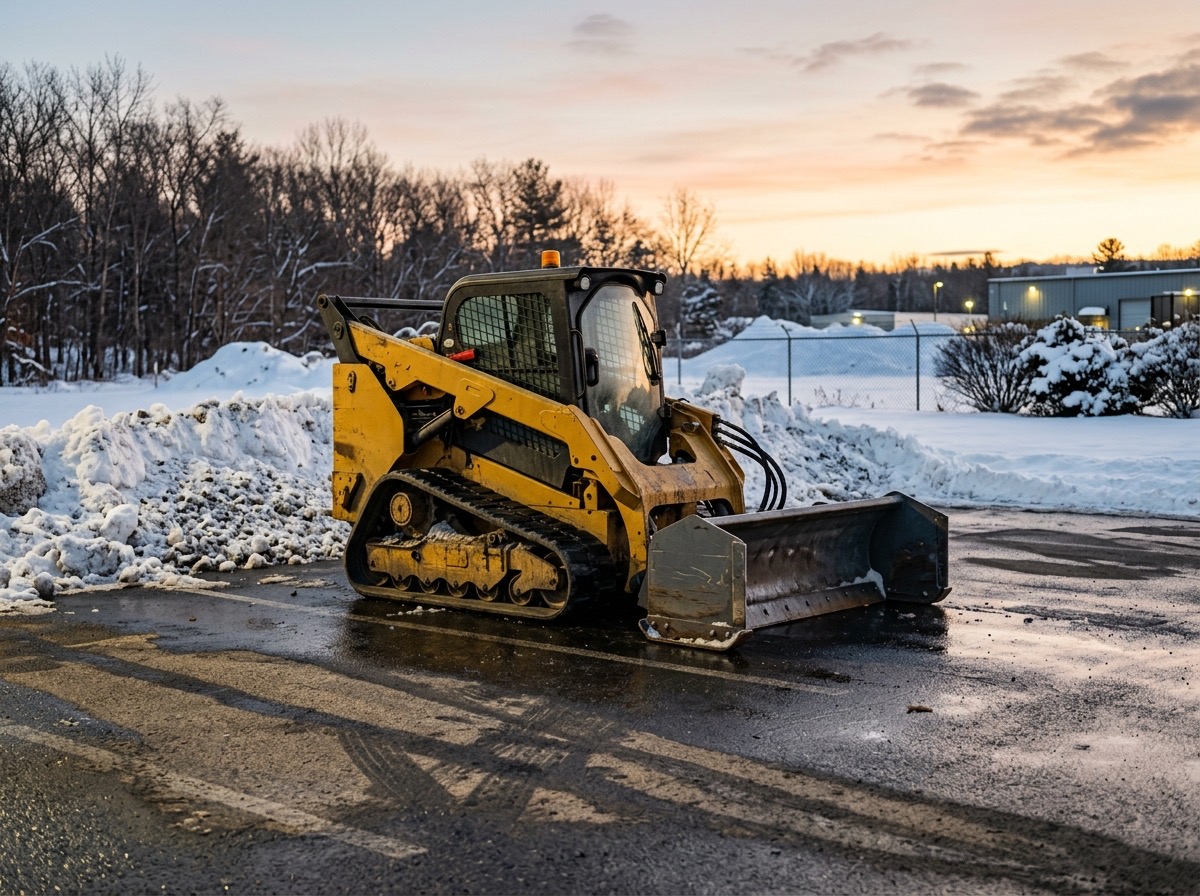
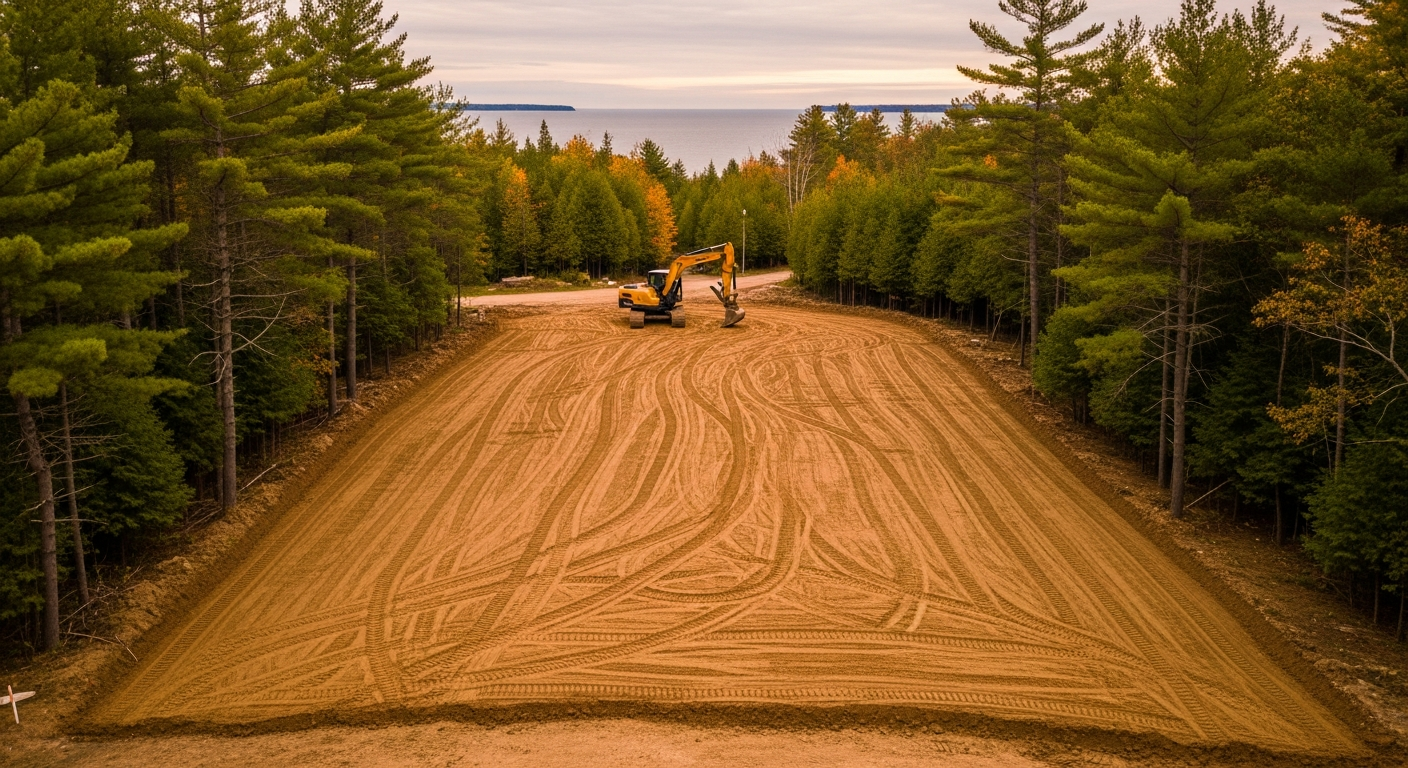
The thaw is the hinge of the whole timeline. As frost comes out of the ground, soil turns soft and wet. Driving loaded equipment across a saturated lawn leaves ruts, compacts the soil and can make a mess of a yard that was fine in the fall.
Roads soften too. Each spring, Simcoe County puts reduced-load restrictions on many county roads, and the County says they are there to prevent road damage, because heavy vehicles on thawing roads cause cracks, potholes and other structural damage. In 2026 the County lifted its reduced-load restrictions on April 27. Provincial highways have their own seasonal limits, listed on Ontario 511's seasonal loads page.
For you, this means deliveries of armour stone, aggregate and heavy machines depend partly on the calendar. It is one more reason to have everything ready before the thaw. When the ground firms up and the roads open, a prepared project can move.
May through August: the build
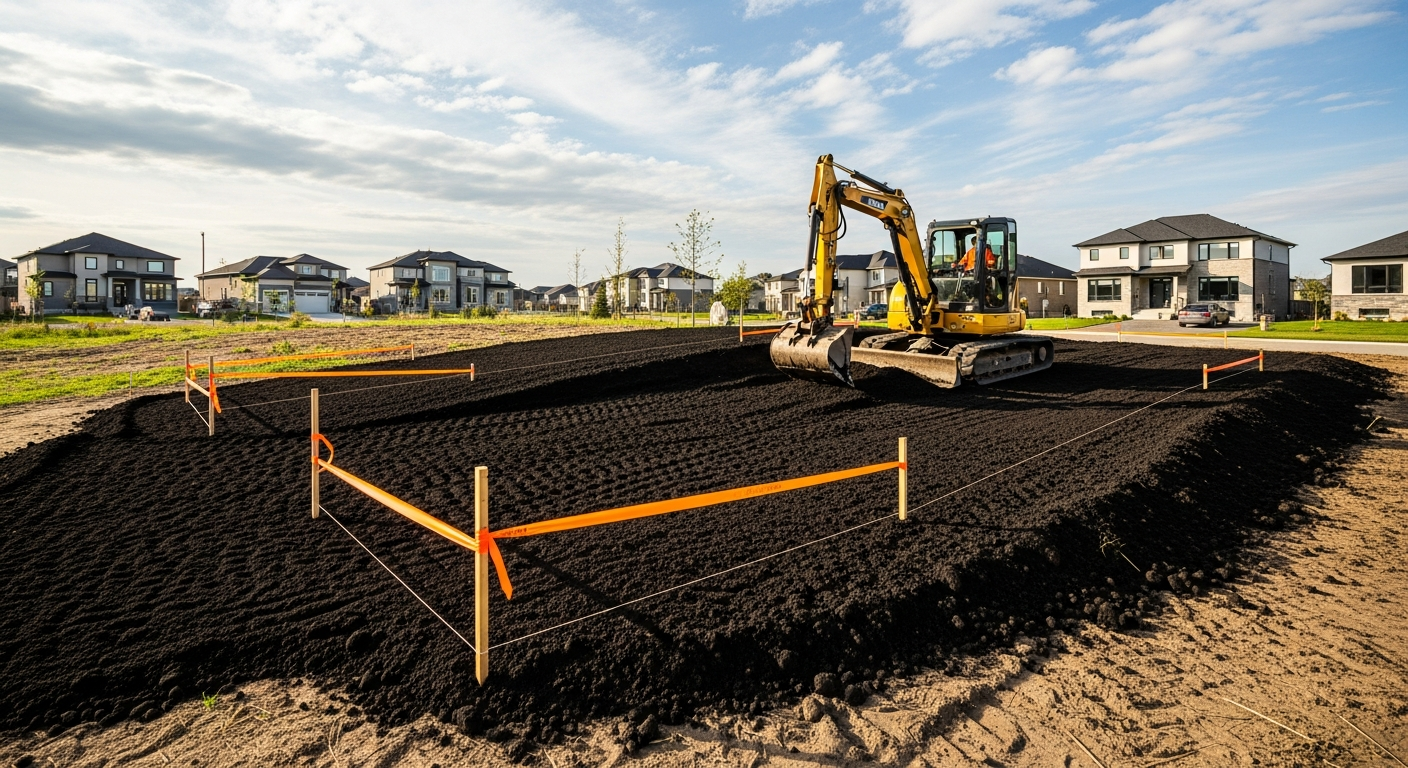
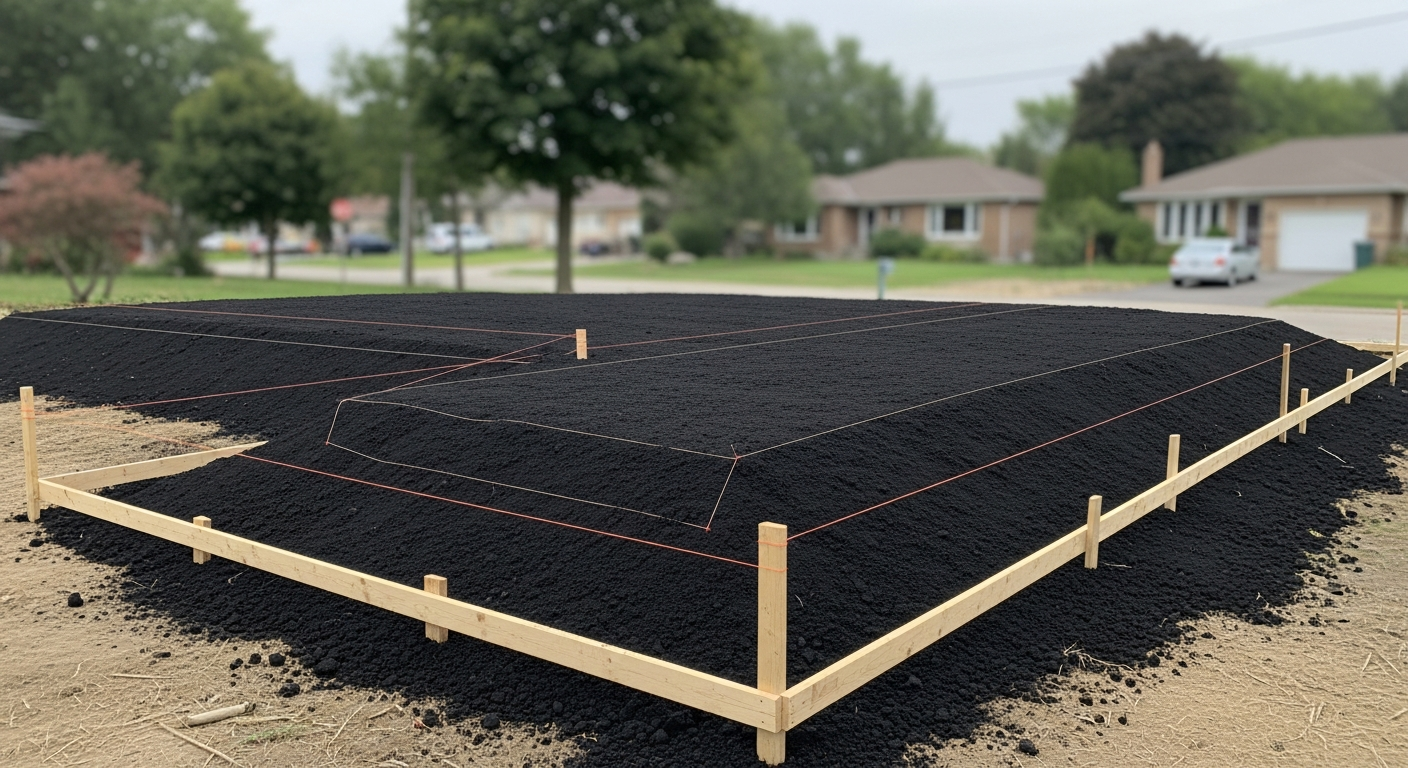
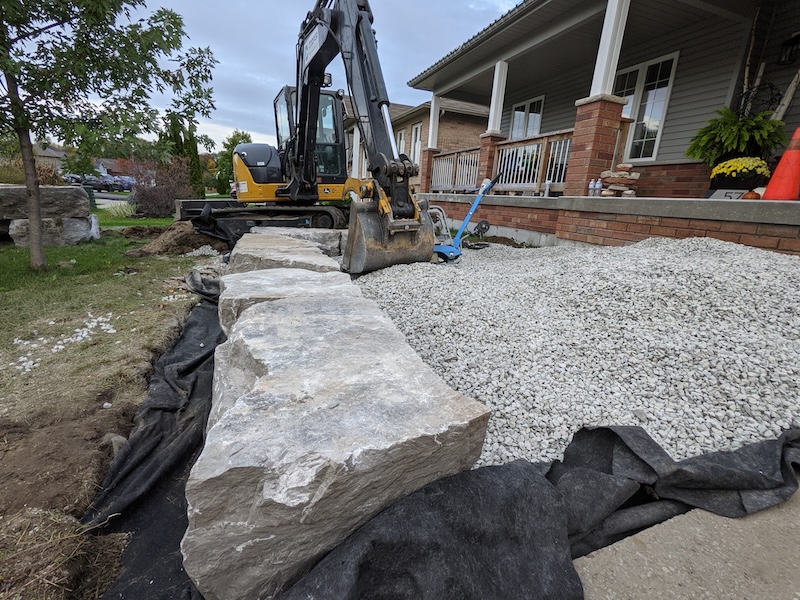
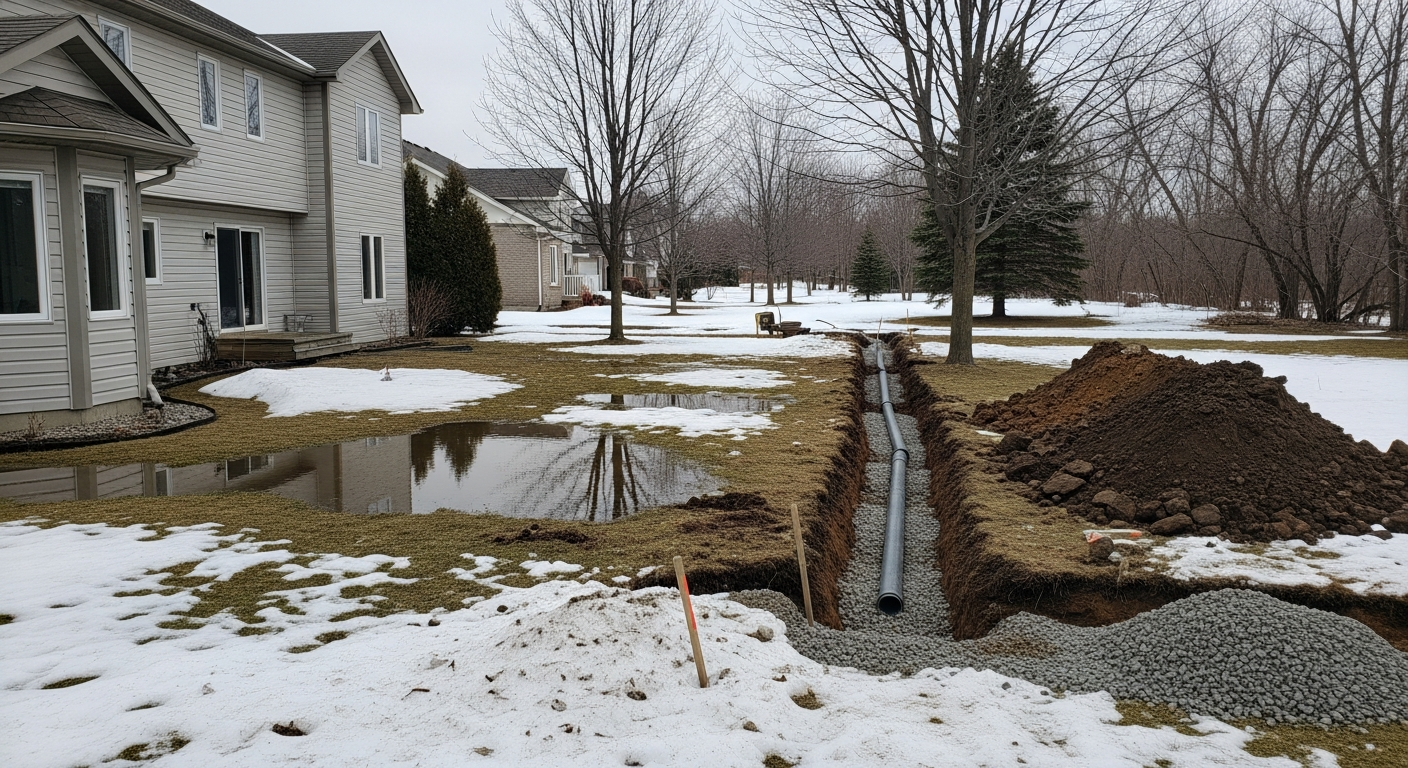
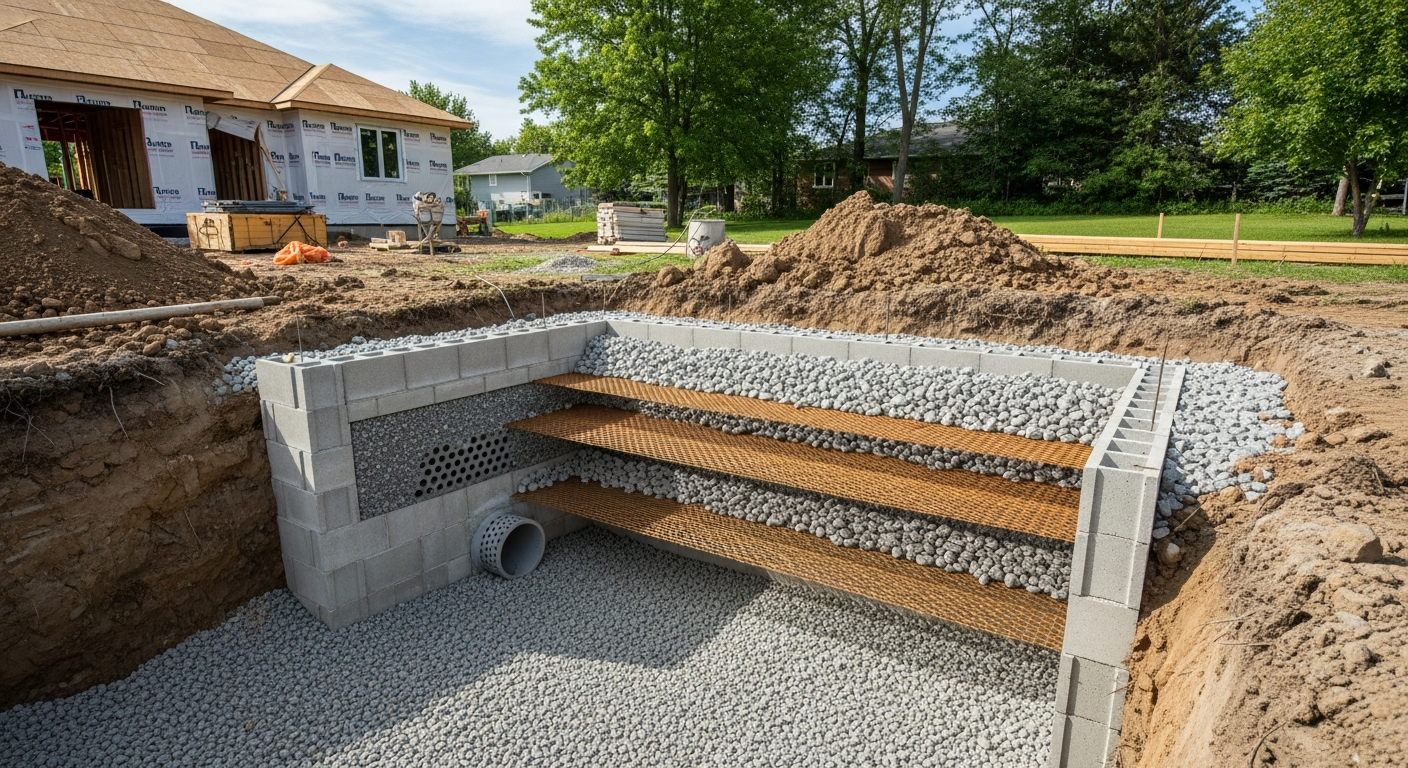
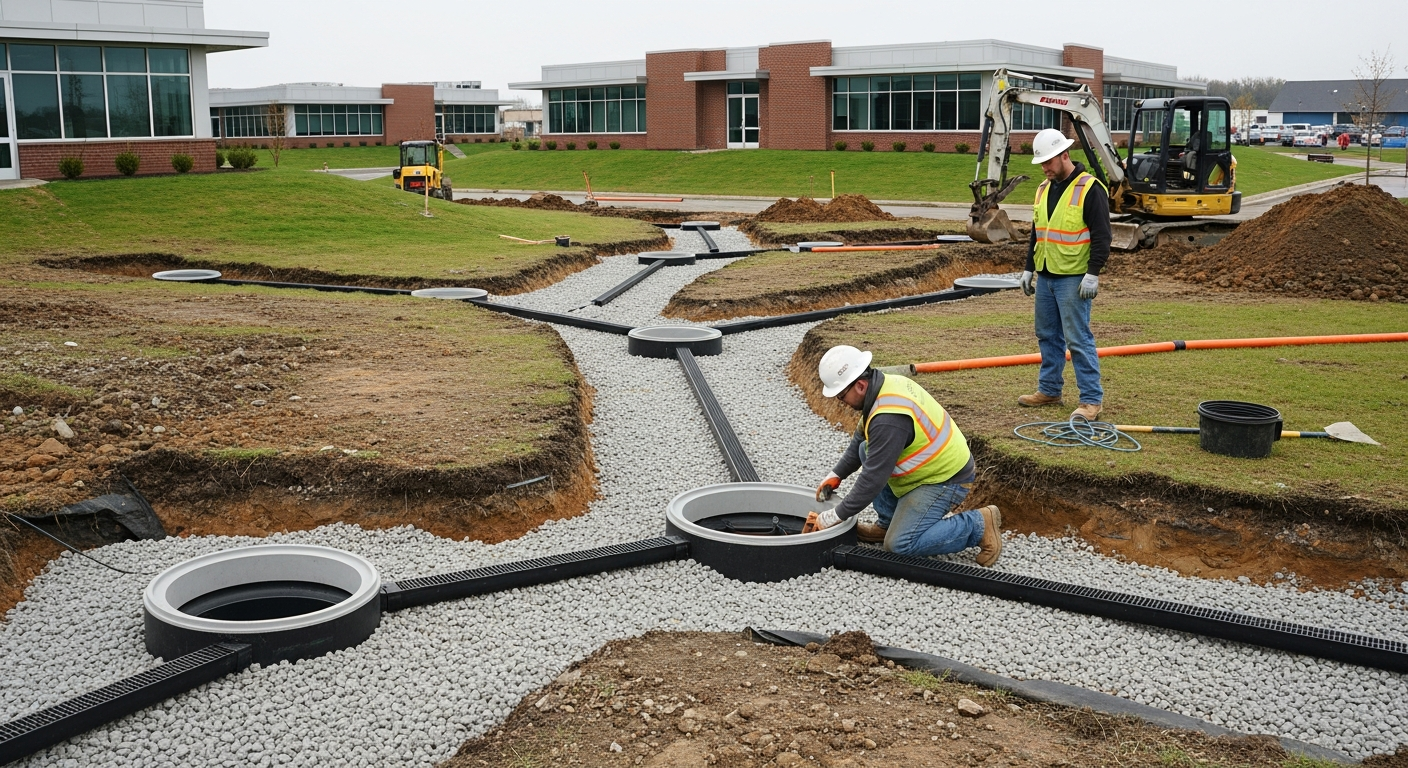
Step six is the build. The work usually follows a logical order: excavation, grading and drainage first, then walls and structures, then bases and hard surfaces like patios, walkways and steps, then carpentry and the wiring for lighting. Decks and other structures go on footings set below the frost line, at the depth the building permit calls for.
One accountable team runs it all, including subcontractors, so you are not stuck coordinating trades. How long the build takes depends on the scope. A walkway and a full waterfront transformation are very different jobs, so we give each client a clear, tailored timeline rather than a one-size number.
Late summer and fall: planting, sod and finishing
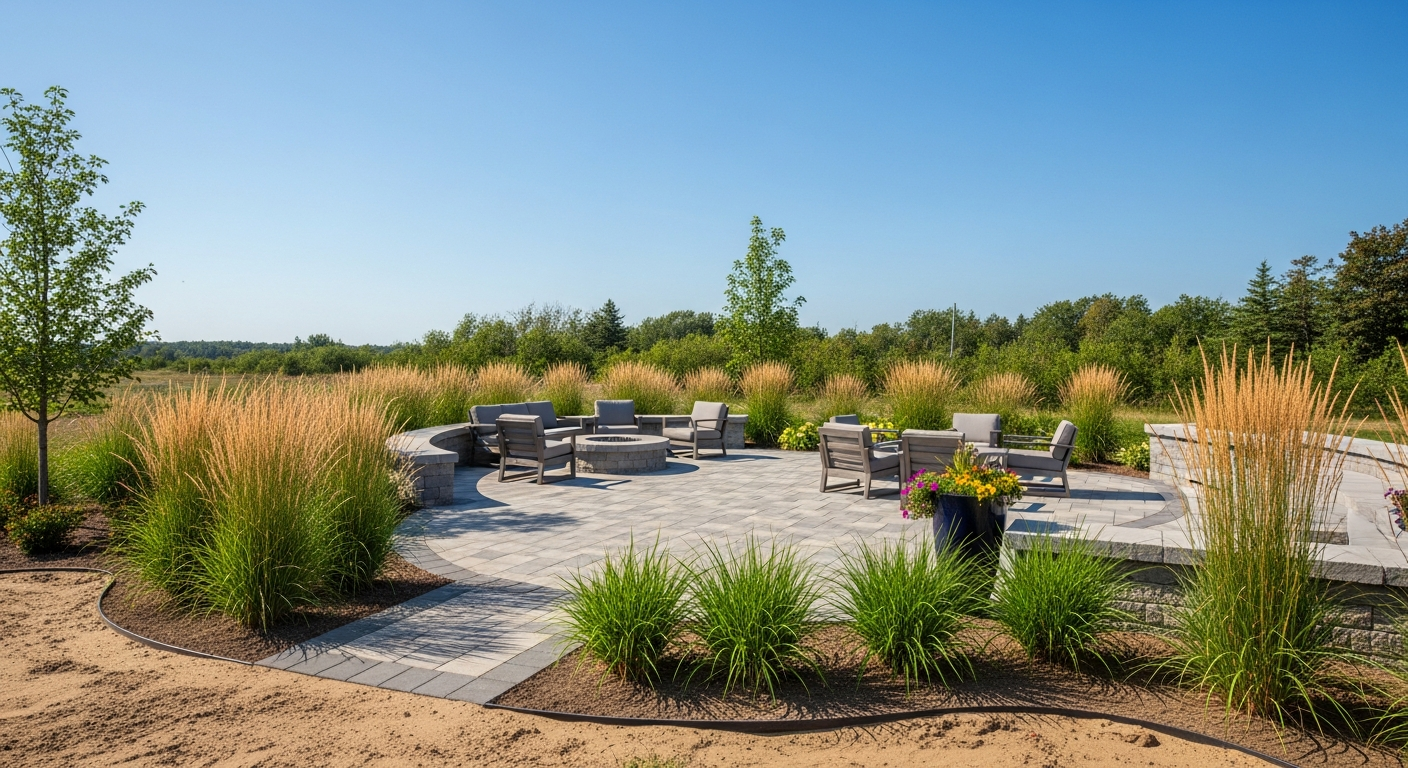
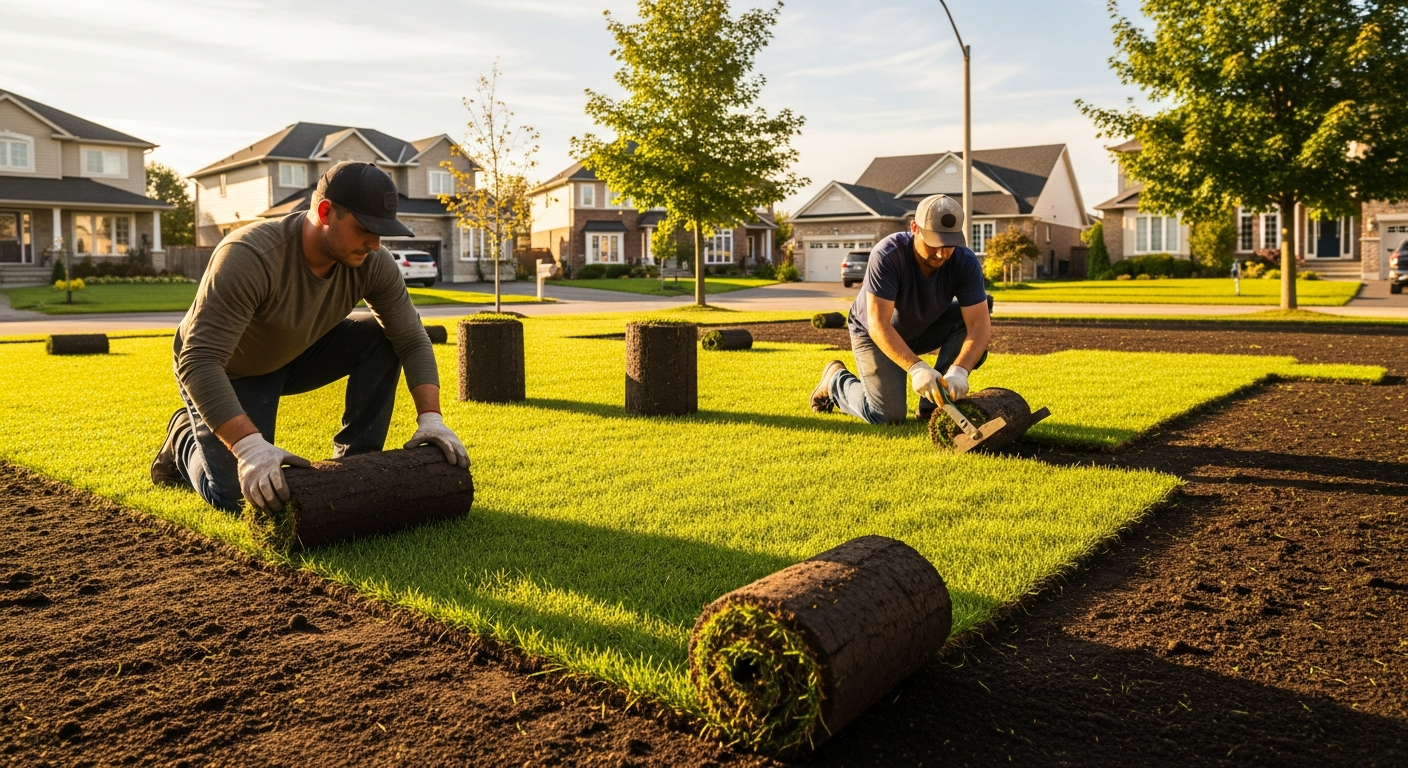
Planting, sod and mulch go in near the end so they are not trampled by the build. Then comes the spotless final clean-up and the walk-through. Step seven is our favourite: enjoy it. Every installation project is backed by our 5-year warranty.
Field drawing 20 · Project timeline
Plan it in winter, build it from May
The order rarely changes. Starting earlier is what moves your build date.
Swipe to see the full drawing →
- Book the site walk early. Snow hides some detail, but grades, access, trees and shoreline are all readable in winter.
- Design while nobody is rushed. 3D design lets you change the plan on screen. On our pricing page, design fees are credited toward construction.
- Get a line-item estimate. Each element priced separately, so you can phase work into year two.
- Start approvals early. Walls over 1 m next to public property and most shoreline work need permits. Locates need 5 business days' notice.
- Expect a thaw pause. Soft ground and county reduced-load limits slow heavy work. Simcoe County lifted its 2026 limits on April 27.
- Prepared projects build first. Excavation, grading and drainage come before walls, patios, carpentry and lighting.
- Finish with planting. Sod, planting and the final clean-up go in last, so the build doesn't trample them.
Which projects need the longest lead time?
Some projects need more runway than others. If yours is on this list, start now.
- Waterfront retaining walls and shoreline restoration. These can need a provincial work permit, a federal fisheries review and municipal approvals, plus planning around water levels and access. In Tiny, check the shoreline freeze first.
- Retaining walls over 1 metre. Engineered drawings and a permit add steps before construction.
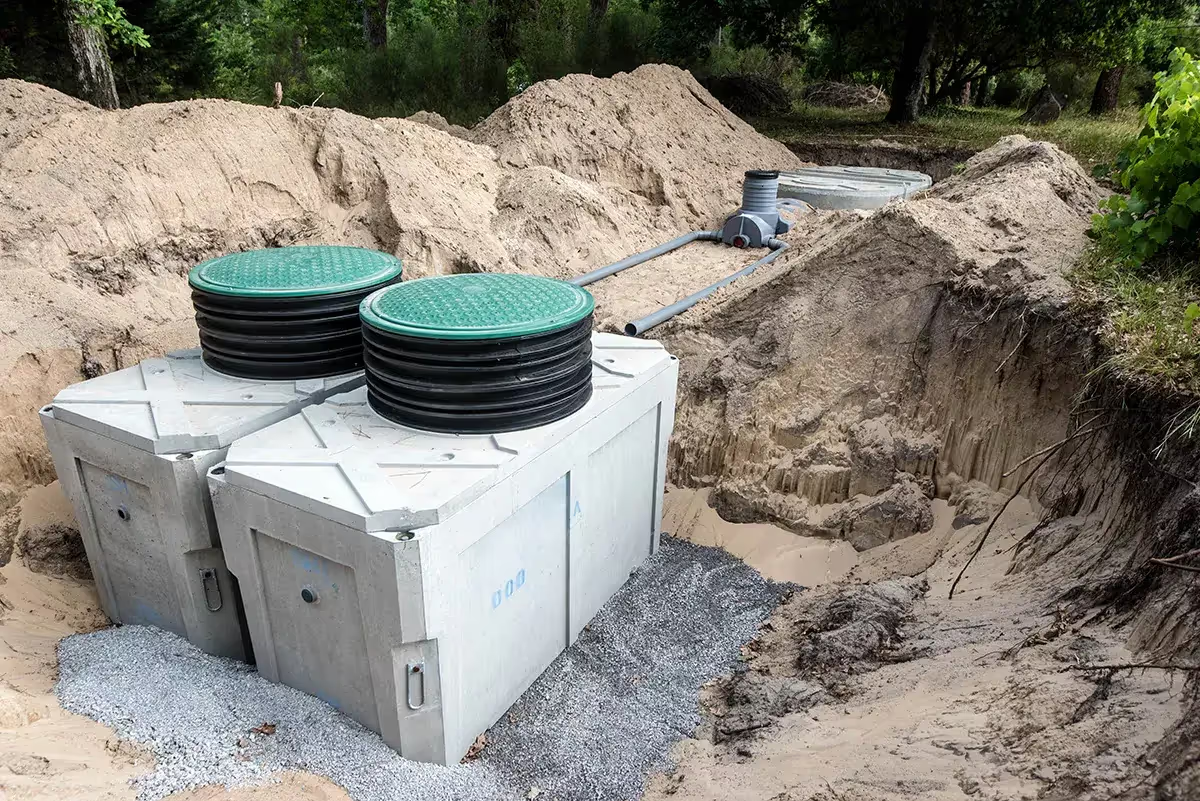
- New-build lots. Grading, drainage and septic usually come before any finished landscaping, and each can involve its own approvals.
- Large armour stone projects. Stone selection, delivery and placement need planning, especially on tight or sloped sites.
- Full backyard transformations. More elements mean more design decisions, and those go better unhurried.
A simple way to set your own start date: pick the week you want to use the space, then work backward. Subtract the build time from your estimate, the spring thaw (Simcoe County lifted its 2026 load limits on April 27), any approval time, and a few weeks for design. If the answer is already in the past, phase the project or move the finish date, rather than rushing the design.
How does the Georgian Bay climate change the schedule?
Southern Georgian Bay sits in one of the snowiest parts of southern Ontario, and lake-effect squalls can bury Midland and Penetanguishene while places inland see far less. That snow cover keeps the ground frozen and the season late. The building window here is shorter than in the GTA, so the months you can build are worth protecting.
Cottage owners have an extra wrinkle. If you are only up in summer, it is easy to put off planning until you are standing on the dock. By then, the best time to plan has passed. Starting the conversation in winter, with photos and your survey, means work can be lined up for when you want to use the property.
What does this look like in Midland, Penetanguishene, Tiny and Tay?
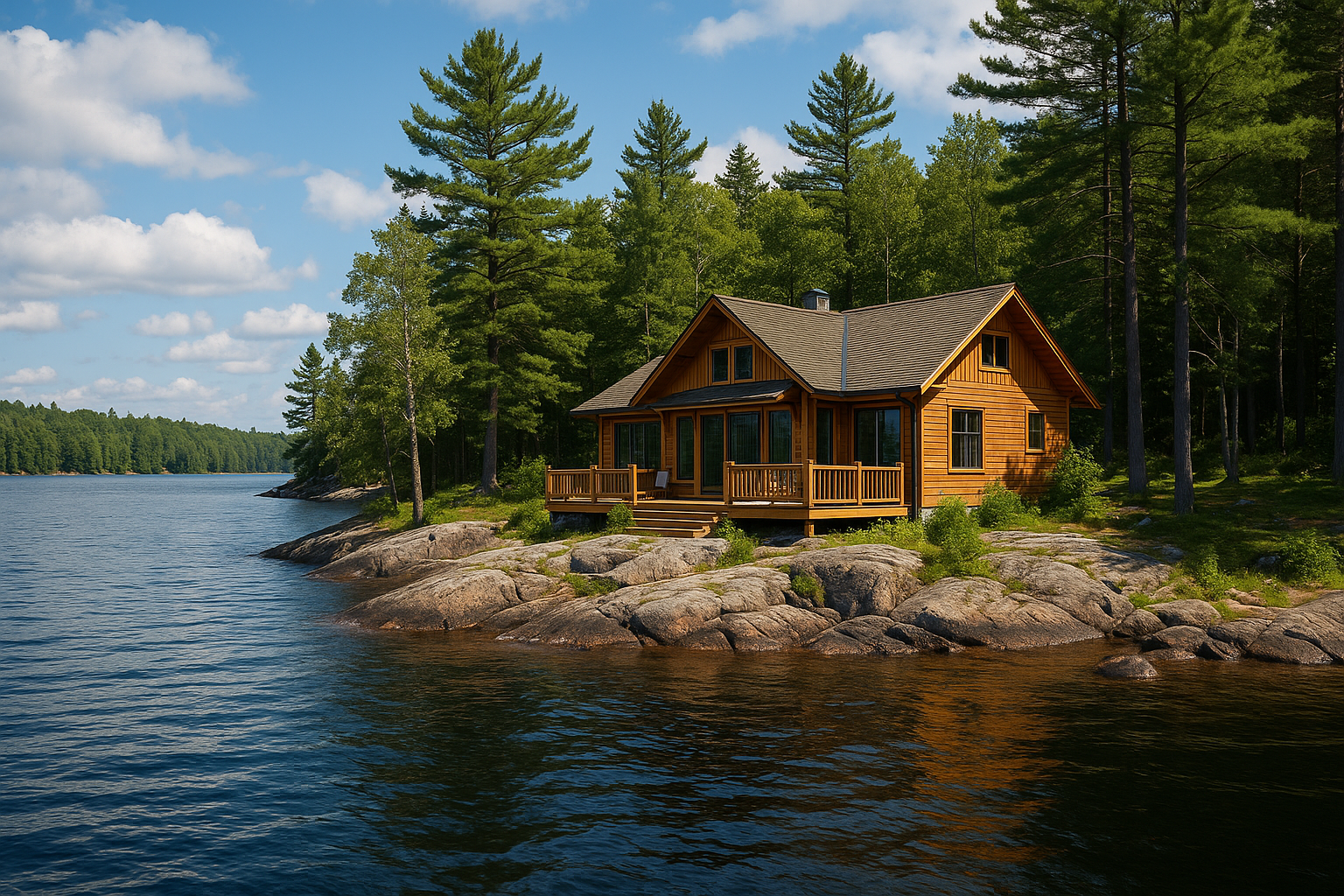
We work across Midland, Penetanguishene, Tiny and Tay townships, Victoria Harbour, Port McNicoll and the wider Georgian Bay shoreline. A backyard patio off a side street near King Street in Midland might be designed in January and built in early summer. A shoreline project on Penetang Bay or Midland Bay, or a cottage lot in Tiny Township, may need more of the winter for approvals before any stone moves. The calendar is the same. The amount of preparation is what changes.
What should you do this week?
- Write down what you want from the space and how your family will use it.
- Find your property survey and any old drawings.
- Gather photos of the yard from different seasons, especially problem spots.
- Think about a budget range you are comfortable with.
- Request your free estimate so the site walk can happen this winter.
Our post on why winter is the best time to book a landscaper has a full checklist for getting ready for your site visit.
Ready to plan your 2027 project?
The families who enjoy their new space earliest next summer are the ones who start planning now. Our team handles the whole journey, from the first site walk through design, permits, locates, the build and the final clean-up, with a low-key, no-pressure approach and a 5-year installation warranty.
Request your free estimate to book a winter site walk, and grab our free 2027 landscape planning guide while you think it through. If you want to see how one team takes a project from idea to finished yard, read about our design and build landscaping services.
Design it this winter. Build it this spring.
Winter is design season. We walk the site, design it in 3D and give you a line-item estimate so you are ready when the ground thaws.
Forty-Five Scapes did an amazing job on my property. I started with such a mess, mud and weeds and poor grading. I met with Mark and he put my mind at ease. He took my wants and needs and budget and created a vision. The crew was always on time and respectful and the end product was amazing. I look forward to many years with my amazing outdoor space.
Frequently asked questions
Start in late fall or early winter. Design, budgeting and permits all take time, and none of them can be rushed once spring arrives. Shoreline work needs the longest runway, because provincial work permits are only reviewed once an application is complete, and studies or drawings may have to come first.
Yes. Snow hides some details, but we can still read grades, access, trees, the house and the shoreline, and talk through how you use the space. Summer photos of the yard help fill in what the snow covers. A winter site walk lets design and permits happen during the quiet months, before the building season starts.
Often. A retaining wall over 1 metre of exposed height next to public property, a building access or land the public can enter needs a building permit and an engineered design. Midland, Penetanguishene, Tiny and Tay have no conservation authority, so shoreline work can need a provincial work permit, a federal fisheries review and municipal approval.
When frost leaves the ground, soil is soft and wet, and heavy equipment can rut and compact a yard. Simcoe County also puts reduced-load limits on many county roads during the thaw; in 2026 they lifted on April 27. That affects deliveries of armour stone and machines, so building starts once the ground firms up and the roads open.