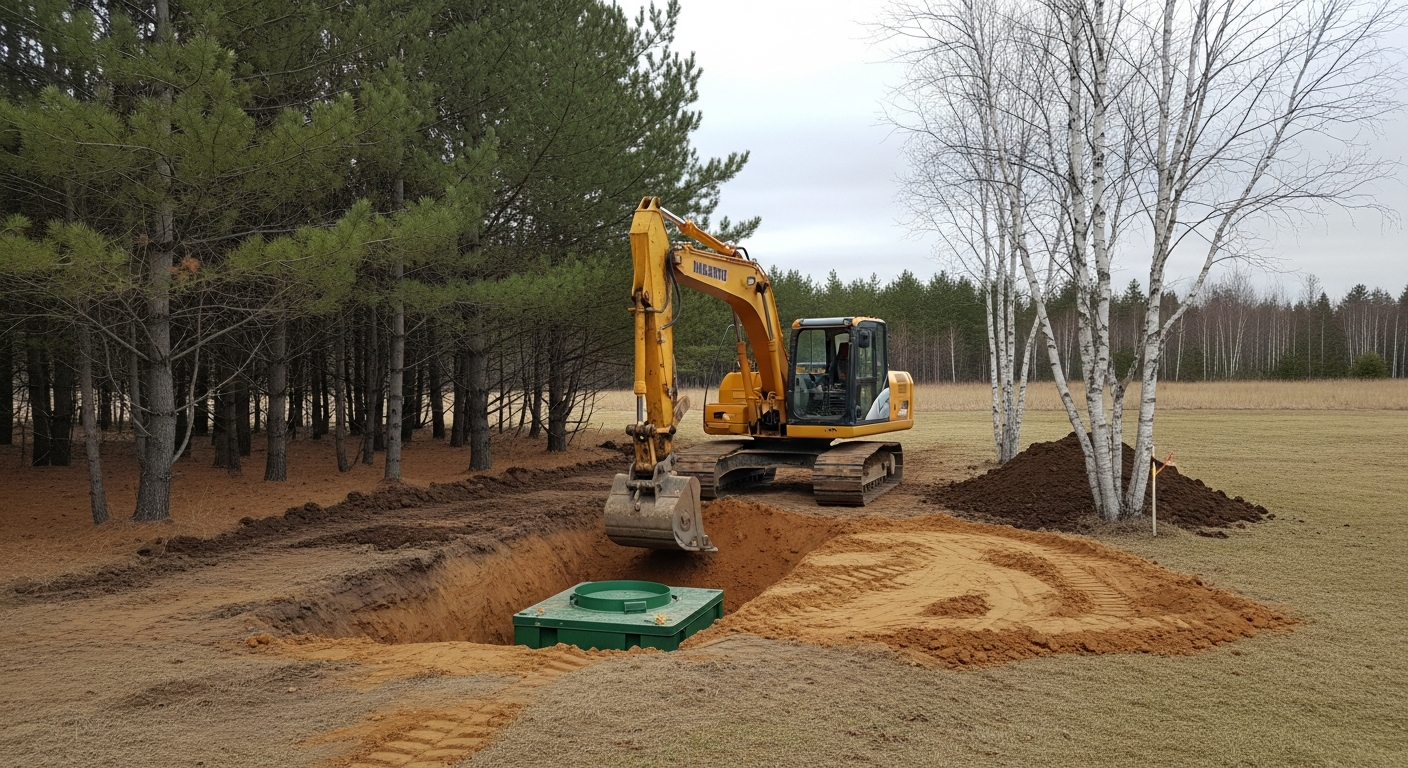
An irrigation system takes pressurized water from a municipal line, well or lake, passes it through a backflow preventer and sends it to zone valves. A controller opens one zone at a time, and water flows through buried pipe to sprinkler heads or drip emitters. In Ontario the system has to be blown out before the first hard freeze each fall.
Key takeaways
Introduction
An irrigation system works by taking pressurized water from a source (a municipal line, well or cistern), passing it through a backflow preventer, and sending it to a set of zone valves. A controller opens one valve at a time on a schedule, and water flows through buried pipe to the sprinkler heads or drip emitters in that zone, which spread it over the lawn or deliver it to plant roots. Sensors for rain or soil moisture can skip a cycle when the ground is already wet.
Irrigation systems deliver water systematically to gardens, lawns, landscapes and crops, so plants are not left to unpredictable rainfall. At Forty Five Scapes, we design and install systems for homes, cottages and commercial properties around Midland and Penetanguishene that put water where it is needed and nowhere else.
Why Is Irrigation Important?
- Water Efficiency: Proper irrigation can significantly reduce water waste.
- Consistent Growth: Even water distribution allows for uniform plant growth.
- Resilience: During dry spells, irrigation keeps new sod, plantings and established lawns alive.
Types of Irrigation Systems
Modern irrigation systems come in various types, each best suited for specific terrains, climates, and plant requirements.
Surface Irrigation Systems
Surface irrigation involves spreading water over the soil surface.
- Flood Irrigation
- Method: Water is released over a field, flowing naturally to cover the soil.
- Pros: Simple setup, minimal initial cost.
- Cons: Potentially wasteful due to runoff and evaporation.
- Furrow Irrigation
- Method: Water flows through channels (furrows) dug between rows of crops.
- Pros: More targeted than flood irrigation, less wastage.
- Cons: Requires regular maintenance of furrows.
These methods are typically used on flat terrain and large agricultural fields where water availability is high.
Drip Irrigation Systems
Drip irrigation delivers water directly to the root zone via perforated pipes or emitters.
- Key Components: Emitters, pipes, filters.
- Advantages:
- High water efficiency—minimal evaporation.
- Well suited to garden beds, hedges, containers and slopes where spray would run off.
- Can be tailored to specific plant needs.
- Typical Use Cases: Greenhouses, horticulture, residential gardens.
At Forty Five Scapes, we often recommend drip irrigation for homeowners looking to save water without compromising on plant health.
Sprinkler Irrigation Systems
Sprinkler systems mimic natural rainfall by spraying water through pressurized nozzles.
- Uses:
- Agriculture: Large-scale crop irrigation.
- Residential & Commercial Landscapes: Lawns, gardens, golf courses.
- Types:
- Fixed Sprinklers: Stationary heads.
- Rotary Sprinklers: Rotating heads covering larger areas.
Fixed spray heads put down water much faster than rotors, so the two should never share a zone. Mixing them leaves some areas soaked and others dry.
Selecting the right sprinkler type ensures uniform coverage and optimal water distribution for your property.
Subsurface Irrigation Systems
In subsurface irrigation, water is delivered below the soil surface through buried pipes.
- Benefits:
- Minimizes evaporation and runoff.
- Useful in narrow strips and windy spots where spray drifts.
- Low-maintenance once installed.
- Considerations:
- Requires precise installation to avoid leaks.
- May need periodic maintenance to prevent root intrusion.
Key Components of an Irrigation System
An effective irrigation setup typically includes the following:
- Backflow preventer: Stops irrigation water from being drawn back into the drinking-water supply. The Ontario Building Code requires backflow protection where a potable supply connects to a lawn sprinkler system.
- Pumps: Draw water from a well, lake or cistern where there is no pressurized supply.
- Pipes & Tubes: Transport water to various zones.
- Valves: Control the flow and pressure of water.
- Emitters & Sprinklers: Release water in measured amounts.
- Controllers & Sensors: Automate and optimize watering schedules.
Tip: By working with Forty Five Scapes, you get a tailored design that accounts for your property's unique topography, soil type, and plant requirements.
Water Source and Supply
Irrigation systems can tap into multiple sources:
- Rivers & Reservoirs: Common for large-scale farming.
- Wells & Groundwater: Useful when surface water isn't readily available.
- Municipal Water: Often used for residential systems. In Midland, lawn sprinkling is regulated by the Town's Water Conservation By-law, and the Town has an application for watering new sod or seed, so check the current watering rules before setting a schedule.
- Lake water: Common at waterfront cottages, with a pump and intake. Taking more than 50,000 litres a day in Ontario requires a Permit to Take Water, which very few residential systems approach.
- Rainwater Harvesting: Sustainable option, though may require storage tanks and filtration.
Automation in Irrigation Systems
Automation makes irrigation more efficient and easier to manage:
- Timers & Controllers: Let you schedule watering cycles.
- Soil Moisture Sensors: Detect when water is needed.
- Weather-Based Systems: Adjust schedules based on local weather forecasts.
Smart irrigation helps you save time, reduce water bills, and maintain a healthier landscape.
Designing an Efficient Irrigation System
Several factors come into play when designing or upgrading an irrigation system, including how the site's grading moves water:
- Soil Type: Sandy soils drain quickly, while clay soils retain water.
- Plant Requirements: Different species have different water needs.
- Local Climate: Temperature, humidity, and rainfall patterns.
- Terrain: Slopes, uneven ground, or obstacles.
- Water pressure and flow: The pressure and litres per minute at the supply decide how many heads each zone can run.
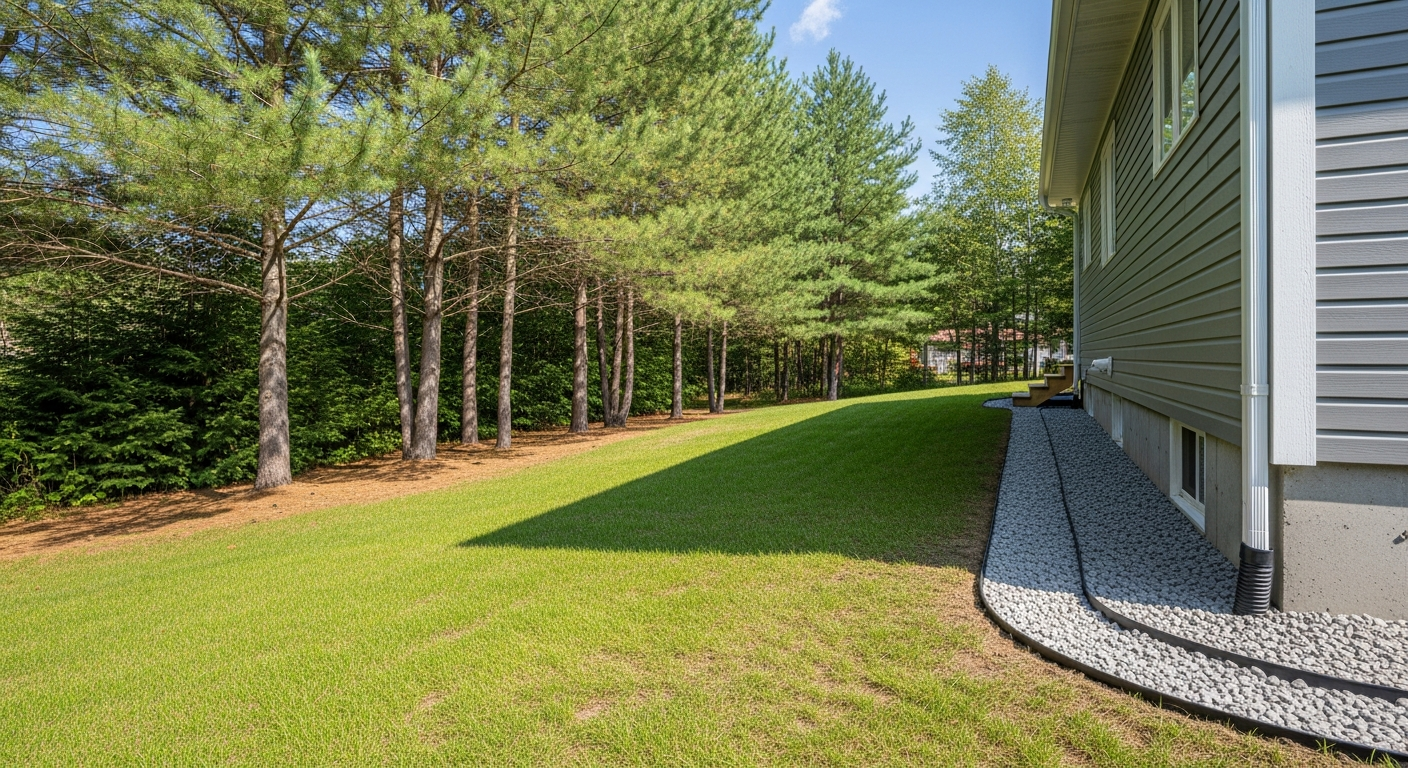
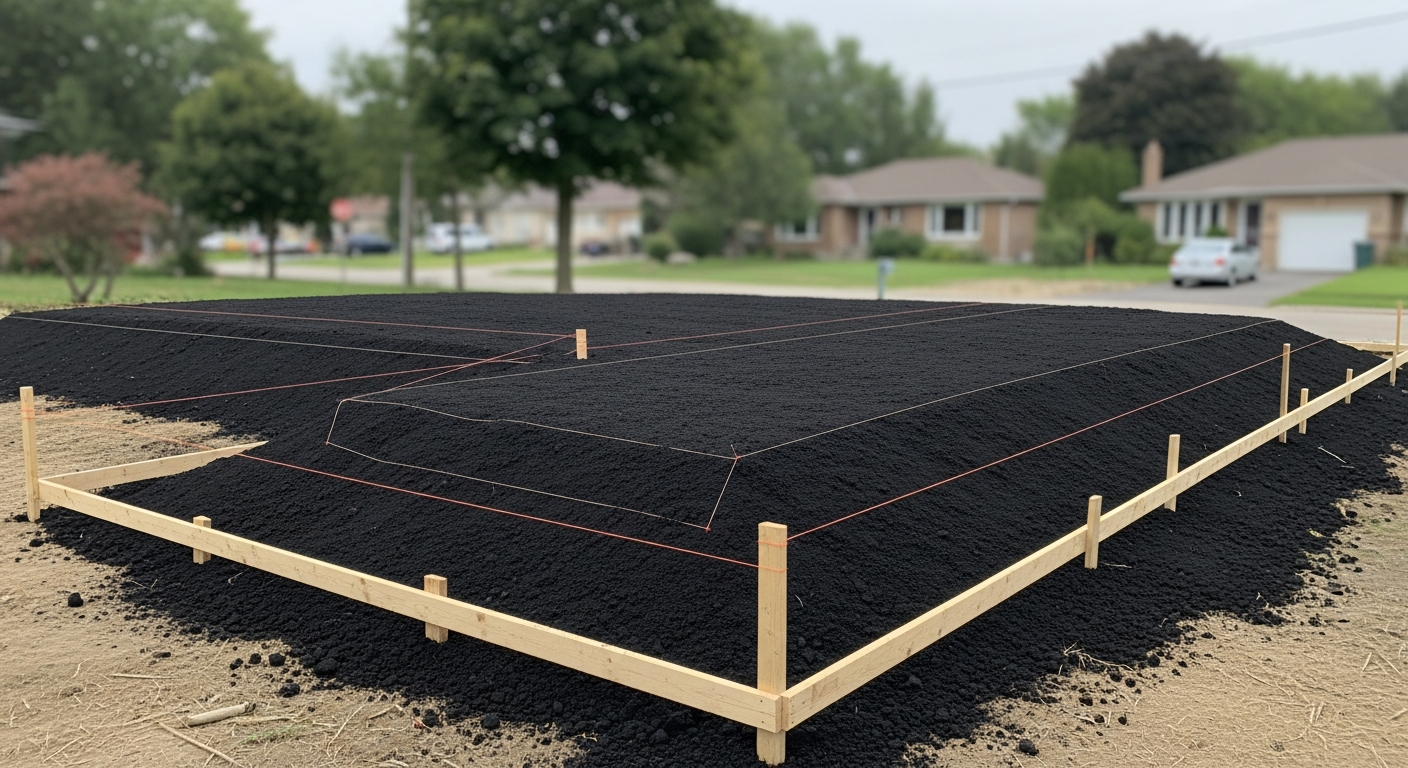
Design starts with measurements: the area of each lawn and bed, the slope, and the distance from the water source. Slopes matter because water applied faster than the soil can absorb it runs downhill, so sloped zones get lower-rate heads or drip and shorter, repeated cycles. Lawns that are graded properly, with the fall away from the house, also keep sprinkler water from collecting against the foundation.
Field drawing 01 · Measuring
Measure area, slope and volume before you order
Three numbers drive every landscape quote: square metres, fall and cubic metres.
Swipe to see the full drawing →
- Split odd shapes. Break the yard into rectangles, triangles and circle segments, measure each, then add them.
- Level a string line. Stretch it between two stakes and set a line level in the middle so the string is dead level.
- Measure down at each stake. The difference is the rise. Divide by the run between stakes and multiply by 100 for percent.
- Volume = area × depth. Convert depth to metres first. Tell the supplier the compacted depth you need.
- Check against the standard. In Midland, grass must fall at least 2% away from buildings and hard surfaces at least 1%.
A professional site assessment ensures each zone receives the correct amount of water.
Benefits of Irrigation Systems
Installing a well-designed irrigation system offers multiple advantages:
- Healthier Plants: Consistent moisture supports steady growth in lawns, beds and crops.
- Water Conservation: Targeted watering prevents wastage.
- Lower Labor Costs: Automated systems reduce manual watering tasks.
- Enhanced Landscape Value: Healthy, vibrant lawns and gardens increase property appeal.
Challenges in Irrigation Systems
While beneficial, irrigation systems can face hurdles:
- Clogging in Emitters: Particularly in drip systems.
- Mineral Build-Up: Hard well water can scale emitters and nozzles, and poor drainage lets water sit around heads and valves.
- Freeze damage: Water left in pipes, valves or the backflow preventer over a Simcoe County winter will crack them. Systems need to be drained or blown out with compressed air each fall.
- Maintenance Costs: Pumps, valves, and filters may require routine care.
- Overwatering: Leads to fungal diseases and water wastage.
Environmental Impact
Proper irrigation practices can have a positive environmental impact by:
- Reducing water depletion.
- Minimizing chemical runoff.
- Supporting sustainable agriculture.
Conversely, inefficient or poorly managed systems may lead to water shortages, soil erosion, and habitat disruption. Responsible design and maintenance are crucial for eco-friendly water management.
Innovations in Irrigation Technology
The irrigation landscape is evolving with advancements such as:
- Remote Monitoring Systems: Track water usage via smartphone.
- Drip-Tape Irrigation: Ultralight tapes for row crops.
- Precision Agriculture: Drones and sensors to analyze field conditions.
- Solar-Powered Pumps: Eco-friendly energy solutions for irrigation.
Seasonal care in Ontario
In the Midland area an irrigation system runs from roughly May to early October. In spring, open the supply slowly, check each zone for broken heads and leaks, and reset the controller. In fall, before the first hard freeze, shut off the supply, drain the backflow preventer and blow out each zone with compressed air at a pressure the pipe can handle. Most homeowners have a contractor do the blowout, since too much air pressure can damage fittings.
Planning a 2027 irrigation system installation
If you want irrigation running for the 2027 season, the design work fits best over the winter. Trenching for pipe can only happen once the frost is out and the soil has dried, which around Midland and Penetanguishene is usually late April or May, and the system should go in before new sod or planting, not after. A winter site visit lets the designer measure the lawn and beds, test pressure and flow at the supply, and lay out zones so spring installation takes a few days.
The decisions to make now are mostly about efficiency. A weather-based or soil-moisture smart controller, drip lines for beds and hedges, and separate zones for sun and shade all cut wasted water. If you are on a well or drawing from the lake, the pump size needs to be settled before design.
- Map your water source: municipal, well or lake, and where the line enters the house.
- Check local watering rules and whether the Town requires a permit to water new sod.
- Coordinate with other landscape work so pipe goes in before patios, sod and beds.
- Plan for the backflow preventer and an easy fall blowout connection.
Frequently Asked Questions (FAQs)
- How often should I water my lawn with an automated system?
- It depends on factors like grass type, local climate, and soil. A general guideline for an established lawn is about 25 mm (1 inch) of water a week, including rain, applied in one or two deep waterings in the early morning rather than short daily cycles. New sod needs light, frequent watering until it roots.
- Is drip irrigation suitable for large-scale farming?
- Yes. While it requires more upfront investment, drip irrigation saves water and often increases yield, making it cost-effective long-term.
- What are common signs of overwatering?
- Yellowing leaves, mold growth, and standing water on the surface are key indicators.
- Can I install subsurface irrigation myself?
- Small residential projects can be DIY-friendly, but larger or more complex landscapes may require professional Forty Five Scapes assistance to ensure proper design and installation.
- How do I maintain my irrigation system?
- Regularly check for leaks, clean filters, and inspect emitters or sprinklers for clogs. Annual professional servicing is also recommended.
- When should I winterize my irrigation system in Ontario?
- Before the first hard freeze, usually in October in the Midland area. Shut off the supply, drain the backflow preventer and blow out every zone with compressed air.
- Do I need a backflow preventer on a lawn sprinkler system?
- Yes, where the system connects to a drinking-water supply. The Ontario Building Code requires backflow protection for lawn sprinkler connections, and some municipalities also require the device to be tested.
Conclusion
Irrigation systems keep landscapes healthy and farms productive. By understanding the various types, components, and best practices, you can make informed decisions that maximize water efficiency while keeping plants healthy. Drip, sprinkler, surface and subsurface methods each have their place, and any of them works well when it is designed for the site and maintained every season.
Ready to Upgrade Your Irrigation System?
Reach out to Forty Five Scapes for personalized advice and professional installation. We'll help you choose the right irrigation layout, use less water and keep your landscape healthy through the growing season. Pairing irrigation with new sod installation or garden planting is the easiest time to put it in.
Optimize Your Outdoor Space with Efficient Irrigation
Invest in an irrigation system tailored to your unique property—reduce water waste, enhance plant health, and add value to your home or farm. For guidance on your property, contact Forty Five Scapes.
Disclaimer: The information provided in this guide is for educational purposes only and may vary based on region-specific regulations and local environmental conditions.
Planning a project this season?
We’ll walk the site, scope it properly and give you a straight price.
Mark and Matt are amazing. Not only do they do high-quality work, but they are also collaborative every step of the way. They are also great at problem-solving for unforeseen issues, or if you are just stuck on what to do in a certain area. I highly recommend Forty-Five Scapes for your landscaping needs.
Frequently asked questions