March 3, 2026
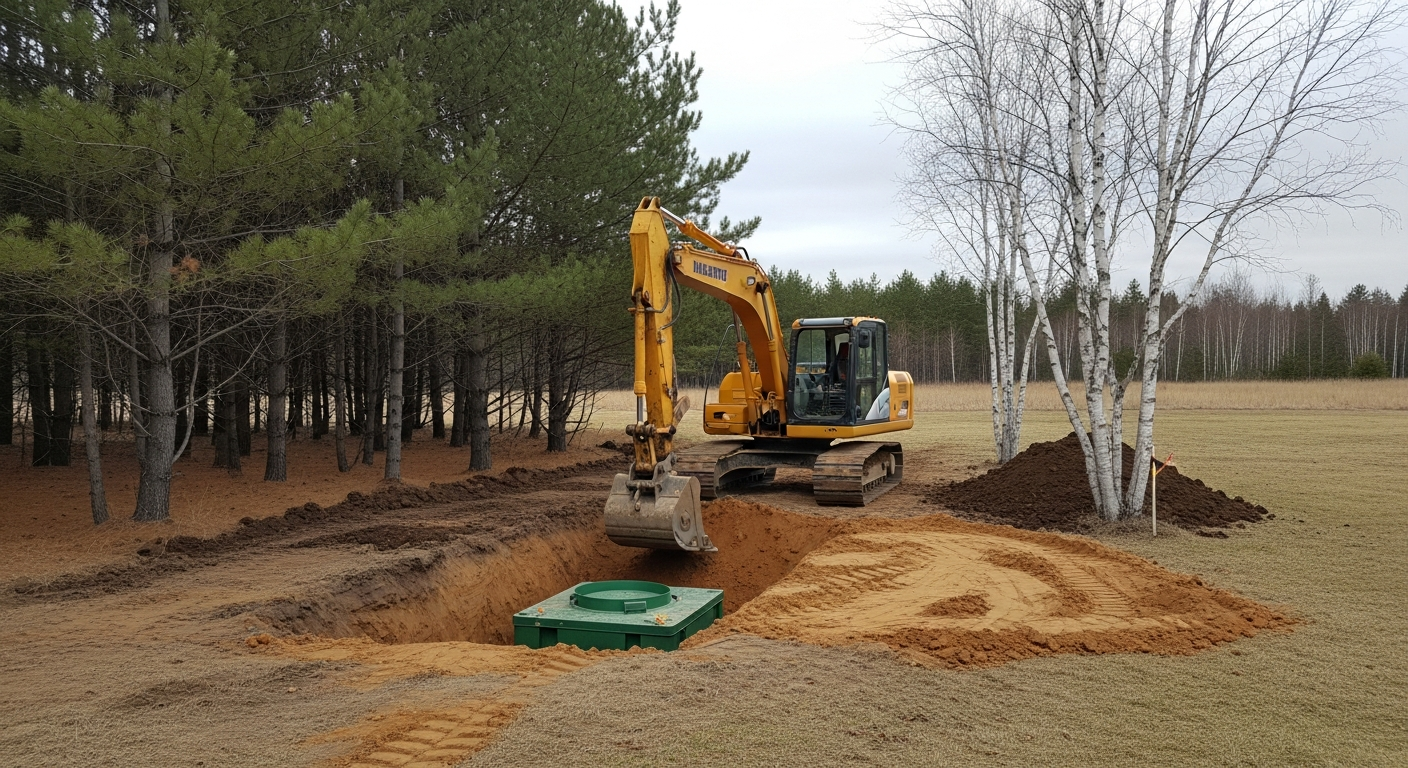
Whether you’re building a new home, replacing a failing system, or upgrading your cottage, septic system installation is one of the biggest investments you’ll make on your property. In the Midland-Penetanguishene area, local soil conditions, water table levels, and municipal regulations all play a role in how your system is designed and installed.
This guide walks you through every stage of the process so you know exactly what to expect.
Every septic installation in Ontario begins with a site evaluation. In Midland and Penetanguishene, this is particularly important because soil conditions vary dramatically — even across a single property.
A licensed designer will:
Properties in Penetanguishene near Georgian Bay or along the Penetanguishene harbour often have high water tables and rocky conditions that require specialized system designs. Inland Midland properties along areas like Hugel Avenue or William Street may have heavy clay that limits conventional leaching bed options. Learn more about our septic design services.
Based on the site evaluation, a septic system designer will recommend the appropriate system type for your property. Common systems installed in the Midland-Penetanguishene area include:
Your designer submits the system design to the Simcoe Muskoka District Health Unit for approval. This permit process typically takes 2–4 weeks, though it can be longer for complex sites. For waterfront properties, you may also want to read our guide on getting a permit for a septic system near water.
Before any septic components go into the ground, the site needs to be properly prepared. This includes:
In our area, site prep often involves dealing with tree roots from mature hardwoods, removing rock, or importing fill material to build up raised bed systems. This is where having a contractor who handles both grading and septic makes a real difference in coordination and cost. For more on why this step is critical, read our post on how grading and drainage protect your septic system.
The septic tank is typically a concrete or polyethylene tank sized based on your home’s number of bedrooms. For most homes in Midland and Penetanguishene:
The tank is set on a prepared granular base and levelled precisely. On properties with high groundwater — common near Midland Bay and the Wye Marsh area — the tank may need to be anchored to prevent flotation.
The leaching bed (also called a drain field or tile bed) is where the treated effluent is distributed into the soil. Construction involves:
For raised bed systems — increasingly common in Penetanguishene and along the Georgian Bay shoreline — imported sand fill is used to create the treatment area above the natural grade. These systems require careful engineering to function properly in our local conditions. See our guide on septic system options for cottages on rock or shoreline lots for more on specialized systems.
Once the tank and bed are installed, the contractor connects the home’s plumbing to the tank, installs any pumps or alarms, and completes the piping between components. The system is then inspected by the Simcoe Muskoka District Health Unit before it can be backfilled and put into service.
Final steps include:
A typical septic installation in Midland or Penetanguishene takes:
The best time to install is late spring through fall when the ground is workable. Winter installations are possible but more expensive due to frozen ground conditions.
Once your system is in the ground, you’ll want to think about how to landscape the area. Our guide on landscape design around your septic field covers plant choices, setback rules, and design tips specific to Midland and Penetanguishene. You should also be aware of common compliance issues — read 7 mistakes cottage owners make near water to stay on the right side of regulations.
Septic installation in Midland and Penetanguishene requires a contractor who understands the local soil, rock, and water table conditions. Look for:
At Forty Five Scapes, we handle septic installation as part of our complete site services for homeowners and cottage owners across Midland, Penetanguishene, Tiny Township, and Tay Township. From initial grading through final landscape restoration, we manage the entire process so your property is left looking its best.
Contact us to discuss your septic project and get a site-specific estimate.