Making Your Septic Field Area Look Great Without Damaging the System
For many homeowners in Midland and Penetanguishene, the septic leaching bed takes up a significant portion of the yard. It’s tempting to treat it like any other part of the landscape — but planting the wrong things or building over it can lead to costly system damage.
The good news is that with the right design approach, your septic field area can be an attractive, functional part of your landscape. Here’s how to do it right in our local conditions.
What You Can and Can’t Do Over a Septic Field
What’s Allowed
- Grass (the standard and safest cover for any leaching bed)
- Shallow-rooted perennials and groundcovers
- Wildflower meadow plantings
- Low ornamental grasses
What to Avoid
- Trees and large shrubs: Roots from species like willow, silver maple, and poplar will find and penetrate distribution pipes. Even species considered “safe” should be planted well outside the bed perimeter.
- Vegetable gardens: Ontario’s Building Code prohibits growing edible plants over a septic bed due to potential contamination.
- Structures: No decks, patios, sheds, pools, or driveways over the bed area. These compact the soil and block the evapotranspiration that the system relies on.
- Heavy equipment or vehicles: Driving over the bed — even occasionally — compresses the soil and can crush distribution pipes.
- Plastic sheeting or landscape fabric: These block air and moisture exchange needed for the treatment process.
Plant Recommendations for Midland and Penetanguishene
When choosing plants for around and over the septic area, focus on species that thrive in our Zone 5b climate with shallow root systems. Here are proven options that work well in Midland-Penetanguishene conditions. For help with plant selection and installation, explore our garden and planting services.
Over the Leaching Bed
- Kentucky Bluegrass or Fescue blend: The safest and most practical cover. Choose a blend suited to the sun exposure of your bed area. See our guide on the best time to lay sod in Southern Ontario for timing tips.
- Creeping Thyme (Thymus serpyllum): Low-growing, drought-tolerant, and fragrant. Works well on raised bed systems where the surface may be drier.
- Wild Strawberry (Fragaria virginiana): A native groundcover with shallow roots that tolerates the variable moisture conditions over a bed. Note: while technically edible, Health Unit guidelines advise against consuming anything grown over a bed.
- Clover: White clover is an excellent low-maintenance option that fixes nitrogen and stays low. Increasingly popular on properties in Tiny Township and rural Penetanguishene.
Around the Bed (3+ Metres From the Edge)
Once you’re a safe distance from the bed perimeter, you have more options:
- Serviceberry (Amelanchier): A native small tree that thrives in our area. Beautiful spring flowers, fall colour, and berries for wildlife. Keep at least 3 metres from the bed edge. Learn more about tree planting services.
- Ninebark (Physocarpus opulifolius): A hardy native shrub with attractive foliage. Works well as a screen to visually separate the septic area from the rest of the yard.
- Daylilies (Hemerocallis): Virtually indestructible in our climate, with shallow fibrous roots. Plant in beds bordering the septic area for summer colour.
- Black-eyed Susan (Rudbeckia): A native perennial that handles the full sun most septic areas receive and looks natural in the Midland-Penetanguishene landscape.
- Ornamental grasses (Karl Foerster, Switchgrass): Add height and movement. Plant along the edges of the septic area to create visual interest without risking root intrusion.
Design Strategies for Septic Areas
The Meadow Approach
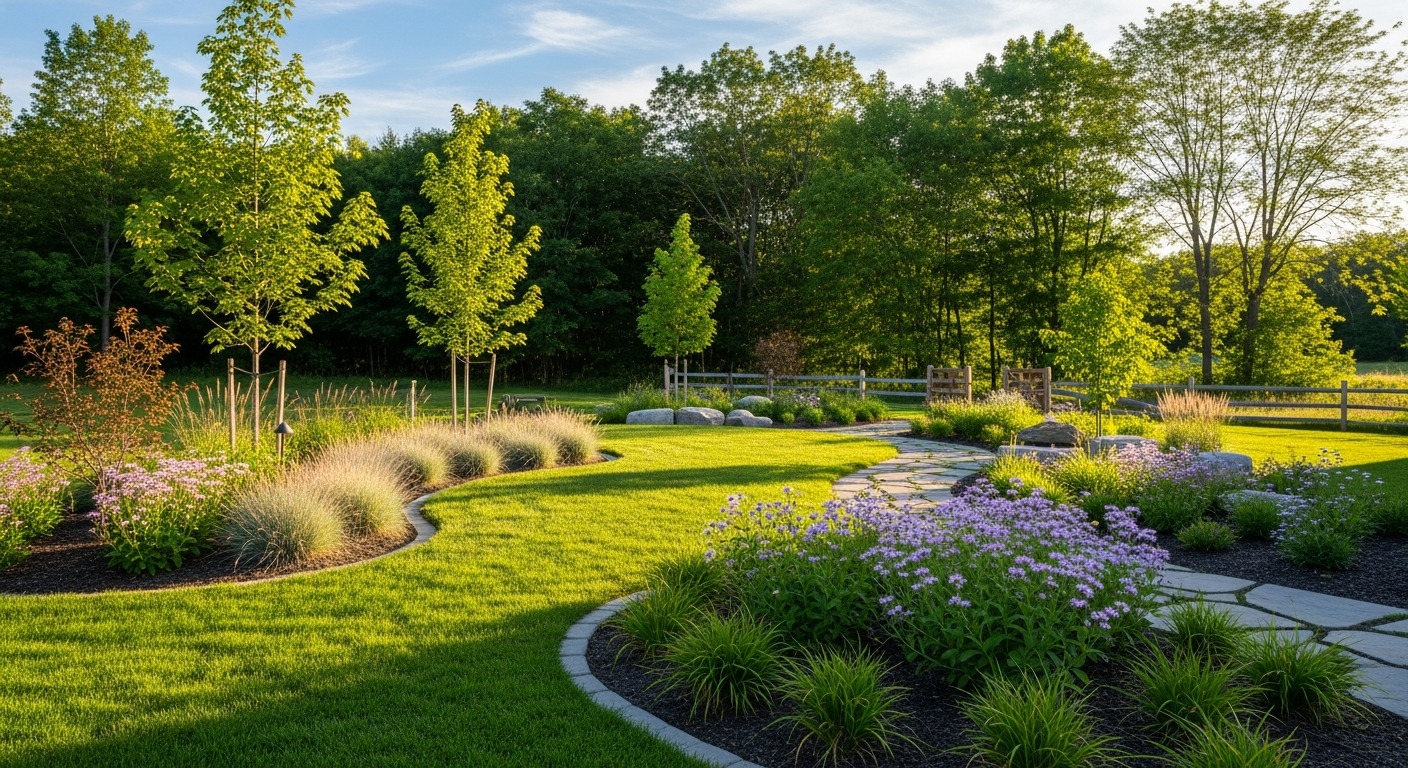
Instead of fighting against the open, sunny character of a septic field, lean into it. A naturalized meadow planting of native grasses and wildflowers over and around the bed creates a low-maintenance, environmentally friendly landscape that actually benefits the system by promoting evapotranspiration.
This approach works particularly well on larger rural properties in Tay Township and the outskirts of Penetanguishene where a manicured lawn over the bed would look out of place with the surrounding landscape. For more on sustainable approaches, read our guide on greywater for landscaping and sustainable water retention.
Define With Borders, Not Weight
Use lightweight border plantings — perennial beds, low ornamental grasses, or a simple natural stone edge — to define the septic area without placing any weight on the bed itself. A curved perennial border around the bed perimeter creates a polished look and directs foot traffic away from the sensitive area.
Screen With Strategic Planting
If your septic bed or raised system is visible from your main outdoor living areas, plant a screening hedge or tall perennial border along one edge (at least 3 metres from the bed). Species like Ninebark, Dogwood (Cornus), or tall grasses create a natural screen without threatening the system with deep roots.
Integrate Pathways
A stepping stone or stone walkway around the perimeter of the bed gives you access for maintenance and inspections while keeping foot traffic off the bed surface. Use loose-laid materials (not mortared) so the path can be easily adjusted if the system ever needs service.
Common Mistakes We See in Midland and Penetanguishene
- Planting cedars along the bed edge: White cedar is a go-to privacy plant in our area, but their roots spread aggressively and will infiltrate distribution pipes. Keep cedars at least 5 metres from the bed.
- Building raised garden beds over the septic area: Adding soil weight and growing vegetables over a leaching bed is a double violation — it compresses the system and creates a health risk.
- Paving the driveway over the bed: On smaller lots in Midland and Penetanguishene, it’s tempting to maximize parking by paving over part of the bed. This will destroy the system.
- Ignoring the tank access: When landscaping, always maintain clear access to septic tank lids for pumping. Mark their location and design plantings that can be moved for service every 3–5 years.
For more on what not to do, see our post on 7 mistakes cottage owners make near water and our guide to waterfront septic systems in Ontario.
Drainage Matters Too
Before you landscape around your septic field, make sure the grading is correct first. Poor drainage is the number one threat to a septic system’s lifespan. Read our detailed guide on how grading and drainage protect your septic system to understand what to address before planting.
Working With a Landscape Designer Who Understands Septic
The key to a great landscape on a property with a septic system is having a designer who understands both the aesthetic goals and the engineering constraints. At Forty Five Scapes, we design and build landscapes around septic systems throughout Midland, Penetanguishene, Tiny Township, and Tay Township every season.
We know where your bed is, what it needs to function, and how to create a landscape that enhances your property without putting your septic investment at risk. Explore our cottage landscape design and backyard landscape design services to see how we approach properties with septic systems.
Ready to make your entire property look its best — septic field included? Contact us for a landscape design consultation.