March 3, 2026
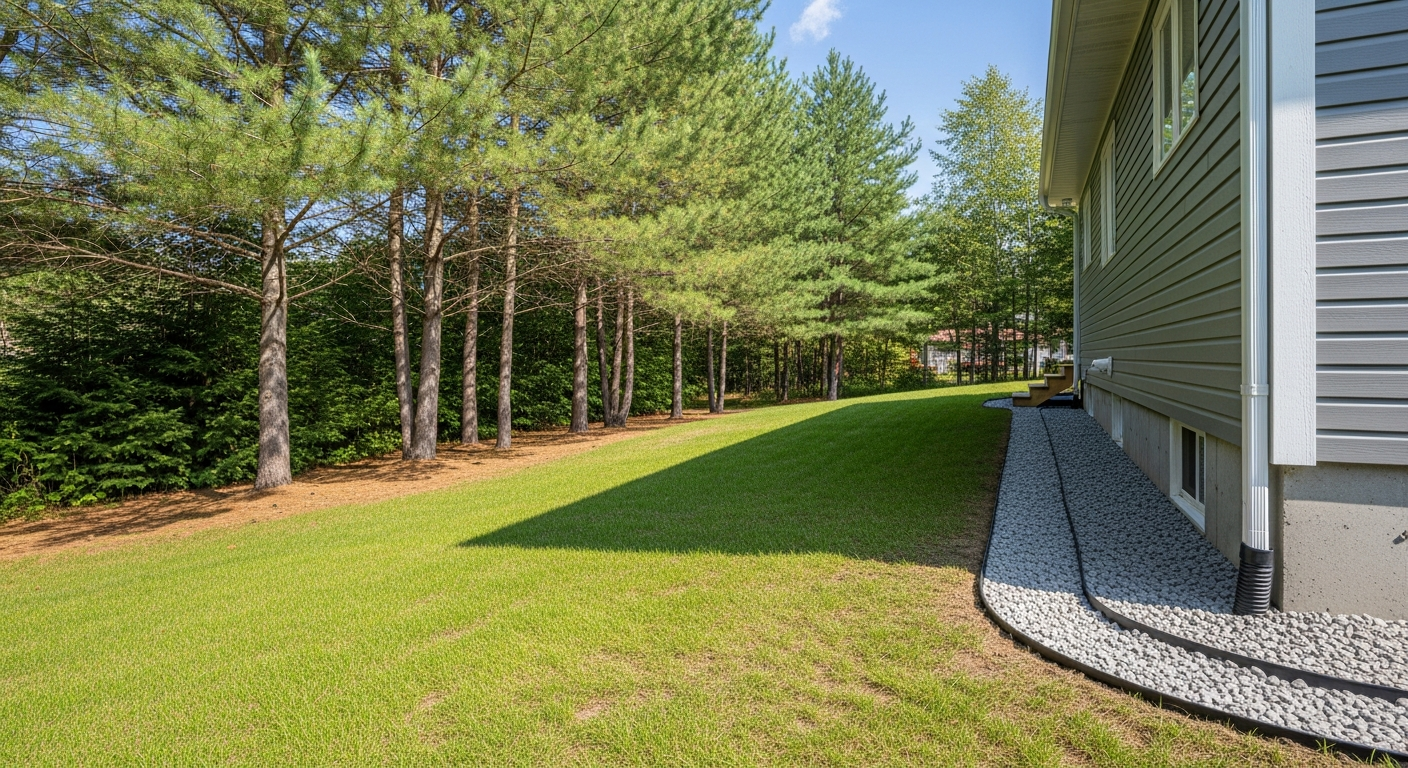
A septic system is a significant investment for any homeowner in Midland or Penetanguishene. But even a perfectly designed and installed system can fail prematurely if the surrounding grading and drainage aren’t working in its favour.
Surface water infiltration is one of the leading causes of septic system overload and failure in Simcoe County. When rainwater, snowmelt, or runoff from neighbouring properties flows toward your leaching bed instead of away from it, the system becomes saturated and can’t do its job.
In the Midland-Penetanguishene area, we see the same grading-related septic problems repeatedly:
Your septic system’s leaching bed relies on unsaturated soil to treat and absorb effluent. When external water sources — surface runoff, roof downspouts, or a high water table — keep the soil around the bed constantly wet, the treatment process breaks down.
In Midland and Penetanguishene, several local factors compound this problem:
The most effective protection is ensuring the ground slopes away from your leaching bed in all directions. A minimum 2% grade (about a 2-centimetre drop per metre) should direct water toward appropriate drainage areas — not toward your neighbour’s property.
For properties in Midland and Penetanguishene, this often means regrading the area surrounding the bed after installation settling has occurred. Many systems installed 10–20 years ago have experienced enough settling and erosion to compromise the original grades. Learn more about the full process in our site grading 101 guide.
On properties where neighbouring land or natural slopes direct water toward the septic area, constructed swales (shallow channels) and berms (raised earth barriers) can intercept and redirect surface water. These are particularly effective on rural properties in Tay Township and along the outskirts of Penetanguishene where lot sizes allow for proper water management.
A curtain drain (a type of French drain installed upslope of the septic bed) intercepts groundwater before it reaches the leaching area. This is a common solution on properties with high water tables, especially near the waterfront areas of Midland and Penetanguishene.
The drain consists of a perforated pipe wrapped in filter fabric, set in a trench filled with clear stone. Water collected by the drain is directed to an appropriate outlet — typically a ditch, dry well, or daylight point downslope of the septic system.
For properties with significant surface water issues, catch basin installation can collect and redirect water before it reaches the septic area. This is particularly effective for managing roof runoff and driveway drainage on smaller urban lots in Midland and Penetanguishene. Read more in our post on catch basin installation.
One of the simplest — and most overlooked — fixes is ensuring roof downspouts and sump pump discharge lines direct water away from the septic area. We frequently see homes in Midland where downspouts dump directly onto or near the leaching bed, adding thousands of litres of water per rain event.
Extending downspouts at least 3 metres past the septic bed area and grading the discharge point to flow away from the system can make a significant difference.
Homeowners in Midland and Penetanguishene should watch for:
If you notice any of these signs, addressing the grading and drainage issue early can prevent a full system failure that could cost $20,000–40,000 to replace. If your system is already showing signs of trouble, explore our septic system repair services.
To understand the full cost picture of addressing grading issues, read our breakdown of lot grading costs in Midland and Penetanguishene.
The best time to address grading around your septic system is before problems start. If you’re planning any landscape work on your property, it’s the perfect opportunity to assess and correct the grading around your septic area at the same time.
Once grading is corrected, you’ll want to know what to plant near the bed. Our guide on landscape design around your septic field covers safe plant choices, setback rules, and design ideas for our area.
At Forty Five Scapes, we evaluate septic area grading as part of every landscape project we take on in Midland, Penetanguishene, Tiny Township, and Tay Township. If your property needs drainage corrections to protect your septic investment, we can integrate those solutions into your landscape plan.
Contact us for a property assessment and learn how proper grading and drainage can extend the life of your septic system.