Landscape a new Muskoka cottage from the ground up: confirm the site plan and Ontario Building Code septic setbacks, grade so water runs away from the building, plan drainage across the rock, protect existing trees and the shoreline, then add native planting, use zones and durable hardscape. Line up MNRF, DFO and municipal approvals early, and plan over the winter for a spring start.
Key takeaways
To landscape a new Muskoka cottage, work from the ground up in this order: confirm the site plan and septic setbacks, set the grade so water runs away from the building, plan drainage across the rock, protect the trees and shoreline you already have, then add planting, use zones and hardscape. Permits come into almost every step on a waterfront lot, so they belong at the start of the plan, not the end.
Landscaping a new build is about managing water, protecting the septic system and the shoreline, and making the property easy to use and maintain. Here is how Forty Five Scapes approaches a new cottage landscape, step by step.
1. Start with the Site Plan
Before you think about plants or patios, pull out your site plan.
- Review property lines, easements, and setbacks
- Map out septic systems, driveways, and utility lines
- Note elevation changes and soil conditions
Tip: If you're still working with your builder, loop in your landscaper early. It saves time and money in the long run.
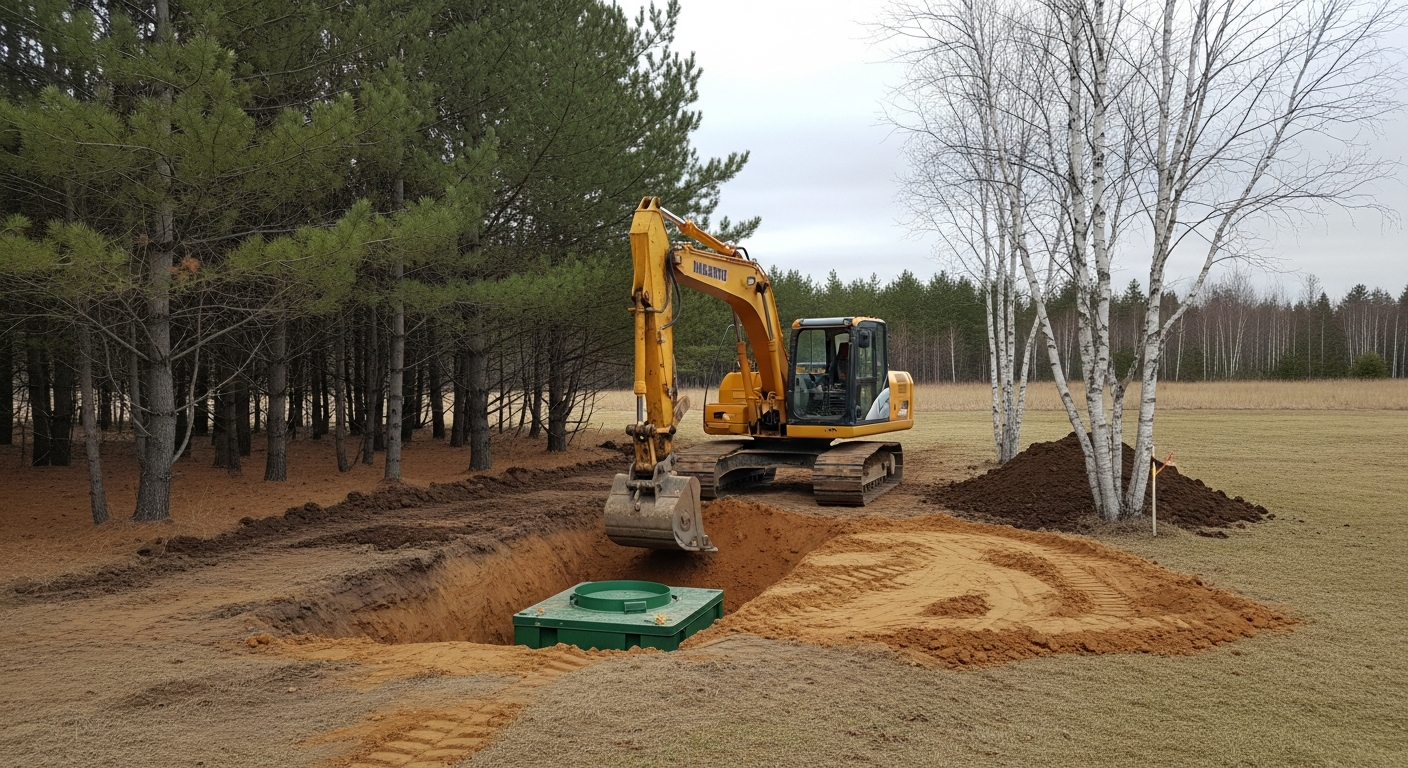
The septic system sets the shape of the rest of the yard. Under the Ontario Building Code, a Class 4 septic tank must sit at least 1.5 m from a structure, 15 m from a well or any lake, river or stream, and 3 m from the property line. The leaching bed's distribution piping needs 5 m from any structure (including decks, sheds and saunas), 15 m from a lake or stream, 15 m from a well with a watertight casing at least 6 m deep and 30 m from any other well, and 3 m from the property line. Those bed distances grow by twice the height the bed is raised above the original grade, which matters on rocky lots where raised beds are common.
Field drawing 06 · Septic systems
Septic setbacks set the shape of the whole yard
Ontario Building Code minimum clearances for a Class 4 system. Raised beds and some municipalities need more.
Swipe to see the full drawing →
- Septic tank. At least 1.5 m from a structure, 15 m from a well or any lake, river, pond or stream, and 3 m from the property line.
- Leaching bed. Distribution pipe at least 5 m from a structure. That includes decks, sheds and pool houses.
- Wells. 15 m from a well with a watertight casing at least 6 m deep; 30 m from any other well.
- Water. 15 m from any lake, river, pond, stream, reservoir or spring.
- Property line. 3 m. Bed clearances grow by twice the height the bed is raised above original grade.
Patios, decks, driveways and trees all have to fit around those clearances, and nothing heavy should drive over the bed. Our guide to landscaping around a septic field covers what can and cannot go on top of it. Confirm the exact requirements with the agency that issued your septic permit.
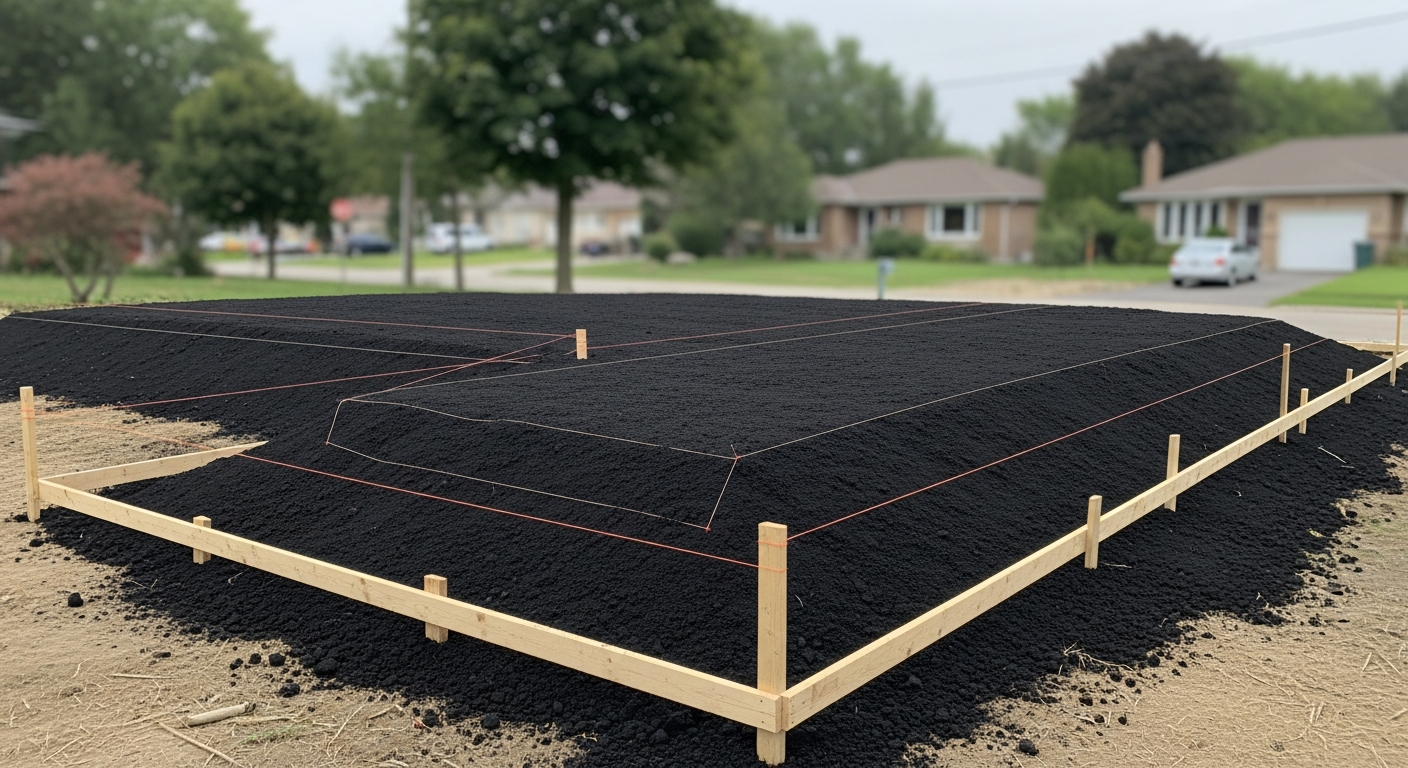
2. Grading Comes First
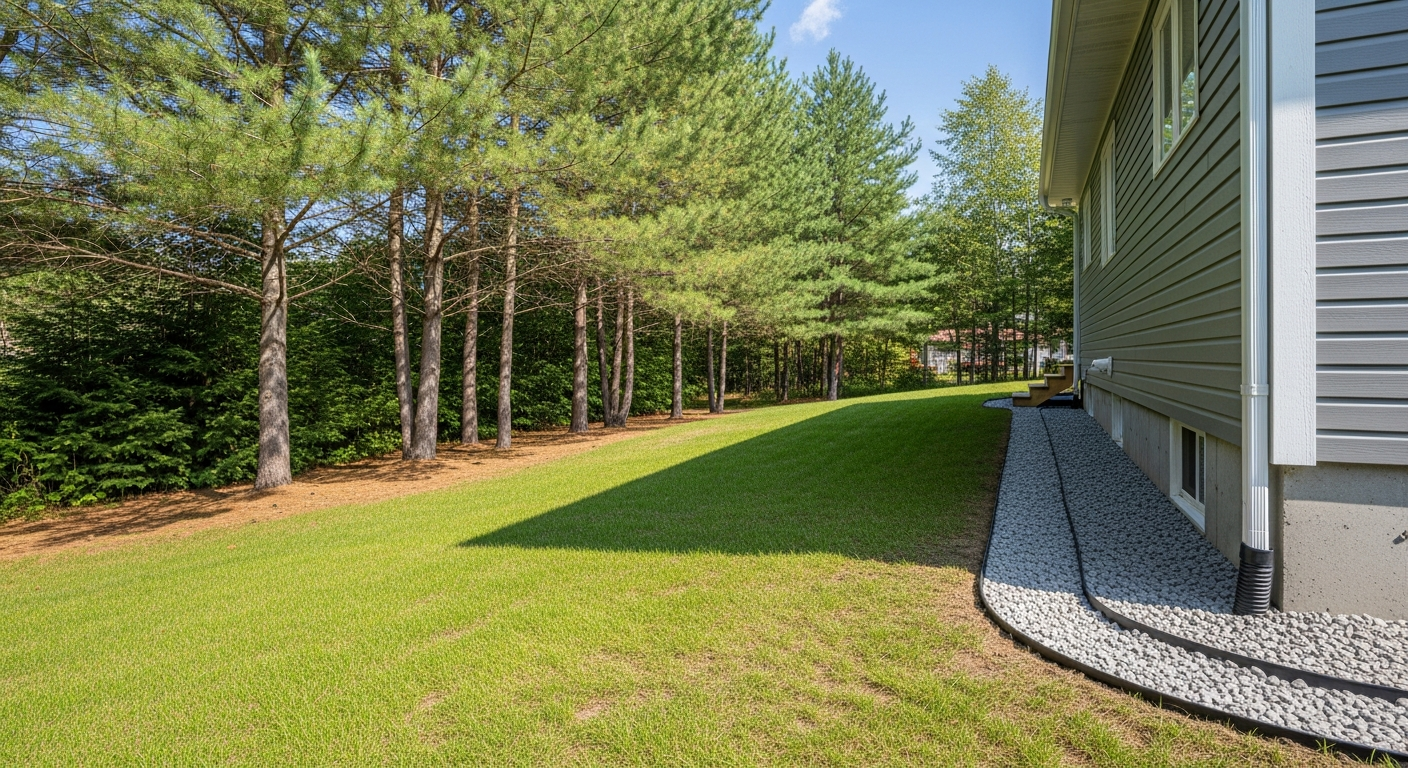
Poor grading can lead to water pooling near the foundation, erosion, and even basement flooding.
- Slope the ground away from the cottage, at least 2% for soft areas and 1% for hard surfaces, with 2–5% common close to the building
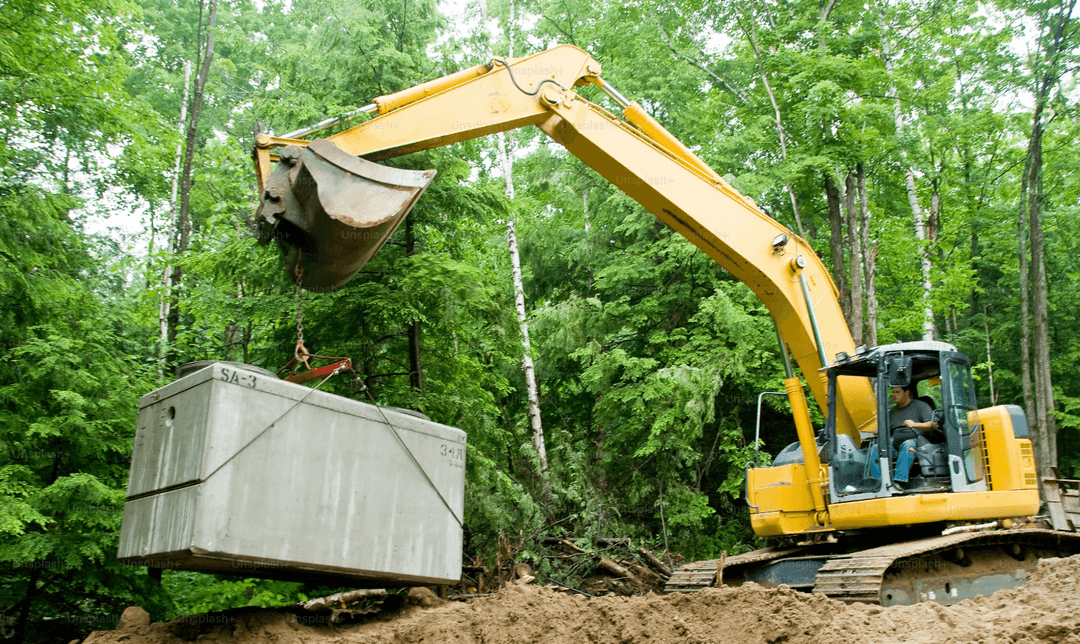
- Use fill strategically to manage steep slopes
- Tie in walkways, patios, and driveways with smooth transitions
Laser-level grading equipment can help create a precise foundation for everything that follows.
3. Plan for Drainage
Muskoka's terrain is rocky and unpredictable. Water doesn't always move where you want it to.
- French drains or swales can direct runoff around your cottage
- Consider dry creek beds for both function and style
- Permeable pavers reduce runoff on driveways and paths
If you're near water, keep runoff from discharging straight into the lake. Spread it through vegetated swales or soak-away areas, and check local rules before you outlet drains toward the shoreline.
4. Preserve Natural Features
Cottage owners often forget how valuable their existing trees, moss, and rock formations are.
- Mature trees offer instant shade and privacy
- Natural rock outcroppings add texture and reduce material costs
- Leave buffers near shorelines and wetlands
Disturb less. Work with what's there.
5. Protect the Shoreline
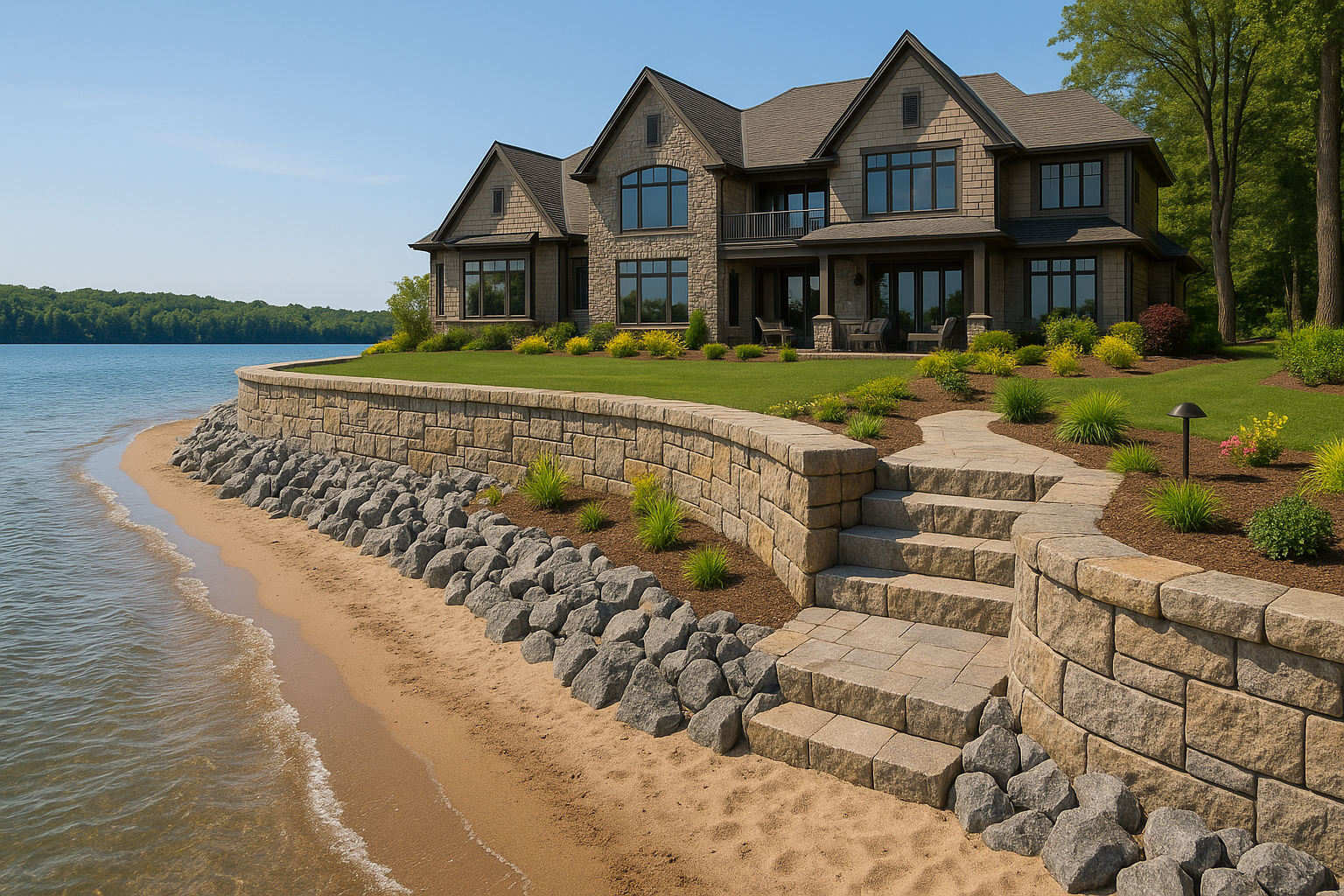
On a waterfront lot, the shoreline is the most sensitive part of the property and the most regulated. A lawn mowed to the water's edge does little to hold the bank. A strip of deep-rooted native shrubs, grasses and perennials protects the upper bank and filters runoff before it reaches the lake. Where waves or ice hit the lower bank, armour stone or rip-rap over filter fabric, keyed in at the toe, protects it from erosion.
Field drawing 15 · Shoreline
A shoreline that holds: buffer above, stone below
Planted roots protect the upper bank. Stone protects the toe where waves hit. Both usually need approvals on Georgian Bay.
Swipe to see the full drawing →
- Pull the lawn back. Turf roots are shallow and do little to hold a bank.
- Plant a native buffer. Deep-rooted native shrubs, grasses and perennials bind the upper bank and filter runoff.
- Stone where waves hit. Armour stone or rip-rap on the lower bank, sized for the exposure.
- Filter fabric under stone. Keeps waves from pulling soil out between stones.
- Keyed toe. The bottom row is set into a stone bedding so it can't be undermined.
- Permits first. MNRF work permits apply on Georgian Bay shorelines, DFO may review in-water work, and Tiny Township regulates work near the 178 m contour.
Shoreline stone work needs a site-specific design and, in most cases, approvals before anything moves. Work on shore lands can need a work permit from the Ministry of Natural Resources, in-water work may be reviewed by Fisheries and Oceans Canada, and municipal site alteration and tree by-laws often cover the shoreline area. Our guides to shoreline landscaping regulations and native shoreline plants go into detail.
6. Pick the Right Plants
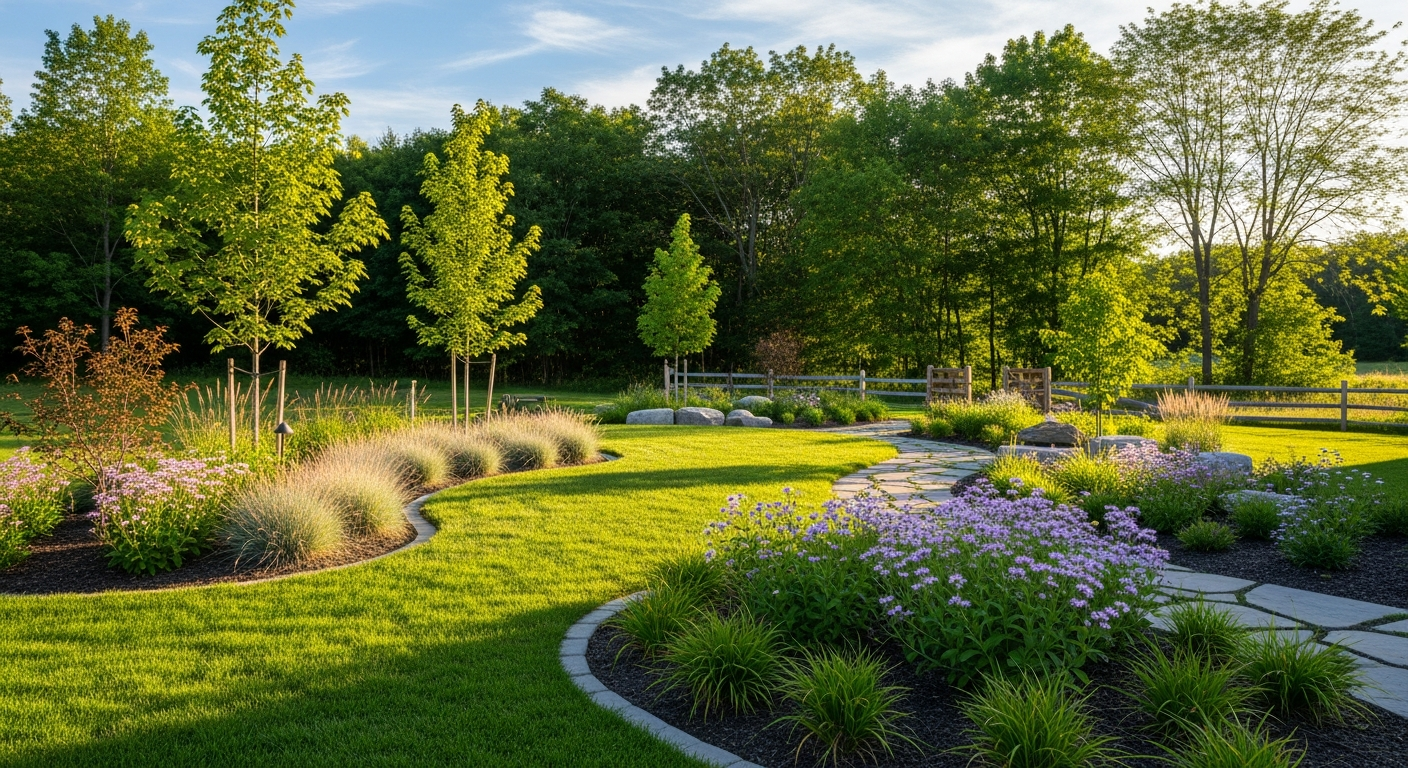
Muskoka sits on the Canadian Shield, with thin, acidic soil over granite in many places. Native plants are adapted to it and need far less watering and feeding once established. Good choices include white pine, red maple, serviceberry, lowbush blueberry, sweet gale near the water, ferns, sedges and bunchberry in shade. Bring in good soil only where you need it, such as around the cottage and in planting pockets between rock.
7. Create Zones for Use
Define how you want to use the property before pouring a single paver. Most cottages need a few clear zones: arrival and parking, an entrance path, an outdoor living area near the cottage, a route to the dock, a fire pit area set well back from structures and trees, and space for firewood, kayaks and storage. Linking them with simple paths stops foot traffic from wearing new trails through the moss and roots.
8. Hardscaping: Think Long-Term
Cottage terrain is tough. Invest in materials that last.
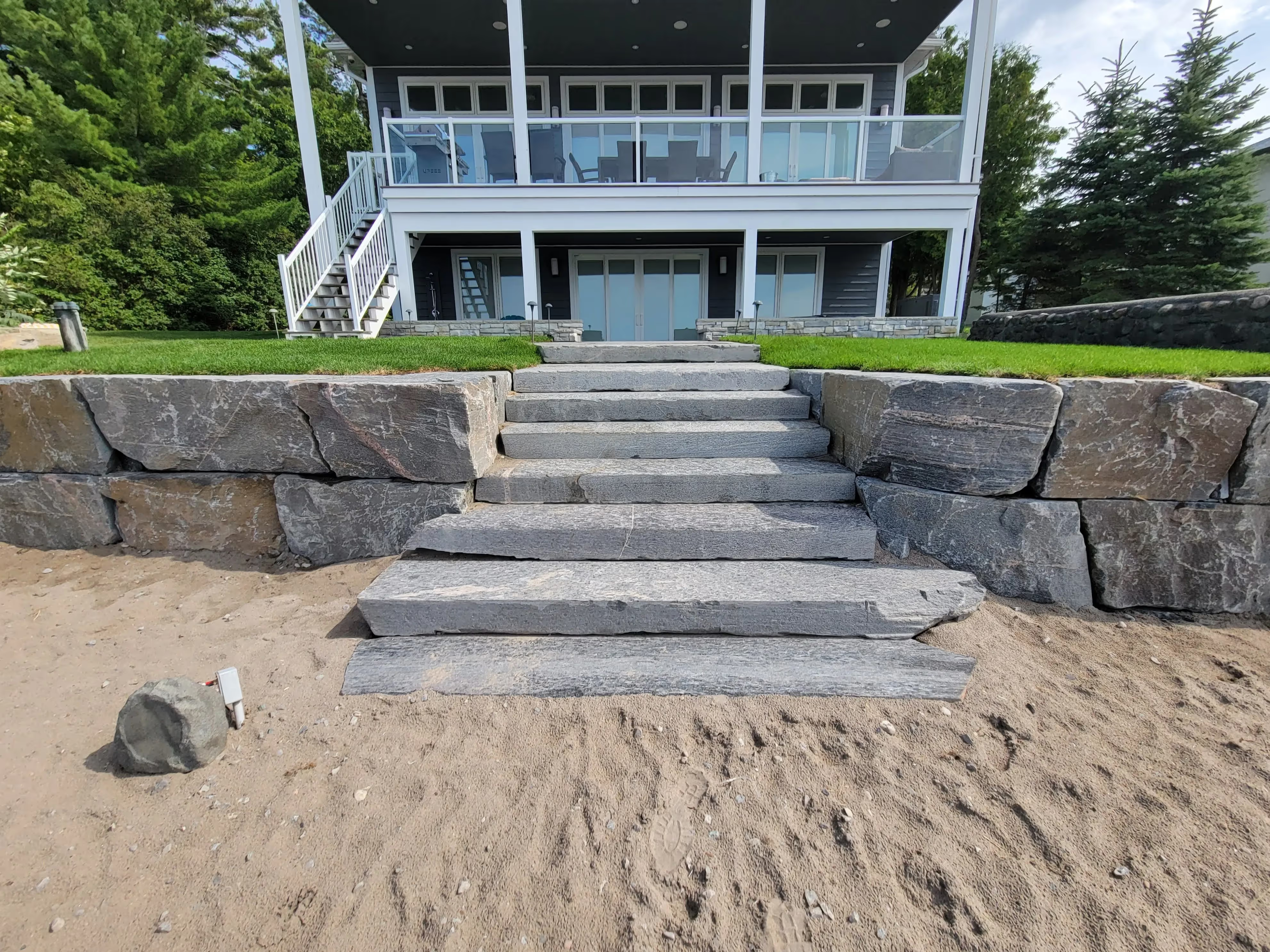
- Flagstone or granite withstands freeze/thaw cycles
- Composite decking resists rot
- Gabion walls work well on steep grades
9. Don't Forget Permits and Approvals
Waterfront and new-build lots usually need several approvals. Line them up early.
- Shoreline and in-water work can need an MNRF work permit and DFO review. Much of Muskoka is not covered by a conservation authority, so municipal by-laws and provincial and federal approvals do most of the regulating there
- Tree removal may require a permit, especially along the shoreline
- Retaining walls and drainage features may be regulated
Hire a professional who knows the local by-laws, and confirm requirements with your township before work starts.
10. Hire Local Experts
Forty Five Scapes designs and builds cottage landscapes across Muskoka and Georgian Bay, from grading and septic-aware layouts to stone, planting and shoreline work. Before you start, read the common mistakes to avoid around a new cottage.
Planning a 2027 Muskoka cottage landscape
If your cottage is being built or finished this year, use the winter to plan the 2027 landscape. Excavation and grading can only start once the ground has thawed and dried, usually late April or May, and Muskoka contractors book quickly for the short building season. Many cottage owners also want the heavy work done before the July long weekend, which makes those spring slots even tighter.
Over the winter, get a survey and the approved septic layout in hand, decide where the main use zones go, and agree on which trees and rock outcrops stay. Any shoreline, dock or in-water work needs approvals that can take weeks or longer, so apply early. Phasing helps on a new build: grading, drainage and erosion control first, then hardscape, then planting once the heavy machines have left.
- Gather the paperwork. Survey, site plan, septic permit drawings and any shoreline approvals.
- Mark what stays. Flag trees and rock you want protected before machines arrive.
- Plan erosion control. Silt fence and quick revegetation protect the lake during construction.
- Get dated, itemized quotes. Budget from 2027 prices, not last year's.
Frequently asked questions
When should I start the landscape design process?
As early as possible, ideally during site planning, before the septic system, driveway and final grade are set.
How far does a septic bed have to be from the lake?
Under the Ontario Building Code, the leaching bed's distribution piping must be at least 15 m from a lake, river or stream, and the septic tank at least 15 m as well. Raised beds need more distance, and some municipalities set larger setbacks, so check with the agency that issues septic permits for your property.
Do I need a permit for shoreline landscaping in Muskoka?
Often, yes. Work on shore lands can need a work permit from the Ministry of Natural Resources, in-water work may need Fisheries and Oceans Canada review, and municipal site alteration and tree by-laws often cover the shoreline area. Planting a native buffer usually needs no permit, but stone work, fill and tree removal near the water often do.
What plants grow best around a Muskoka cottage?
Native species adapted to thin, acidic Shield soils do best: white pine, red maple, serviceberry, lowbush blueberry, sweet gale, ferns and sedges. They need less water and fertilizer than lawn and ornamental plants.
Start planning your cottage landscape with Forty Five Scapes
Planning a project this season?
We’ll walk the site, scope it properly and give you a straight price.
Mark and Matt are amazing. Not only do they do high-quality work, but they are also collaborative every step of the way. They are also great at problem-solving for unforeseen issues, or if you are just stuck on what to do in a certain area. I highly recommend Forty-Five Scapes for your landscaping needs.
Frequently asked questions