Commercial landscape drainage combines grading that sheds water away from buildings, surface drains such as swales, catch basins and trench drains, subsurface French drains, and storage that slows storm runoff. Most failures come from poor grading, drains with no real fall or outlet, and catch basins that are never cleaned, so plan the design over winter and schedule inspections every spring.
Key takeaways
Commercial landscape drainage means moving rain and snowmelt off a property before it pools, freezes or soaks into the wrong places. On most sites that takes four things working together: grading that sheds water away from buildings, surface drains such as swales, catch basins and trench drains, subsurface drains such as French drains, and a way to hold back or slow large volumes during storms. At Forty Five Scapes, we design and build drainage systems for commercial properties in Midland, Penetanguishene, Collingwood, Wasaga Beach and Muskoka. This guide covers the parts of a working system, how to plan one, and how to keep it running through Georgian Bay winters.
The Importance of Effective Drainage in Commercial Landscapes
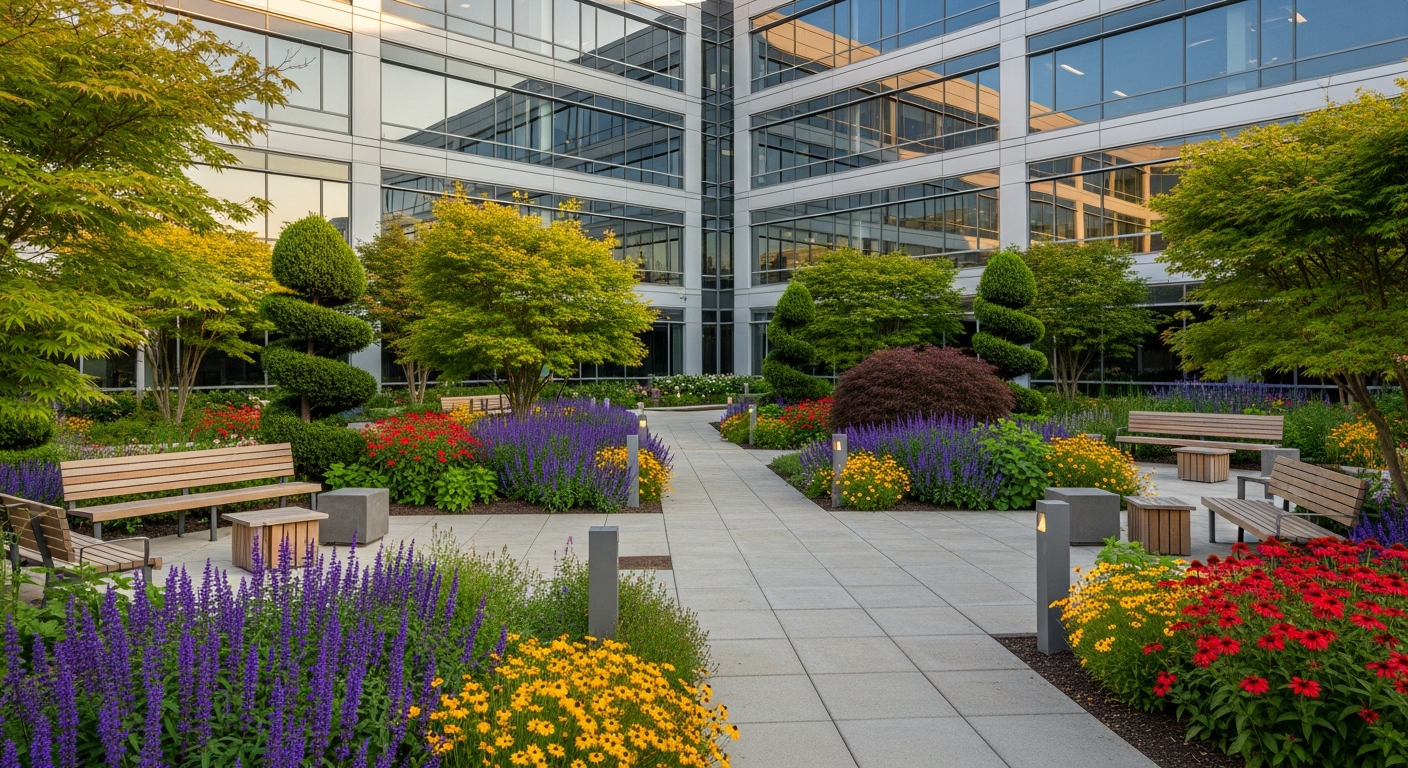
Commercial properties often feature large areas of hard surface, such as parking lots, walkways, patios and loading areas, next to lawns and planting beds. Hard surfaces shed almost all the water that lands on them, so the runoff has to go somewhere. When it goes to the wrong place, these problems follow:
- Waterlogging: Excess water saturates soil, causing plant roots to rot and turf to thin out.
- Erosion: Uncontrolled water flow washes away soil, destabilizes retaining walls and damages landscaping features.
- Structural Damage: Water held against a foundation leads to leaks and costly repairs.
- Safety Hazards: Standing water and the ice it turns into in winter increase the risk of slips and falls for employees, customers and visitors.
- Pavement damage: Water that sits under asphalt or interlock softens the base, and freeze-thaw cycles turn that into potholes and heaving.
Signs your commercial site has a drainage problem
Most drainage failures show up before they get expensive. Watch for puddles that are still there a day after rain, ice patches that form in the same spot every winter, silt fans on pavement below planting beds, soggy turf along the edge of a parking lot, catch basins with water standing in the grate, and staining or efflorescence at the base of building walls. Any of these means water is not reaching a drain, or the drain is not carrying it away.
Key Components of Commercial Landscape Drainage Systems
An effective drainage system combines several components that each handle part of the job. Here are the essential elements:
1. Surface Drainage Solutions
Surface drainage manages water flow across the landscape, directing it away from critical areas.
- Swales: Shallow, vegetated channels that capture runoff and carry it to a drainage point.
- Catch Basins: Grated structures installed at low points to collect water and send it into an underground pipe system.
- Trench and channel drains: Long, narrow grated drains set flush with pavement. They suit loading docks, garage entrances and the low edge of a parking area where a single catch basin cannot collect everything.
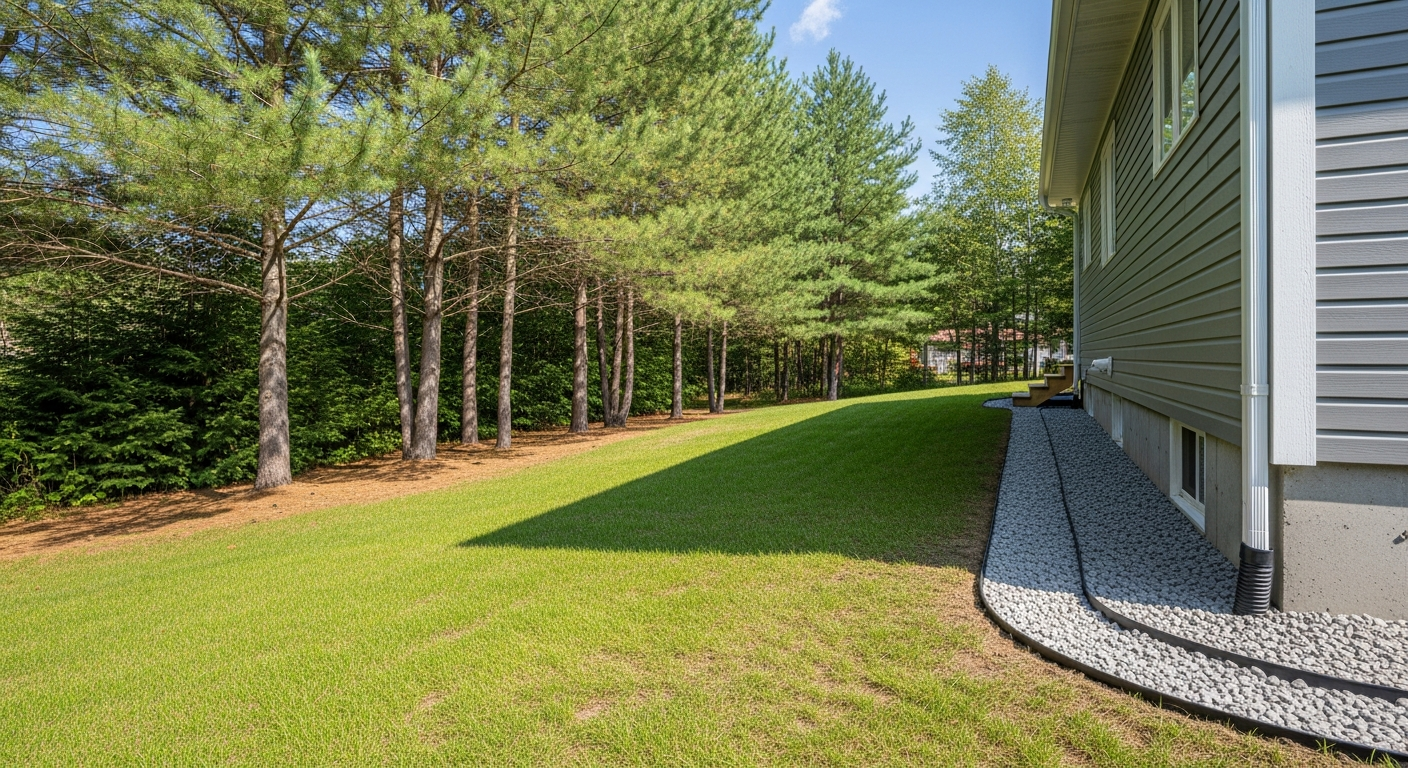
- Gutters and Downspouts: Installed on buildings to capture roof water and direct it away from foundations and landscaped areas.
2. Subsurface Drainage Systems
Subsurface drainage deals with water below the surface, preventing soil saturation and the frost damage that comes with it.
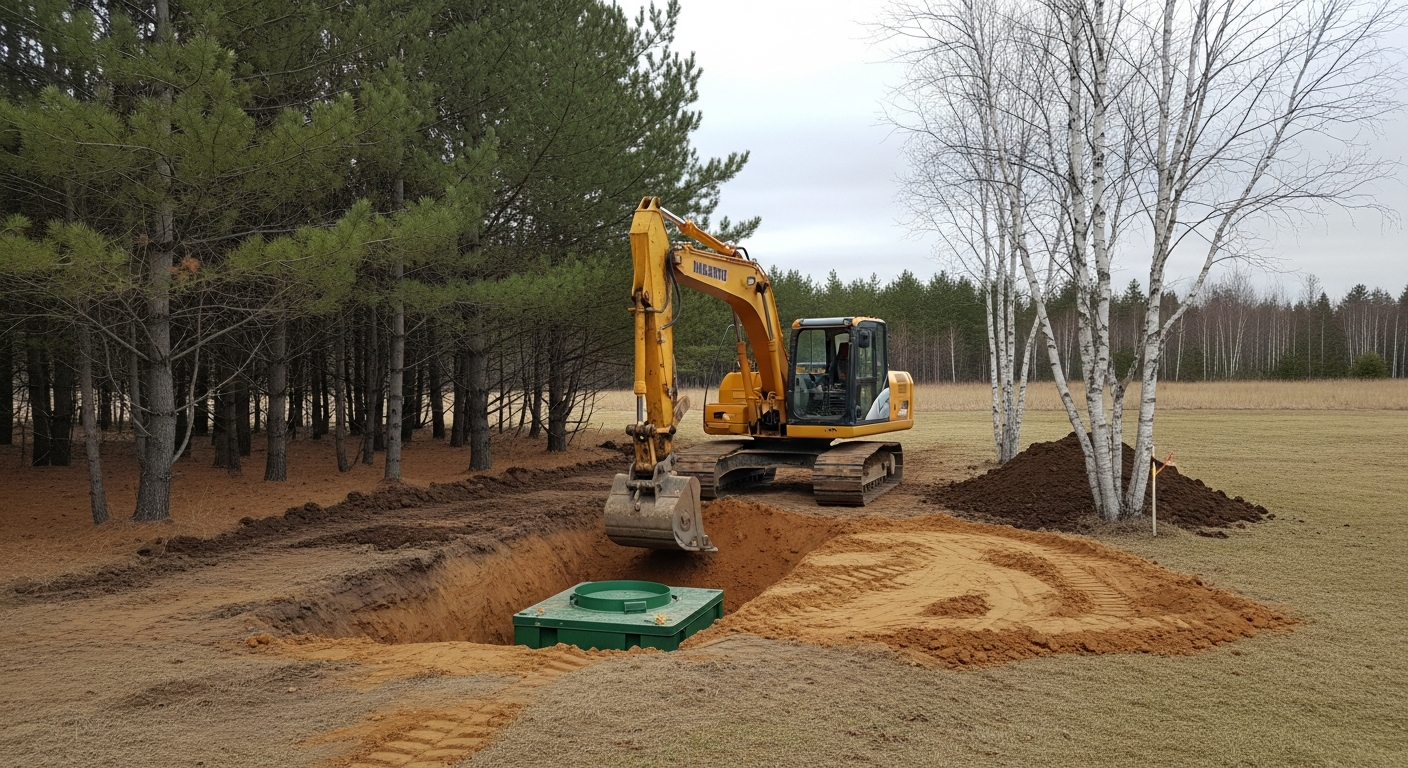
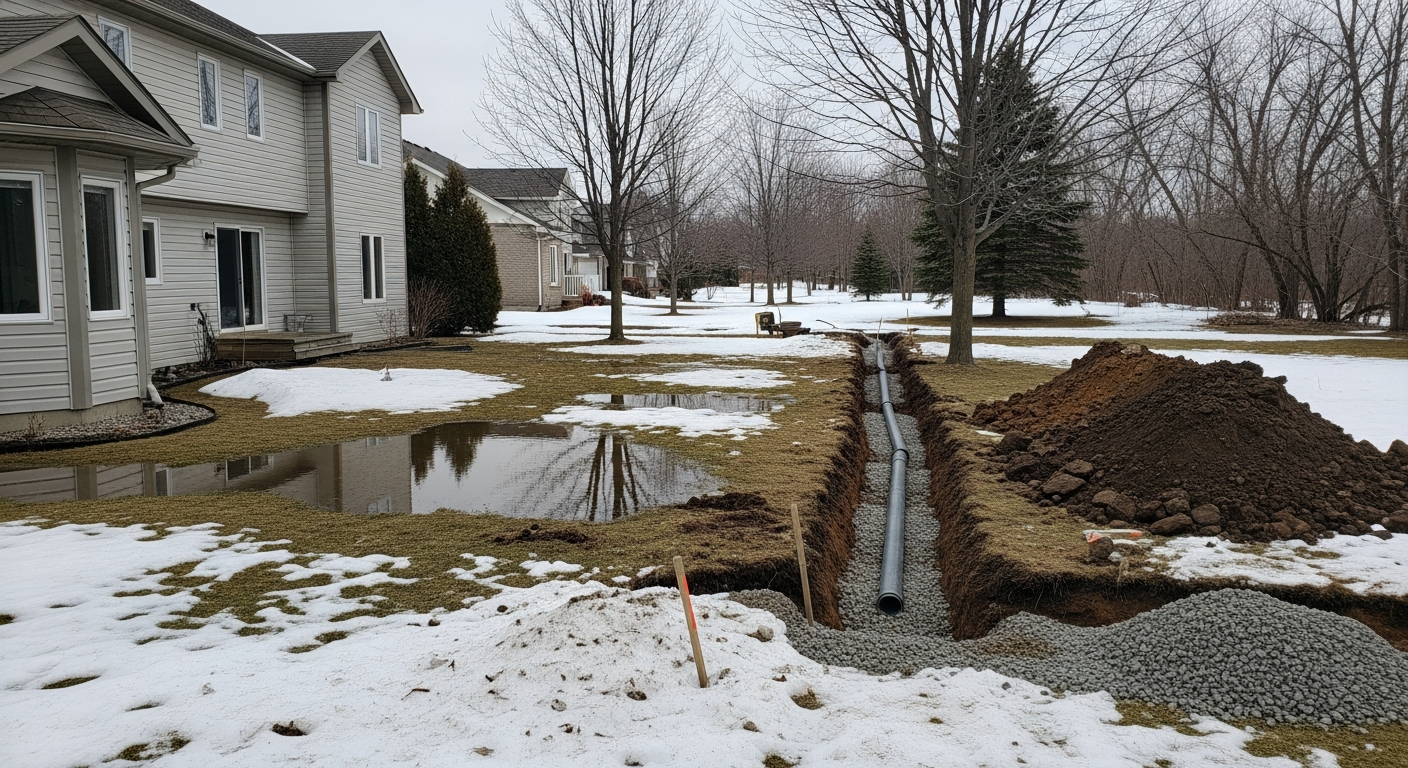
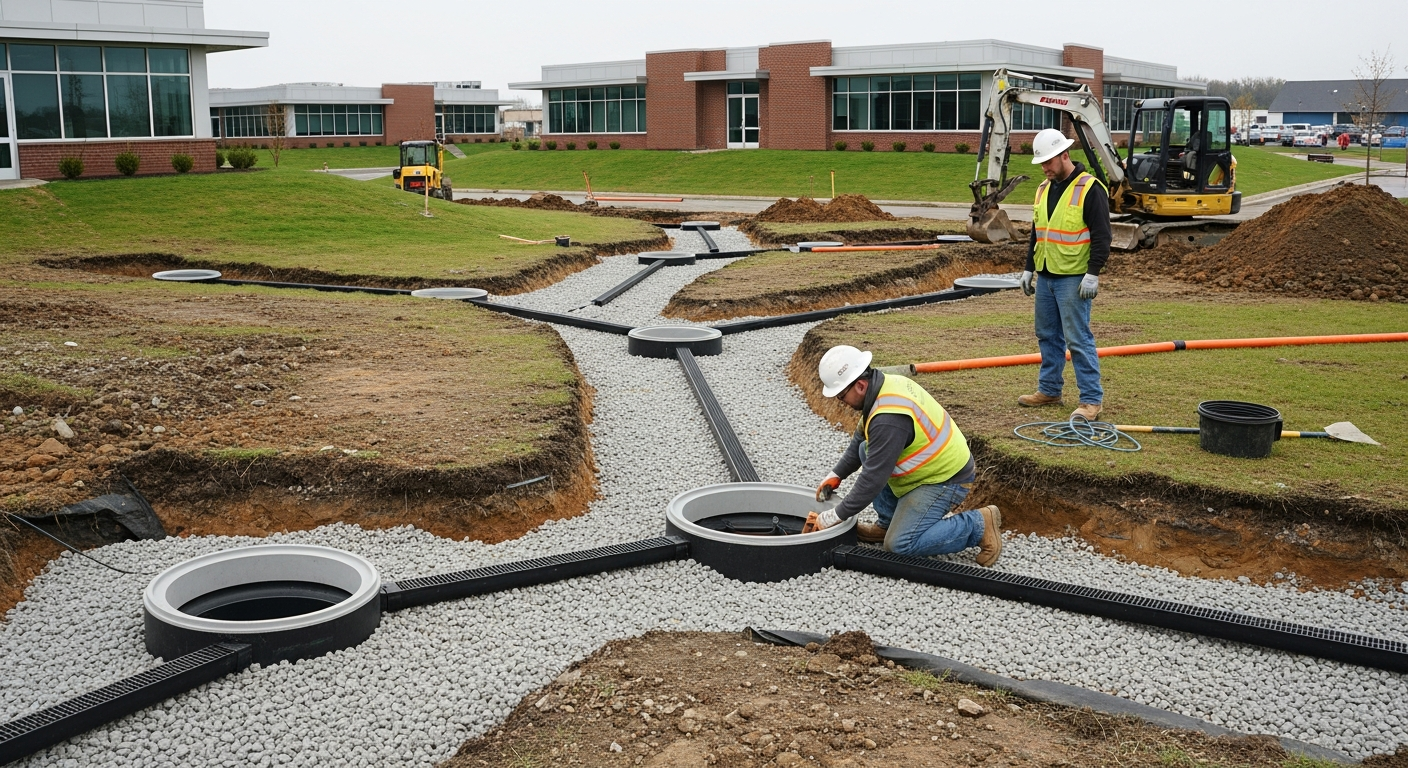
- French Drains: Trenches lined with filter fabric and filled with clear stone around a perforated pipe that collects groundwater and carries it away from vulnerable areas.
- Perforated Pipes: Placed underground to intercept and redirect water flow, reducing soil moisture levels.
- Drainage Tiles: Installed around building foundations to manage groundwater and prevent seepage.
The detail that decides whether a French drain works is fall. The pipe has to slope continuously, at least 1% in common practice, all the way to a real outlet: a daylight exit, a dry well or an approved storm connection. Washed clear stone with no fines keeps it from plugging, and wrapping the stone in non-woven fabric keeps silt out. A drain that runs flat or ends in the ground just collects water underground.
Field drawing 05 · Yard drainage
A French drain only works if it keeps falling
Wrap the stone, point the holes down and give the water a real exit. Depth matters less than continuous fall.
Swipe to see the full drawing →
- Non-woven filter fabric. Line the trench and wrap it over the stone so silt can't clog the drain.
- Perforated pipe, holes down. Bed it on a few centimetres of clear stone so water rises into the holes.
- Clear stone only. Washed stone with no fines. Crusher run with fines will plug.
- Cap with topsoil and sod. Or finish with decorative stone if the drain also catches surface water.
- Fall and outlet. At least 1% fall the whole way to a daylight outlet, dry well or approved storm connection. A drain with no exit is a buried bathtub.
On commercial sites the same detail runs along the edges of parking areas and behind retaining walls, and the pipe often ties into a catch basin instead of a daylight outlet.
3. Retention and Detention Systems
Retention and detention systems control the rate and volume of runoff, so a large paved site does not flood its neighbours or overload the municipal storm sewer.
- Retention Ponds: Ponds that keep a permanent pool of water, hold extra runoff during storms and release it slowly through a controlled outlet.
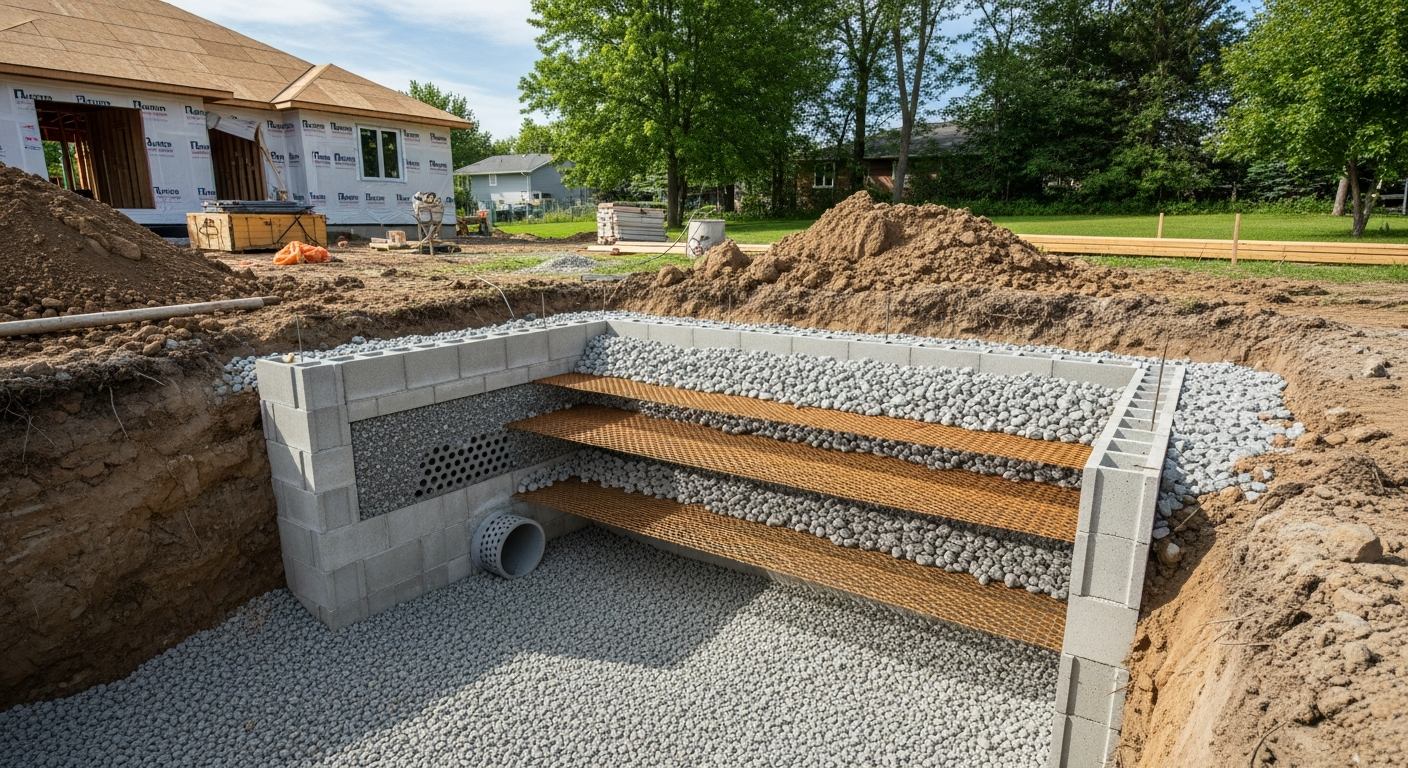
- Detention Basins: Dry storage areas, or underground chambers, that fill during heavy rain and drain out gradually to prevent flooding and erosion downstream.
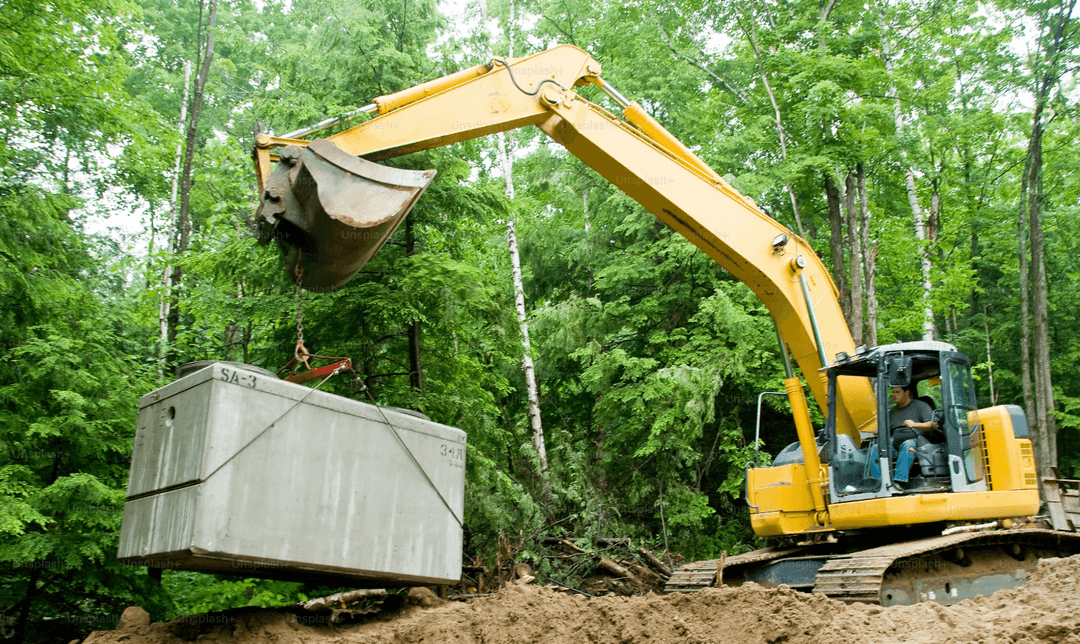
- Oil-grit separators: Underground units that trap sediment, oil and debris from parking lot runoff before it reaches the storm system. They are common on newer commercial sites and need regular inspection and vacuum cleaning.
4. Green Infrastructure Solutions
Green infrastructure, often called low impact development, uses soil and plants to soak up and clean runoff close to where it falls.
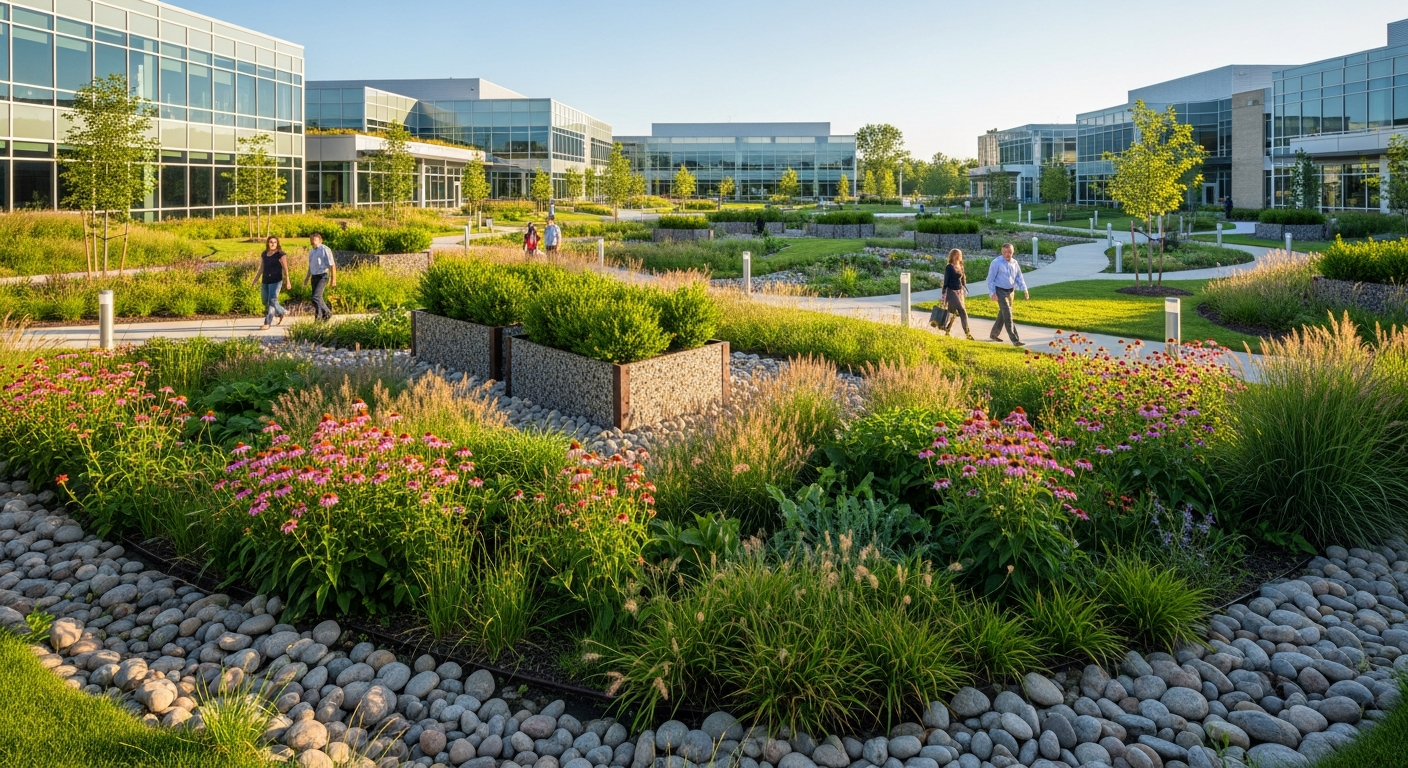
- Rain Gardens: Shallow, planted depressions that absorb and filter rainwater, reducing runoff and improving water quality.
- Bioretention Areas: Engineered planting beds with a designed soil mix, and often an underdrain, that manage stormwater from nearby pavement.
- Permeable Paving: Paving systems that let water pass through the joints into a stone reservoir below, reducing runoff and recharging groundwater.
Designing an Effective Commercial Drainage System
Designing a drainage system starts with understanding where water comes from on the site and where it can legally and safely go.
1. Site Assessment
Start with a thorough assessment of the property's topography, soil, existing drainage patterns and problem areas.
- Topography Analysis: Identify slopes, depressions and high points to map natural water flow paths.
- Soil Testing: Evaluate soil permeability. Sandy soils near the bay drain quickly, while clay and shallow bedrock hold water at the surface.
- Hydrological Study: Estimate rainfall and runoff volumes so pipes, basins and storage are sized for peak flows.
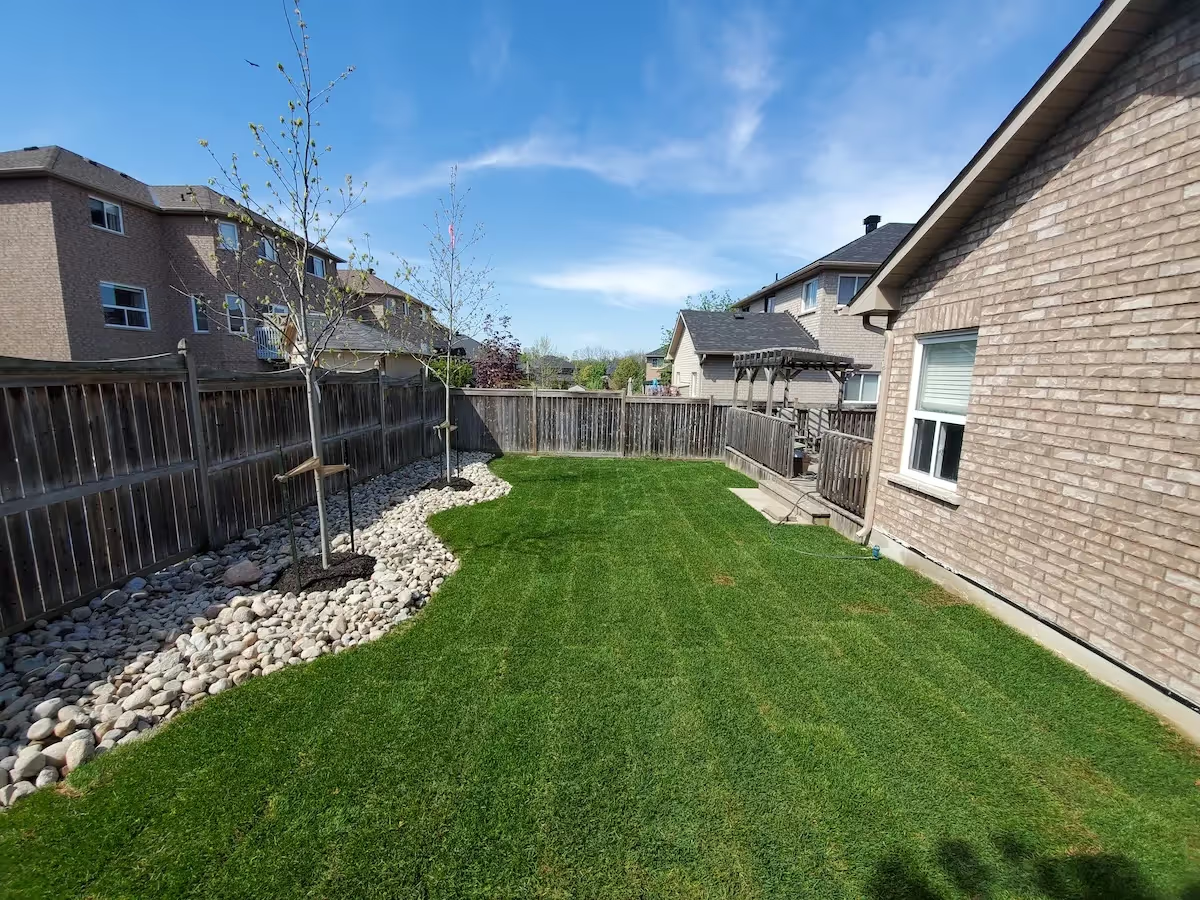
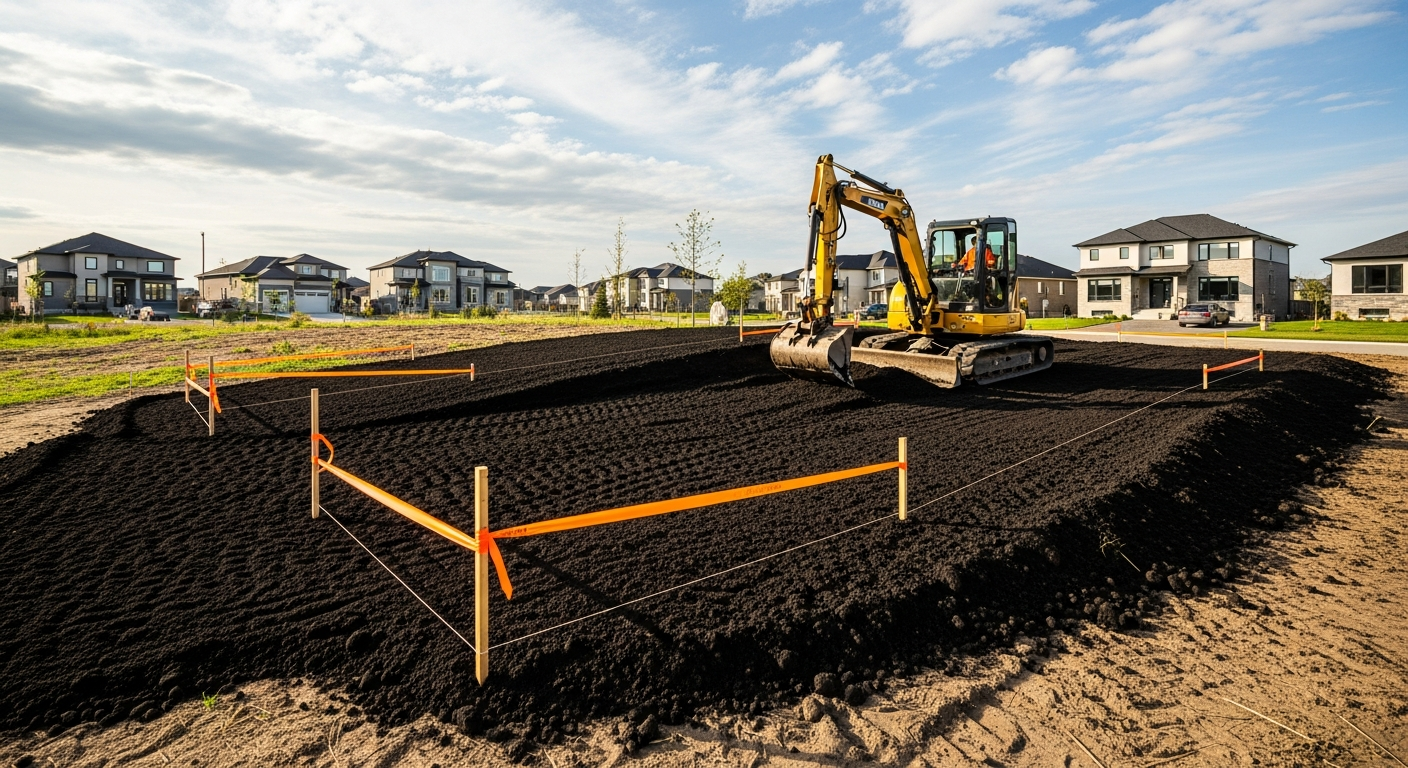
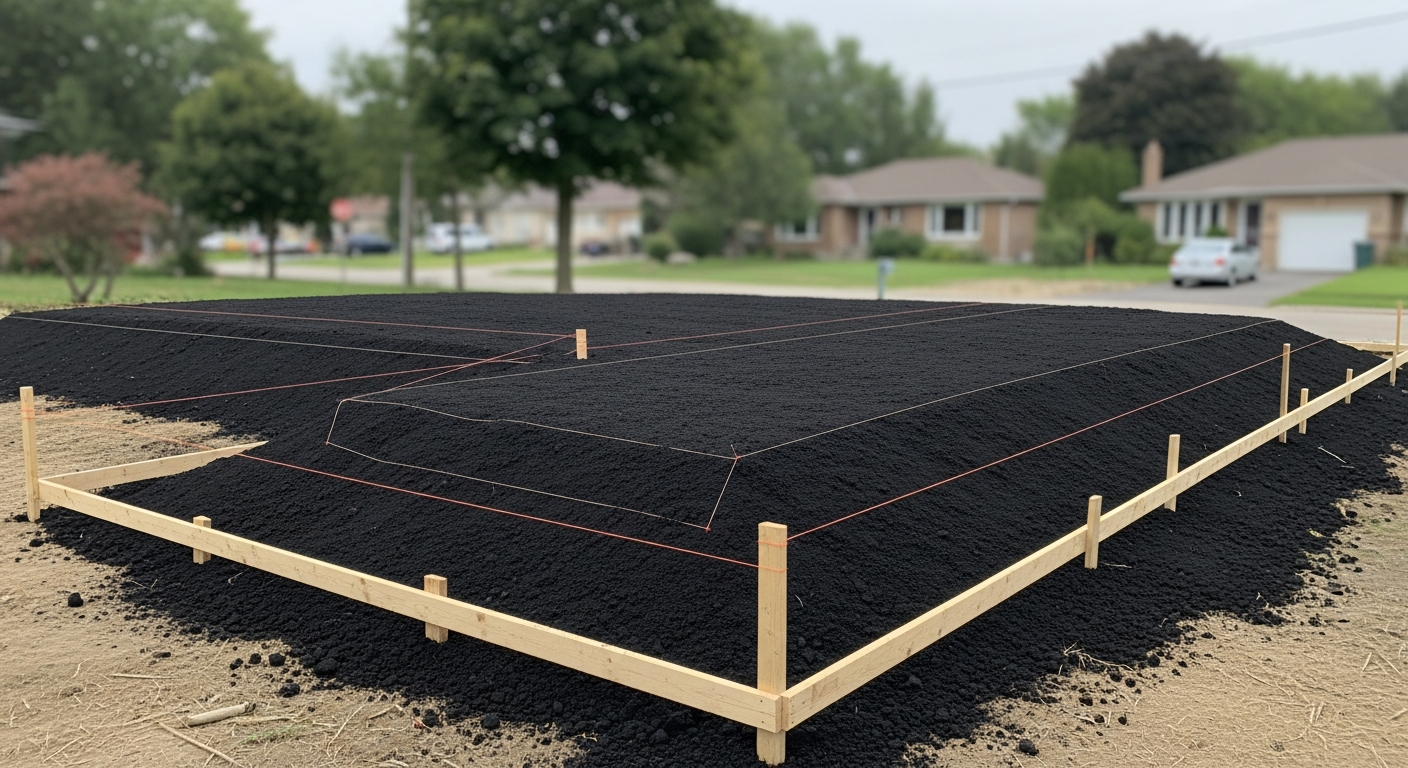
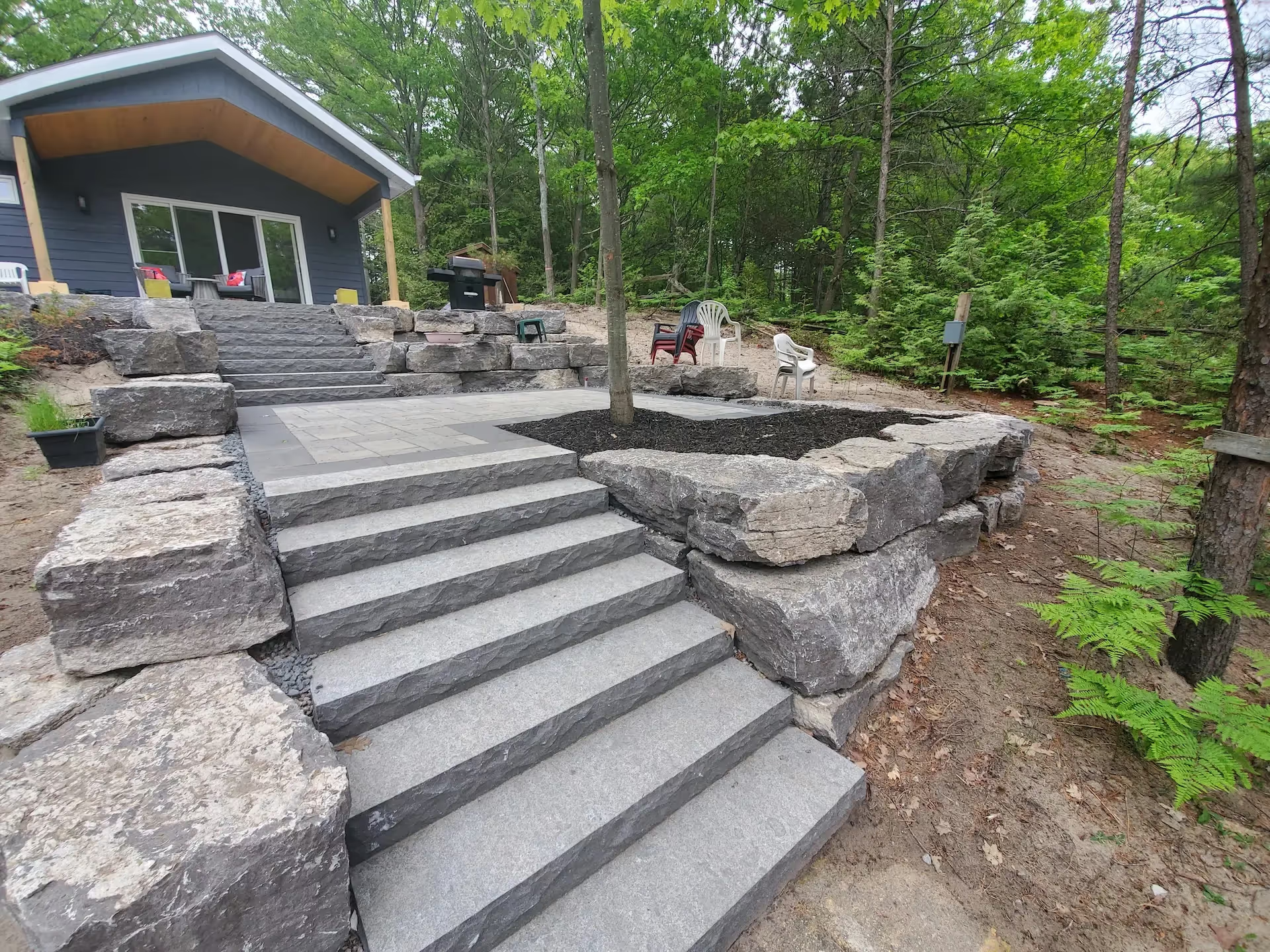
Grading is usually the cheapest drainage fix and the one most often done wrong. The Town of Midland's lot grading checklist is a useful benchmark: grass and planting areas should fall at least 2% away from buildings and hard surfaces at least 1%, swales should be at least 150 mm deep with a minimum 2% grade, and side slopes should be no steeper than 3:1 so they can be mowed and do not erode. Those numbers are written for lot grading plans, but the same logic applies to the landscaped edges of a commercial site. Our lot grading service starts with exactly this kind of survey.
Field drawing 04 · Lot grading
Grade every lot away from the house
These are the Town of Midland's minimums for lot grading plans. Most neighbouring towns use similar numbers.
Swipe to see the full drawing →
- Rear apron. At least 5 m of rear yard graded between 2% and 5% away from the house.
- Softscape fall. Grass and planting beds fall at least 2% away from every building. Hard surfaces fall at least 1%.
- Swale depth. Swales sit inside the lot, at least 150 mm deep, and run at a 2% minimum along their length.
- Side slopes. No steeper than 3:1 so they can be mowed and don't erode.
2. Customized Drainage Solutions
Every site needs its own mix of surface and subsurface drainage.
- Integration with Existing Infrastructure: New drains have to tie into existing storm pipes, curbs and hardscape at the right elevations.
- Scalability: Size pipes and structures with room for future building additions or more paving.
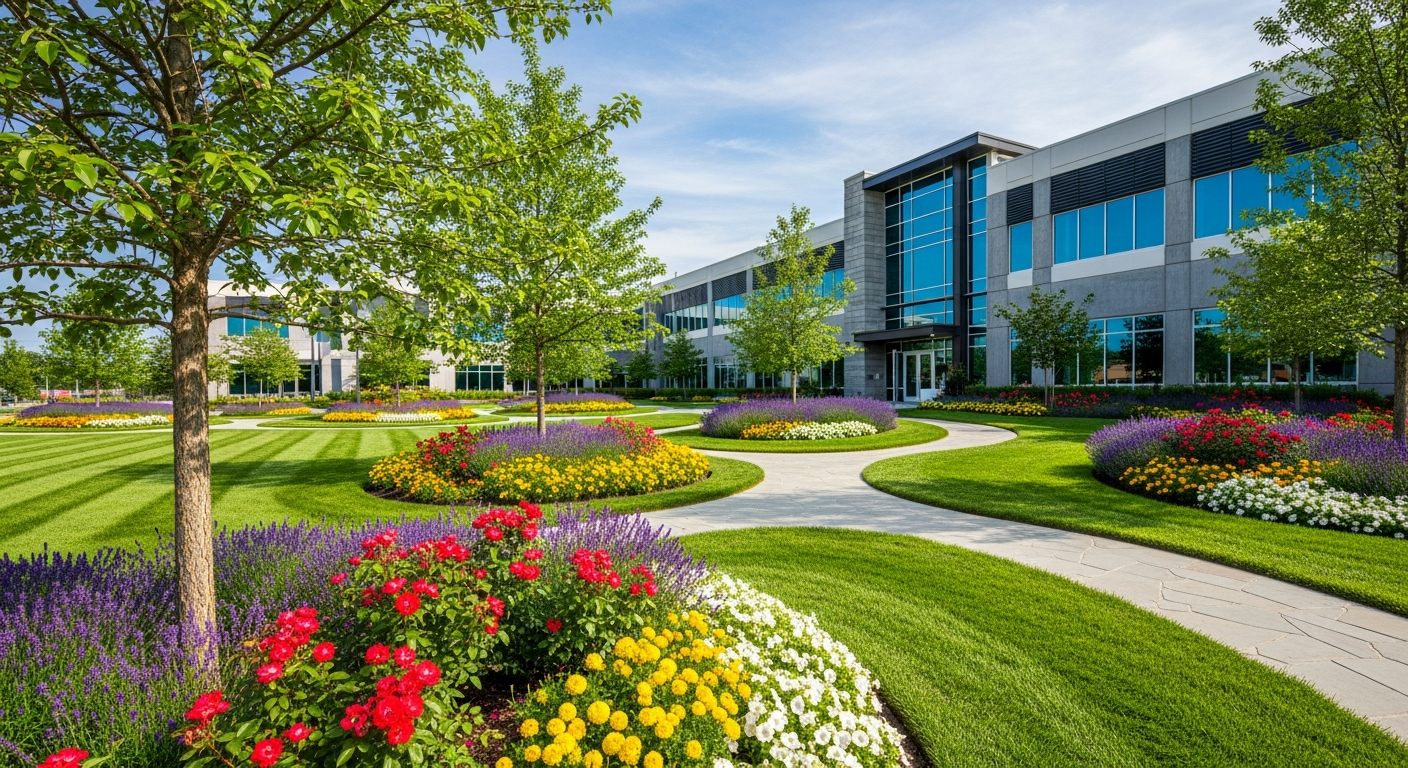
- Sustainability: Use rain gardens, bioretention and native plants where the soil allows, so less water has to be piped away.
3. Compliance with Regulations
Drainage on commercial land is regulated more tightly than on a house lot.
- Permits and Approvals: New or expanded commercial sites usually go through the municipality's site plan approval, which reviews grading and stormwater. Connections to a municipal storm sewer need the municipality's permission.
- Neighbouring properties: Changes in grading cannot send more water onto an adjacent lot or a public road than before.
- Environmental Impact: Work near a shoreline, wetland or watercourse can need provincial or federal approval, so check before you dig.
4. Professional Installation and Maintenance
Drainage only works if the elevations are right, so installation needs a laser level or survey equipment, not guesswork.
- Expert Installation: Pipe slope, outlet elevations and compaction around structures decide how long a system lasts.
- Regular Maintenance: Scheduled inspections catch blockages before they cause flooding.
Maintenance Practices for Commercial Drainage Systems
A drainage system that is never cleaned slowly stops working. Most of the maintenance is simple and predictable.
1. Routine Inspections
Inspect regularly for blockages, damage and settlement.
- Catch Basin Cleaning: Remove debris, leaves and sediment from catch basin sumps so water keeps flowing and sediment does not wash into the storm sewer.
- Oil-grit separators: The City of Brampton, for example, asks owners of these units for at least one inspection a year, with vacuum cleaning when sediment or oil reaches the manufacturer's limit.
- Pipe Inspections: Camera-inspect or flush pipes that drain slowly, and repair cracked or crushed sections.
- Vegetation Management: Keep rain gardens and swales planted and mowed so they absorb and filter water as designed.
2. Preventive Maintenance
A few preventive steps extend the life of the whole system.
- Leaf and Debris Removal: Clear leaves and debris from grates, swales and rain gardens, especially in late fall.
- Flush subsurface drains: Jet French drains and perforated pipe through cleanouts when flow slows. A French drain that has silted up usually has to be dug up and rebuilt, which is why the fabric wrap matters at installation.
- Pump Maintenance: If your system includes sump or lift pumps, test them before spring thaw and after major storms.
3. Seasonal Maintenance
Maintenance should follow the seasons.
- Spring: Clear grates and outlets before the thaw, check for frost damage, and repair washouts from snowmelt.
- Summer: Check that irrigation is not running onto pavement or into drains.
- Fall and Winter: Clear leaves before freeze-up, keep outlets and grates open, and pile snow where its meltwater will reach a drain instead of running across a walkway and refreezing.
Snow storage and meltwater
On commercial sites around Georgian Bay, snow piles are a drainage issue. A large pile at the high end of a parking lot will melt across the lot for weeks and refreeze every night. Plan snow storage areas next to catch basins or swales, away from building entrances and sidewalks, and make sure the meltwater has a clear path to a drain. If snow is plowed by a separate contractor, give them a site map that shows where piles should go. Our parking lot snow removal crews work from the same drainage plan.
Benefits of Professional Drainage Solutions by Forty Five Scapes
Working with a contractor who does the grading, excavation and landscaping on the same job keeps the drainage design and the build in one set of hands:
1. Experience on local sites
We design and install drainage on commercial properties in Midland, Penetanguishene, Collingwood, Wasaga Beach and Muskoka, where sandy shoreline soils, clay pockets and shallow rock all behave differently.
2. Customized Solutions
Each system is designed around the property's grades, soils and existing storm connections.
3. Quality Materials and Installation
We use clear stone, non-woven fabric and properly sloped pipe, and we check elevations as we build.
4. Comprehensive Maintenance Services
Our maintenance visits cover grates, catch basins, swales and outlets so problems are caught early.
5. Sustainable Practices
Where the soil allows, we use rain gardens, bioretention and native plants so less water has to be piped off site.
6. Regulatory Compliance
We work to the municipality's grading and site plan requirements so the system passes review.
Why Choose Forty Five Scapes?
Forty Five Scapes is a family-owned design-build landscaping and excavation company based in Penetanguishene. We handle commercial drainage from design and installation through ongoing maintenance:
- Customized Design Solutions: Drainage designed around your site, not a template.
- Experienced Professionals: Our crews do the excavation, grading and landscaping themselves.
- Quality Assurance: Elevations are checked during installation, not after the first storm.
- Sustainable Practices: Green infrastructure where it suits the site.
- Comprehensive Services: Consultation, design, installation and maintenance from one company.
- Responsive service: One point of contact when a drain backs up or a new problem shows up.
Planning a 2027 commercial drainage project
If drainage problems showed up on your property this year, winter is the time to plan the fix. Walk the site during a thaw or a heavy rain and photograph where water pools, ices or runs across pavement; those photos are the most useful thing you can bring to a contractor. Surveys and designs can be done over the winter, but excavation usually has to wait until the ground thaws and dries, which in Simcoe County is typically late April or May. If the work involves a new storm connection or changes to an approved site plan, start the municipal conversation early so approvals are in place before the construction season.
- Book the site visit in winter so design and pricing are done before spring.
- Schedule catch basin and separator cleaning for early spring, after the snow and before heavy rain.
- Coordinate with paving. If a parking lot is due for resurfacing, fix the drainage first, since regrading under new asphalt costs far less than cutting it up later.
- Plan snow storage with the drainage layout for the 2027–28 winter.
Frequently asked questions
What is the best drainage solution for a commercial parking lot?
Most parking lots need correct grading to catch basins, with trench drains at loading docks or entrances where water collects across a wide edge. Larger sites add underground storage or an oil-grit separator to control and clean the runoff.
How often should commercial catch basins be cleaned?
Inspect them at least once a year, and after spring thaw, and clean them when the sump is filling with sediment. Busy lots, sites with lots of trees and lots that are sanded in winter usually need cleaning more often.
Do I need approval to change drainage on a commercial property?
Often, yes. Changes that affect an approved site plan, a storm sewer connection or a neighbouring property usually need municipal review, and work near water can need provincial or federal approval.
What is the difference between retention and detention?
A retention pond keeps a permanent pool of water and releases storm runoff slowly. A detention basin is dry most of the time and only fills during storms before draining out.
Talk to us about your site
Effective drainage prevents waterlogging, erosion, ice and pavement damage on commercial properties. The right system depends on the site's grades, soils and storm connections, and it needs regular maintenance to keep working. We design, build and maintain drainage systems for commercial properties in Midland, Penetanguishene, Collingwood, Wasaga Beach and Muskoka. For catch basin details, see our guide to commercial catch basin installation.
Contact Forty Five Scapes to book a site visit and talk through the drainage problems on your commercial property.
Planning a project this season?
We’ll walk the site, scope it properly and give you a straight price.
Forty-Five Scapes did an amazing job on my property. I started with such a mess, mud and weeds and poor grading. I met with Mark and he put my mind at ease. He took my wants and needs and budget and created a vision. The crew was always on time and respectful and the end product was amazing. I look forward to many years with my amazing outdoor space.
Frequently asked questions