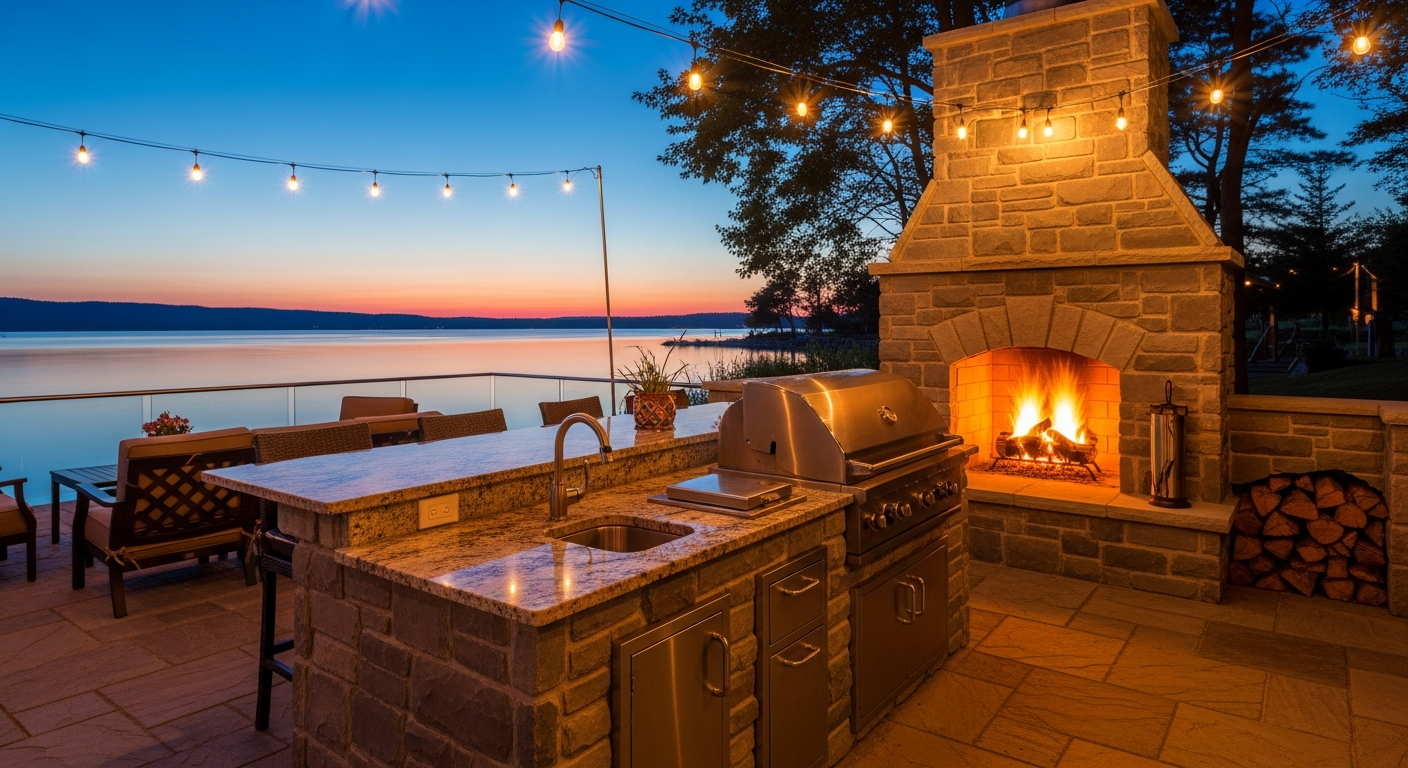
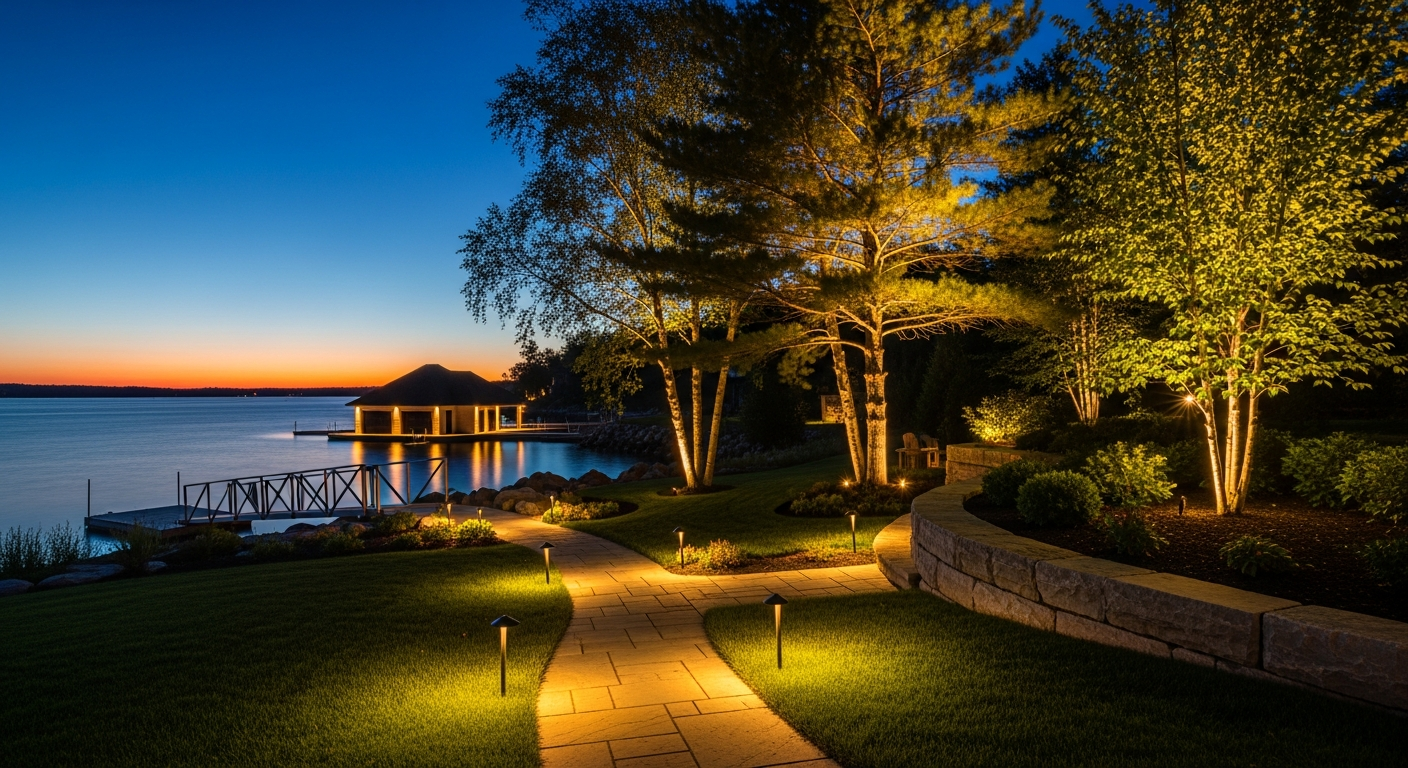
To build a patio in Midland, pick the spot and size, choose a freeze-thaw-tough material, strip the topsoil, and build a compacted gravel base that falls at least 1% away from the house. For interlocking pavers that means 100 to 150 mm of compacted Granular A, about 25 mm of bedding and pavers at least 60 mm thick, held by an edge restraint. A ground-level patio usually needs no building permit in Midland, but decks over 10 square metres, enclosures and some retaining walls do.
Key takeaways
Building a patio in Midland comes down to five steps: pick the spot and size, choose a material that stands up to freeze-thaw, dig out the topsoil, build a compacted gravel base sloped away from the house, then lay and edge the surface. The base does most of the work. For interlocking pavers that means 100 to 150 mm of compacted Granular A, about 25 mm of bedding and pavers at least 60 mm thick, with the surface falling at least 1% away from the house.
This guide covers materials, design ideas, permits, the build itself and upkeep, so you can plan a patio that is still flat after a few Simcoe County winters.
Introduction to Patio Building in Midland, ON
Midland homeowners get a short, warm outdoor season and long winters, so a patio here has to be built for both. Understanding the climate and the lot comes before any design choice, and a well-built patio will be usable from spring thaw into late fall.
Understanding the Climate of Midland, ON
The climate in Midland is characterized by warm summers and cold, snowy winters. Water that soaks into the ground freezes and expands each winter, and that frost heave is what lifts and tilts poorly built patios. Choose materials rated for freeze-thaw, keep water moving off and away from the surface, and give the patio a deep, well-compacted base.
Why Build a Patio?
A patio serves as a bridge between your indoor and outdoor living spaces, offering a versatile area for relaxation, dining, and entertainment. It gives you more usable space for the warm months and makes the yard easier to use.
Selecting the Right Materials for Your Patio
The choice of materials for your patio significantly influences its longevity, maintenance, and aesthetic appeal. Let's explore some popular options available in Midland, ON.
Natural Stone Options: Pros and Cons
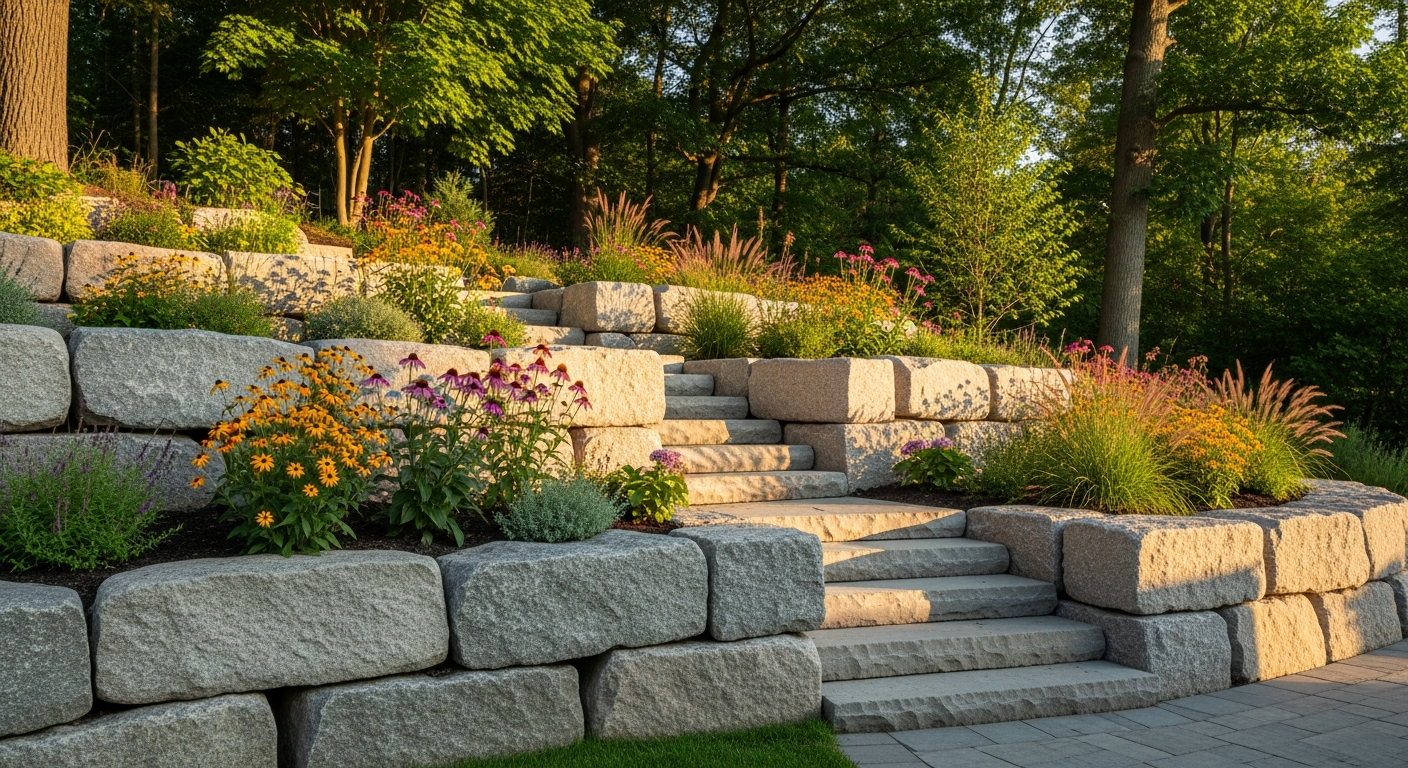
Natural stone, with its durability and timeless appeal, can complement any landscape. Options like limestone, sandstone, and granite offer unique textures and colours but may require a higher initial investment and periodic sealing to maintain their appearance.
Concrete Pavers: Durability and Design Flexibility
Concrete pavers are a versatile and cost-effective option that comes in a variety of shapes, colours and textures. They are durable, easy to repair because single pavers can be lifted and reset, and can mimic the look of natural stone or brick. Because the joints let the surface flex slightly, an interlocking patio on a good base copes with freeze-thaw better than a poured slab, which tends to crack.
Wood and Composite Decking: A Warm, Inviting Option
Wooden decks add warmth and a natural feel to your outdoor space. Cedar is the common choice in Ontario for its natural resistance to decay and insects. Composite decking, though more expensive, offers a wood-like appearance with less maintenance. A raised deck is a different project from a patio: in Midland, a deck over 10 square metres, or one attached to the house or forming part of the main entrance, needs a building permit.
Popular Patio Designs in Midland, ON
Your patio design should reflect your personal style and fit the functionality of your outdoor space. Here are some designs that are well-suited to Midland's landscape and climate.
The Classic Flagstone Patio
Flagstone patios offer a natural and organic look, ideal for blending with Midland's natural environment. Each stone's shape and colour is different, so no two patios look alike. See our flagstone installation guide for dry-laid and mortared options.
Modern Concrete Paver Designs
For a more modern aesthetic, concrete pavers offer clean lines and a wide range of design possibilities. They are perfect for creating geometric patterns and contemporary outdoor living areas.
Rustic Wood and Composite Decks
Wood and composite decks provide a rustic charm that complements Midland's scenic views. They are ideal for uneven terrains and can be built at varying heights to enhance the visual interest of your outdoor space.
Planning and Preparation: Before You Build
Before breaking ground on your patio project, careful planning and preparation are essential to ensure a successful outcome.
Assessing Your Backyard Space
Evaluate the size, shape, and slope of your backyard to determine the best location and design for your patio. Consider how the sun's path and natural shade will affect the area throughout the day.
How big should a patio be?
Size the patio for what you will put on it. A small table for four needs roughly 3 × 3 m once chairs can be pulled out; a dining set plus a lounge area or barbecue station needs closer to 4 × 5 m or more. Lay the furniture out on the lawn with a garden hose marking the edge before you commit. Leave room for walkways so people are not squeezing past chairs to reach the door.
Getting the Necessary Permits
A ground-level patio usually does not need a building permit in Midland, but several things around it can. The Town requires a permit to enclose an existing deck, porch or patio of any size, to build a deck over 10 square metres or one attached to the house, and to build a retaining wall more than 1 m high next to public property, a building entrance or property open to the public. Zoning rules still apply even when no permit is needed, so confirm setbacks and lot coverage with the building department (building@midland.ca) before you dig. If you are adding hard surface on a new lot, check your lot grading plan too.
Building a Patio: Step-by-Step Guide
Building a patio involves several key steps, from preparing the ground to laying the foundation and installing the chosen materials.
Preparing the Ground
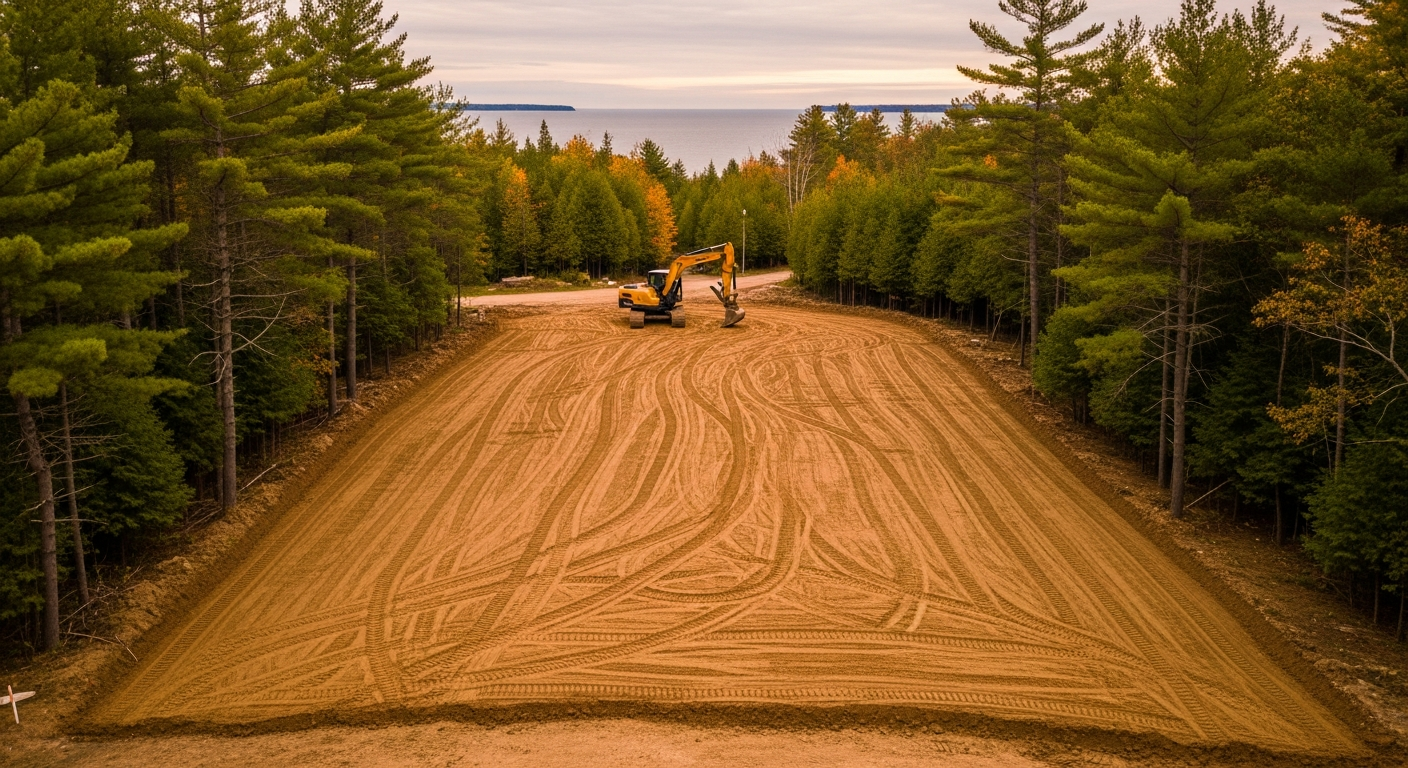
The first step involves clearing the area of any vegetation, rocks, or debris and leveling the ground. Proper drainage is also crucial to prevent water accumulation and damage. Strip all topsoil, since it is organic and will settle, and dig out soft spots. Set the finished grade so the patio falls away from the house; the Town of Midland's lot grading checklist calls for at least 1% on hard surfaces, which is 1 cm of drop for every metre.
Laying the Foundation
A solid foundation is essential for the longevity of your patio. Depending on the materials used, this may involve pouring a concrete slab or creating a compacted gravel base. For interlocking pavers, the Interlocking Concrete Pavement Institute (ICPI) calls for 100 to 150 mm of compacted Granular A under patios and walkways, compacted to at least 98% Standard Proctor density, then a nominal 25 mm bedding layer screeded flat. Pavers should be at least 60 mm thick. Clay or wet ground needs a deeper base, and the base should extend past the edge of the pavers so the edge restraint has something to sit on.
Field drawing 11 · Patios and driveways
The base under interlock is the real patio
Pavers are only the wearing surface. Settling, heaving and ruts start in the layers below.
Swipe to see the full drawing →
- Pavers. At least 60 mm thick for pedestrian areas and residential driveways.
- Bedding layer. A nominal 25 mm, screeded flat. Never use bedding to fix a bad base.
- Compacted Granular A. 100–150 mm under walks and patios, 150–200 mm under driveways, compacted to at least 98% Standard Proctor.
- Firm subgrade. Strip topsoil and soft spots and compact before the base goes in. Clay or wet sites need more base.
- Edge restraint. Spiked or concrete edge so the field can't creep. The base runs past the edge to carry it.
Compact the base in layers rather than all at once, because a plate compactor only firms up the top part of a thick lift. The bedding layer is there to seat the pavers, not to fix low spots; if the base is uneven, fix the base.
Installing the Patio Materials
Lay the chosen materials, carefully following the design plan. This step requires precision, especially if working with interlocking pavers or natural stone, to ensure a stable and visually appealing finish. Install a spiked or concrete edge restraint around the field so the pavers cannot creep, compact the pavers into the bedding, then sweep in joint sand (polymeric sand if you want to limit weeds and ants, following the manufacturer's directions) and compact again.
Should you build a patio yourself?
A small paver or flagstone patio on a flat, well-drained lot is a reasonable DIY project if you rent a plate compactor and are careful with the base. Larger patios, sloped yards, wet clay, heated interlock or anything tied into steps and retaining walls are where a contractor earns their fee, because base and grading mistakes show up as settling a winter or two later. Our guide to patio builders in Midland covers what to ask before you hire.
Maintenance and Upkeep of Your New Patio
Regular maintenance is key to keeping your patio looking its best year-round.
Seasonal Care for Different Materials
Different materials require different care methods. For example, wooden decks may need to be resealed or stained, while pavers might require weed removal and joint sand replenishment.
Long-Term Maintenance Tips
Regular cleaning, immediate repair of any damage, and preparation for winter weather are all important practices to extend the life of your patio.
Enhancing Your Patio: Accessories and Landscaping Ideas
A patio is more than just a surface; it's a living space. Adding the right accessories and planting makes it a place you want to sit.
Lighting and Furniture for Function and Comfort
Select furniture that complements the style of your patio and offers comfortable seating. Strategic lighting can create ambiance and extend the use of your patio into the evening.
Plant Selection and Placement for Midland, ON Climate
Choose plants that thrive in Midland's climate and provide seasonal colour and interest. Consider incorporating native plants for low maintenance and to attract local wildlife.
Planning a 2027 patio build in Midland
If you want a new patio ready for summer 2027, the winter is the time to design it. Settle the size, shape and material, decide whether you want lighting, a fire feature or heated interlock wired in, and get quotes while contractors have time for site visits. Spring calendars fill quickly. Excavation generally waits until the frost is out of the ground, which in Simcoe County usually means late April or May, and the base should never be built on frozen or saturated soil.
Check permits before spring. A plain ground-level patio usually needs none, but a deck over 10 square metres, enclosing the patio, or a retaining wall over 1 m in the wrong location does, and zoning setbacks apply either way. For 2027 designs, larger-format pavers, permeable pavers on lots with drainage problems and low-voltage lighting installed with the base are all worth considering now rather than adding later.
- Mark out the patio and furniture layout on site this fall or early spring.
- Choose the material and colour from samples, not screens.
- Confirm permits, zoning setbacks and any lot grading plan.
- Book installation for late spring or early summer.
Frequently asked questions
How deep should a patio base be?
For an interlocking paver patio, ICPI recommends 100 to 150 mm of compacted Granular A plus a 25 mm bedding layer, with pavers at least 60 mm thick. Add more base on clay, wet ground or anywhere vehicles might cross.
Do I need a permit to build a patio in Midland?
Usually not for a ground-level patio. The Town of Midland does require a permit to enclose a patio, to build a deck over 10 square metres or attached to the house, and for some retaining walls over 1 m. Zoning still applies, so check with building@midland.ca.
What is the best patio material for Midland winters?
Concrete pavers and natural flagstone on a well-compacted granular base both handle freeze-thaw well, because the joints let the surface move slightly. Poured concrete can cost less up front but is more likely to crack, and any material will heave if the base holds water.
How much slope should a patio have?
At least 1% away from the house, the Town of Midland's minimum for hard surfaces. That works out to about 1 cm of drop per metre.
Building a Patio in Midland, ON
Building a patio in Midland, ON, requires careful planning, from selecting the right materials and design to understanding the local climate and landscape. By following these guidelines, you can create a beautiful and functional outdoor space that enhances your home and lifestyle.
Planning a project this season?
We’ll walk the site, scope it properly and give you a straight price.
Mark and Matt are amazing. Not only do they do high-quality work, but they are also collaborative every step of the way. They are also great at problem-solving for unforeseen issues, or if you are just stuck on what to do in a certain area. I highly recommend Forty-Five Scapes for your landscaping needs.
Frequently asked questions