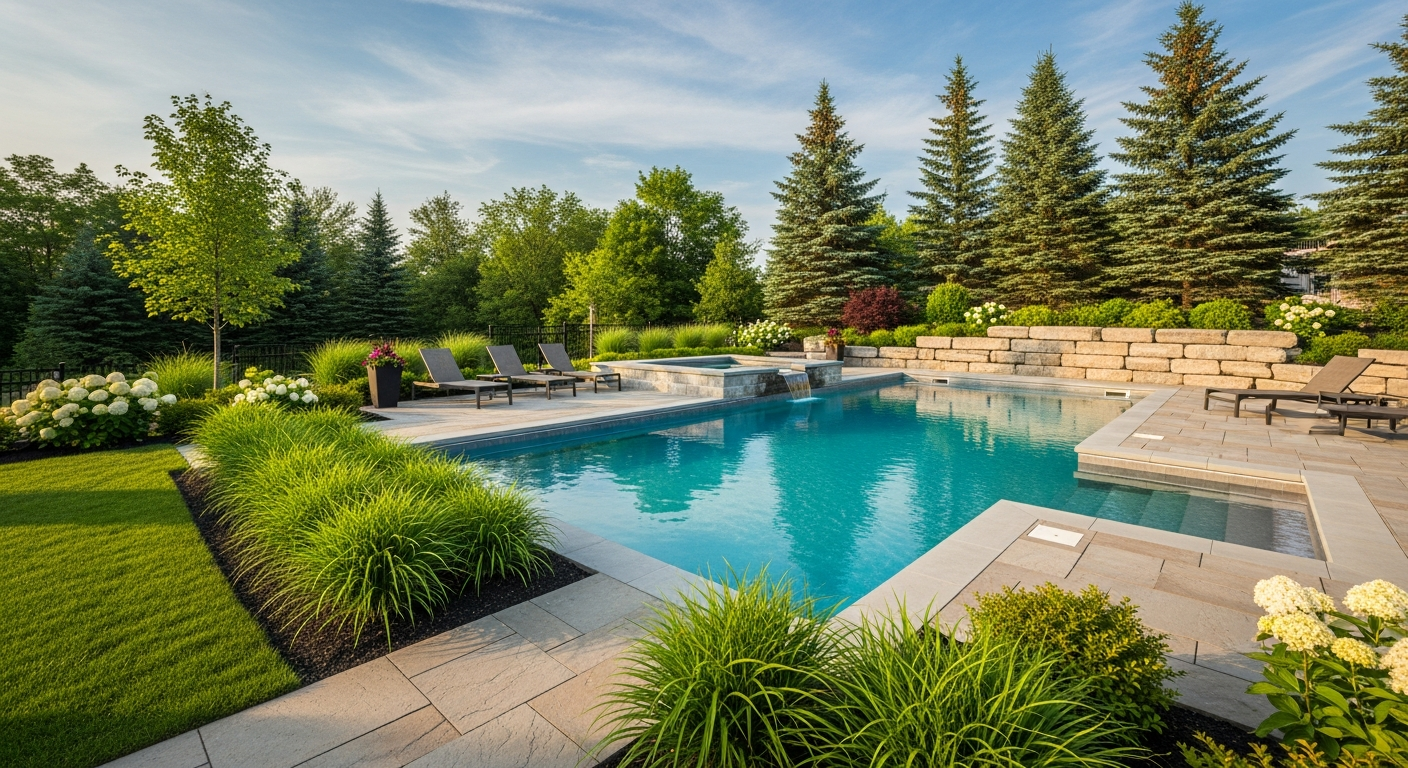
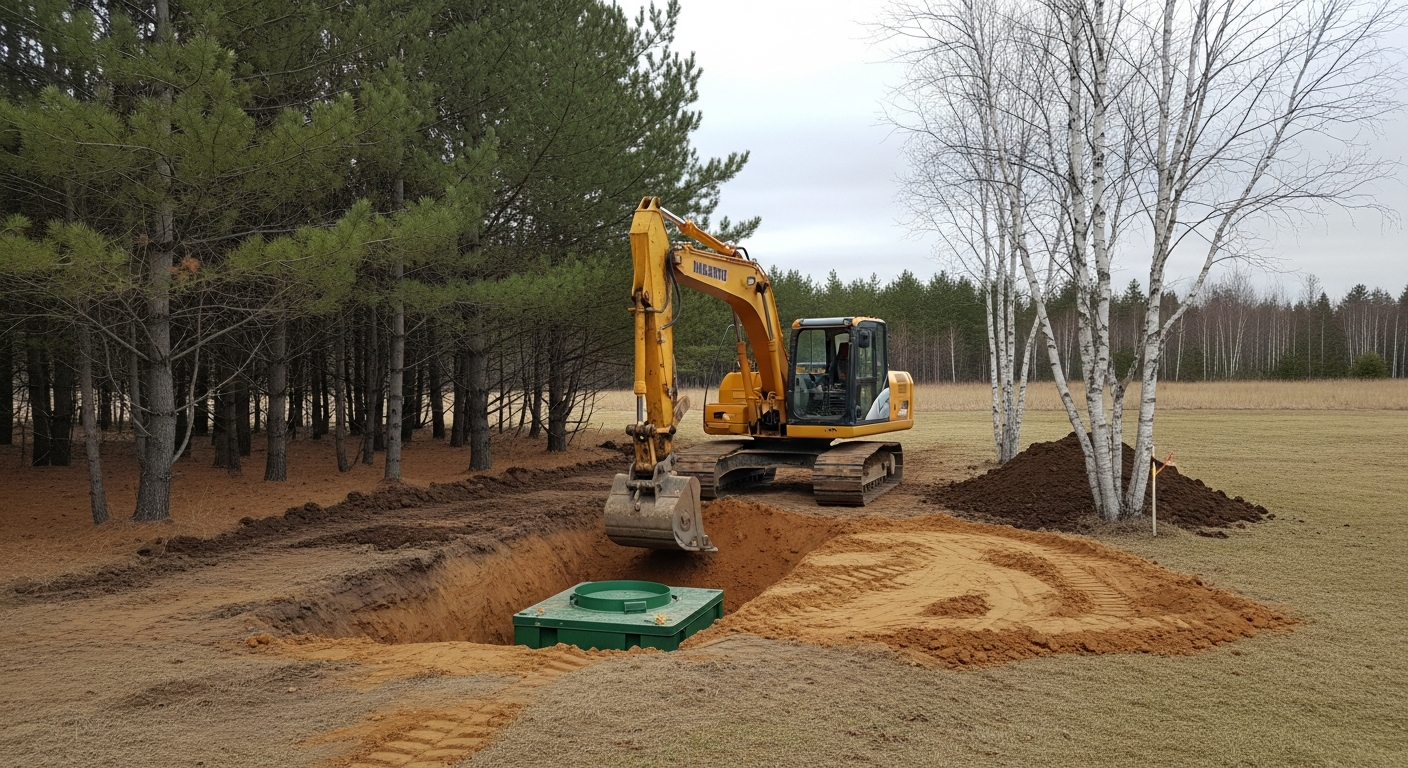
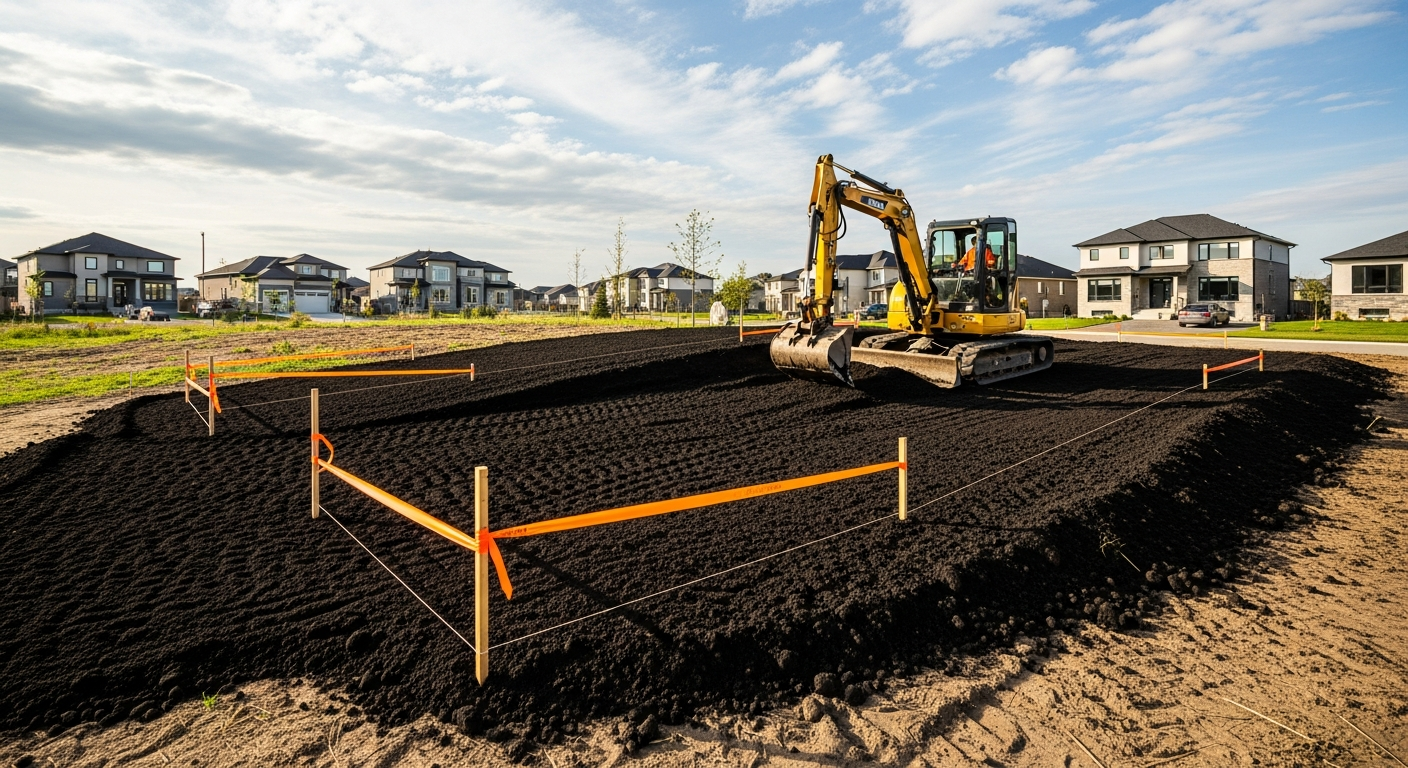
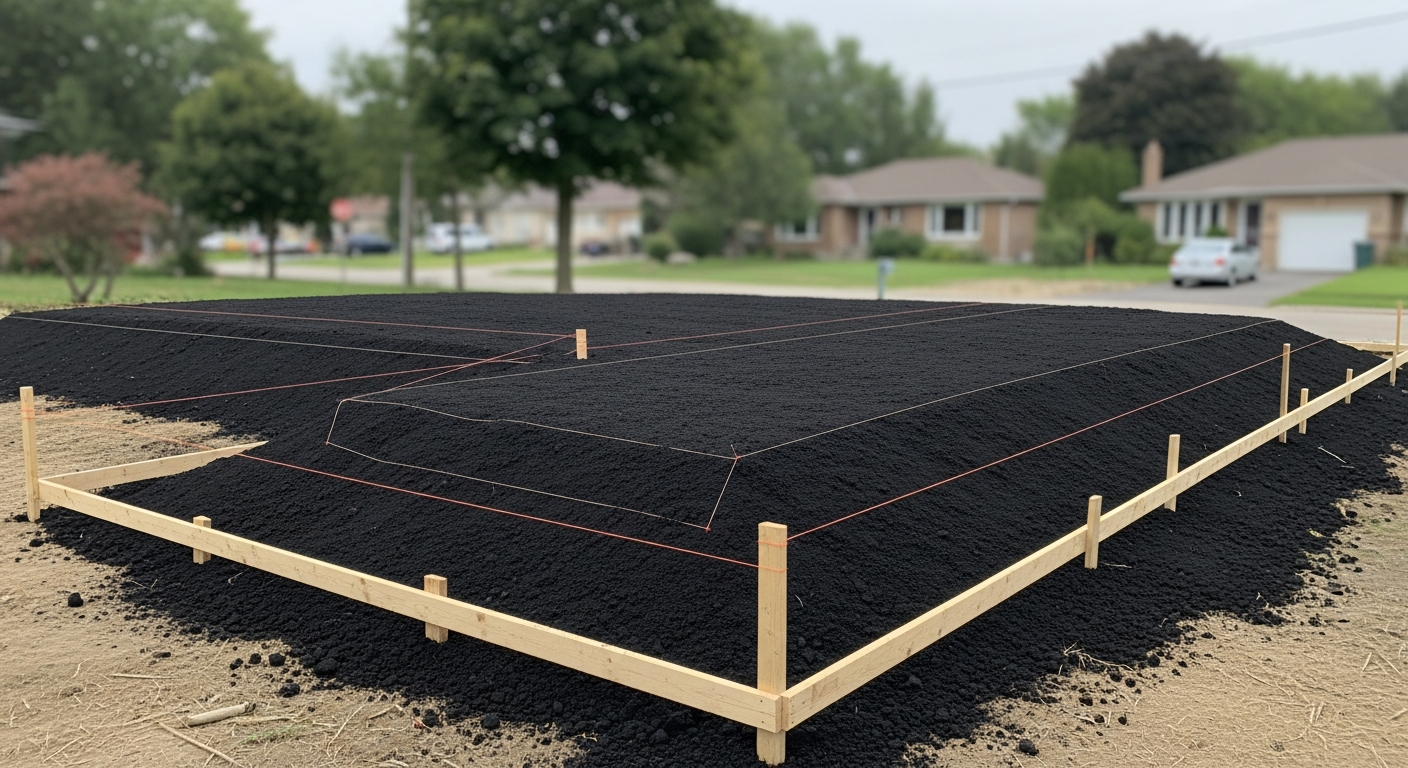
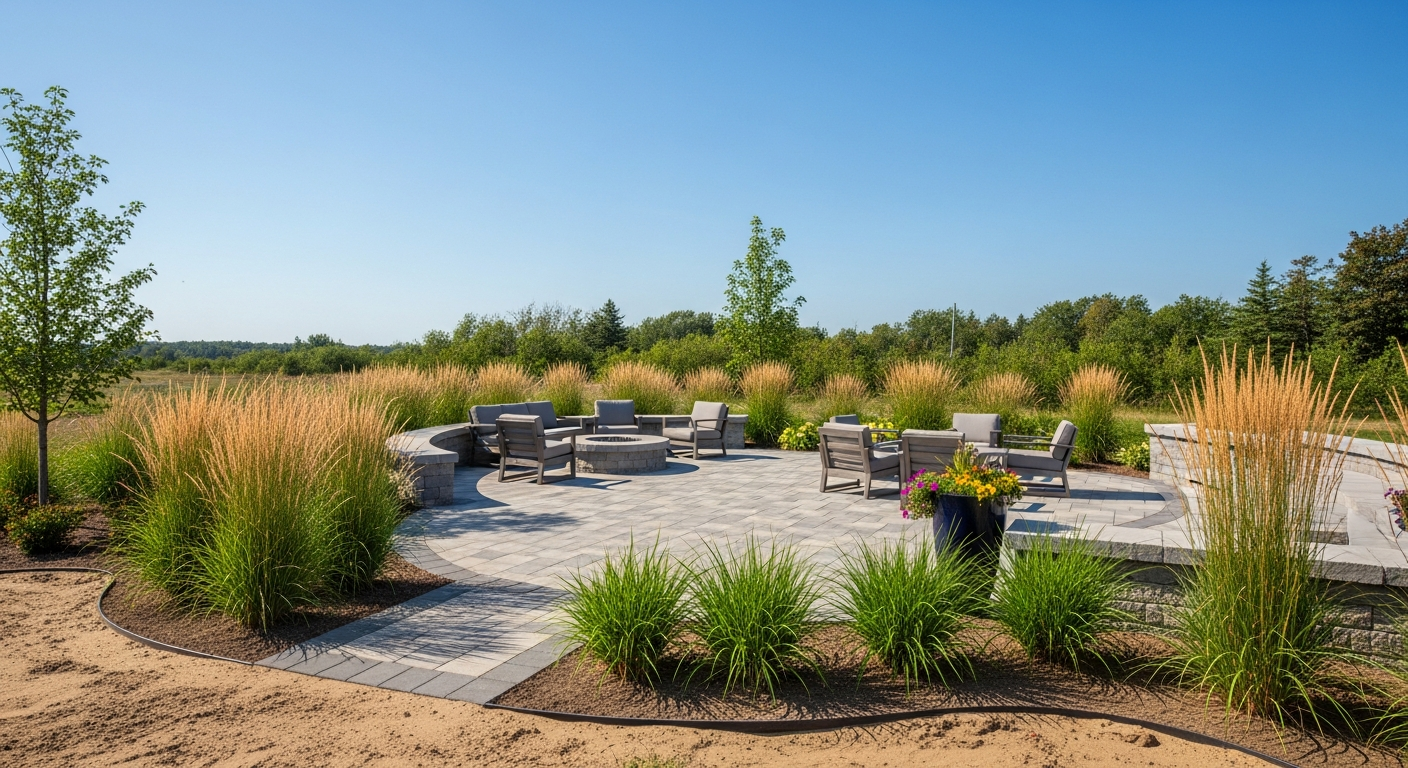
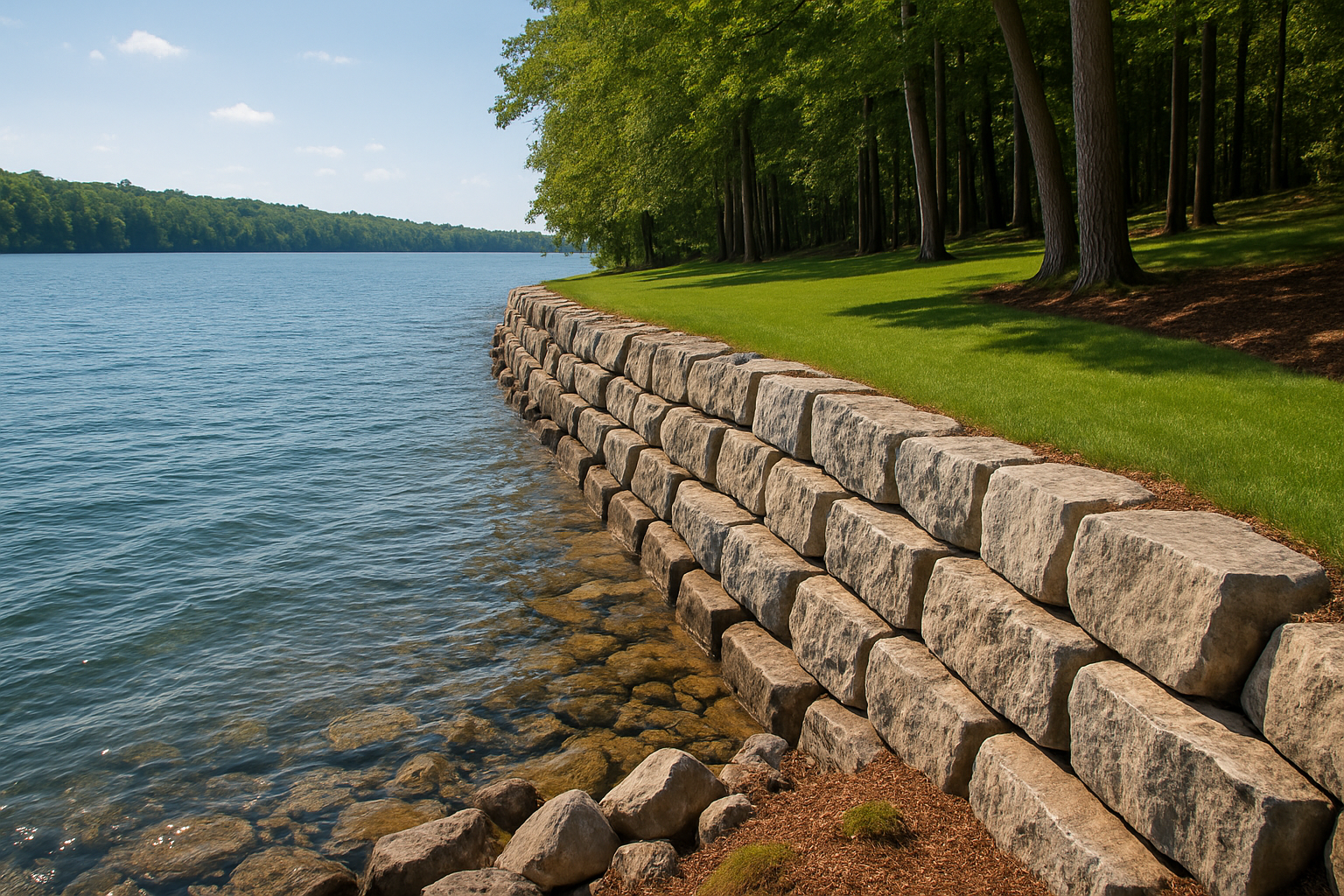
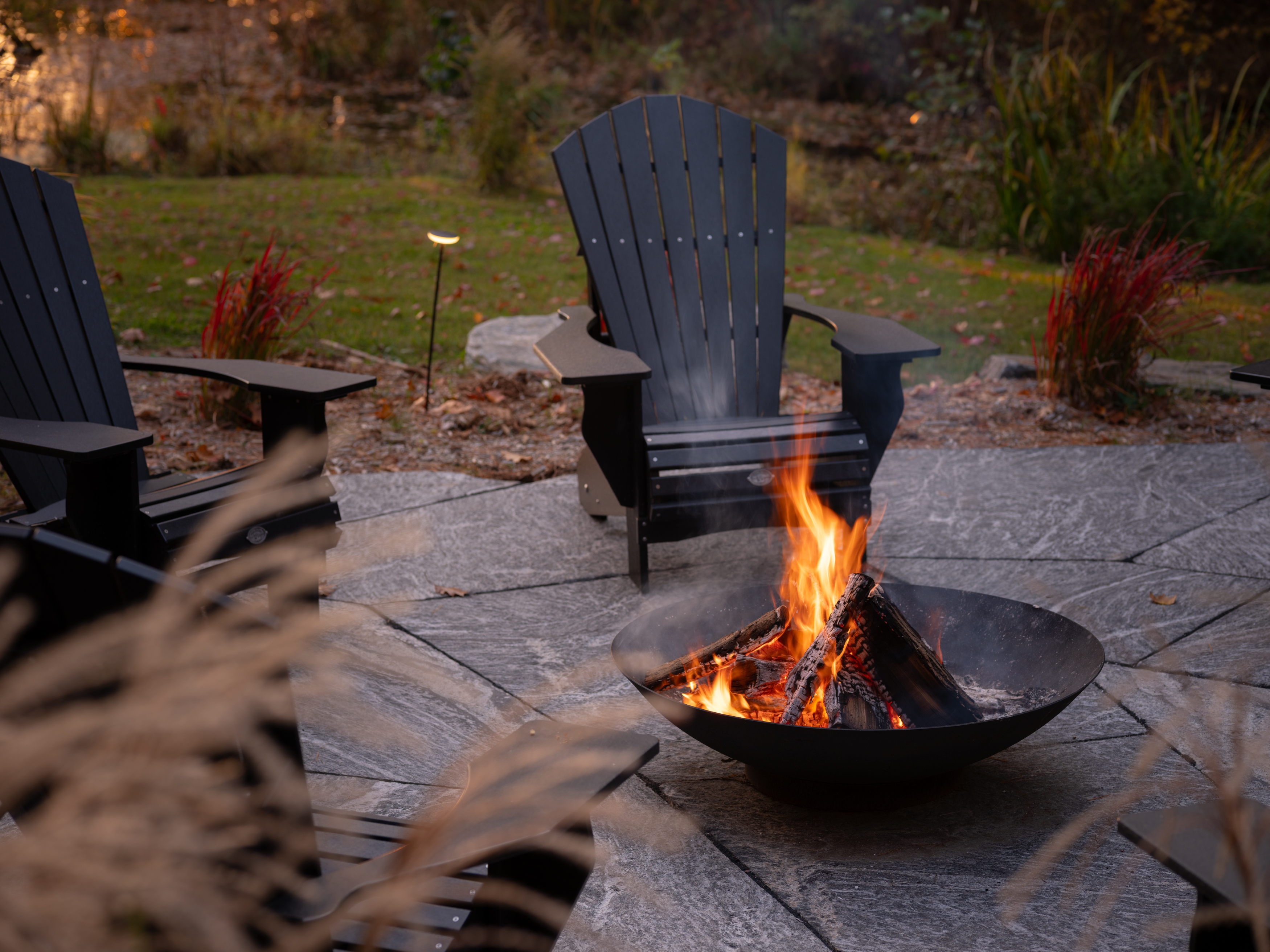
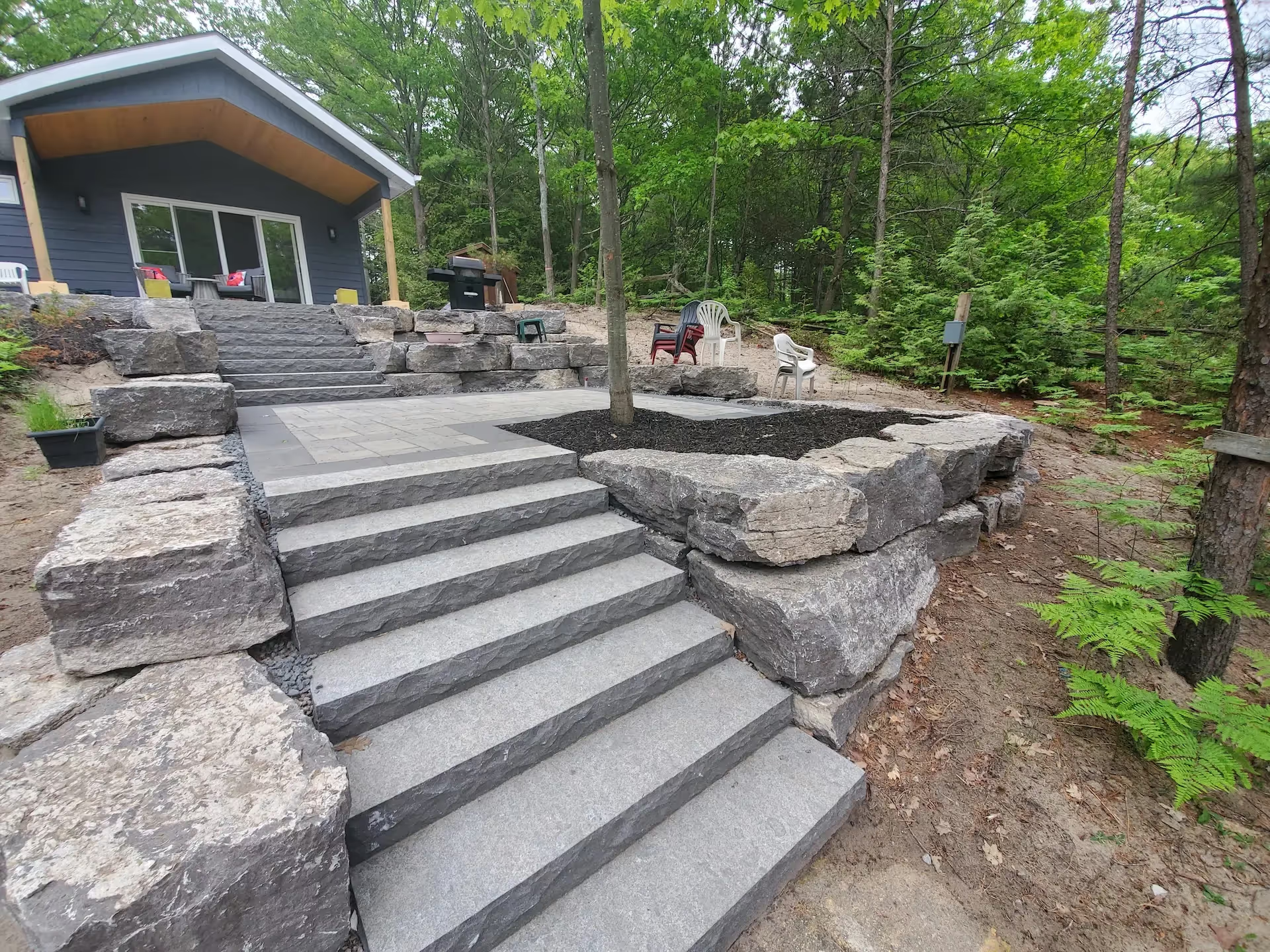
Armour stone works best for retaining walls that terrace a slope, wide stone steps, shoreline protection, seating walls around a fire pit, raised-bed edging and natural-looking ponds and waterfalls. The stone itself rarely fails; a lasting installation depends on a compacted granular base, stepped-back courses and drainage behind the wall. Walls over 1 m next to public areas need a building permit and an engineered design in Ontario.
Key takeaways
The most useful armour stone landscaping ideas are retaining walls that terrace a slope, wide stone steps, shoreline protection, seating walls around a fire pit, edging for raised beds, and natural-looking ponds and waterfalls. Armour stone is large, quarried blocks of limestone or granite, usually weighing anywhere from a few hundred kilograms to several tonnes each, so it stays put by its own weight and handles Midland's freeze-thaw winters without the movement smaller blocks can show. This article covers creative and practical ways to use it, from retaining walls to walkways to planting beds, and what to plan before the stone arrives.
If you're looking for an armour stone contractor, see our armour stone retaining wall installation service.
The Aesthetics of Armour Stone in Landscaping
Armour stones offer a blend of aesthetic appeal and functionality. Their rugged appearance and large size make them a statement piece in any landscaping project. Beyond their visual impact, armour stones are celebrated for their durability and minimal maintenance requirements, which suits Midland properties where winters are long and spring brings heavy runoff.
Benefits of Using Armour Stone
Integrating armour stone into your landscaping not only enhances your property's natural beauty but also contributes to its durability. These stones can serve various functions, from retaining walls that hold back soil and control erosion to providing the foundation for serene garden pathways.
Enhancing Your Property's Natural Beauty
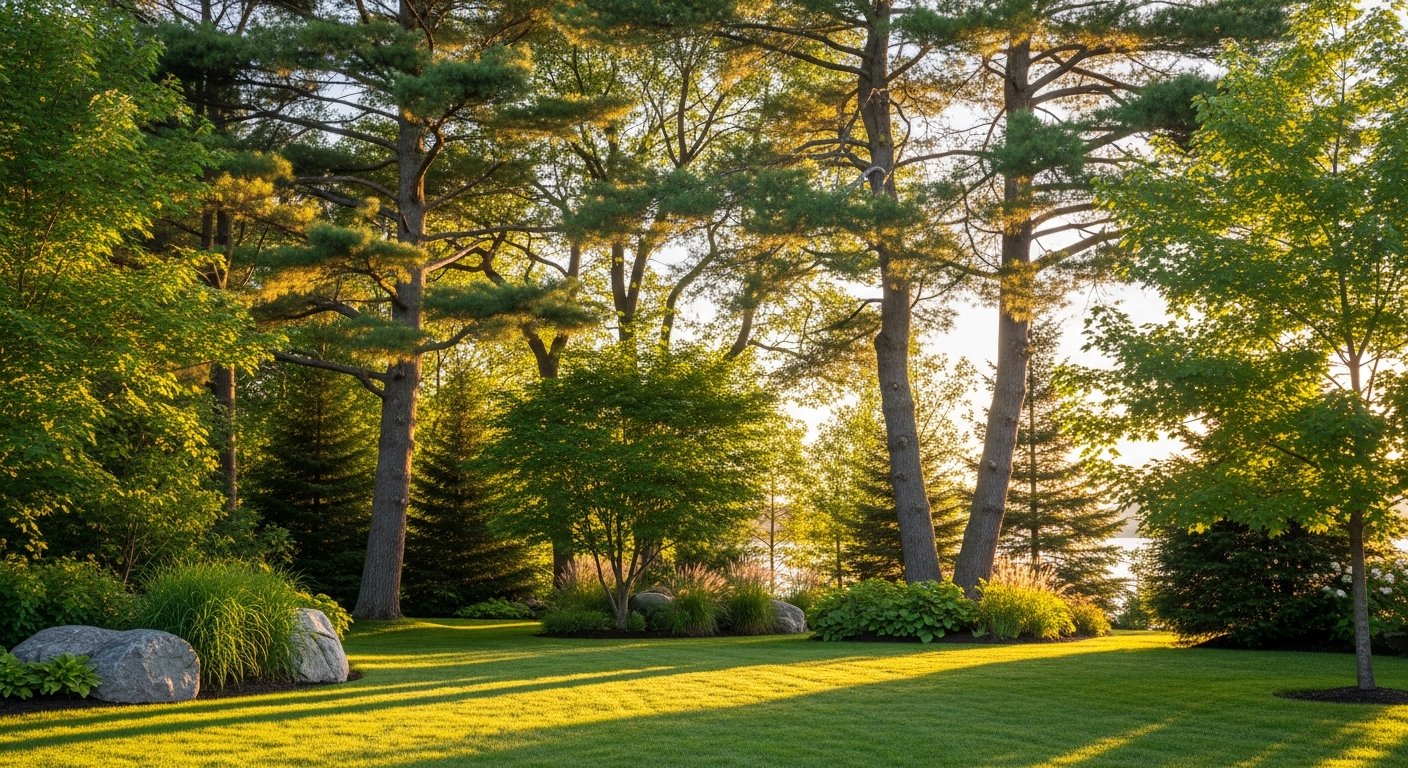
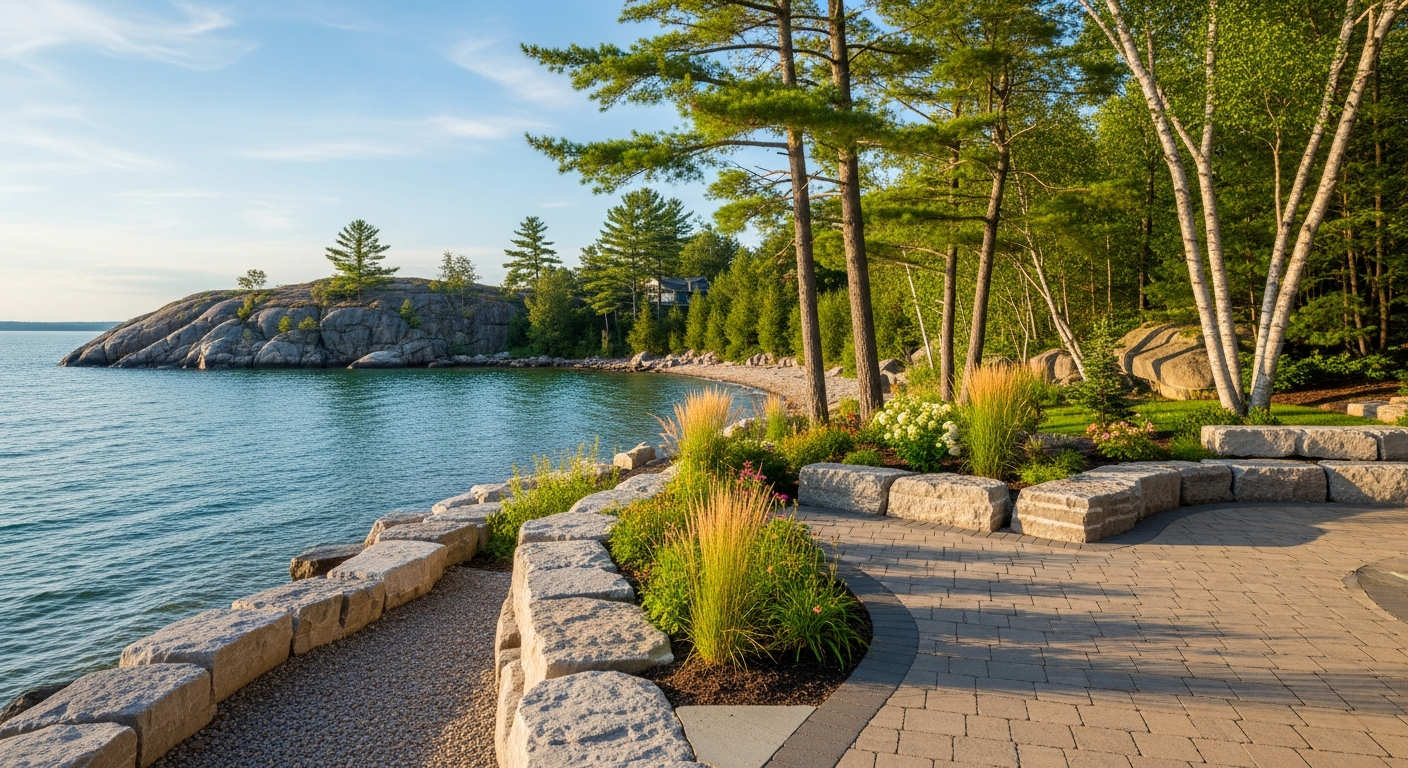
Using armour stone in landscaping lets you echo the limestone and granite outcrops found around Georgian Bay. Placed well, the stones make the line between your property and the natural landscape look deliberate rather than built.
Crafting Timeless Landscapes
Armour stone does not go out of style the way some manufactured products do, and it weathers rather than wears. A well-set wall or step looks better after a few seasons of lichen and moss than on the day it was placed.
Durability and Longevity
Dense, sound armour stone stands up to the freeze-thaw cycles common in Midland. The stone itself rarely fails; when an armour stone wall does move, the cause is almost always a poor base or water building up behind it, which is why the base and drainage deserve as much attention as the stone.
Planning Your Armour Stone Landscape
The first step in creating an armour stone landscape is planning. Assessing your space and choosing the right stones are crucial steps in this process.
Assessing Your Space
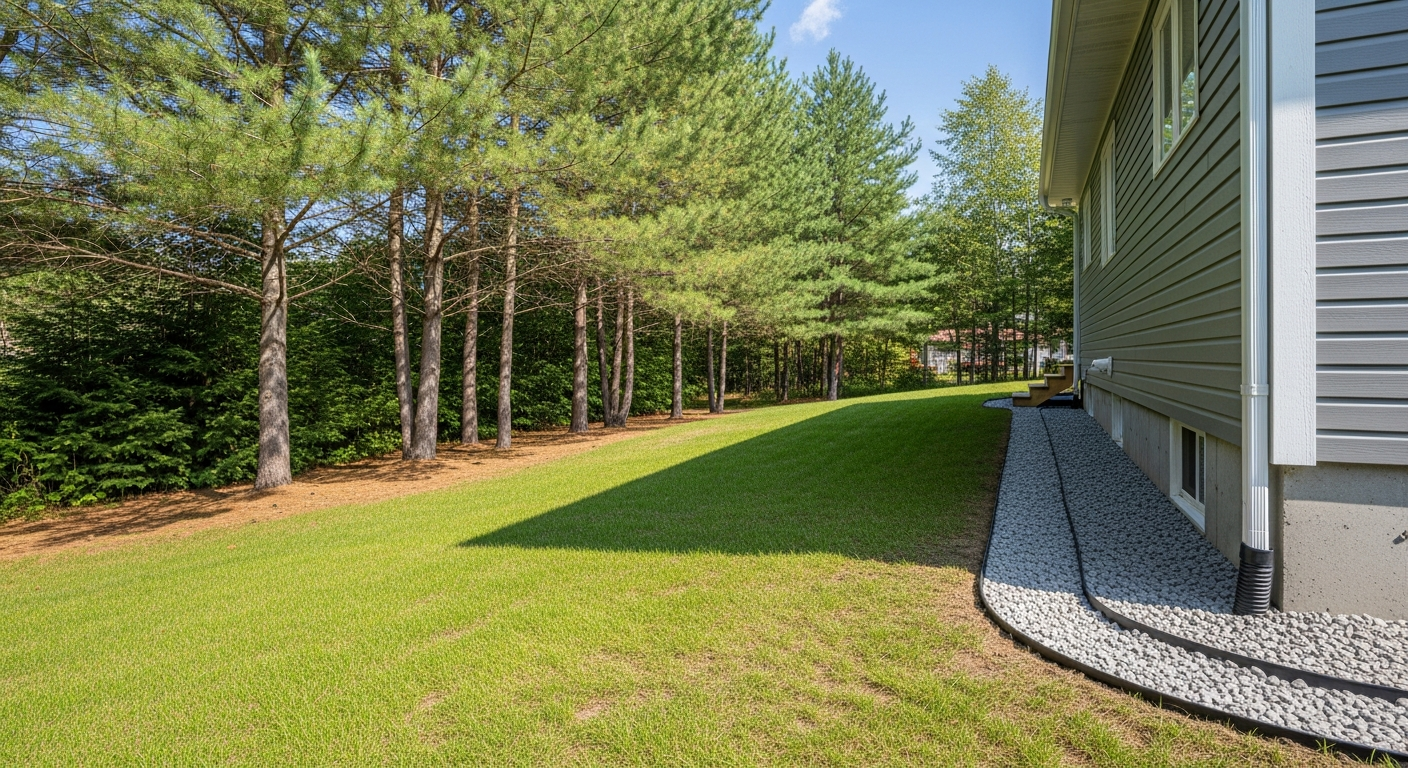
Understanding the topography of your property is essential before beginning any landscaping project. Armour stone can be used effectively to address elevation changes and improve drainage.
Understanding Topography
Topographical analysis helps identify the best locations for armour stone installations, such as retaining walls or elevated garden beds, enhancing both function and form in your landscape.
Visualizing with Design Software
Modern design software can help visualize your project before any physical work begins. This can be a valuable tool in planning your armour stone landscape, allowing for adjustments and refinements in the design phase.
Choosing the Right Stones
Selecting the right armour stones involves considering colour, size, and shape to ensure they complement your property's overall aesthetic and meet the functional needs of your landscape.
Colour Considerations
The colour of the armour stone you choose affects the whole look of the landscape. Ontario limestone ranges from grey to buff and weathers lighter, while granite runs from pink and grey to near black. Pick a colour that suits the house, the existing rock on the property and any paving you plan to add.
Size and Shape Varieties
The size and shape of the stones you select will influence the landscape's final appearance and functionality. Larger stones can create bold focal points, while smaller ones might be used for detailing or filling spaces between larger stones. Armour stone is usually sold by the tonne, and a wall's height largely sets the stone size: taller walls need deeper, heavier base stones. Our guide to armour stone landscaping costs explains how size and access affect price.
Armour Stone Applications in Midland Properties
Armour stones are versatile and can be used in various landscaping applications. From creating functional retaining walls to aesthetic garden edging, here are some innovative ways to incorporate armour stones into your Midland property.
Retaining Walls
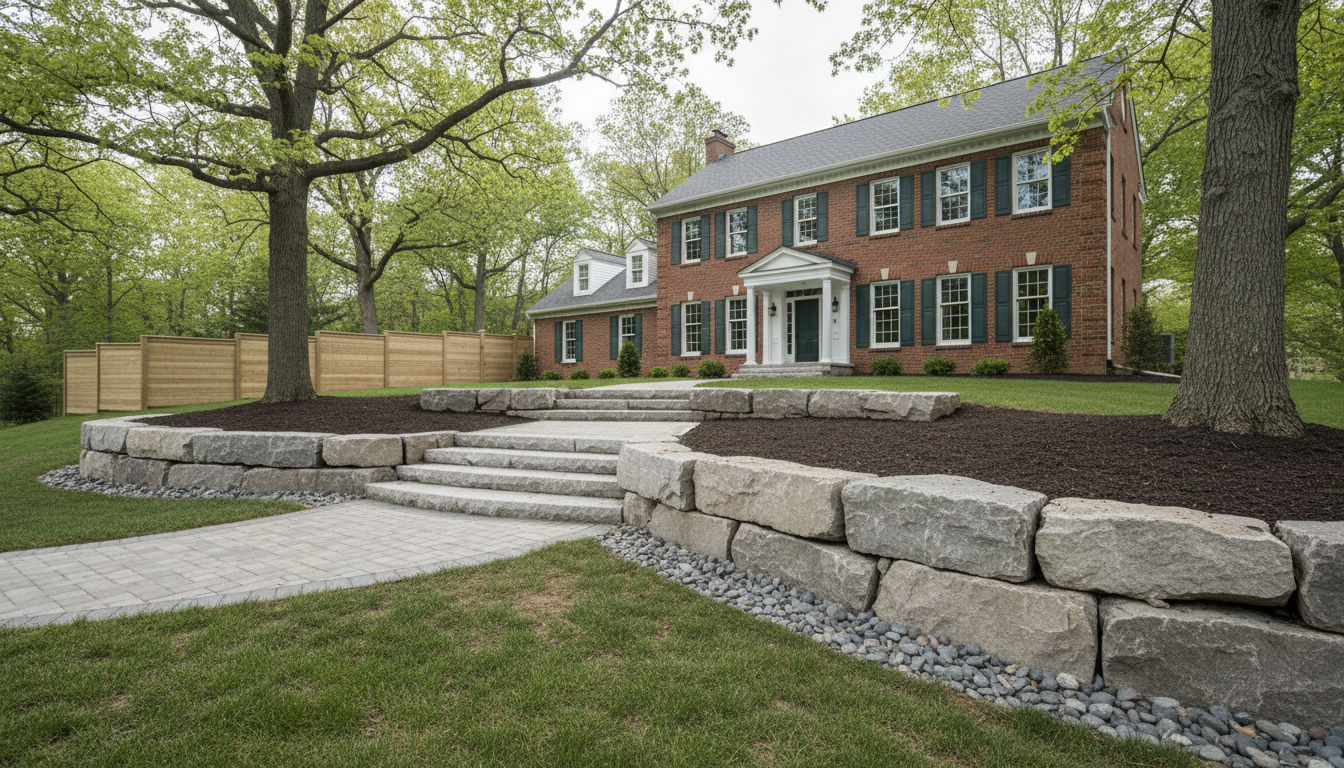
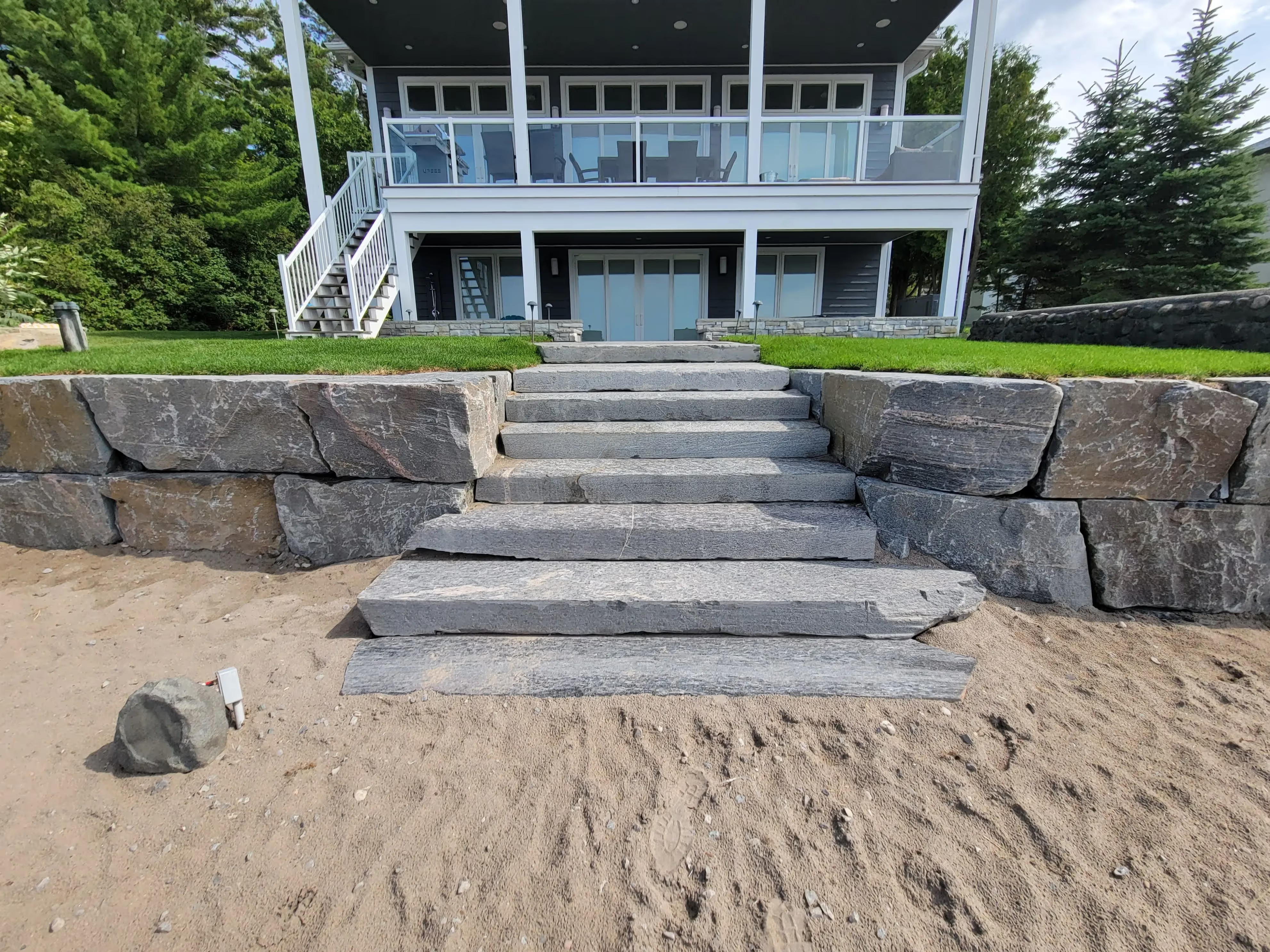
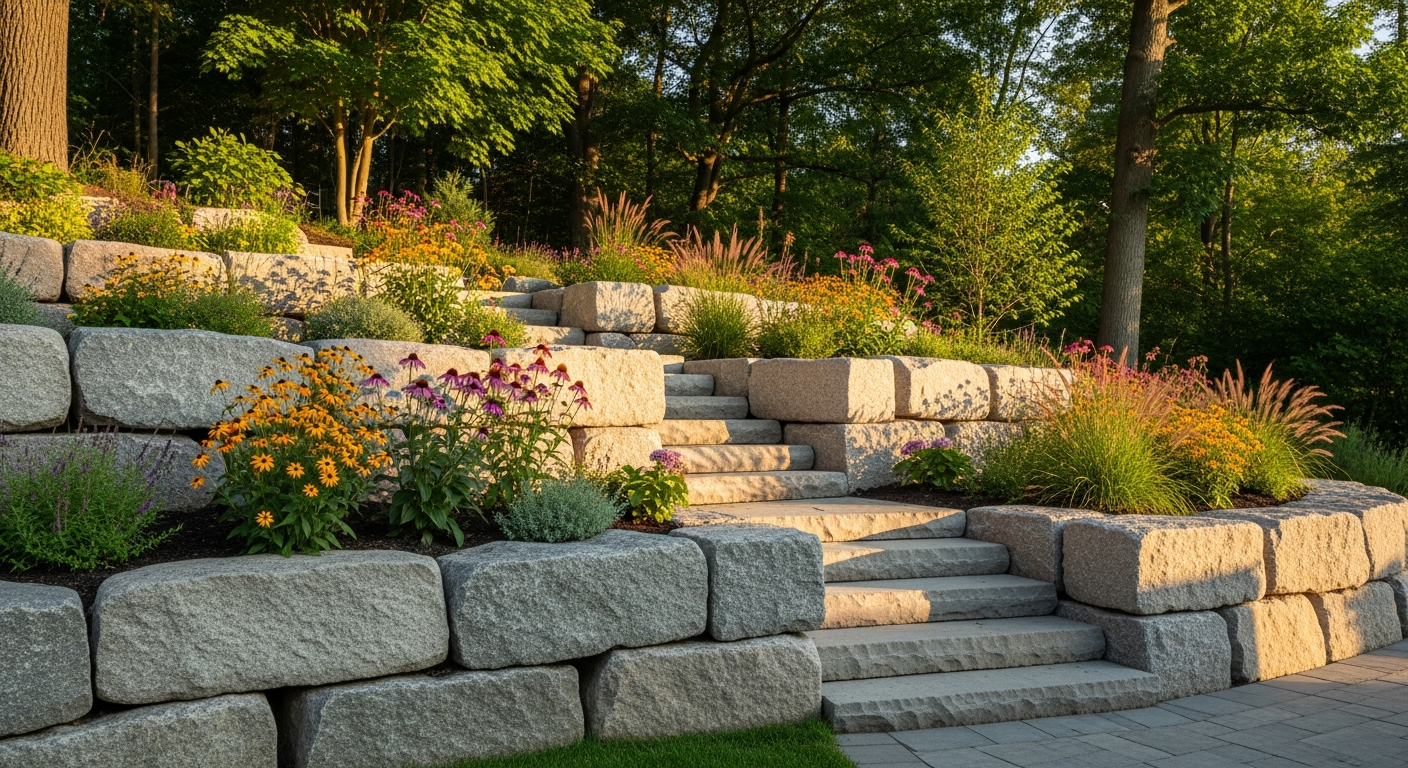
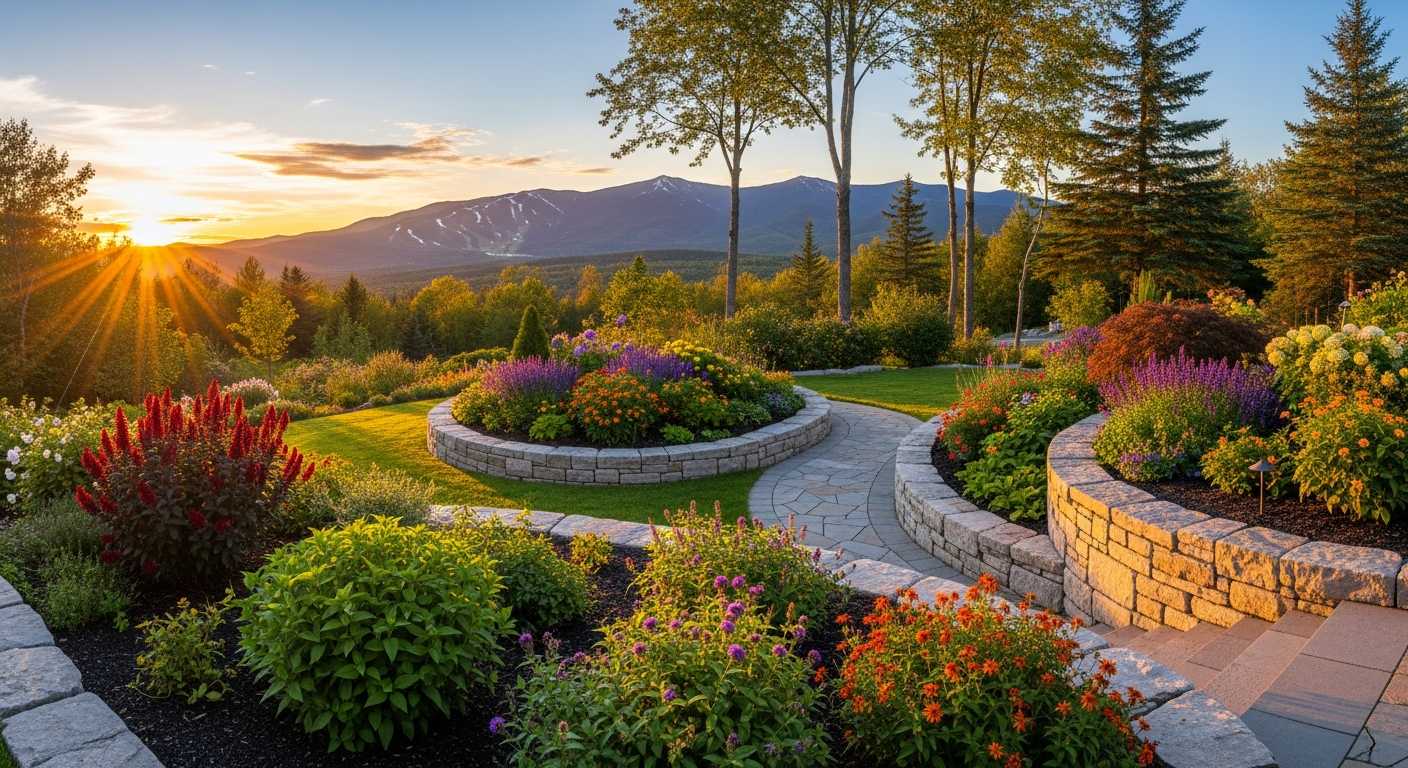
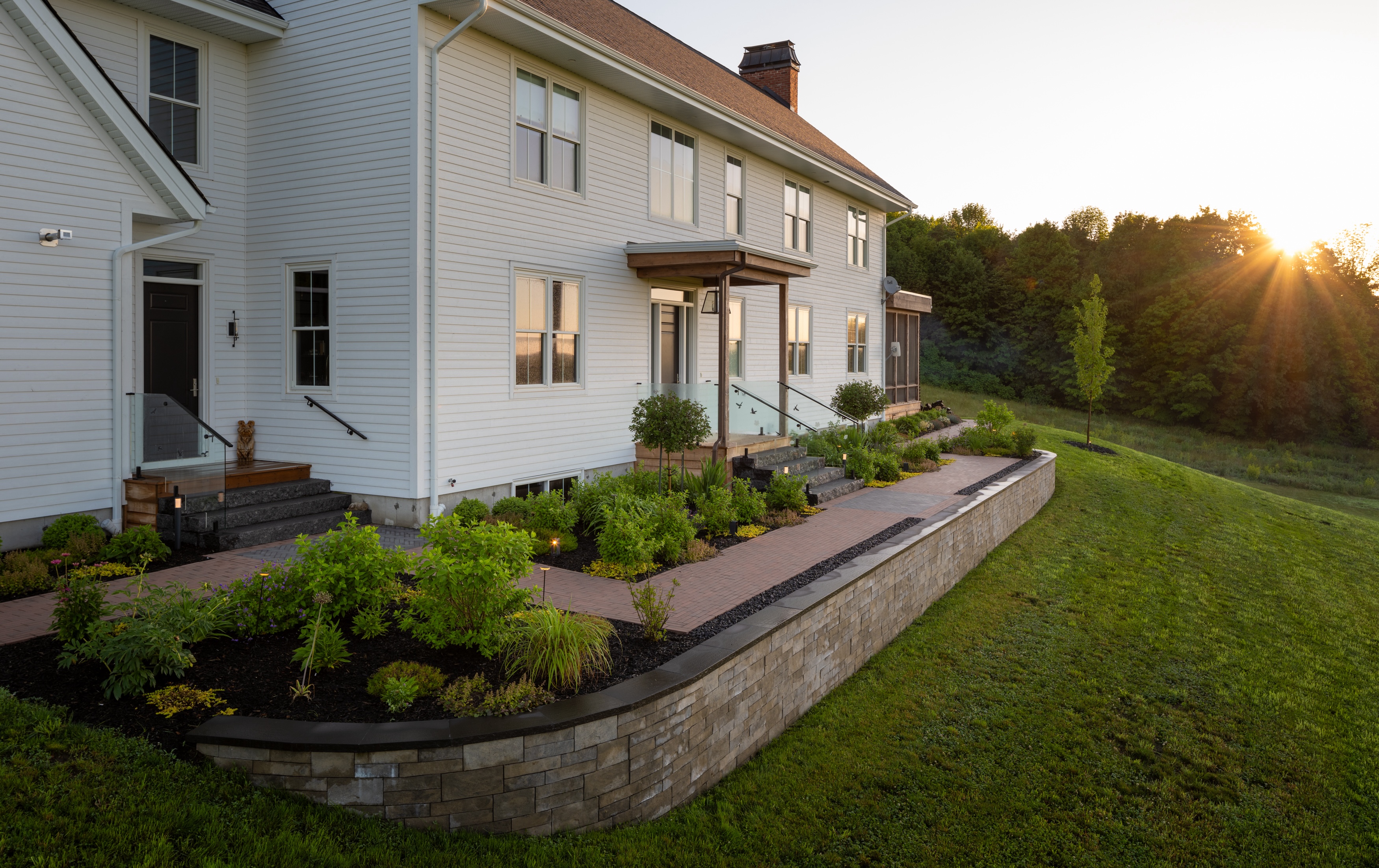
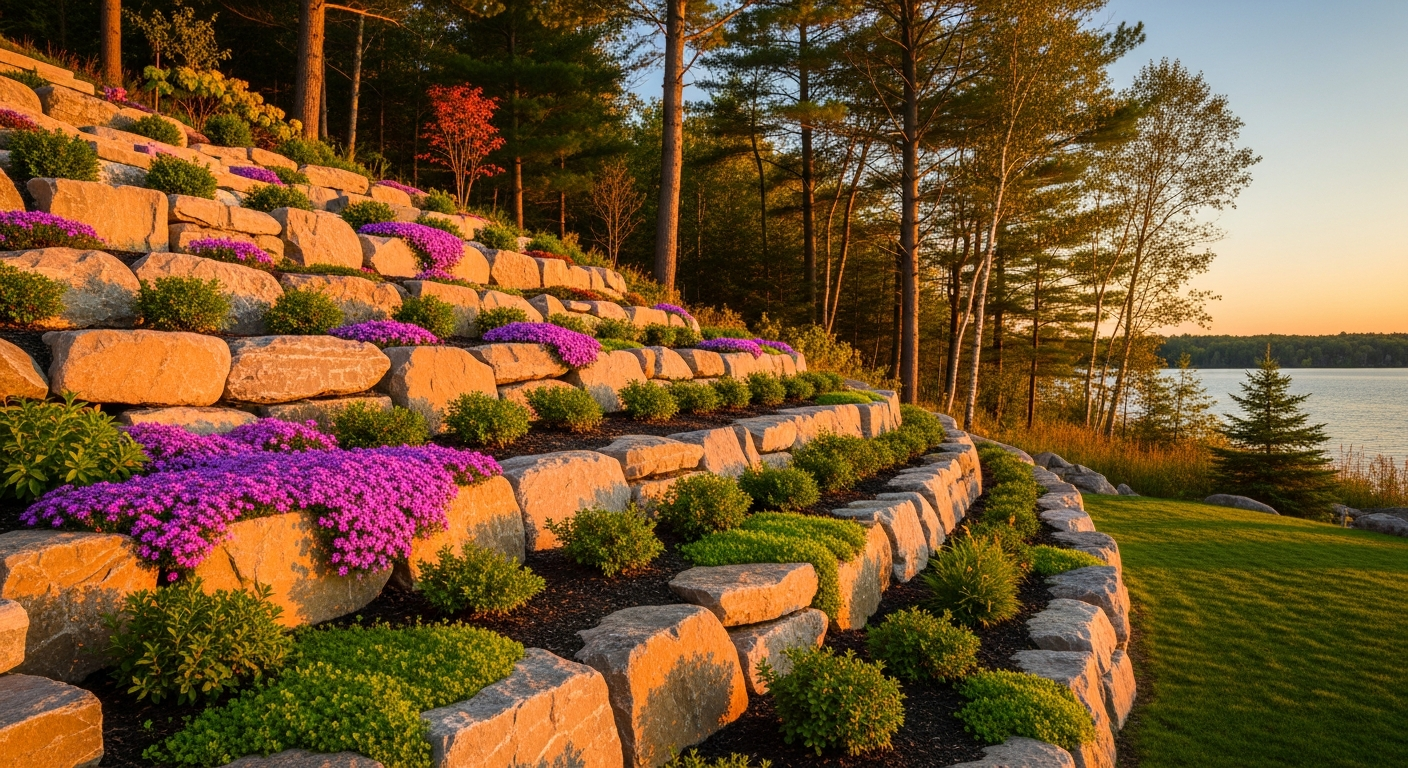
Armour stone retaining walls not only prevent soil erosion but also add a dramatic visual element to your landscape. They can be designed to follow the natural contours of your land, so the wall reads as part of the slope rather than a barrier across it.
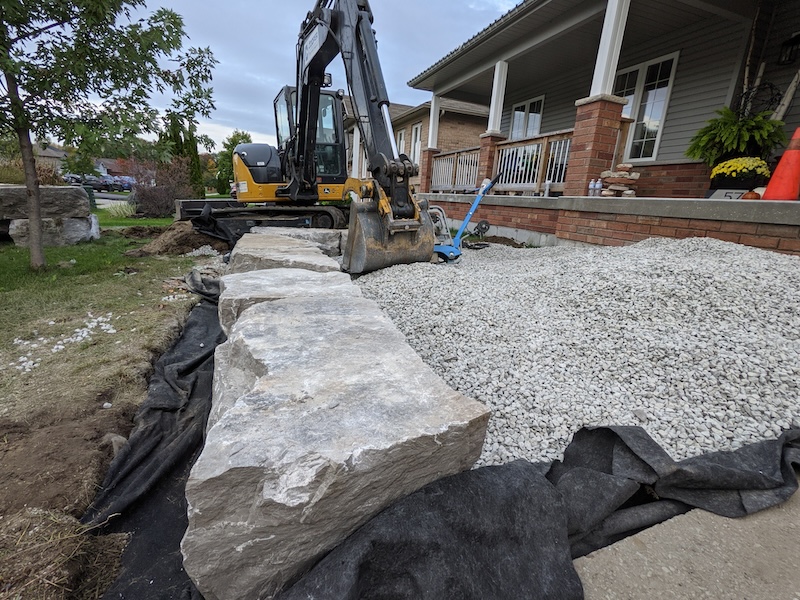
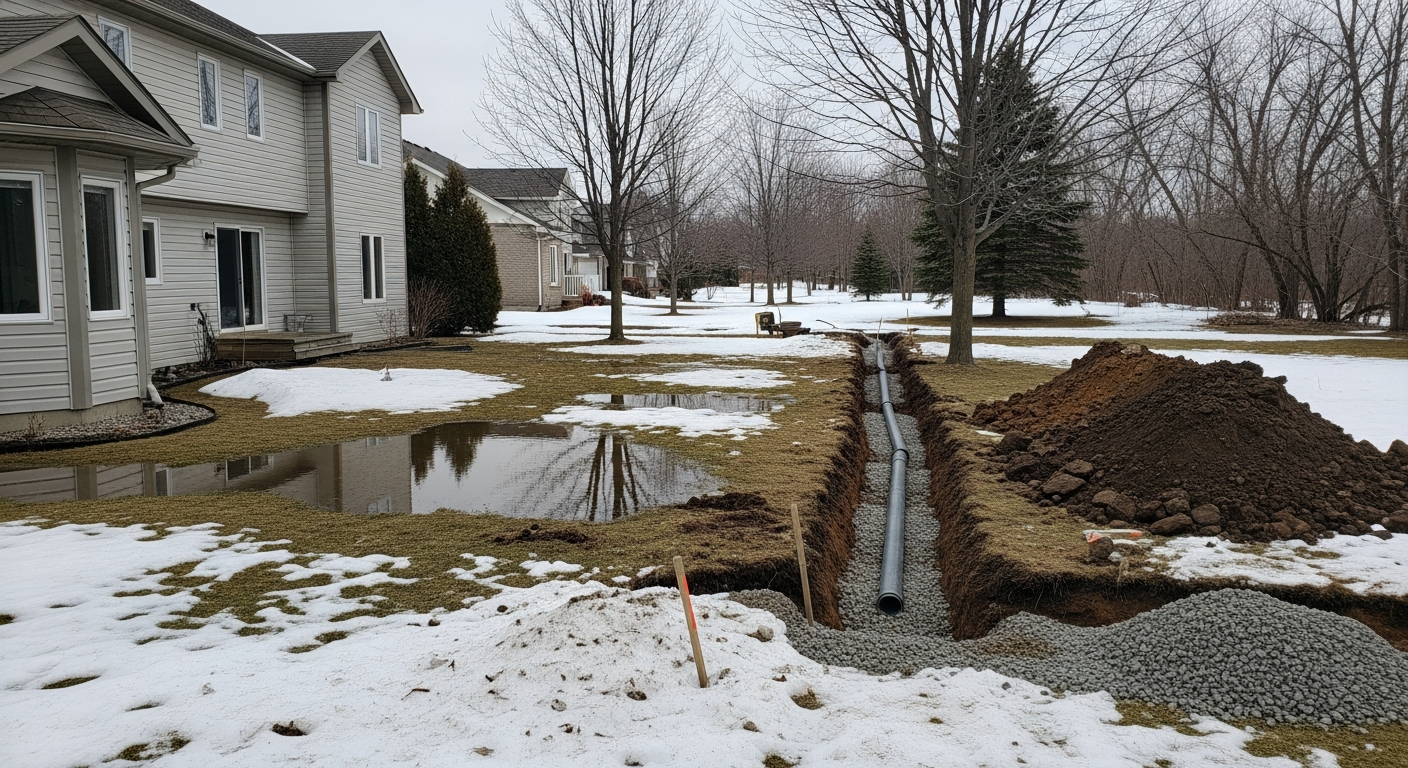
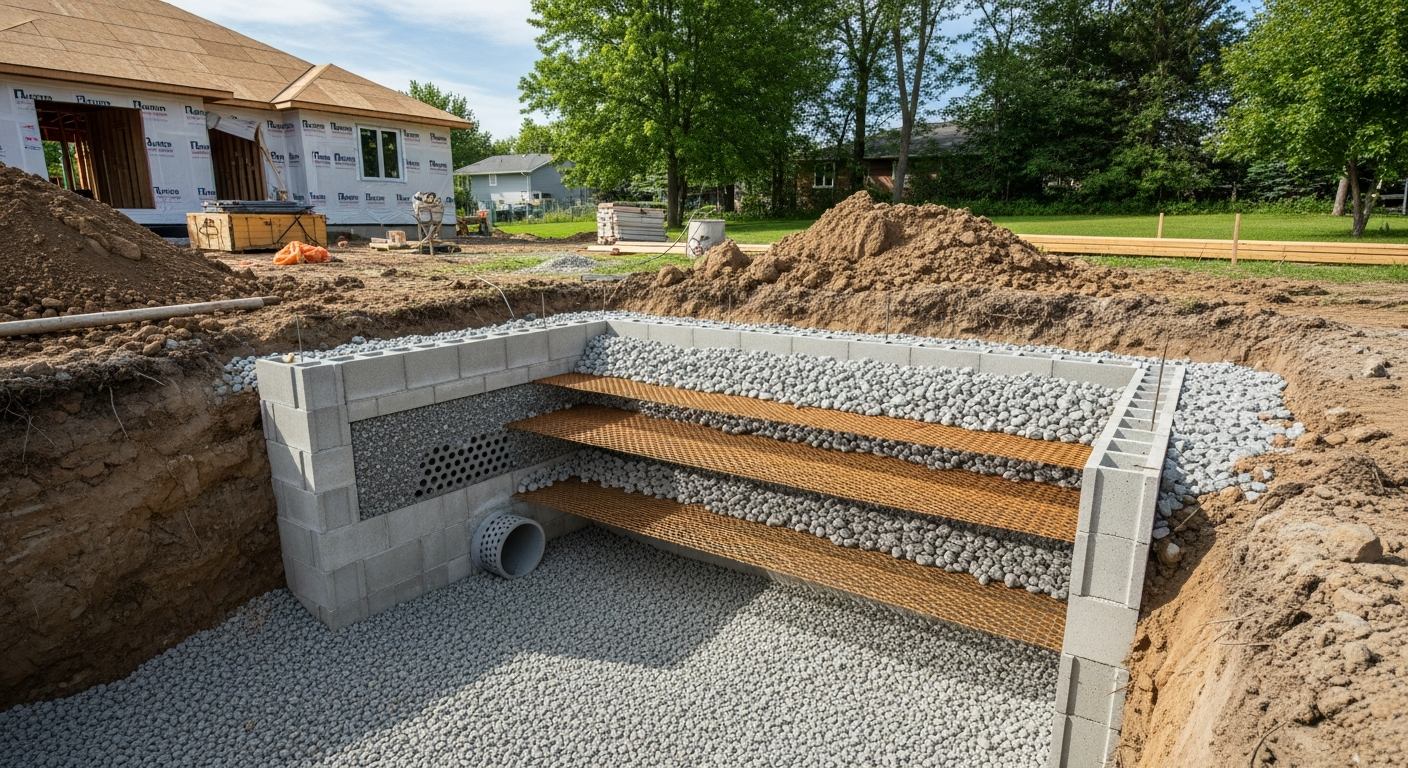
A lasting wall starts with a compacted granular pad wider than the base stone, with the first course set partly below grade so it cannot kick out at the toe. Each course steps back into the slope, clear stone fills the joints and the space behind the wall, and a perforated drain at the base carries water out to daylight. Filter fabric between the drainage stone and the native soil keeps fines from clogging it.
Field drawing 10 · Armour stone
Armour stone walls hold by weight and setback
Each course leans back into the slope and sits on the one below. Drainage still matters.
Swipe to see the full drawing →
- Compacted granular pad. Granular A, compacted, wider than the base stone. Soft ground gets dug out first.
- Embed the base stone. The first course sits partly below grade so it can't kick out at the toe.
- Step each course back. The batter puts each stone's weight behind the one below. Set stones on their flattest faces.
- Clear stone behind. Free-draining stone in the joints and behind the wall relieves water pressure.
- Drain to daylight. A perforated pipe at the base, outletting where water can't undercut the wall.
- Fabric against the soil. Non-woven fabric between drainage stone and native soil. Walls over 1 m next to public areas need a permit and an engineer.
Height changes what is needed. Under the Ontario Building Code, a retaining wall more than 1 m high next to public property, access to a building, or private property open to the public is a designated structure that needs a building permit and an engineered design. Taller walls elsewhere still benefit from an engineer's review, and terracing with two lower walls is often simpler than one tall one. See our guide to retaining wall permits in Ontario.
Walkways and Steps
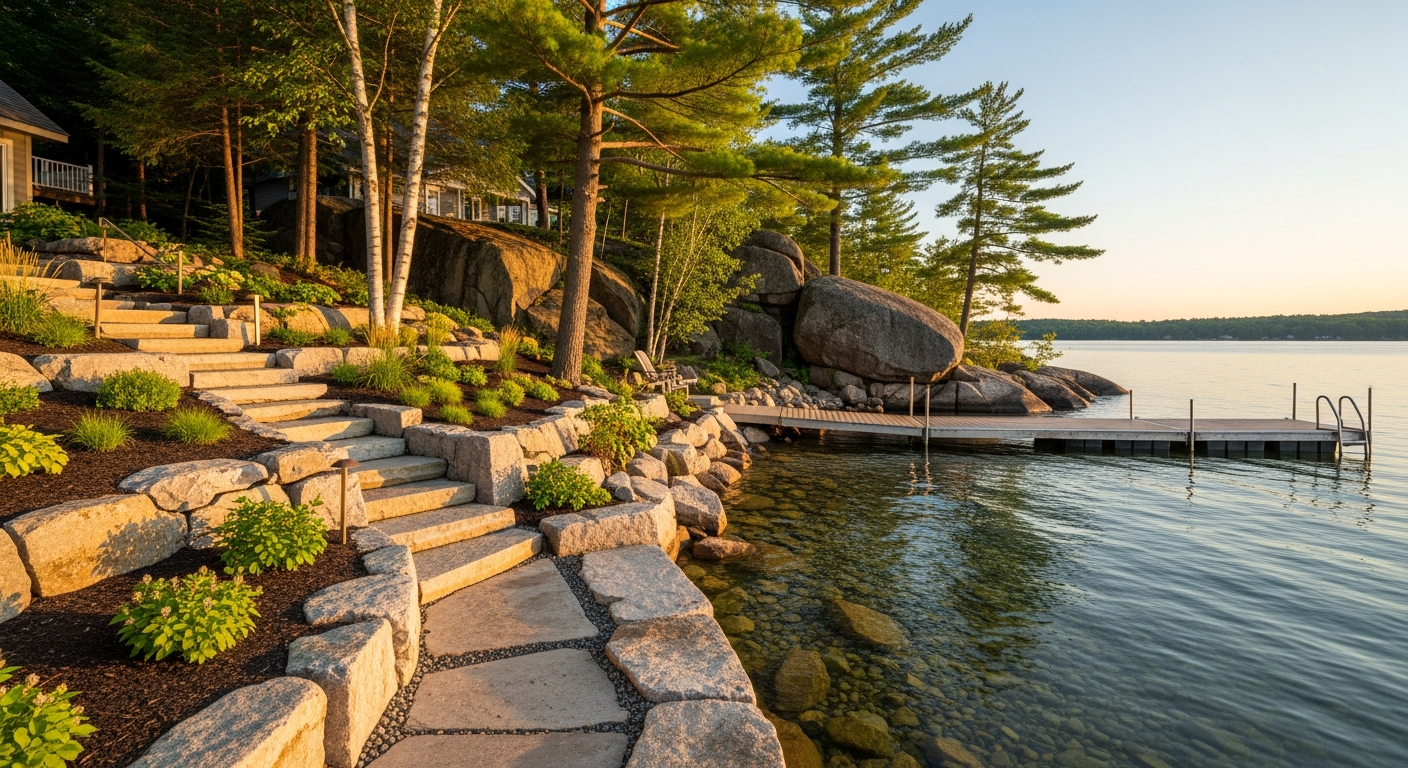
Creating walkways and steps with armour stone can enhance the accessibility and beauty of your outdoor space. The natural texture and colour variations of these stones add a rustic charm to garden paths and staircases.
Water Features
Incorporating armour stones into water features, such as ponds and waterfalls, makes them look like they belong in the landscape. Stone ledges for a waterfall and large boulders around a pond edge also hide liners and hold them in place.
Shoreline Protection
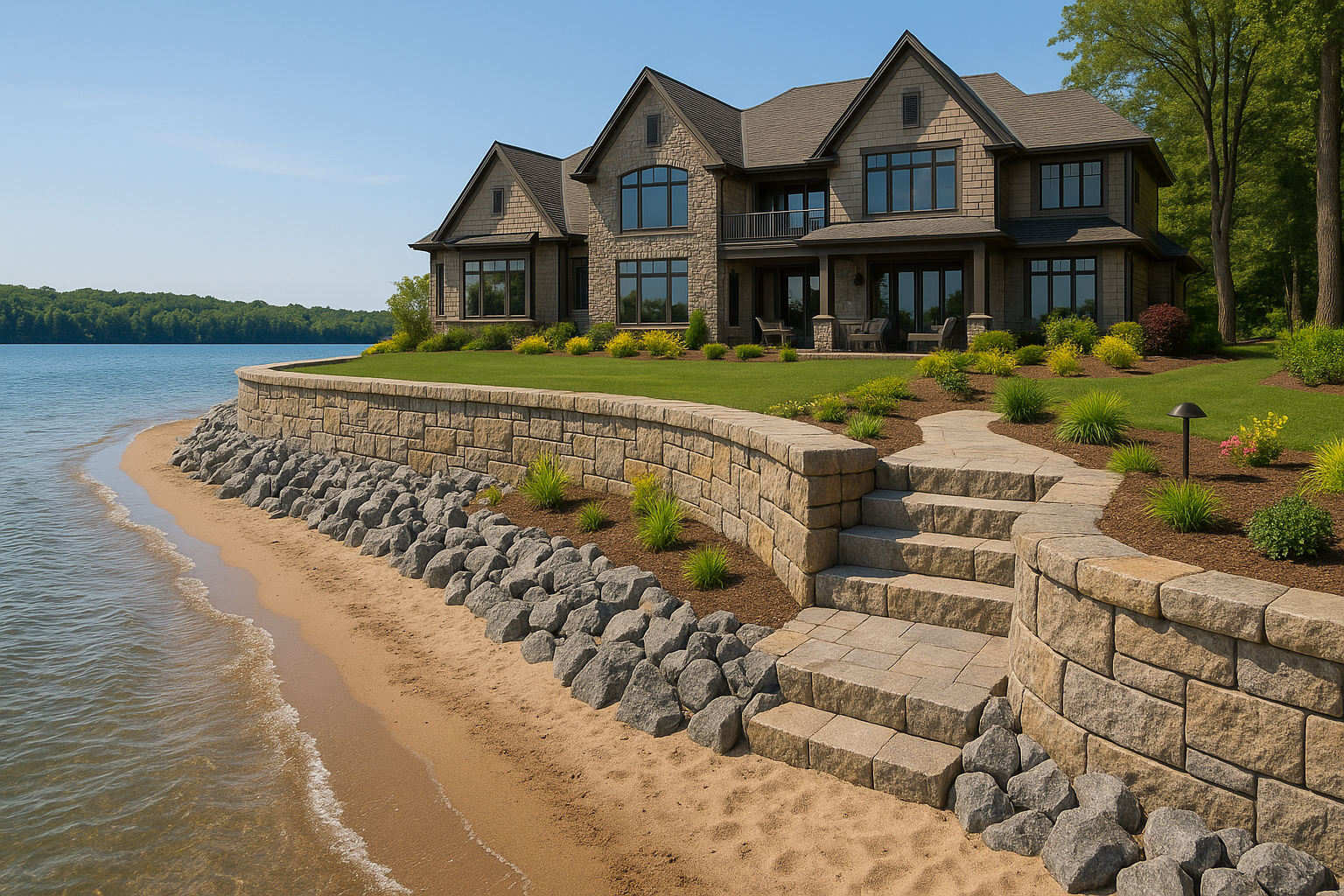
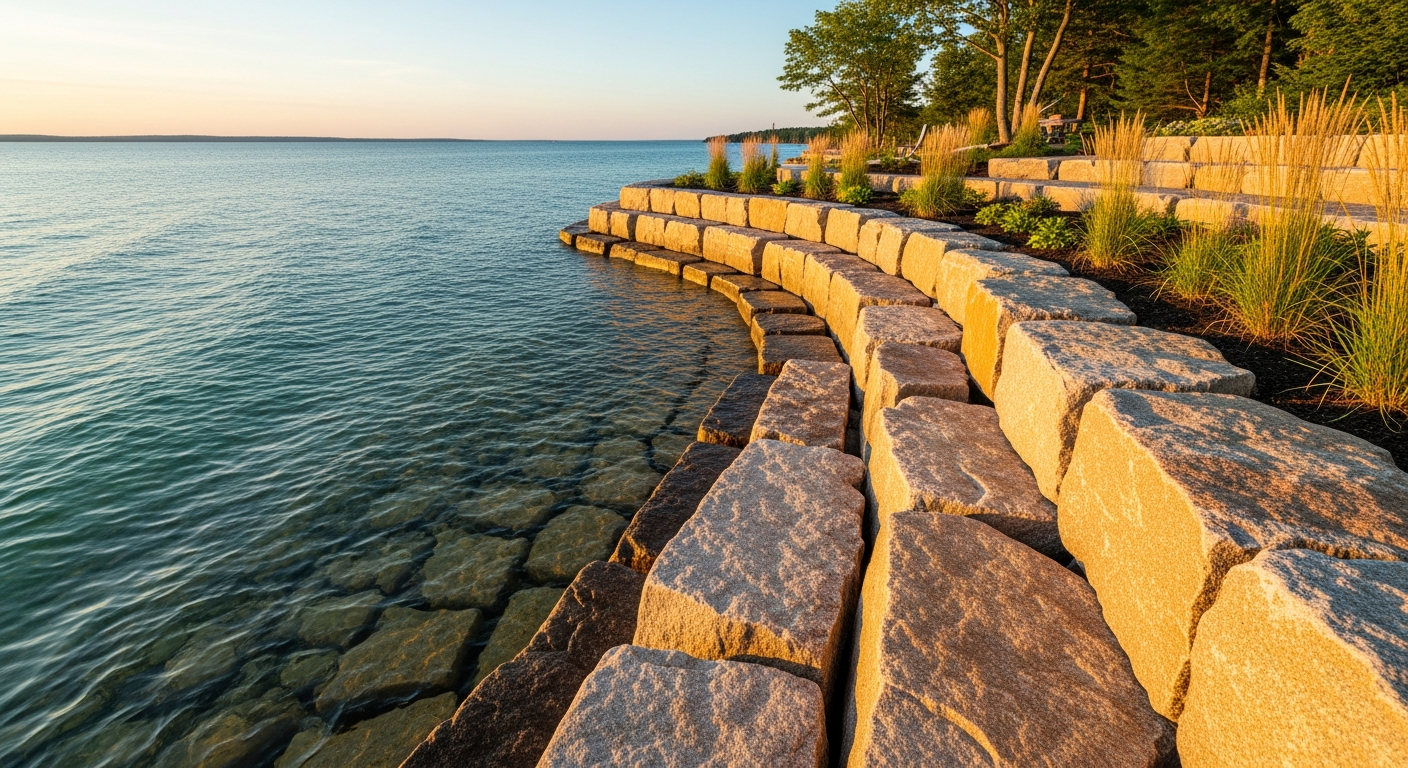
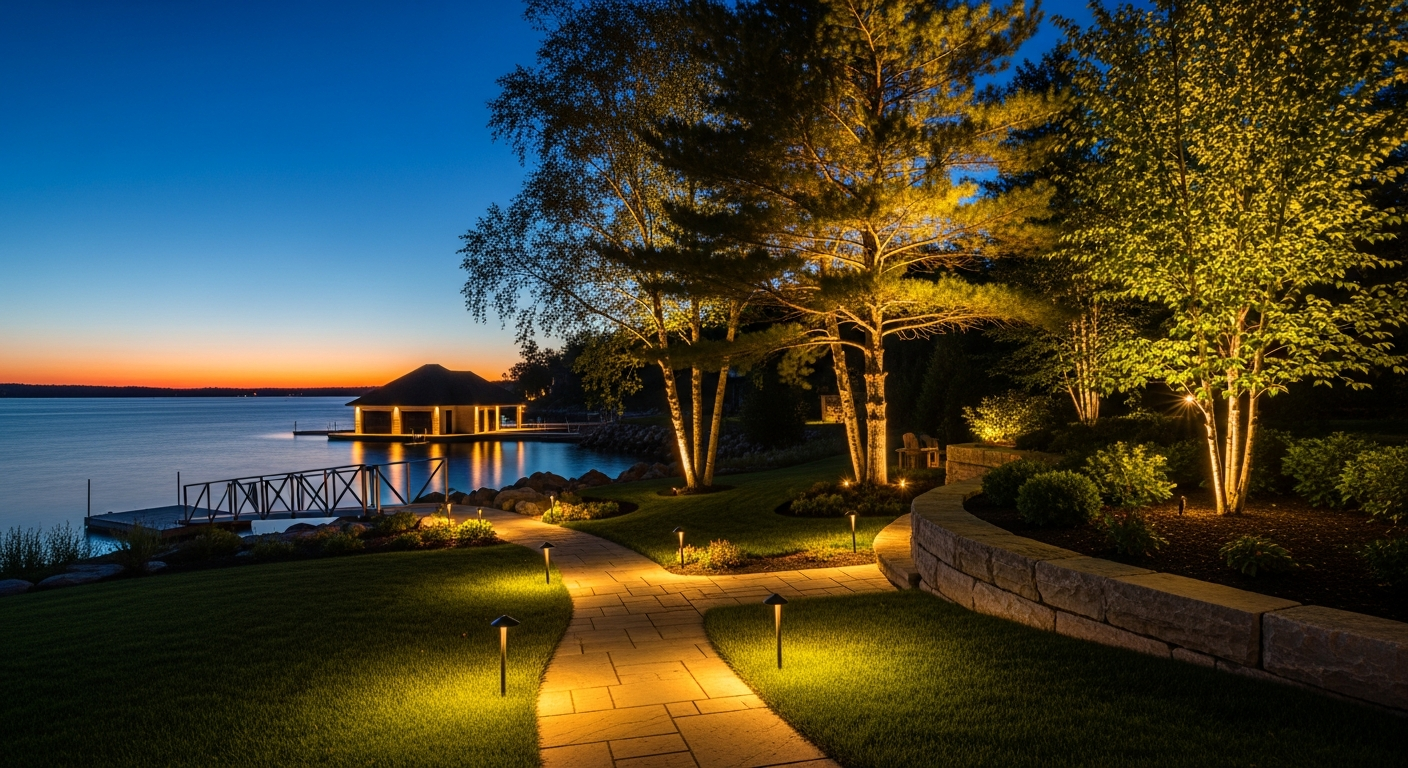
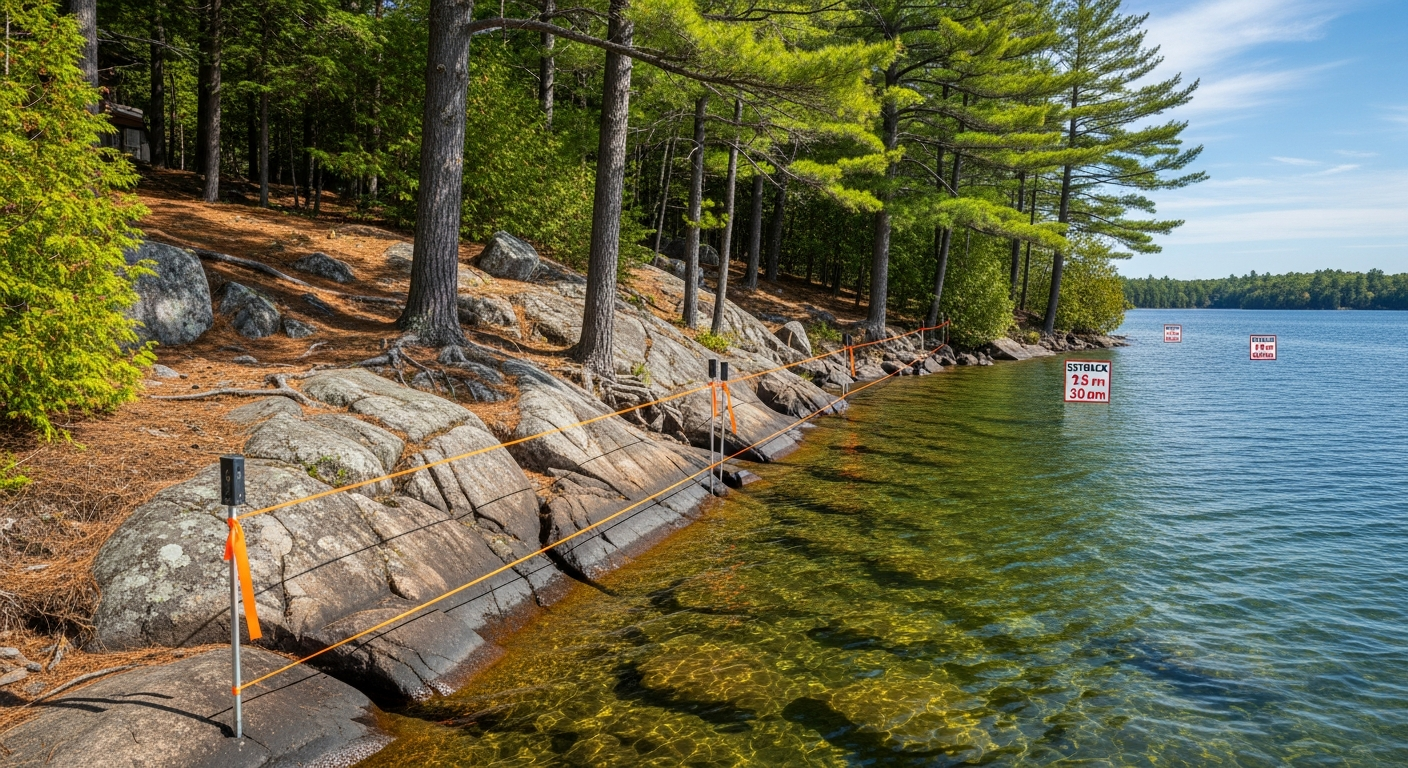
On Georgian Bay and inland lakes, armour stone is the standard material for protecting the toe of an eroding bank, usually combined with native planting above. Shoreline work on Georgian Bay generally needs an MNRF work permit before any stone is placed, so plan it with a contractor who handles shoreline restoration and the approvals that come with it.
Seating Areas and Fire Pits
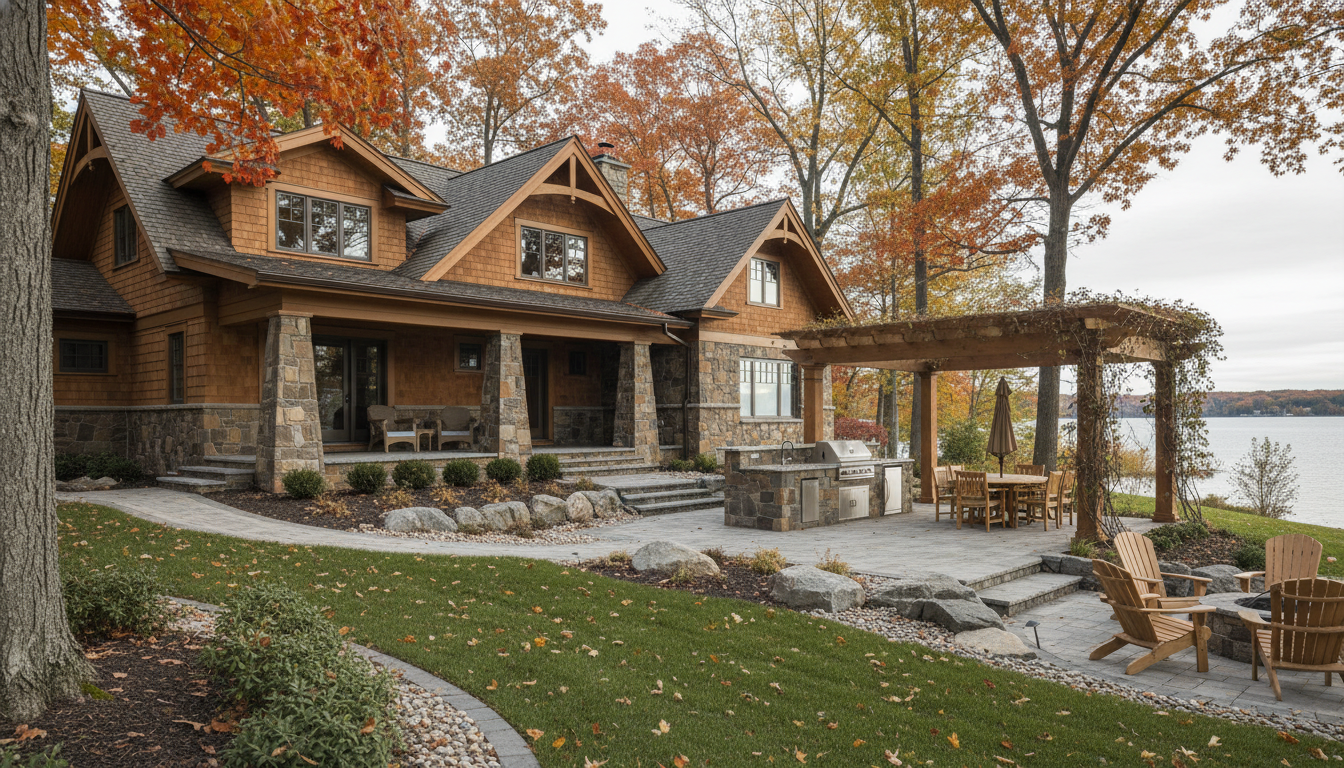
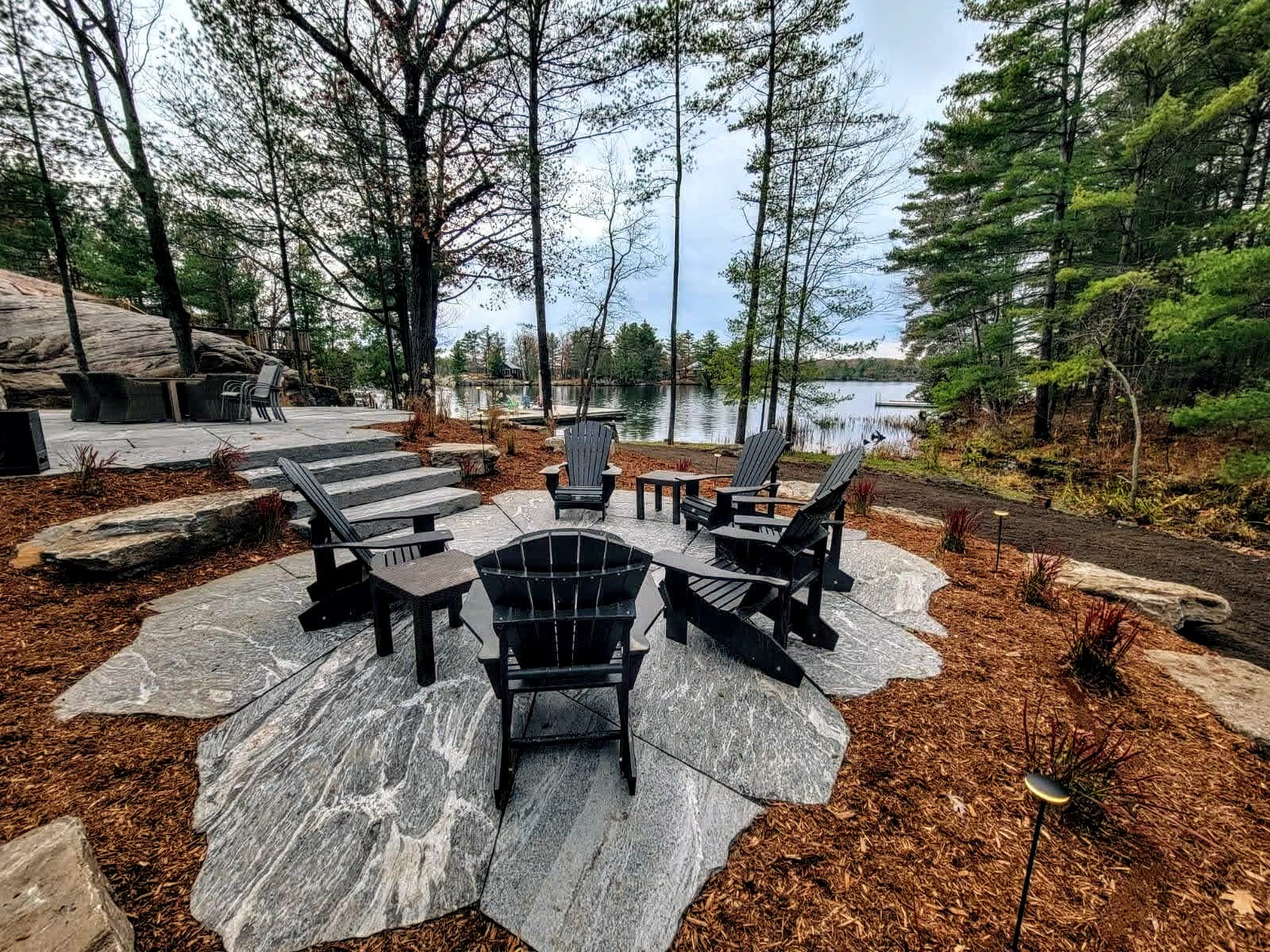
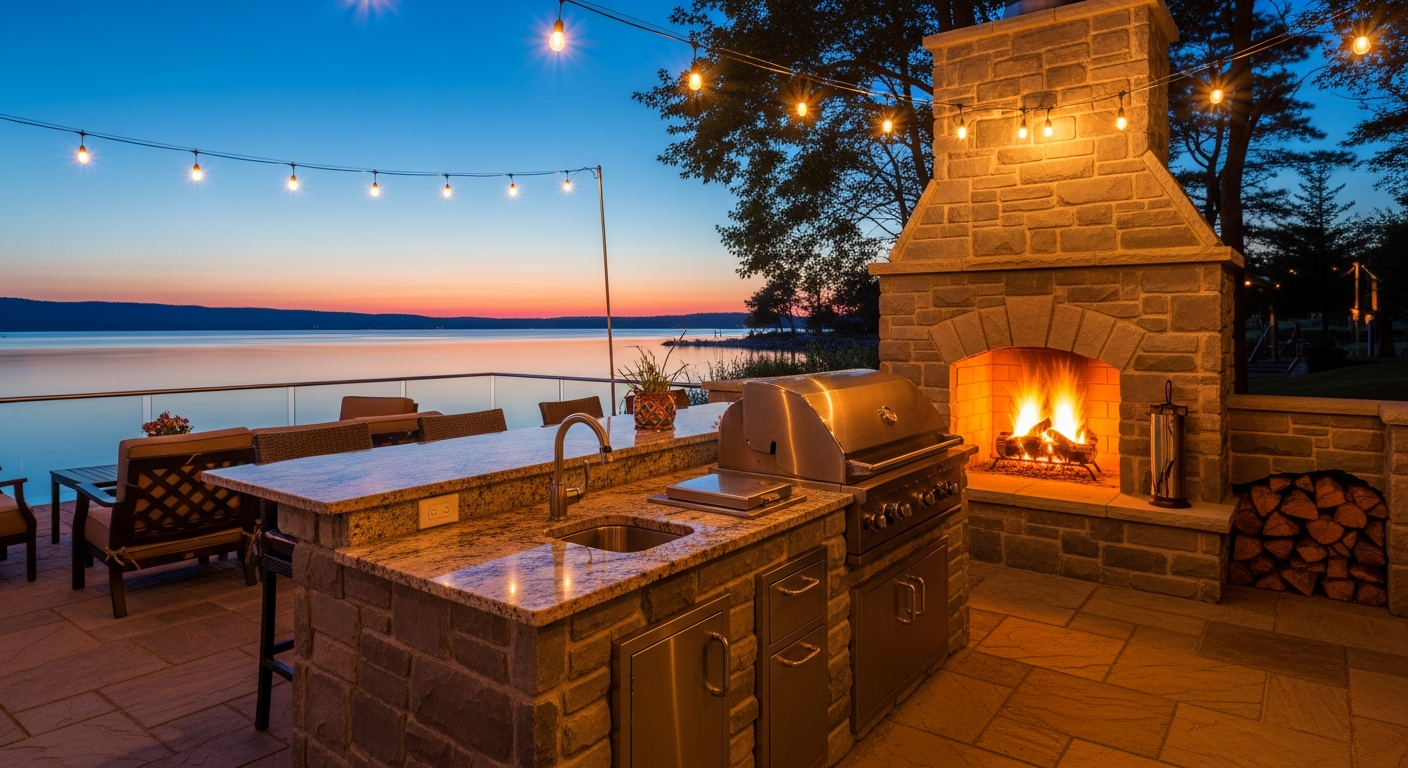
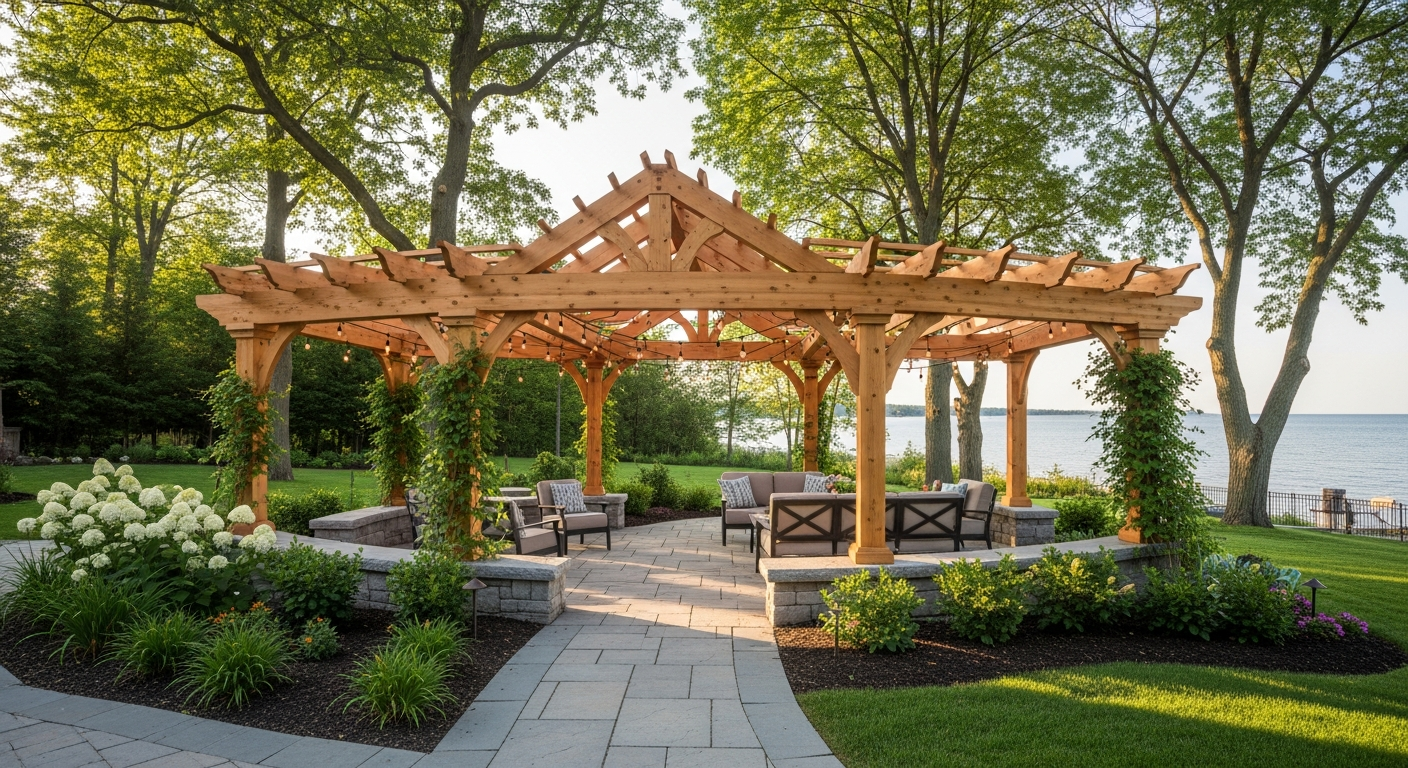
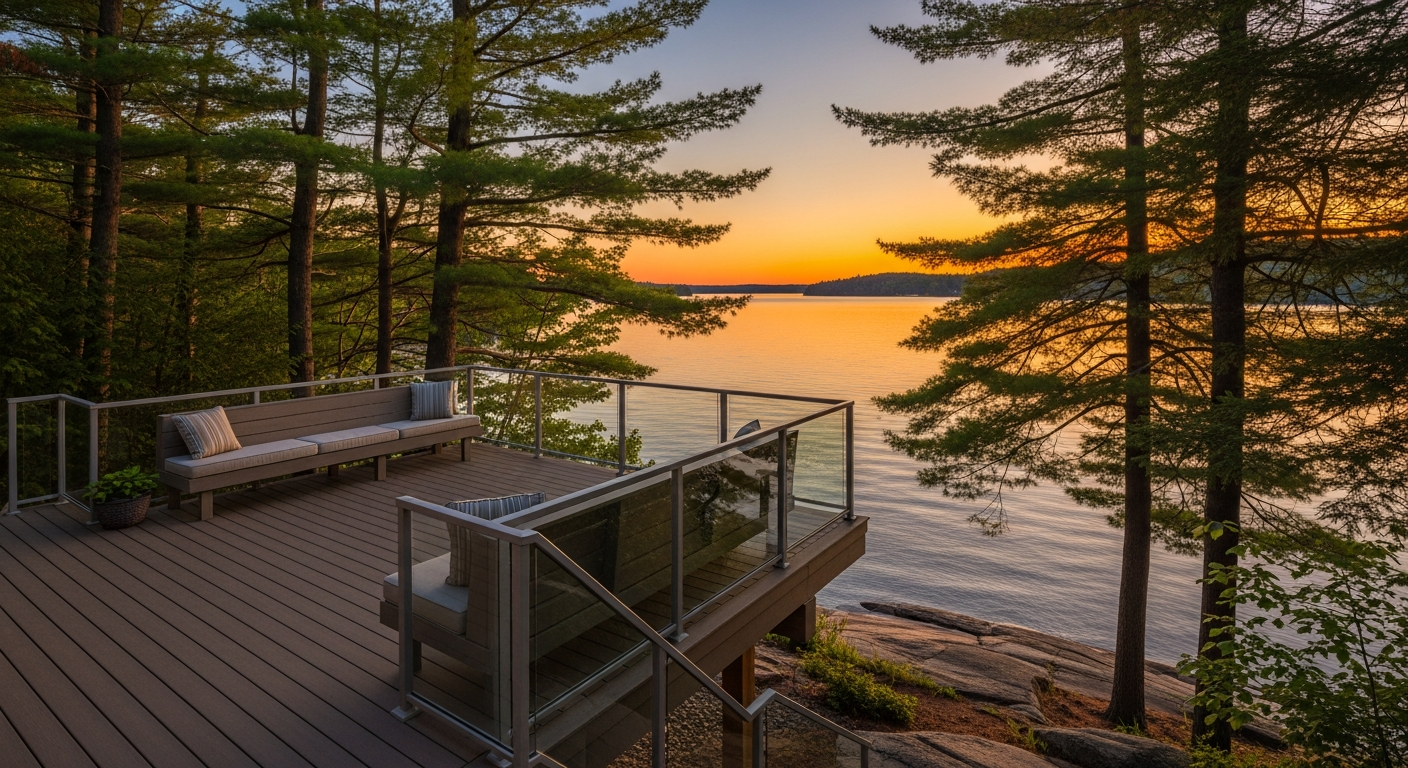
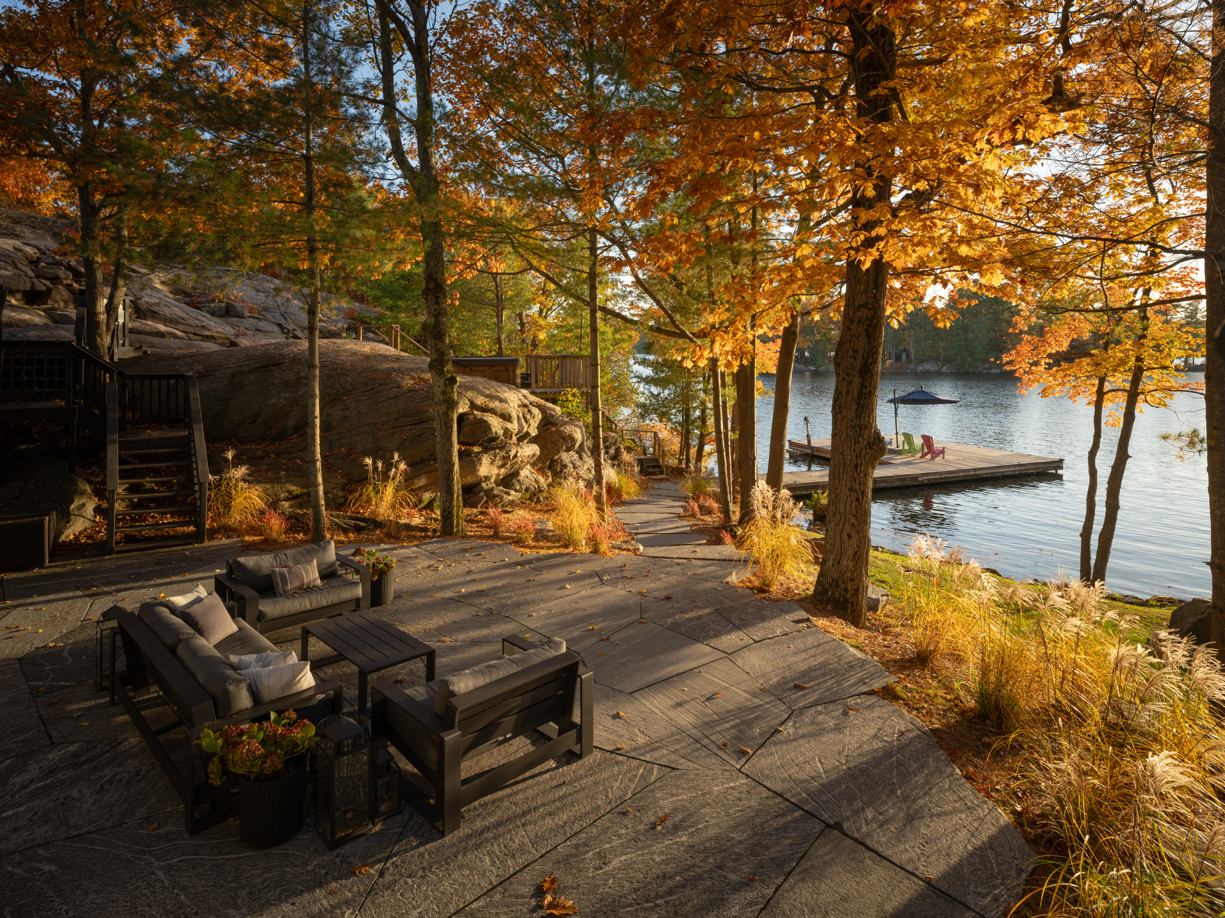
Armour stones can be used to create unique seating areas and fire pits, offering a durable and attractive solution for outdoor entertainment spaces. A low armour stone wall at seat height, roughly 400 to 450 mm, doubles as seating around a patio or fire pit. Keep any fire at the distances your municipality requires from structures and property lines.
Incorporating Local Flora with Armour Stone
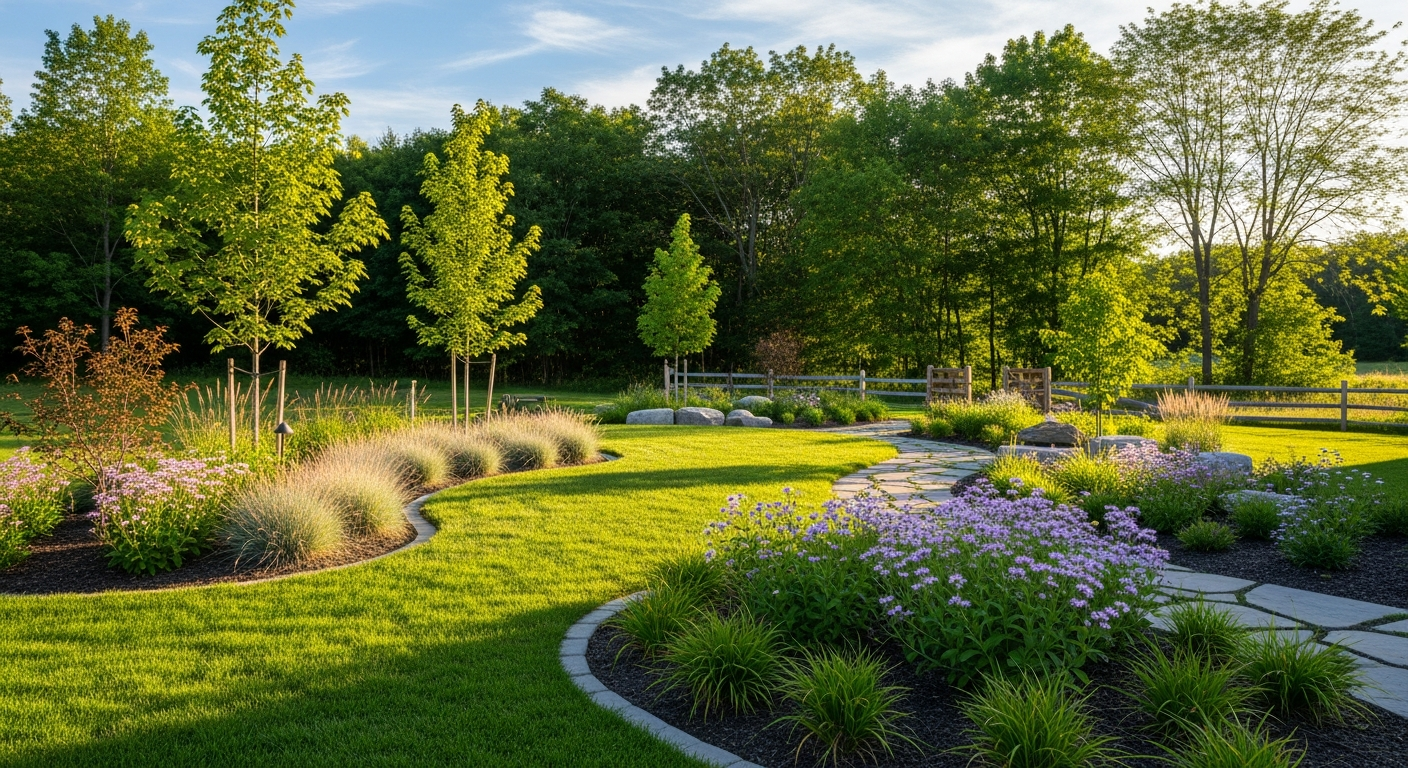
Choosing the right plants to accompany your armour stone landscape is essential for creating a cohesive outdoor space. Selecting plants native to the Midland area makes the landscape easier to keep and better for local wildlife.
Low, spreading plants soften the base and top of a wall: wild strawberry, creeping juniper, and native sedges and ferns in shade. On sunny terraces, little bluestem, black-eyed Susan, wild columbine and prairie smoke fit well in the pockets between stones. Leave enough soil depth behind the top course for roots, and keep large trees away from the wall, where their roots can push stones out of line over time.
Planning a 2027 armour stone project
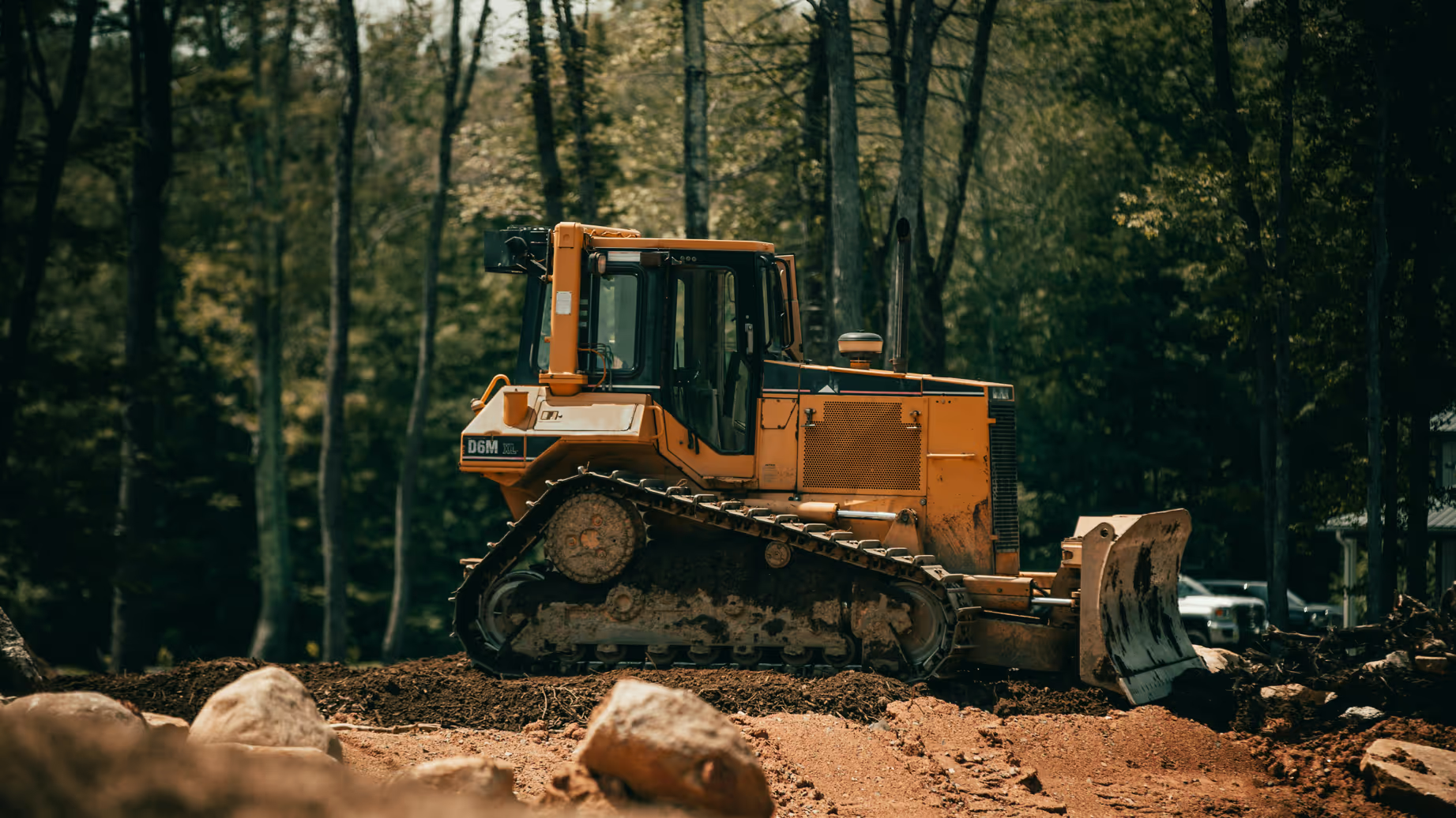
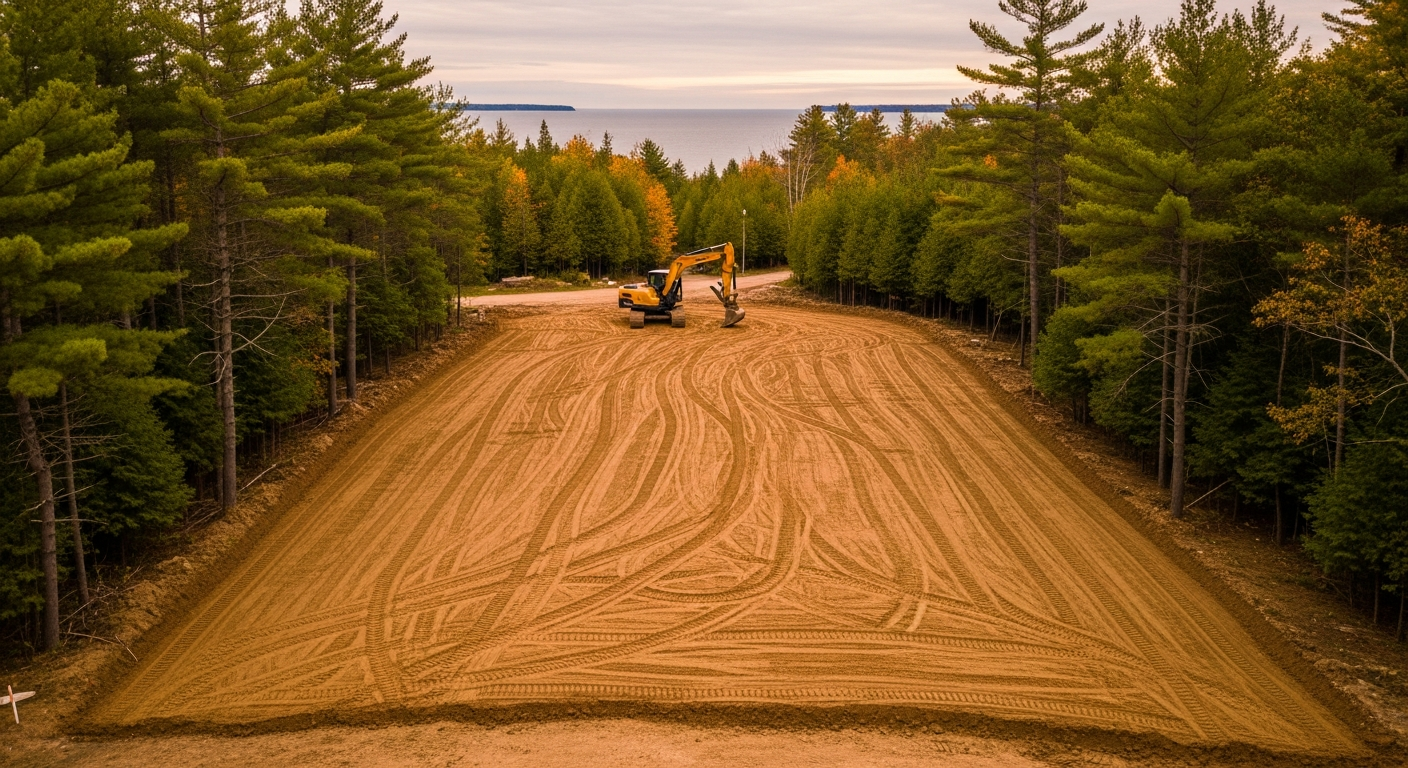
Armour stone work for 2027 is best planned over the winter. Quarries and suppliers stock stone year-round, but heavy equipment can only work once the frost is out and the ground is firm enough to carry loaded trucks, which around Midland usually means late April or May. Getting a site visit and design done in the off-season lets the contractor order the right stone sizes and book equipment for an early start.
Use the winter to decide on the layout, the wall heights and the stone colour, and to check access: armour stone arrives on large trucks and is set with an excavator, so the route from the road to the work area matters. If a wall will be more than 1 m high near a public area, or the work is on the shoreline, line up the engineering and permits before spring.
- Measure the slope and note where water collects.
- Choose stone type and colour, limestone or granite.
- Check access for trucks and an excavator.
- Confirm permits for tall walls and shoreline work.
Frequently asked questions
What is armour stone?
Armour stone is large, roughly rectangular quarried rock, usually limestone or granite, used for retaining walls, steps, shoreline protection and landscape features. Individual stones commonly weigh from a few hundred kilograms to several tonnes.
How high can an armour stone wall be without a permit?
Under the Ontario Building Code, a retaining wall over 1 m high adjacent to public property, access to a building or private property open to the public needs a building permit and an engineered design. Check with your municipality for other rules that may apply on your lot.
Does an armour stone wall need drainage?
Yes. Clear stone behind the wall, filter fabric against the soil and a perforated drain at the base that outlets to daylight relieve water pressure, which is the main reason walls bulge or shift.
Can I install armour stone myself?
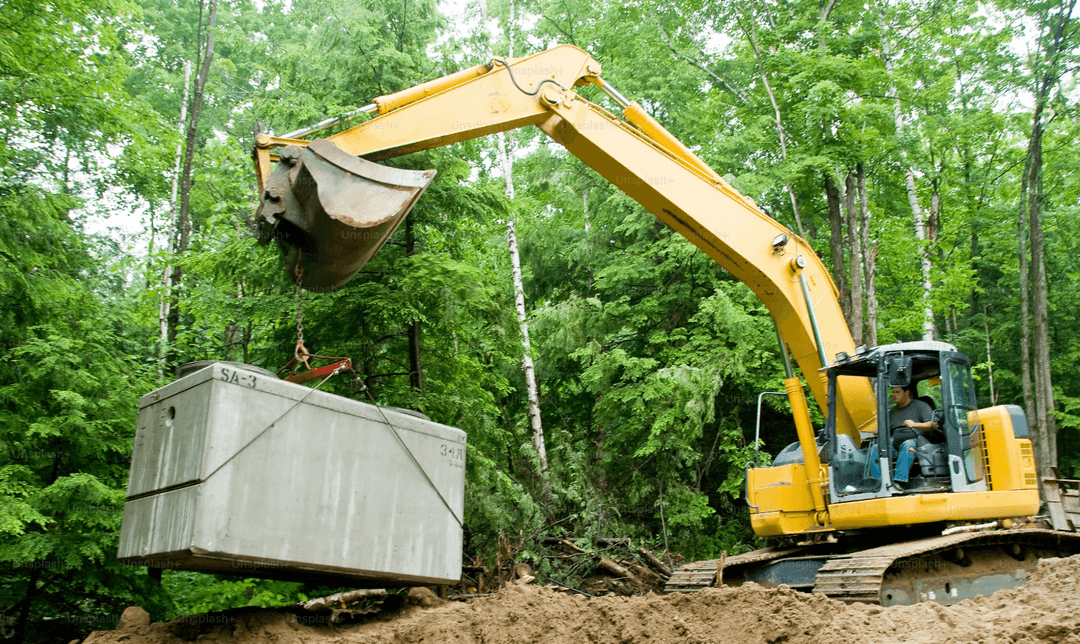
Small accent stones can be placed by hand, but most armour stone needs an excavator to lift and set safely. A wall also needs a properly compacted base and drainage, which is why most homeowners hire a contractor for anything taller than a single course.
Planning a project this season?
We’ll walk the site, scope it properly and give you a straight price.
Forty-Five Scapes did a fantastic job replacing the broken concrete retaining wall at the end of our driveway with beautiful armour stone. They were punctual, worked long/hard days and finished the job extremely quickly. We couldn't have asked for better service!
Frequently asked questions