Heated interlock uses electric cables or hydronic tubing under the pavers to melt snow and ice automatically, giving safer footing, far less shovelling and plowing, and little need for de-icing salt. It costs more to install and run than standard interlock, so it pays off most on steps, entry walks, steep driveways and accessible entrances.
Key takeaways
Introduction to Heated Interlock Systems
The main advantages of heated interlock are safer winter footing, far less shovelling and plowing, and little or no de-icing salt on your pavers, steps and car. Electric cables or hydronic tubing under the pavers melt snow and ice as it falls, so a driveway or walkway stays clear without a plow piling snow on the lawn. The trade-offs are a higher installation cost, running costs for electricity or fuel, and the need to plan the system before the pavers go down.
That matters in Midland, where Georgian Bay snowsqualls can drop heavy snow in a few hours and freeze-thaw cycles turn wet walks to ice. This article covers how heated interlock works, how it is built, what it costs to run, and how to plan one.
What is Heated Interlock?
Heated interlock refers to the integration of heating elements beneath interlocking pavers, providing a controlled heat source that melts snow and ice, ensuring surfaces remain clear and safe for use. It combines ordinary interlocking pavers, built on a proper base, with a snow-melting system that switches on when sensors detect snow or ice.
Why Midland?
Climate Challenges in Midland
Midland experiences a wide range of weather conditions, from heavy snowfall in winter to intense rain during other seasons. These fluctuations can deteriorate outdoor surfaces and create hazardous conditions. Heated interlock systems offer a proactive solution to these challenges.
How Heated Interlock Works
The Technology Behind the Warmth
Heated interlock systems use either electric heating cables or hydronic tubing (PEX carrying heated glycol from a boiler) placed just beneath the pavers. A controller with a snow and moisture sensor switches the system on when it detects precipitation near freezing and off once the surface is clear, so it isn't running all winter. Electric systems are simpler to install and suit walkways, steps and smaller driveways; hydronic systems cost more to set up but are often cheaper to run over large areas, especially where a boiler is already in place.
Benefits of Installing Heated Interlock
Safety Improvements
The primary benefit of heated interlock is fewer icy patches where people walk, which lowers the risk of slips and falls on steps, walkways and entrances at homes and businesses.
Convenience and Comfort
Heated driveways and walkways cut most routine shovelling and plowing. In a heavy squall a system may fall behind the snowfall for a while, but it catches up without anyone going outside, and there are no plow ridges at the end of the driveway or snowbanks crushing the garden.
Durability and Longevity
Comparing Traditional vs. Heated Surfaces
Heated interlock can extend the life of a driveway or walkway mainly by removing the need for de-icing salt, which pits concrete pavers and damages nearby plants, and by stopping plows and shovels from chipping paver edges. Interlock itself handles freeze-thaw movement better than poured concrete because the joints let it flex, as long as the base underneath drains and is properly compacted.
Energy Efficiency and Environmental Impact
Sustainable Practices
Snow-melting systems use real energy, so the controls matter. Automatic snow and moisture sensors, zoning so only the walkways and tire tracks are heated, and rigid insulation under hydronic tubing all reduce running time. Using less salt is an environmental benefit in its own right, since salt runoff harms soil, plants and nearby water.
Installation Process
Planning and Design
The versatility of interlock pavers allows for customized designs that complement any architectural style, with the added functionality of built-in heating.
The Installation Procedure
What to Expect During Installation
The process involves excavating the existing surface, installing the heating elements, and then laying the interlock pavers. Professional installation ensures optimal functionality and aesthetics.
The base under a heated system is the same as under any good interlock surface, and it has to be right because you can't easily dig up the heating once it's in. ICPI guidance calls for 100 to 150 mm of compacted Granular A under walkways and patios and 150 to 200 mm under residential driveways, compacted to at least 98% Standard Proctor, with a nominal 25 mm bedding layer and pavers at least 60 mm thick. The heating cable or tubing is set in a protected layer just under the pavers, according to the system manufacturer's instructions, and is tested before and after the pavers go down.
Field drawing 11 · Patios and driveways
The base under interlock is the real patio
Pavers are only the wearing surface. Settling, heaving and ruts start in the layers below.
Swipe to see the full drawing →
- Pavers. At least 60 mm thick for pedestrian areas and residential driveways.
- Bedding layer. A nominal 25 mm, screeded flat. Never use bedding to fix a bad base.
- Compacted Granular A. 100–150 mm under walks and patios, 150–200 mm under driveways, compacted to at least 98% Standard Proctor.
- Firm subgrade. Strip topsoil and soft spots and compact before the base goes in. Clay or wet sites need more base.
- Edge restraint. Spiked or concrete edge so the field can't creep. The base runs past the edge to carry it.
Electrical work for an electric system or a hydronic boiler and pump needs an Electrical Safety Authority permit in Ontario, and gas boilers must be installed by a licensed gas technician. Plan the controller location, power supply and any boiler room connection before excavation starts.
Cost Analysis
Initial Investment vs. Long-Term Savings
The upfront cost of heated interlock is higher than standard interlock, because you are paying for the heating system, controls, electrical or boiler work and the labour to install them. Running costs depend on the area heated, the system type, your energy rates and the winter. Against that, you save on snow removal contracts or equipment, salt and repairs to salt- and plow-damaged surfaces. For many homeowners the deciding factor is safety and convenience rather than pure payback.
Maintenance Costs
Heated interlock systems need little maintenance: check the controller and sensor each fall, and for hydronic systems, service the boiler and check the glycol on the manufacturer's schedule.
Real-Life Applications
Where Heated Interlock Makes Sense at Home
The best residential uses are front steps and entry walks, steep driveways that ice up, the path to a garage or hot tub, and homes where the owners are older or away for stretches of the winter. Heating just the walkway and two tire tracks gives most of the benefit at a lower cost than heating a whole driveway.
Commercial Benefits
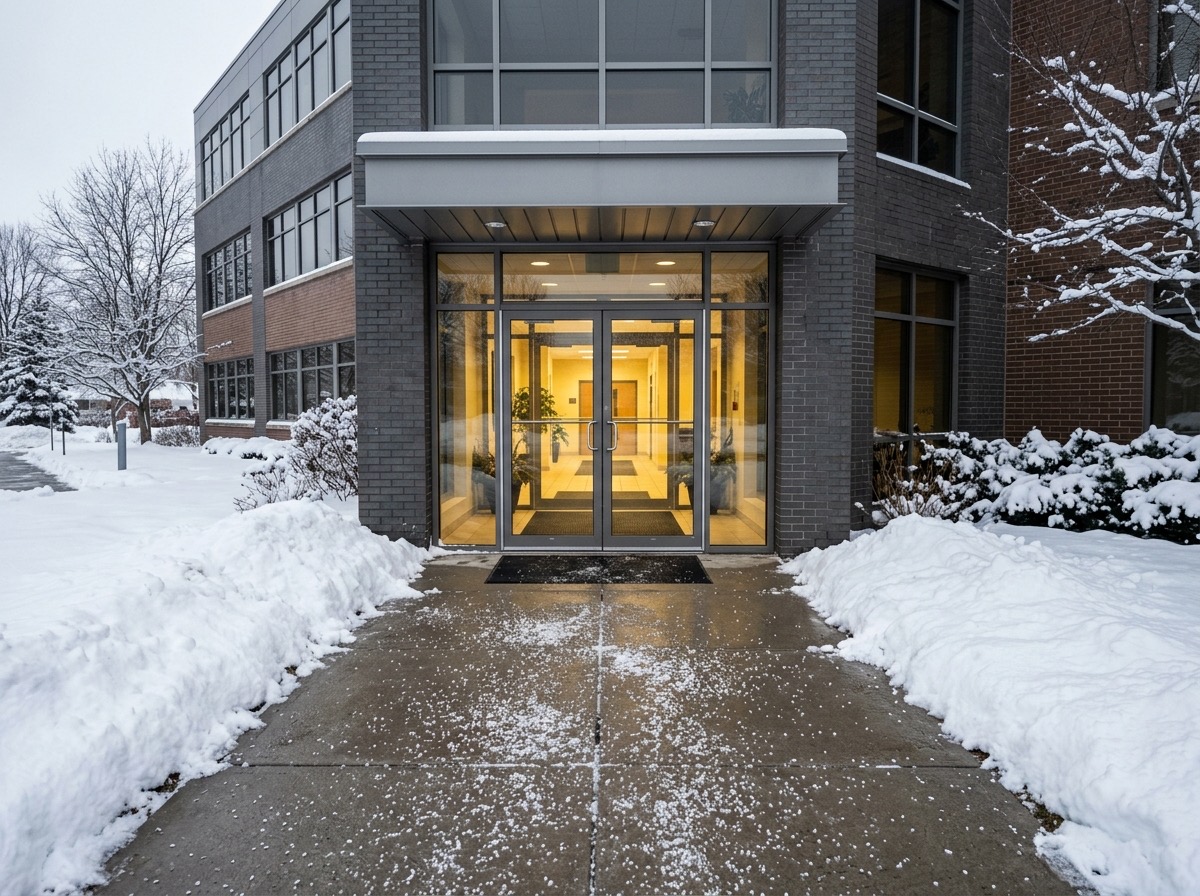
Businesses benefit from safer, more accessible entrances, ramps and walkways for customers and employees during winter. Heated entries also reduce how much salt gets tracked inside.
Planning a 2027 heated interlock driveway or walkway
If you want heated interlock in place before next winter, plan it this winter. Decide which areas really need heat: steps, the main walk and driveway tire tracks are the usual priorities. Choose electric or hydronic, and get your electrician or heating contractor to confirm the power supply or boiler capacity early, because a service upgrade can take time to arrange.
Construction can start once the ground has thawed and dried, typically late April or May in Simcoe County. Book design and installation over the winter so the work fits the spring and summer schedule and the system can be tested well before the first snow. If you are already planning a new driveway or walkway in 2027, that is the time to add heating; retrofitting means lifting the pavers again.
- Pick the zones to heat and the system type over winter.
- Confirm electrical capacity or boiler options.
- Arrange ESA permits and, for gas boilers, a licensed gas technician.
- Schedule installation for spring or summer and test before fall.
Frequently asked questions
Is heated interlock worth it?
It is worth it where safety and convenience matter most: steps, steep or long driveways, accessible entrances, and properties where snow clearing is hard to arrange. For a short, flat driveway, a snow removal contract may cost less.
Electric or hydronic heated interlock?
Electric is simpler and cheaper to install and suits walkways, steps and smaller areas. Hydronic costs more up front but can be cheaper to run over large areas, especially if a boiler is already available.
Can you add heating to existing interlock?
Yes, but the pavers have to be lifted and the bedding redone so the cables or tubing can go in. If the base underneath is poor, it should be fixed at the same time.
Do you still need salt with heated interlock?
Usually not on the heated areas. That is one of the main benefits for paver life and nearby plants.
Talk to us about heated interlock
Forty Five Scapes builds heated and standard interlock driveways, walkways and patios in Midland, Penetanguishene and the Georgian Bay area. See our heated interlock installation service or our interlocking driveways page to get started.
Planning a project this season?
We’ll walk the site, scope it properly and give you a straight price.
Mark and Matt are amazing. Not only do they do high-quality work, but they are also collaborative every step of the way. They are also great at problem-solving for unforeseen issues, or if you are just stuck on what to do in a certain area. I highly recommend Forty-Five Scapes for your landscaping needs.
Frequently asked questions